Are you a busy woodworker on the go? Looking for some more hand tool luggage to go with your saw till? Then look no further than this stylish Hand Tool Cart! Its clean lines and stylish fenders will turn heads as you roll from the workshop to the trade show. But wait, there’s more…..
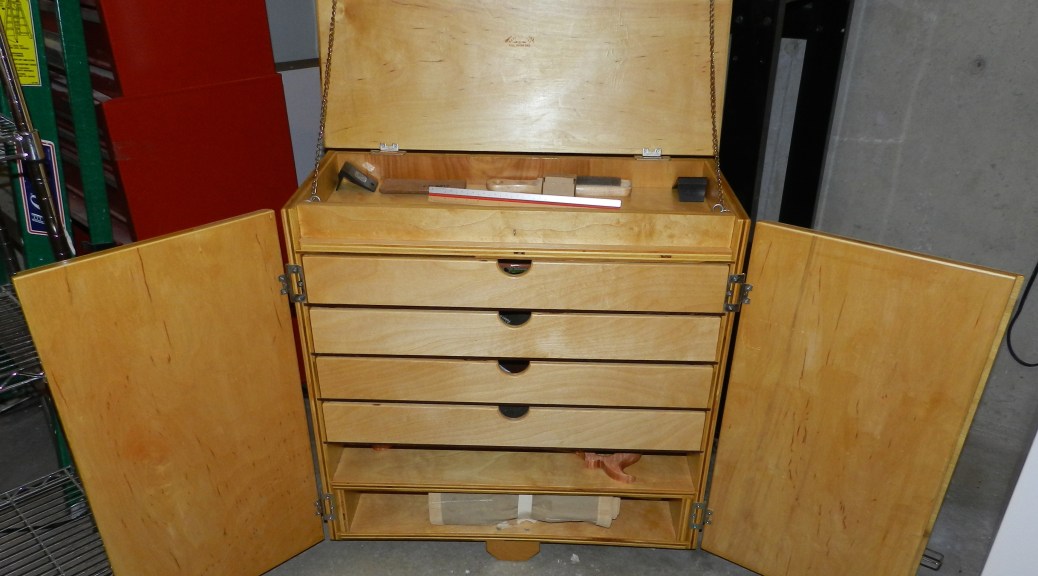
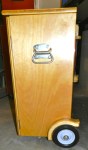
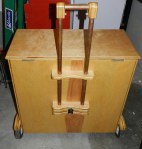
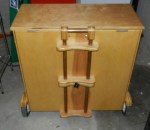
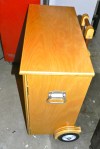
OK, now that we’ve chased that car salesman out of the shop we can talk about the details. I based the design on a ‘Tool Caddy’ I saw in issue 158 of Wood Magazine from 2004; though I made some modifications/additions. I scaled up the width of the chest to fit a #8 plane and panel saws. I built out a full set of drawers to hold planes and marking gauges etc. I added locking clasps on the front so it can be locked. I installed safety chains on both sides of the flip top lid — which is where I store items I use most frequently — combo square, brush, card file, scraper, scale, marking gauge etc. The lid also locks inside the protected zone covered by the main chest doors. The luggage style handle mechanism is made from copper pipe and folds out of the way when not in use. I also added heavy duty chest pulls to aid in maneuvering the chest as it can get heavy fast. I particularly like the fenders as a finishing touch. I also took care to match wood grain across the pieces. The cart is made from birch plywood, finished with 4 coats of polyurethane and 2 coats of wax. I’ve used it for several years now and it has been a great addition to the shop.
I need to get something off my chest– literally. Ever since reading the Anarchist’s Tool Chest I’ve had Tool Chest envy. My wife and I recently moved up to NH from Boston and it seems like it has been taking a lifetime to get my shop setup and fully functional again. Teaching, work, life, smaller projects and commissions keep getting in the way. Once winter sets in and I get more ‘me’ time in the shop I plan to build my own proper tool chest — though right now hand my tools ride around in style via a mobile tool chest/cart I built as a student at NBSS — complete with curved fenders, a retractable handle, 4 drawers and a tray top (I’ll post more on that in an upcoming post).
This past week I was at the Live Free or Die tool show and auction in Nashua NH — and is part of my twice annual pilgrimage to the ultimate old hand tool show. Beyond great deals on hard to find tools, it’s also a great place to see lots of faces from NBSS, vendors I’ve been buying from for years and the one random guy who only seems to sell very ornate turned plumb bobs every year.
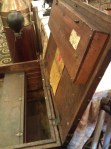
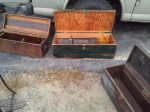
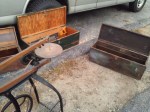
Below are some of the more interesting tool chests I was able to find and photograph with my camera phone (please excuse the quality of them). The wide variety of what survived was a great source of inspiration.
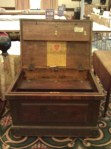
Tool Chest with Extensive Inlay Work and single Till inside
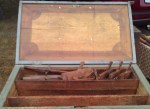
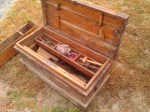
Small portable chest
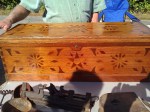
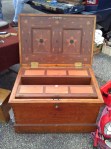
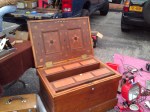
Large chest with inlaid lid
Close Up
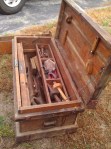
Remains of a large tool chest with wood and rope handle
Beautiful Tool Chest from 1849 with extensive inlay work, divided tills, half lock etc
More of that ornate tool chest. This gentleman must have loved playing cards
Chest with heavy metal reinforced corners
Chest with Heavy Metal reinforced corners
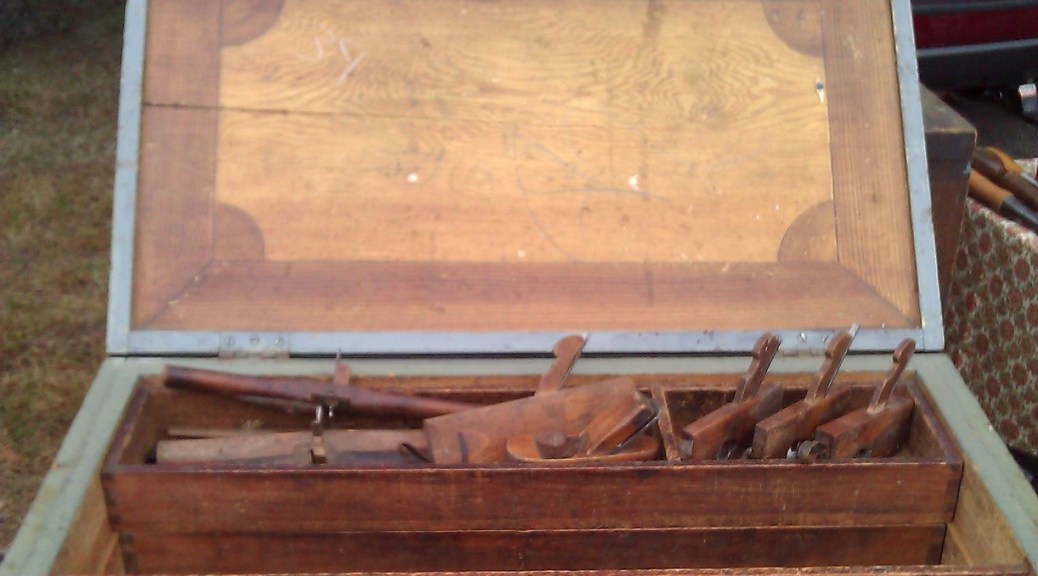
Large chest from the auction. Interesting box till on the lid
Detail view of that box till on the lid
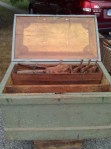
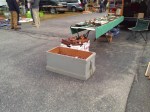
Some of the more pedestrian and modern tool chests — I see some plywood
More of the modern chests, and a treadle powerd scroll saw
You never know what you will find in a chest here — including a human skeleton (anatomy model)
You can learn more about the Anarchist’s Tool Chest here on my friend Chris Schwarz’s blog. (Along with other great books by the Lost Art Press)
Sorry Chris — I was unable to find any slant topped chests, but I gave it a good try.
A stone building or home often conveyed a sense of lasting presence, wealth, and a connection to the many famous stone structures of antiquity that we so often try to emulate and incorporate into our architectural designs. So why not just build with stone in the first place?
The answer is usually economics — wood is a lot cheaper, easier to move and shape compared to stone — so if you could make your wooden home look like stone you’ll be keeping up with the Jones’ and not break the bank.
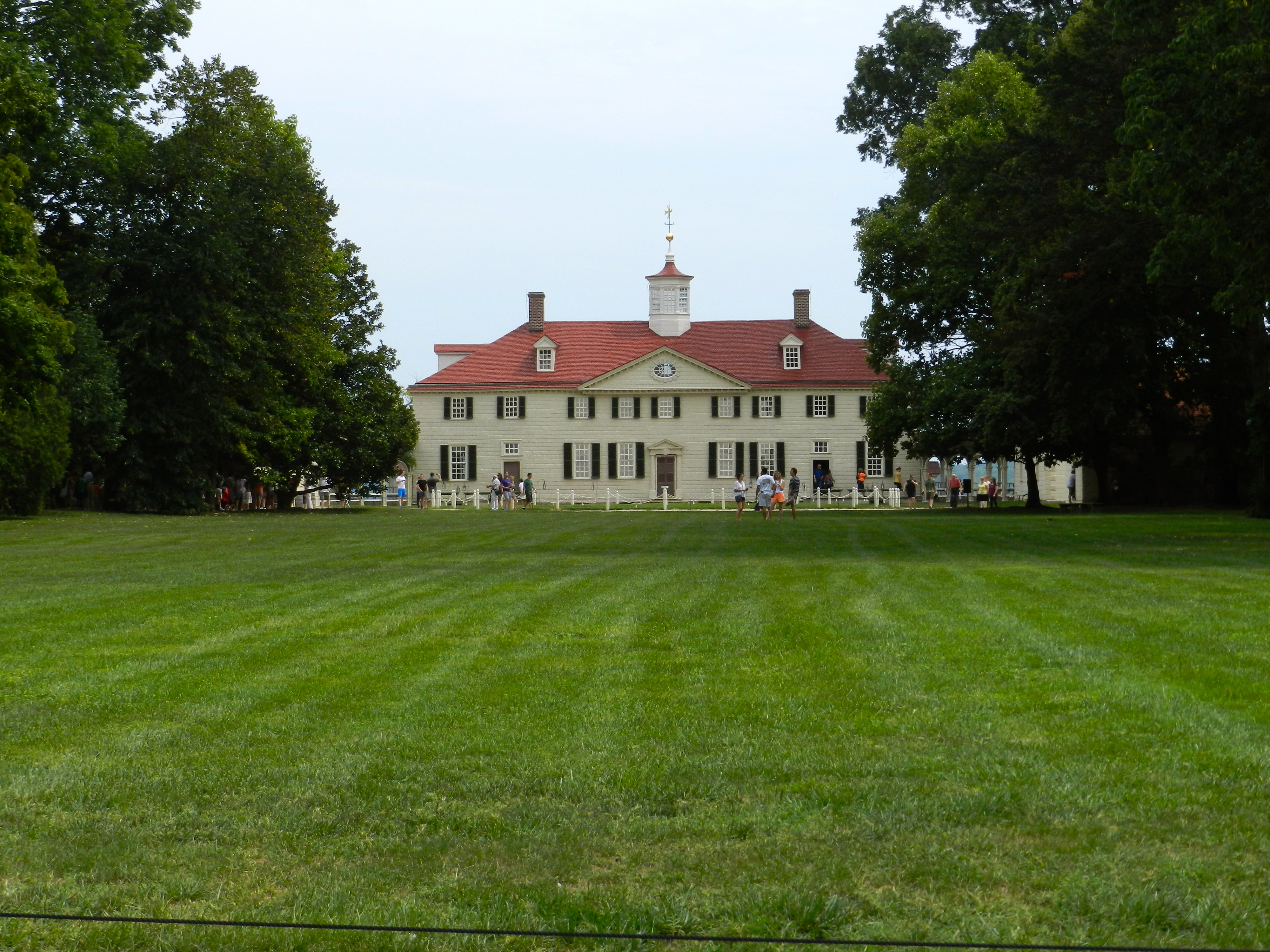
I just returned from a trip down to Washington D.C. where we also visited Mount Vernon — the home of George and Martha Washington with amazing views of the Potomac — and the most famous example of Feigned Rustication I am aware of.
George and Martha Washington’s Home — Mount Vernon
What is Rustication?
Rustication is a term from the world of Masonry wherein the individual stones are squared off or beveled so as to accentuate the textured edges of each block. You can learn more about it on Wikipedia here. You can often see this feature on the lower and/or first levels of large masonry structures like banks and older stone office buildings. It provided a sense of grounding and provided a stark contrast to the smoother ashlar work on upper stories.
Close up of the Mansion
What is Feigned Rustication?
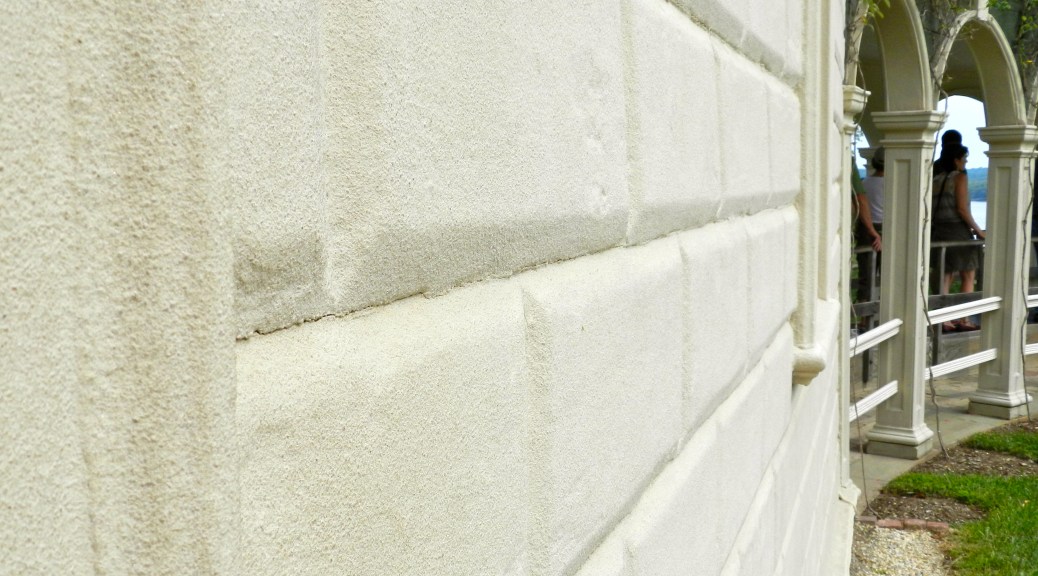
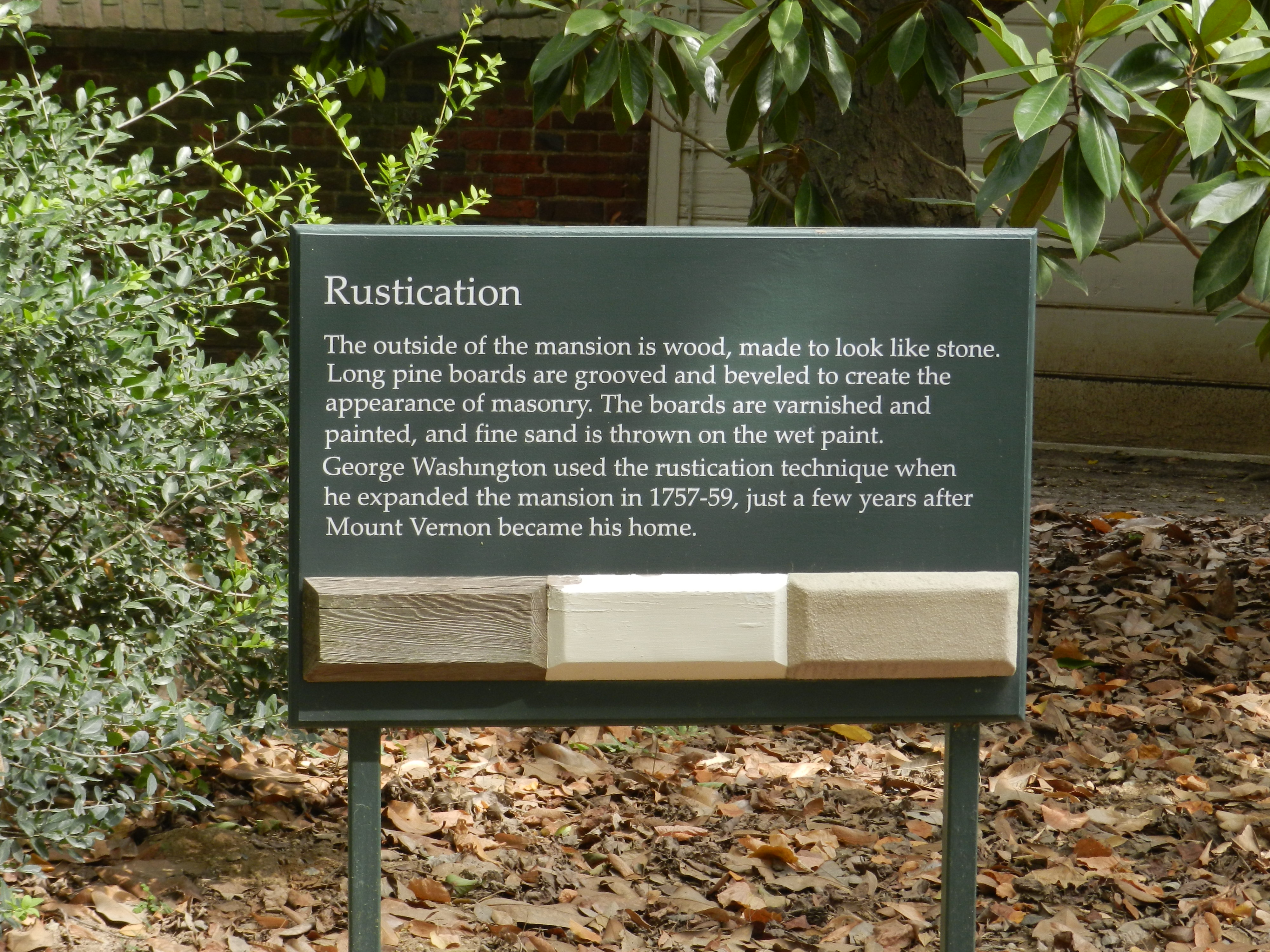
Feigned Rustication is the process of taking wood siding — carving/shaping it so that it looks like a series of rusticated stones, priming and painting it, and then when the paint is still wet covering it with fine sand so that the board takes on the color/shape/texture of stone.
Rustication Process as shown in stages on a sign out on the grounds of Mount Vernon. (Click to enlarge)
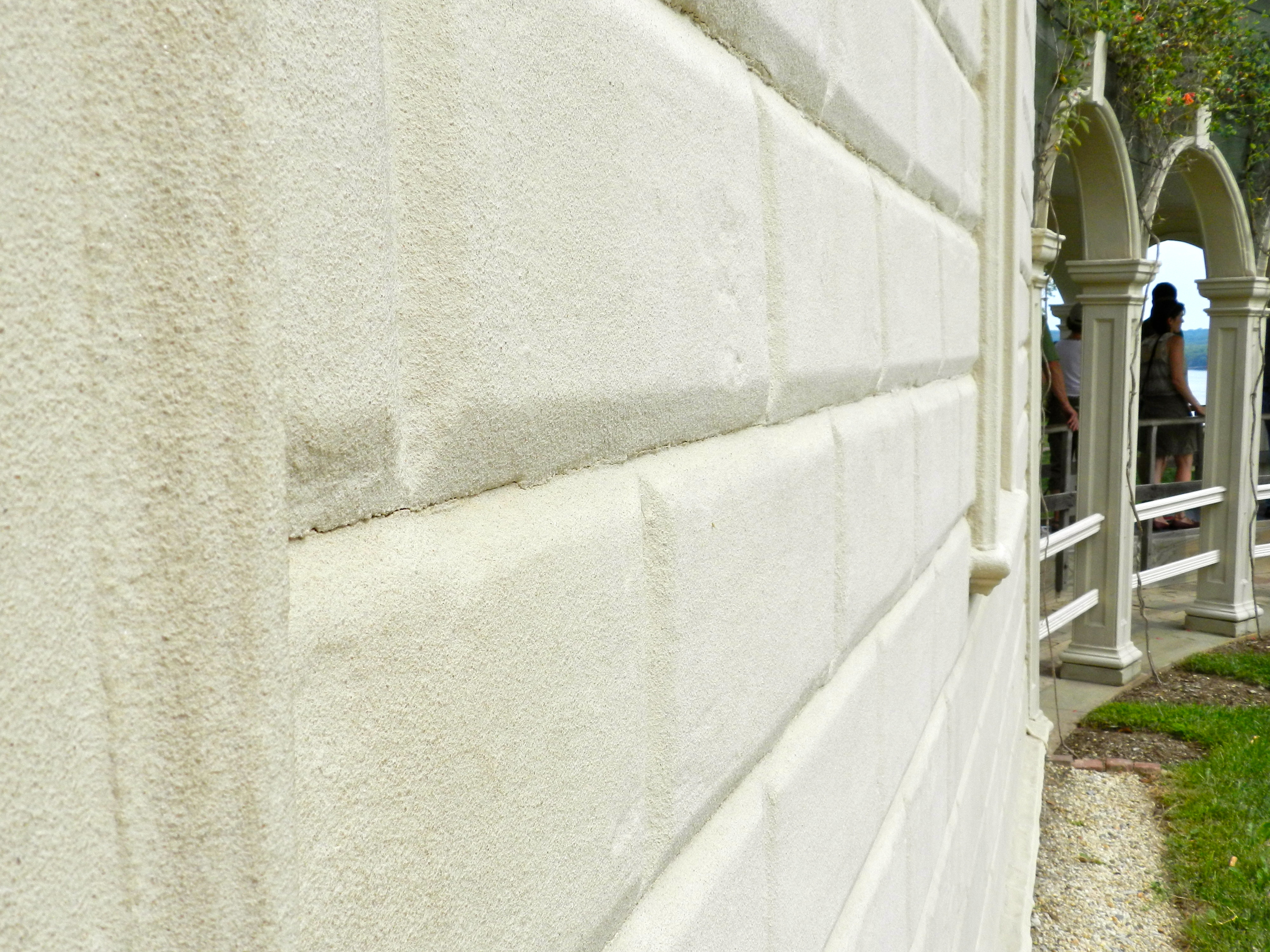
Here is a close up view of this technique applied to the exterior siding and trim:
Close up detail of Rustication
While not alchemy, this technique got the job done and from a distance it’s hard to tell the building is not made from stone until you get up close — and even then you have to know what you are looking at.
The Rustication lets the home look like as if it is made of stone
So while George and Martha Washington were generally quite wealthy during their time, they did make decisions that weighed materials vs. appearance vs. cost much the same way we do in our own homes today and stretched the dollar as much as they could. As you can see in the picture below, for secondary buildings they only applied this technique to the fronts of the buildings — around the corner you can see the siding reverts back to a nice beaded clapboard detail. You can also see some other more common faux finishes like artificial grain applied to some doors in the home — to make them look like expensive mahogany. This was a fairly common practice and not looked down upon the way some readers may be interpreting this.
Note the transition from Rustication back to beaded claps on the side of this secondary building
Now that you’ve seen how we can transform wood into stone — were you fooled by the illusion? Are you going to work some similar alchemy on your own home’s exterior?
I highly recommend visiting Mount Vernon if you are in the Northern VA/Washington D.C. Area. You can find out more about this historic home, museum and grounds here.
In your travels if you find some other examples of Feigned Rustication, let me know here on the blog. (Another famous place with this treatment is Monticello also in Virgina)
A Joiner's Guide To Traditional Woodworking and Preservation





 Rainford Restorations