The Shutters of Old Quebec

As a Joiner and a Preservation carpenter I always enjoy studying interesting architectural details. On a recent trip to Old Quebec I found a lot of interesting French influenced shutters that I wanted to share with you.

The Frontenac Hotel and Old Quebec

Living and working in New England and the mid-Atlantic the majority of what I come across are English, Dutch and some German inspired shutters.

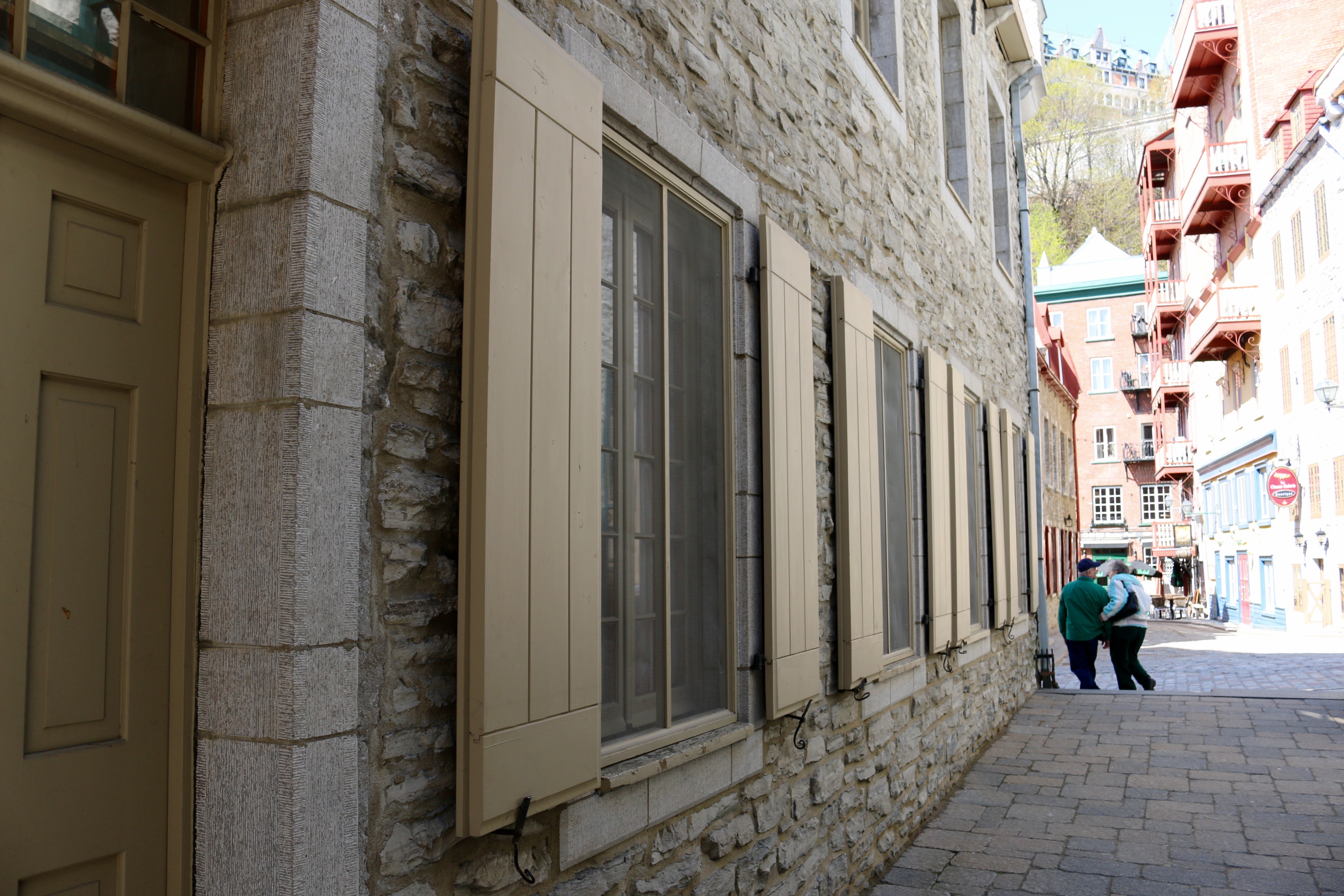
In Old Quebec many of the buildings date to the 17th and 18th centuries. Shown below is a great example of a board and batten (or sometimes called a ‘ledge’) shutter with ‘Z’ bracing. I like how the ‘Z’ brace was properly let into the batten (horizontal member). What was unusual to my eye was how the the nails used to clinch the boards to the batten were relatively large nails and relatively few in number compared to English versions of this type of shutter.
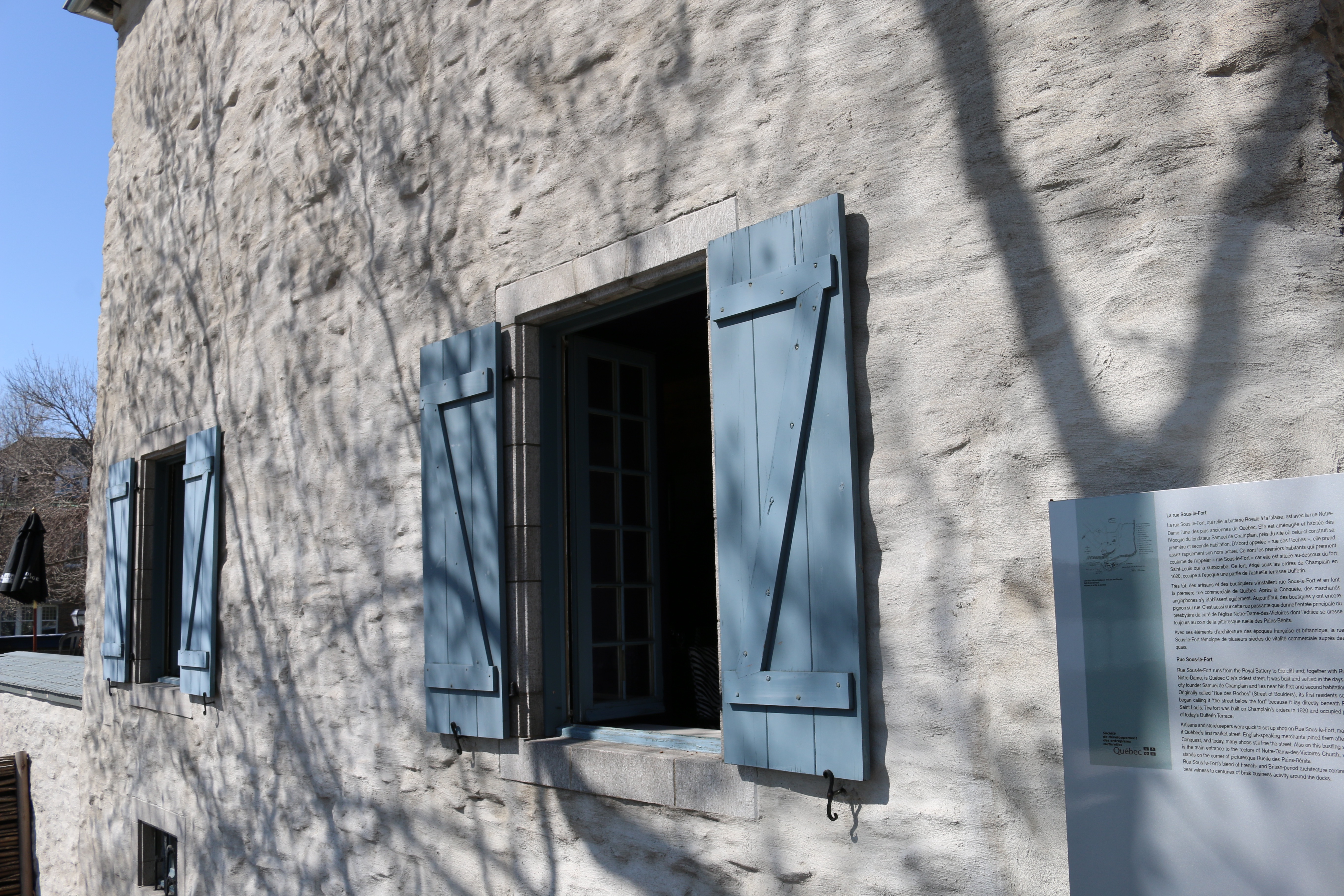
Z-braced Batten Shutter

Wandering around Place Royale Square you can visit many beautiful and historic buildings. The earlier 17th century French buildings had smaller panes in the windows and the 18th century English buildings had larger windows with larger panes as technology advanced and styles changed over time.

Smaller window panes are from earlier French buildings, the larger panes are from later English buildings (Place Royale Square -- Quebec)
Smaller window panes are from earlier French buildings, the larger panes are from later English buildings (Place Royale Square — Quebec)

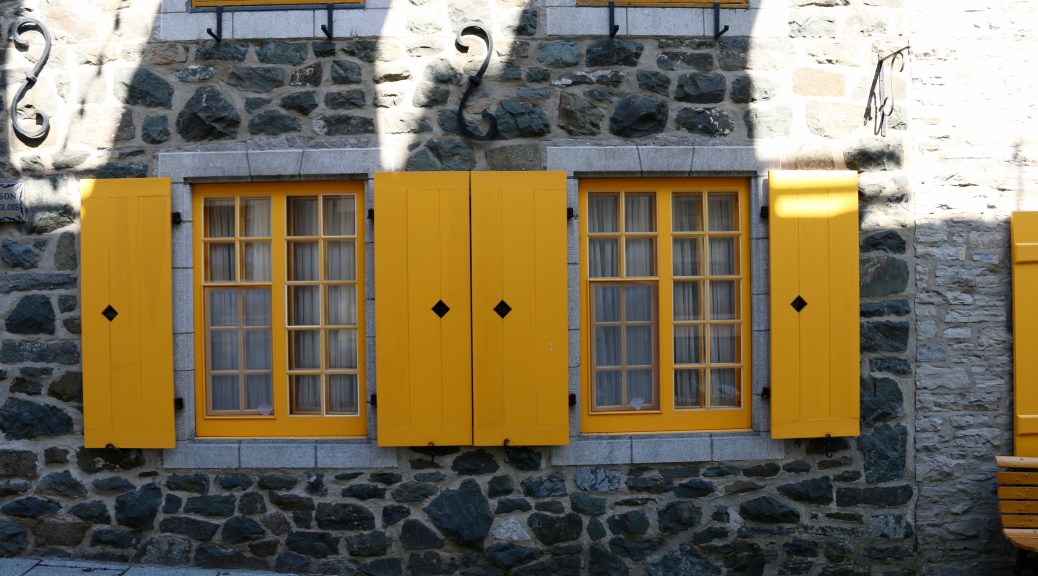
The doors, windows and trim on many of these buildings are painted in vibrant colors.  The tour guide for our group said many of these colors were reminders of the villages they came from in France where towns often had many buildings painted in the same color to help aid ships navigating — by the color they could tell what town it was. (I have nothing to back that statement other than her word, but interesting if true)
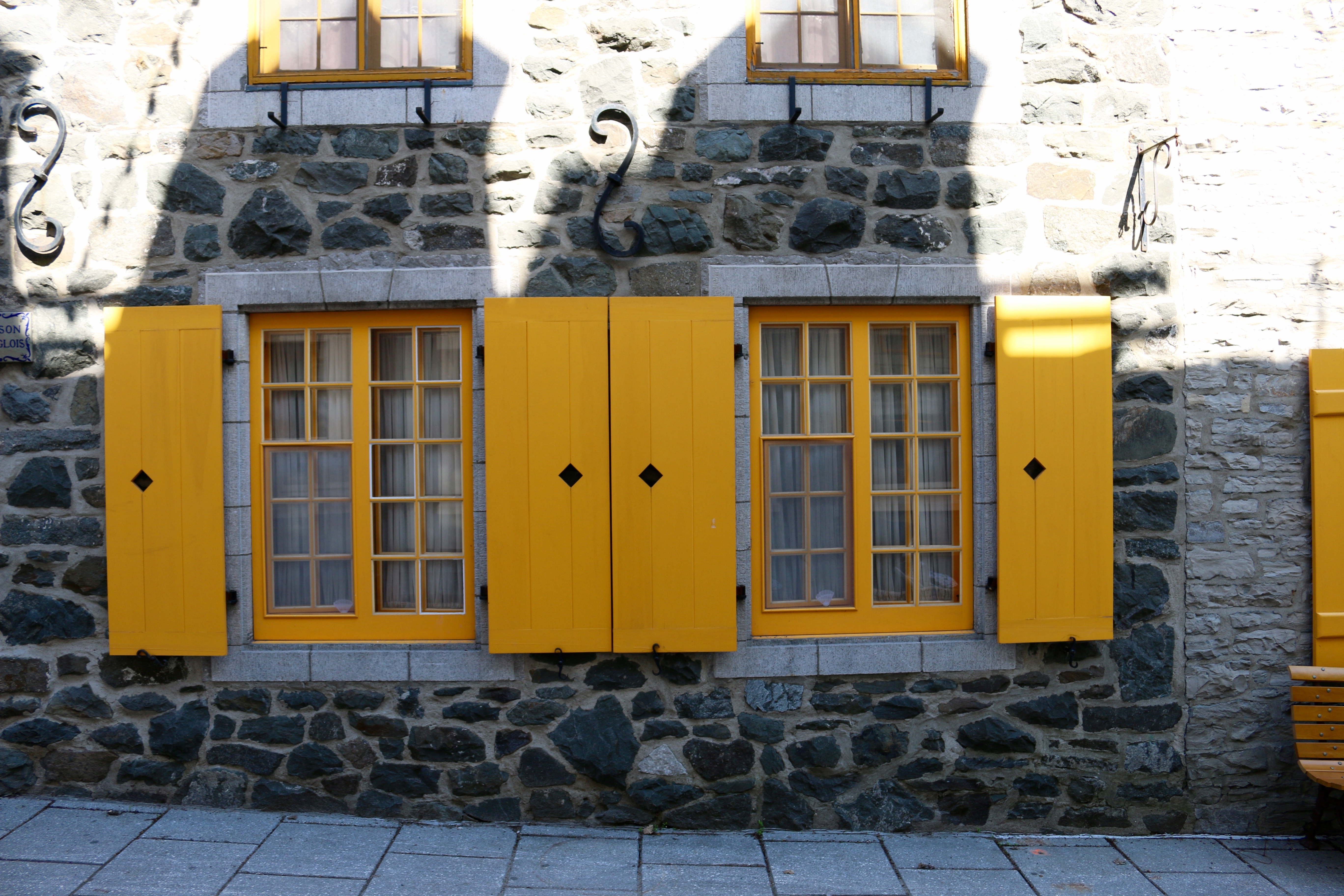
Breadboard ends and decorative cutouts

These beautiful bright yellow shutters had nice breadboard ends and decorative cutouts to dress up the otherwise relatively plain look and let in a bit of light so occupants could tell if it was day or night from inside the building.
Breadboard ends
Breadboard ends

On this building the shutters also sport breadboard ends to help keep the vertical boards flat. These shutters were made from particularly thick stock and the outer edges are also fielded a bit which adds a nice detail and likely helps the shutter sit flush when closed.
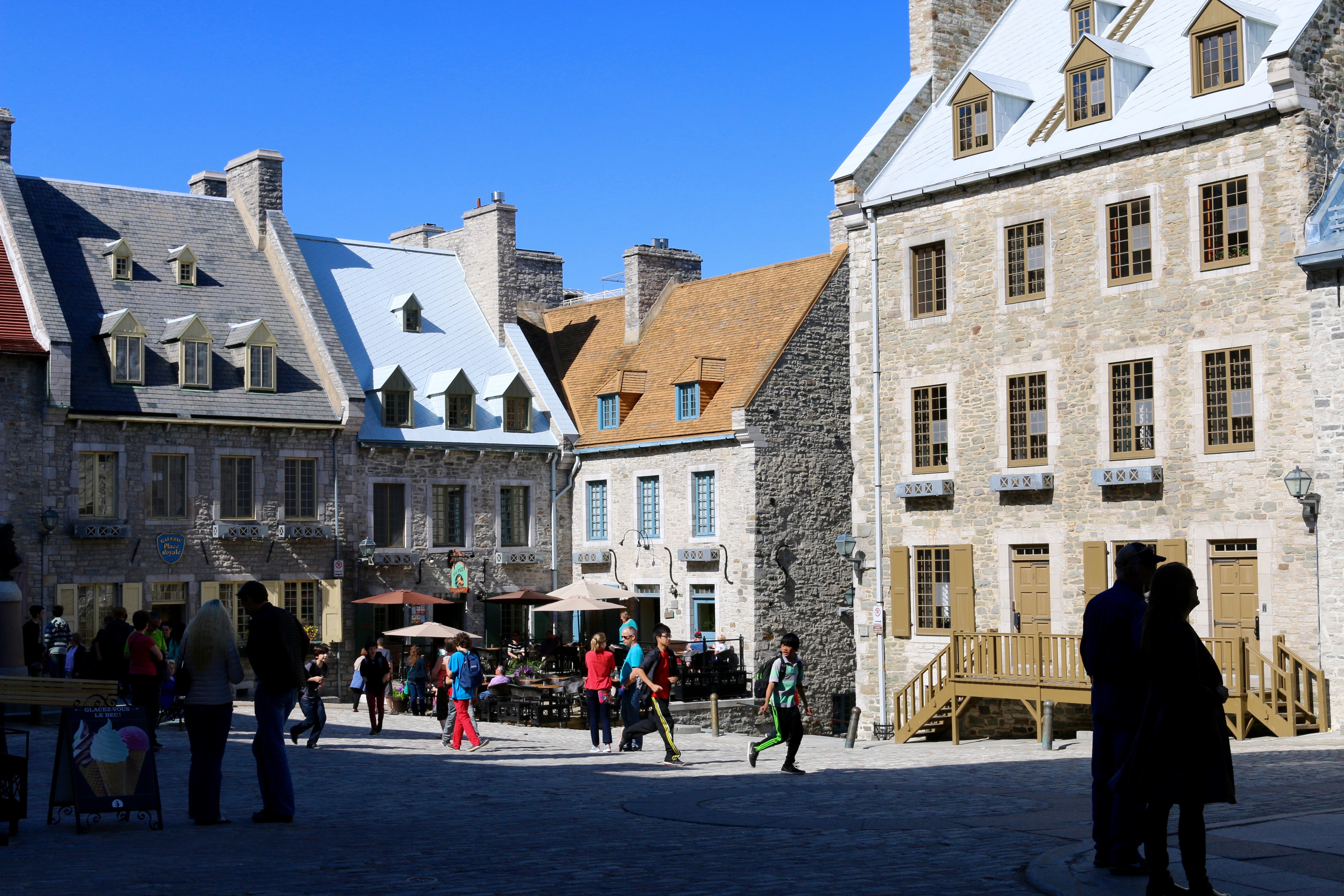
Place Royale Square -- Quebec
Place Royale Square — Quebec

Wandering around Place Royale Square there were many great buildings to admire including some with traditional raised panels but we’ll skip those English style shutters since we’ve talked about them before in other posts.
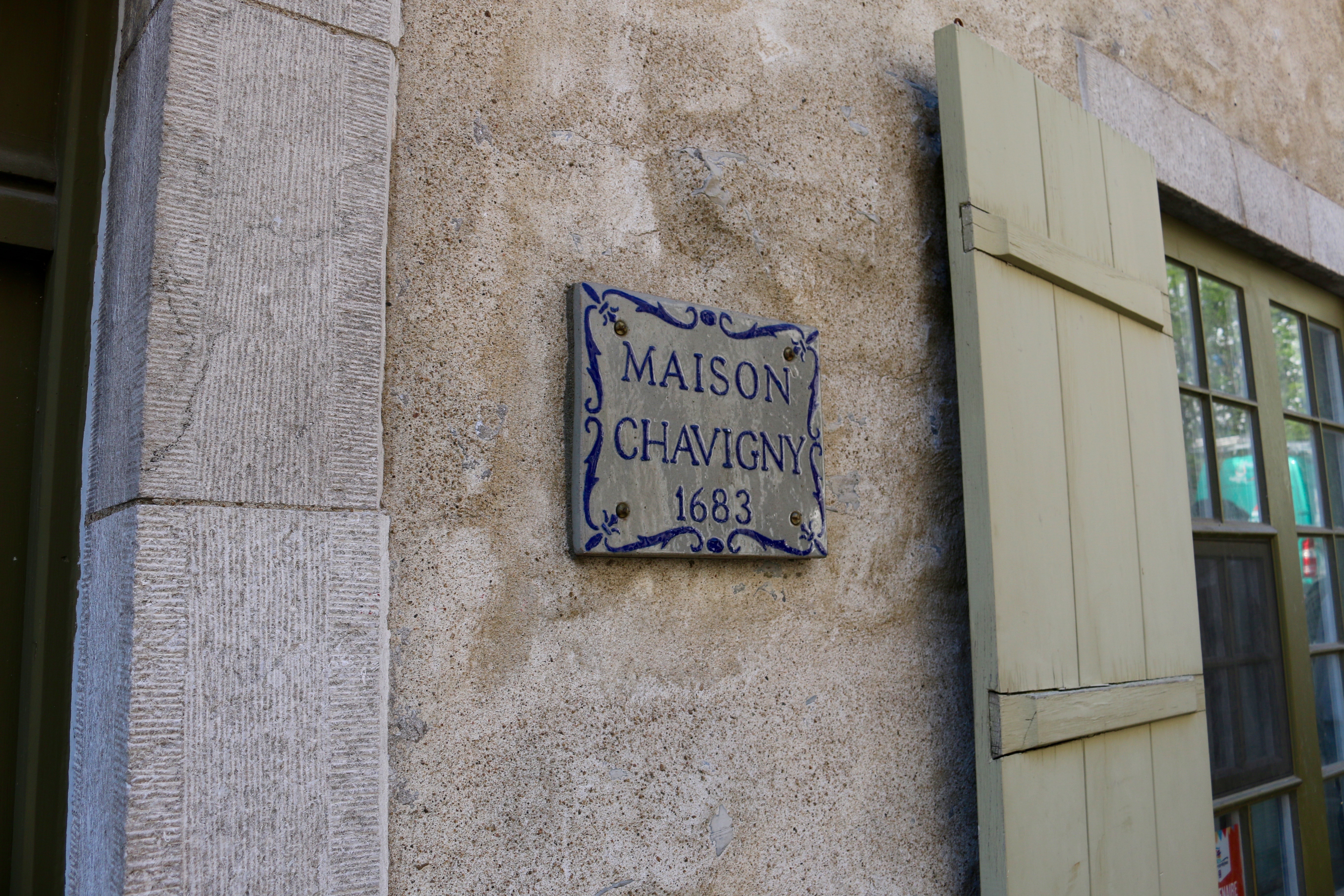
Many of these buildings date back to the 17th century

Here is were things really started to get interesting for me. The building shown here has tapered sliding dovetail battens to help keep the boards flat. A shutter is exposed to extreme conditions of sunlight, heat, weather, cold etc which will cause the boards to move a lot with the seasonal changes. If you look carefully at the photo above you can see how the sliding dovetail allows for that seasonal movement without any metal hardware to secure the batten to the boards.
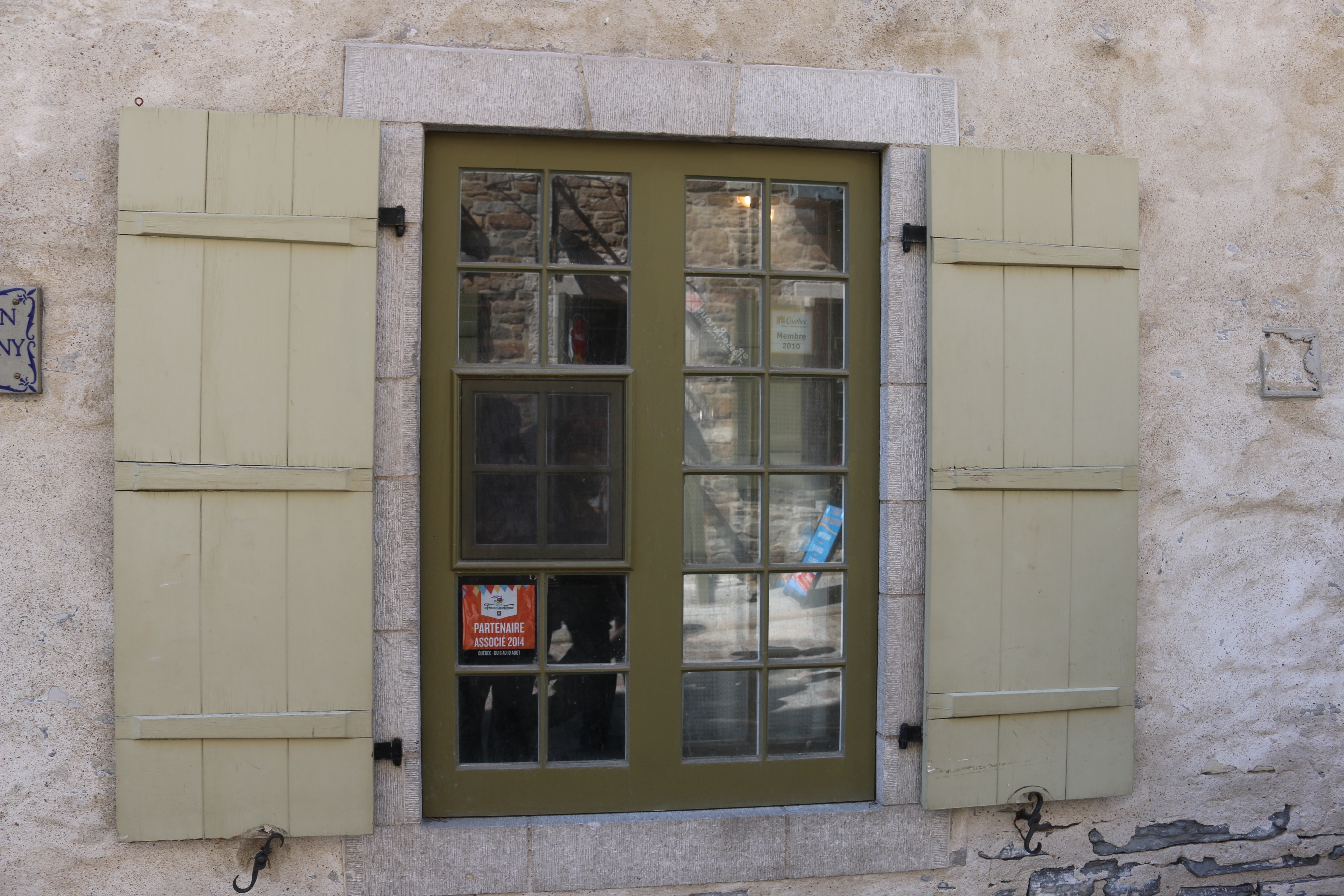
Tapered dovetailed battens

Also note how the middle batten is tapered the opposite way compared to the upper and lower battens. This helps keep the battens and boards flat and keeps the boards from sliding off the battens.
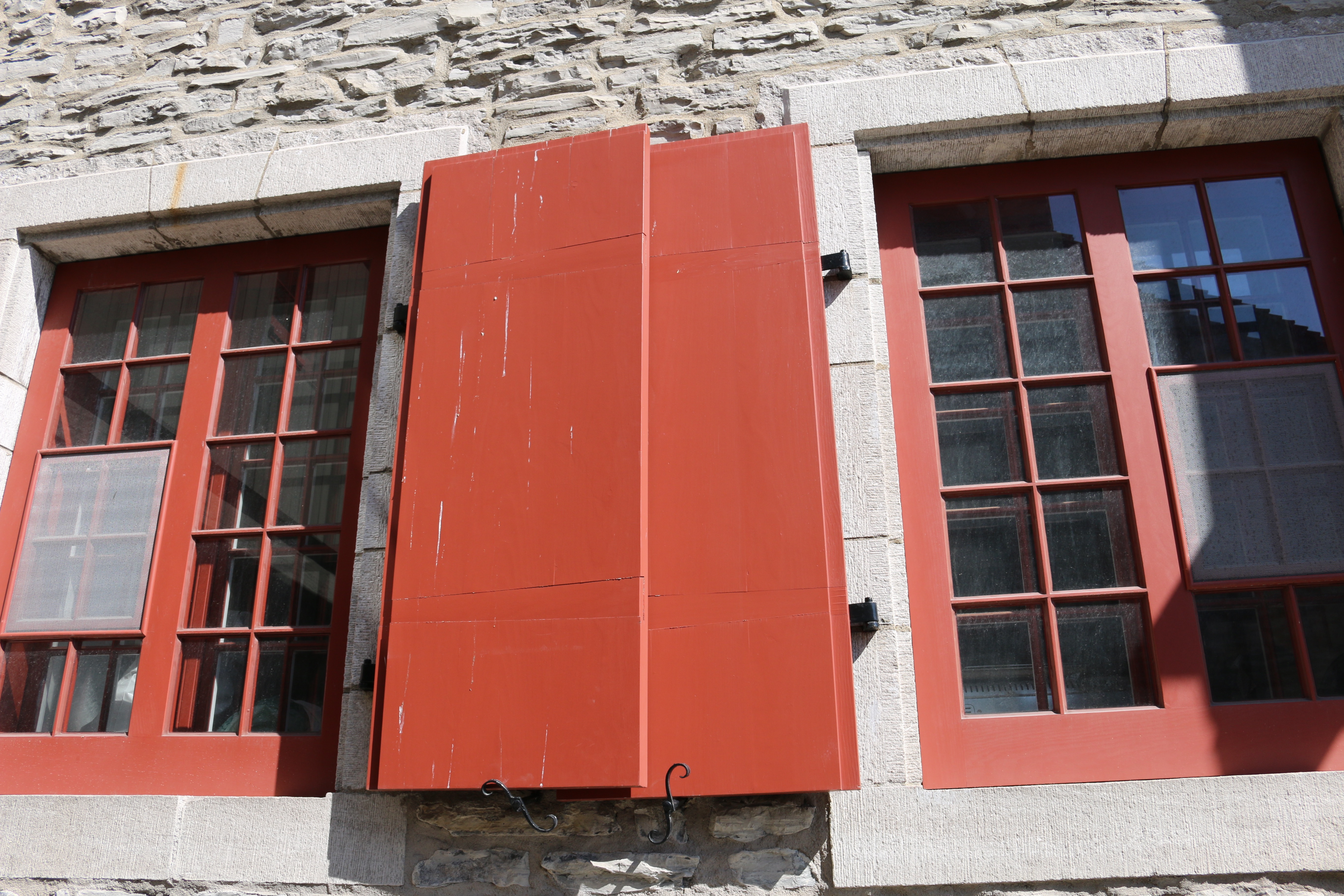
Flush tapered dovetailed battens

In another part of the city we saw the same style of tapered sliding dovetail battens that are flushed with the rest of the shutter. If you look carefully at the paint lines you can see how the battens were set into these nice thick boards.
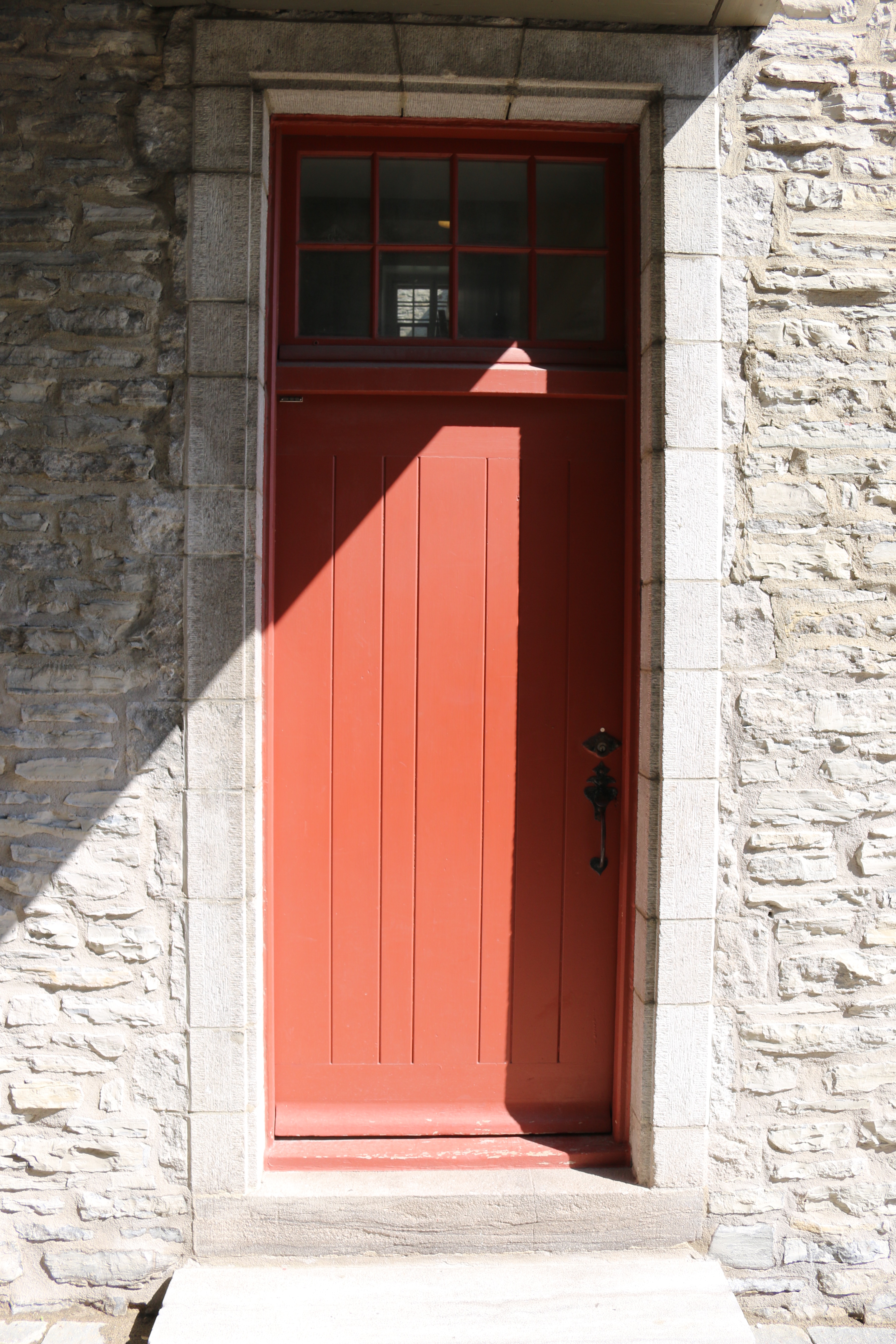
Beautiful 'bead and butt' paneled door to go with those shutters
Beautiful ‘bead and butt’ style paneled door to go with those shutters. (Rather than a bead, looks like a simple V-joint)

On that same building was a very nice butted panel door with a large transom above it that I had to share with you. Again the lines are very neat and plan, only dressed with a simple V-joint to accentuate the defect of the narrow panels meeting the rails and stiles.
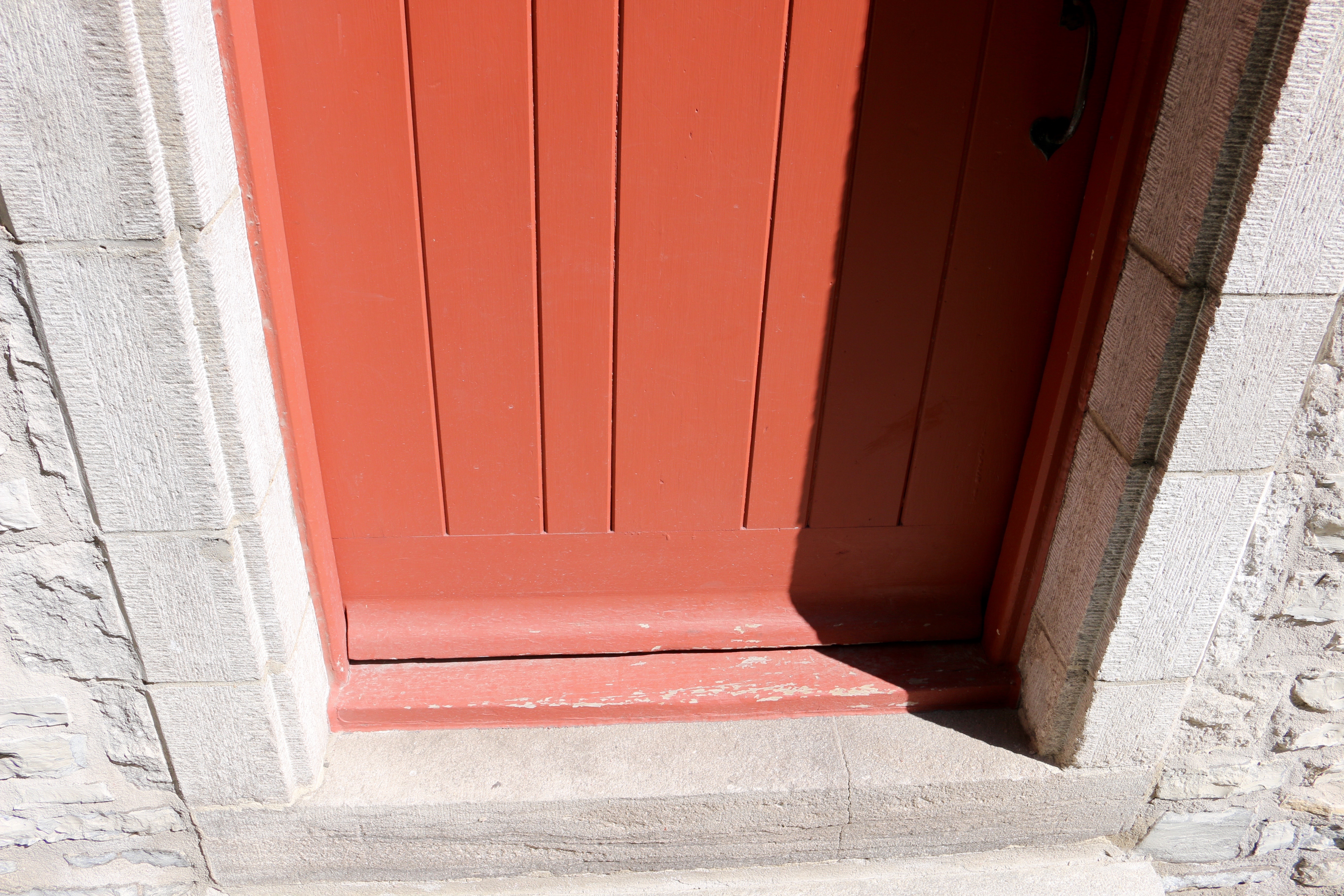
Great door detail to help keep snow from getting under the door

What really grabbed my eye was this detail on the bottom of the door that helps she snow away from the threshold during the harsh Quebec winters. This year in Boston we set local records for getting 10+ feet of snow this year. When talking to folks in Quebec they said they had over 20 feet of snow! So with larger snow piles reaching up to your door this detail presumably will help keep some of the snow from getting in.

It was great to see some architectural details that were uncommon to my area. If you live in an area with interesting shutter and door details, please share them in the comments.

Take care,
-Bill

P.S. If you want to learn more about traditional New England and Mid-Atlantic style shutters you may want to check out this earlier post here or an upcoming session of that workshop. During the course I talk about stylistic and regional variations we have here in New England, New York and Northern Virginia.
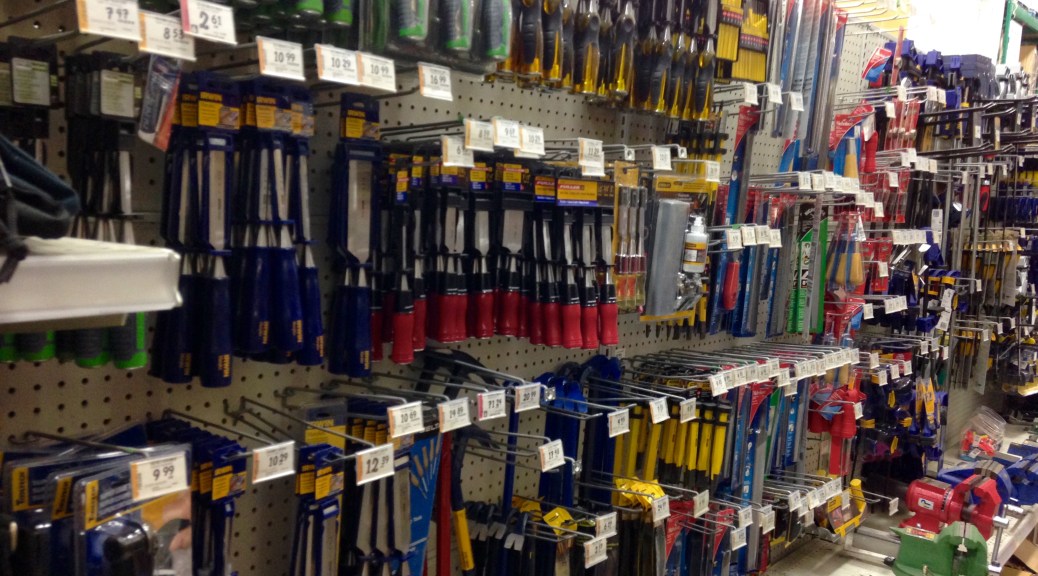
Hand Tool Shopping at Foreign Big Box Stores

While on vacation my wife and I have a few idiosyncrasies. Alyssa and I like to visit food stores we don’t have at home to see how the locals eat, try some new foods, bring home unusual condiments etc. It kind of gives us a feel for ‘could we live in this place’?

I also like to visit hardware stores and lumber yards to see what is available and popular in other parts of the world.  We were recently in Quebec Canada for the Early American Industries Association (eaiainfo.org) Annual Meeting. The meeting was enjoyable as they always are — if you are not familiar with that group but love old tools and methods of work I encourage you to check out their website — don’t worry, I’ll wait for you to check out the site — I built out  their webpage so you’ll see me over there as well. 😉

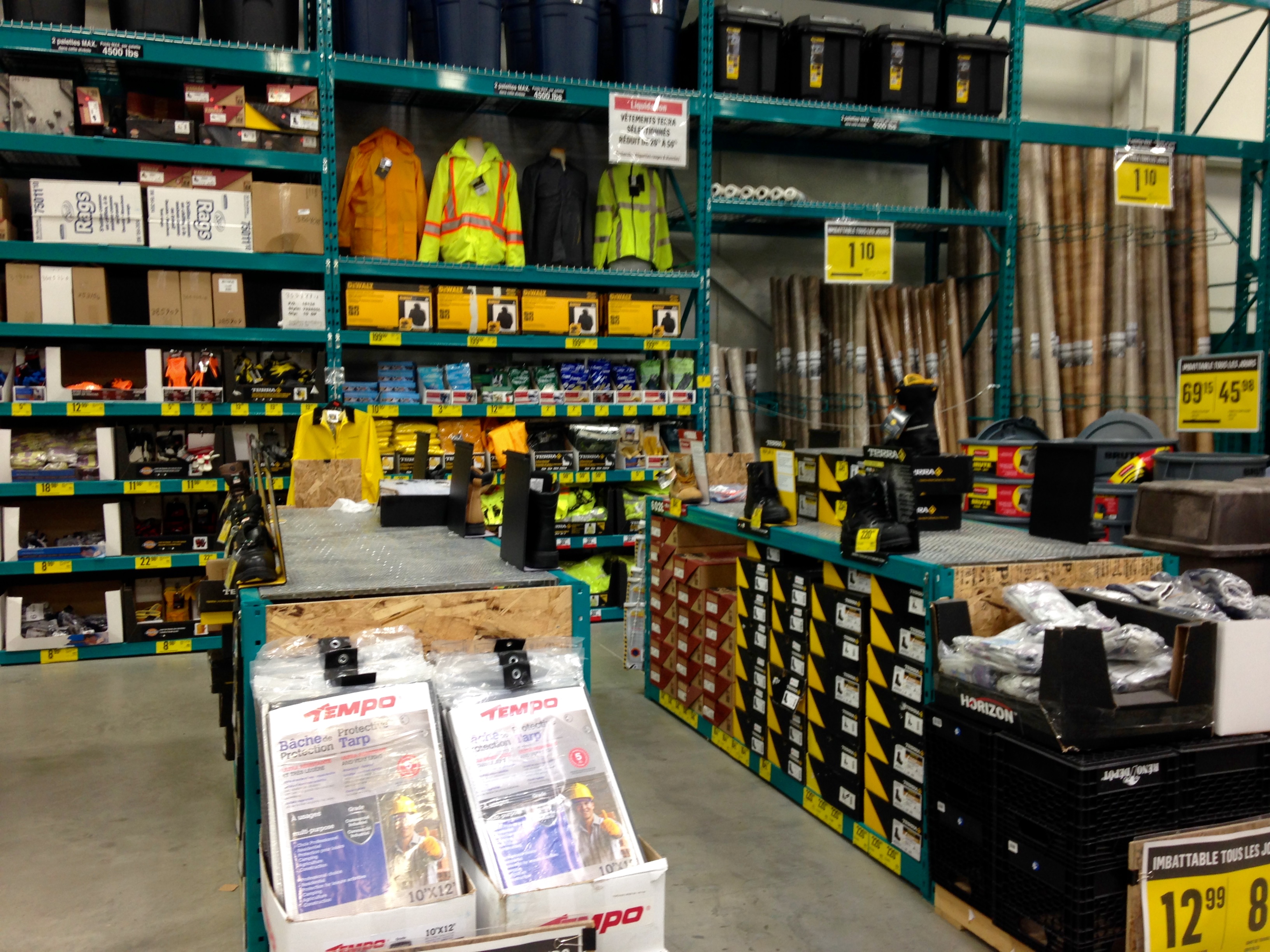
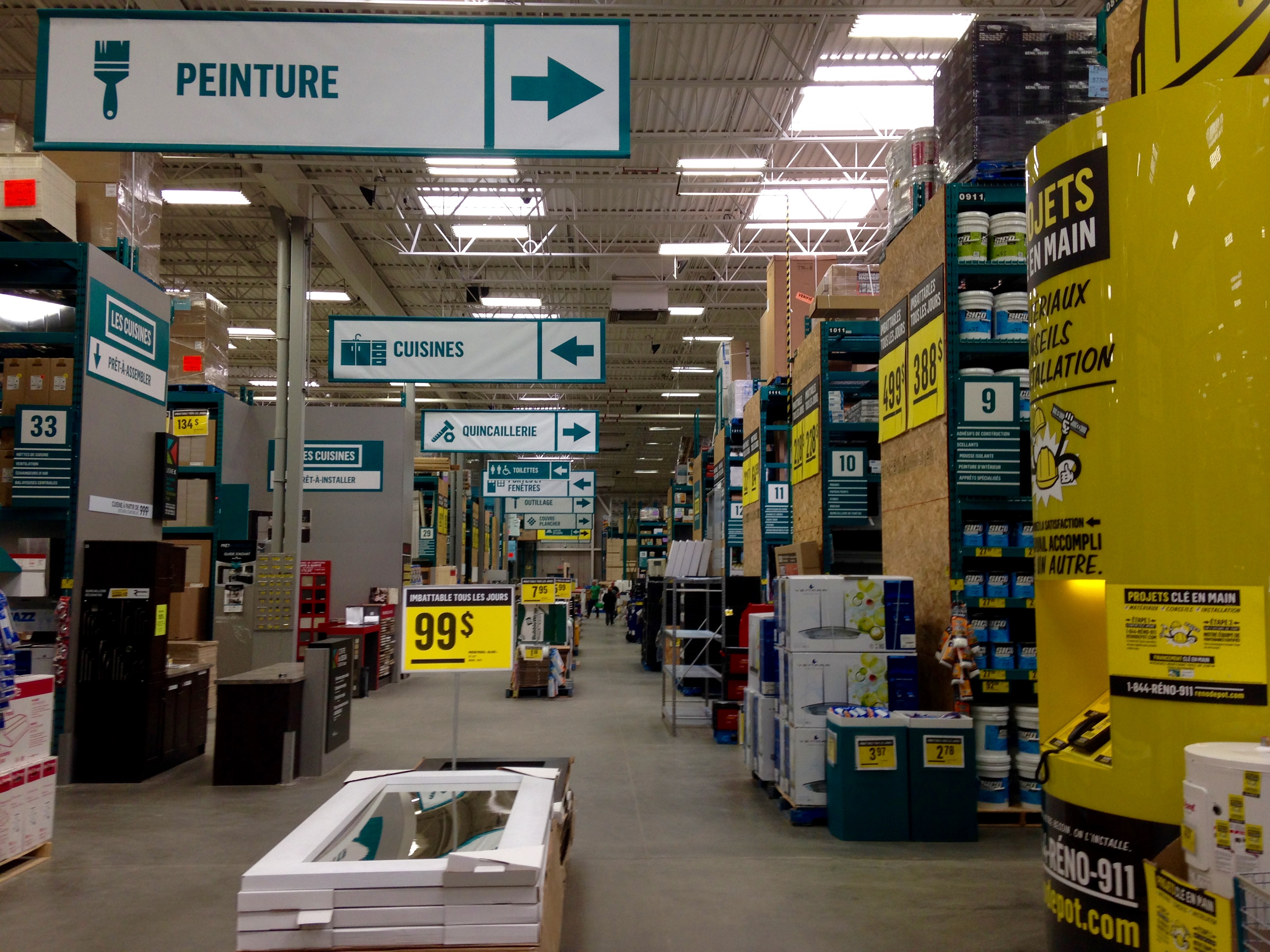
Main Aisle inside RenoDepot

While in Quebec we went to ‘RenoDepot‘. At first glance it reminded me a lot of Home Depot and Lowes — many of the same major manufacturers, same power tools etc.– but with a nicer blue-green color on everything.  It was a little smaller in scale and reminded me a bit of what Rickles/Pergament/Grossmans used to be like before they were all driven out of business — a big store but limited selection of brands and supplies. I made a bee-line for the hand tool section.

Hand Tools at RenoDepot
Hand Tools at RenoDepo

I was happy to see a larger hand tool section compared to the American big box renovation stores I was used to. A larger selection of chisels (still not fine chisels), files etc. Stanley seemed to have a larger presence on the shelves of stores we visited followed by Fuller and the usual generic/store branded imported brands. There seemed to be more items made in Canada and North America in general, but not drastically different from home.

Rona Exterior
Rona Exterior

I also searched online in the area and checked out a RONA home store. Apparently RONA owns Reno-Depot and it seems like a RONA is the larger Super-Center type store with a wider selection.

Hand Tools at Rona
Hand Tools at Rona

Again I went straight to the hand tools section. I was much happier with the selection at Rona. 5+ different makes of chisel including the BlueChip style Irwin/Marples/Record chisels which are the first tier of big box chisels I’d consider — I learned on them as a student and they were always a good value for a lower end chisel and work great out in the field. (The website showed the old Record ones at a great price which is why I went there, but on the rack was some of the early 2000s Irwin flavor chisel with round handle and the newer style with the stumpier handle). The price was right and I bought 2 of each style in odd sizes I didn’t have to round out my travel tool roll and will compare them to my old English made Marples Blue chip chisels in a future post. I heard the metal quality was not as good in these later Asian made lines so we’ll put that to the test.

What made me really happy with the hand tool aisle here was the quantity and variety given this was not a specialty woodworking store. There were a few low-end Stanley bench planes (Still better than the Buck Brothers or generic planes at similar stores near me), far greater variety of Nicholson and similar files and then lots of things I wish local big box stores still stocked — card files, sharpening stones and oil (not hyped up cheap diamond plates, but traditional oil stones etc), Stanley spoke shaves, card scrapers, record woodworking vises and that sort of thing.

Even safety gear and boots

The other neat thing was to see a selection of safety gear, working gear (jackets, overalls etc), work boots etc for the carpenter on the run.

It was clear that the Canadian renovation market still made use of human powered woodworking.  Sure these stores still had all the latest cordless power tools as well, but at least craftsmen and handymen and women in Quebec had the option of filling their tool-boxes with reasonably quality hand or power tools. At my local big box stores the brand name hand tools have been increasingly swapped out for cheaper and cheaper brands, smaller selection and replacement by cheap gimmicky power tools.

As energy becomes increasingly expensive, folks spend their limited funds on higher quality materials and results and green/conservation movements help put pressure on the disposable society mentality of the 20th century I hope the current hand tool renaissance can spill back over into mainstream carpentry/renovation. Only time and our efforts to spread the word will tell.

Take care,
-Bill

P.S. I also checked out a BMR Lumber (great name as those are also my initials) and a Canac store with similar findings. I was hoping to find a store that stocked a lot of Bahco tools — I still want to try some Bahco files but never see them offered in the US. I love my Bahco Superior saws, card scrapers and paint scrapers.  If you find other regional chains that value and sell quality hand tools, please share it in the comments below.

Stumped?

Woodworkers often pride themselves on their knowledge of trees and wood. Most folks simply go to the lumber yard or big box store to pick up wood that has been processed by others. Some have felled their own trees and dried their own wood. But for many once the body of the tree hits the ground they are left with a large unsightly stump.

What do you do with your larger stumps?

Small stumps can be dug out by hand. Larger stumps can be left to rot (or accelerated via chemicals or bacteria), burned out in a controlled burn, ground down below the surface with a large stump grinder, blown out with explosives or dug out by hand or machine.

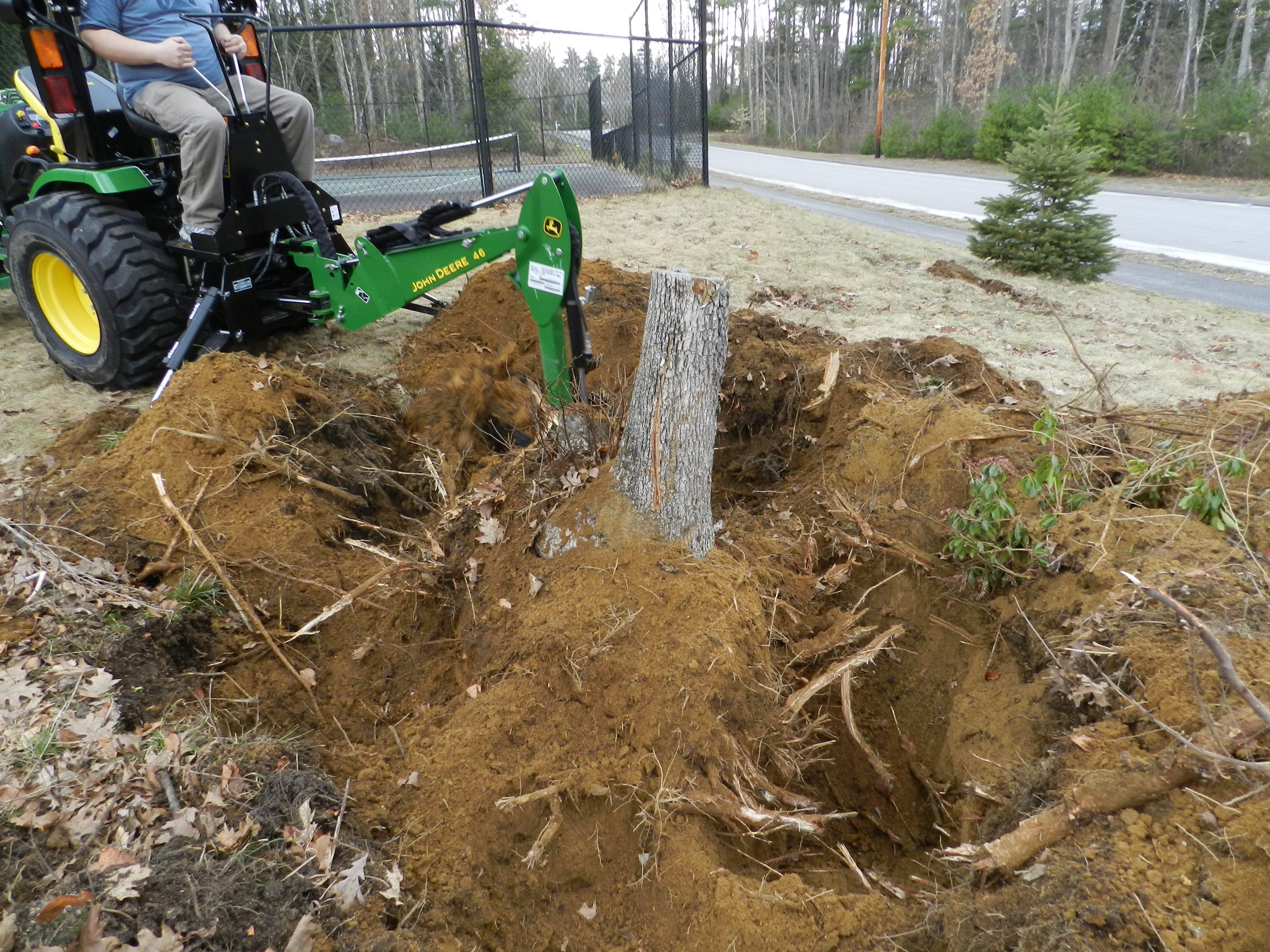
Digging around the root ball

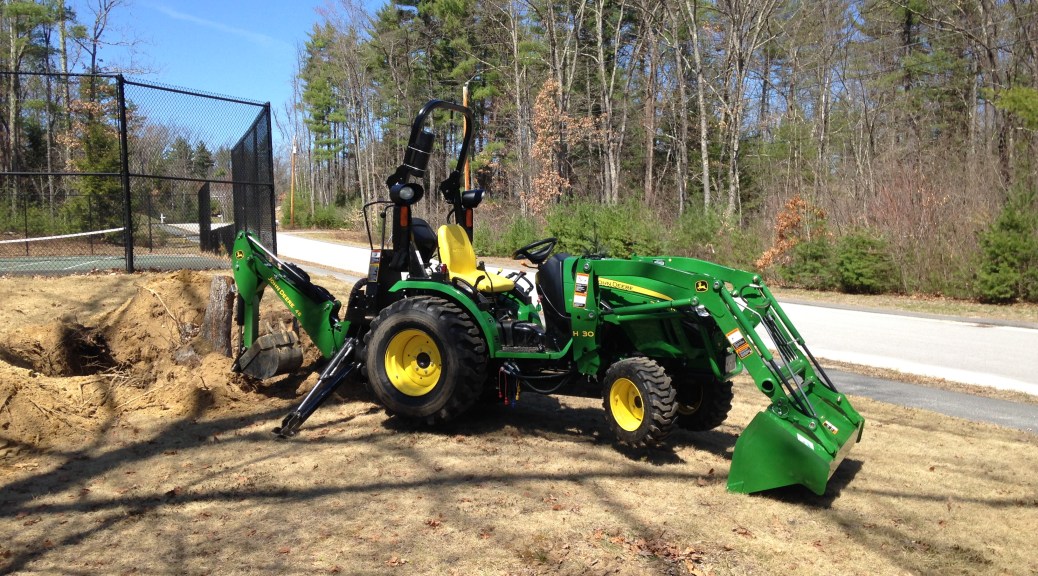
I needed to clear some of my yard for an upcoming barn build and after trying to get out some larger stumps by hand last year I decided the best avenue for me would be to enlist the help of a tractor with a backhoe.  If you don’t have a tractor you may have a neighbor, local machine rental store or landscaping company that can help you out.  I prefer this method of removing a stump by digging it out as I know when it’s completely out I won’t have sink holes or obstacles during future digging at this location.

How do I remove a large stump?

Testing to see if the root ball is free

I start by digging around the base of the stump to see where the major roots are. If they are too big for the back-hoe to directly rip through I will move further out away from the stump until I can rip them out with the bucket. I’ll work my way around the root ball until I can knock it over with the backhoe.

Root ball
Root ball

If the stump is still too big/heavy I’ll spray down the stump with water to remove dirt, grit and weight. (Thank you Dad for that idea as it saved the day on some of the real big stumps that maxed out what the tractor could lift and pull).  If the watering doesn’t work you can let it dry out a bit and cut the freed stump into more manageable pieces. (Make sure to take all necessary safety precautions when attempting that)

Water your stump...
Water your stump…

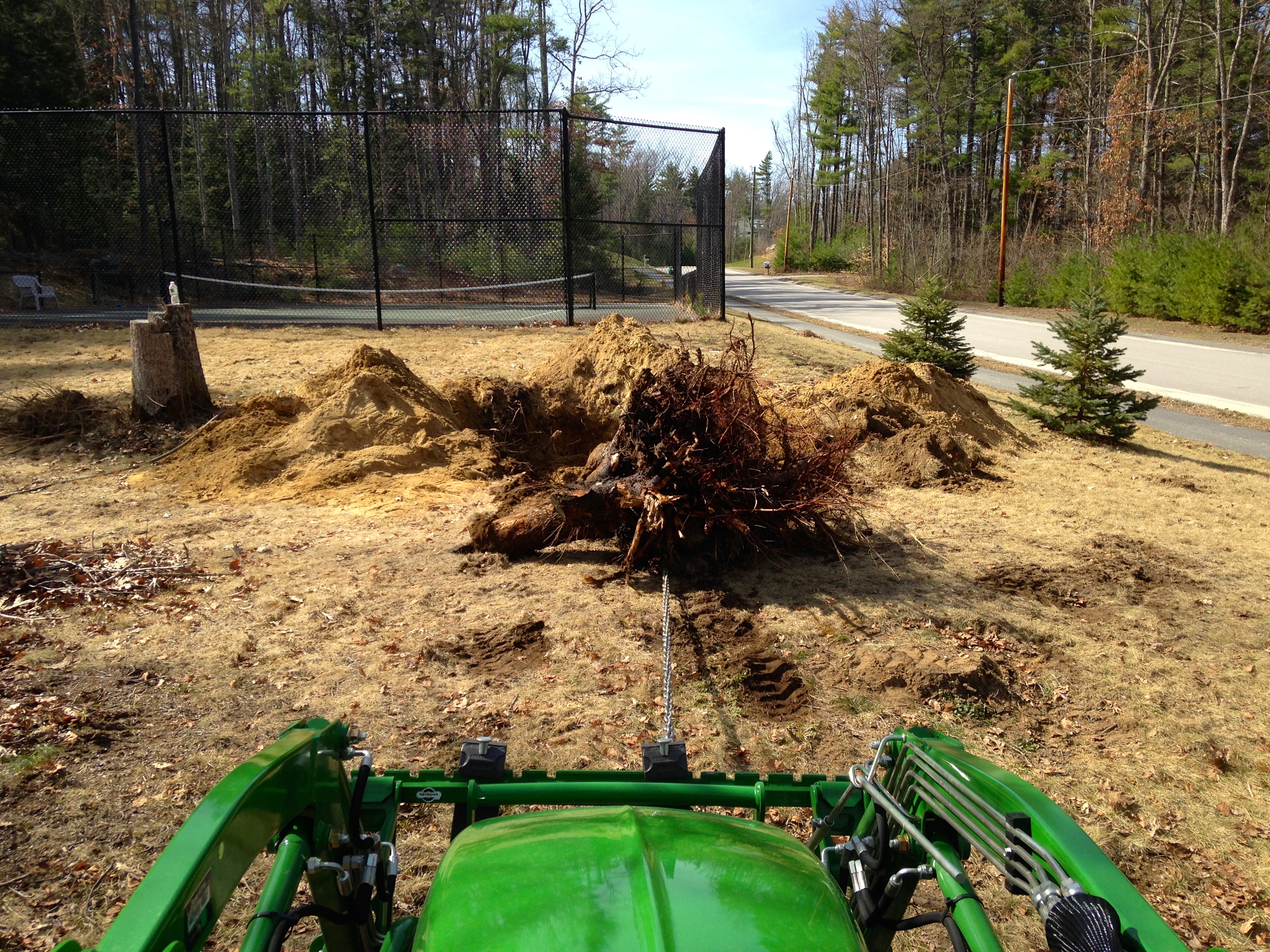
Next up, I got out my hefty 3/8″ thick logging chain and secured it to the stump. The trick for me was to get it around the roots in such a way that pulling up makes the stump tumble end over end and thus make its way out of the hole with minimal friction. If I tried to just drag it up on its own the friction makes it almost impossible to get out.

Pulling the stump with a logging chain

Each time a stump clears the pit it’s a mini celebration as even with a big machine stump removal can be a lot of work.

What do you do with the stump once you have it out of the ground?

Some town transfer stations will accept them and grind them up. Some folks will let them dry out and cut them up to burn as part of a bonfire. A last resort is hiring someone to come take them away — this option still a lot cheaper than paying for digging it out and grinding estimates were coming in at $100/stump so things can add up fast. I don’t recommend re-burying them elsewhere as they take a LONG time to rot on their own and buried stumps often lead to sink holes.

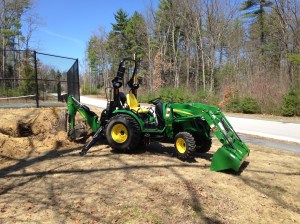
I know I flew through the above steps in this post, so if you’d like to see a video of some of these techniques in action in the removal of another stump, please check out my new YouTube video which you can watch by clicking the link here or by clicking on the image of the tractor below.

Tractor with back-hoe ready to go.

Now it’s time to be back out into the yard — there are still a LOT of sizable stumps left to clear out….

Take care,
-Bill