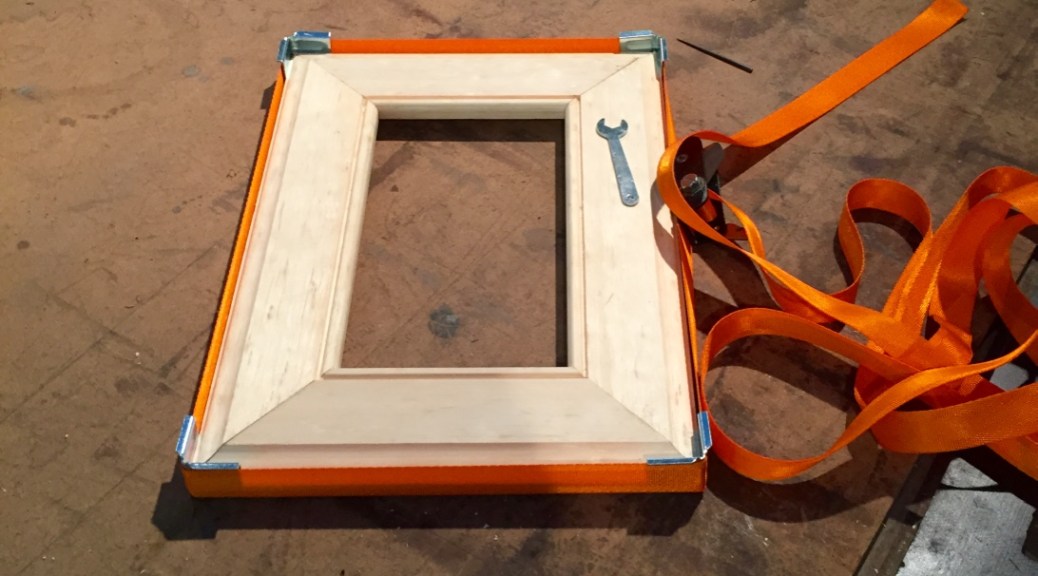
From Molding To Picture Frame

It’s always fun to travel back in time. This past weekend I traveled back to the 19th century as I participated in the Early American Industries Association Historic Trades Sampler Program at Eastfield Village.

On Saturday I taught a workshop on the use of traditional molding planes to make a picture frame.  In this post I’ll cover some of the highlights of the course and share some details for folks who might want to give it a try at home.
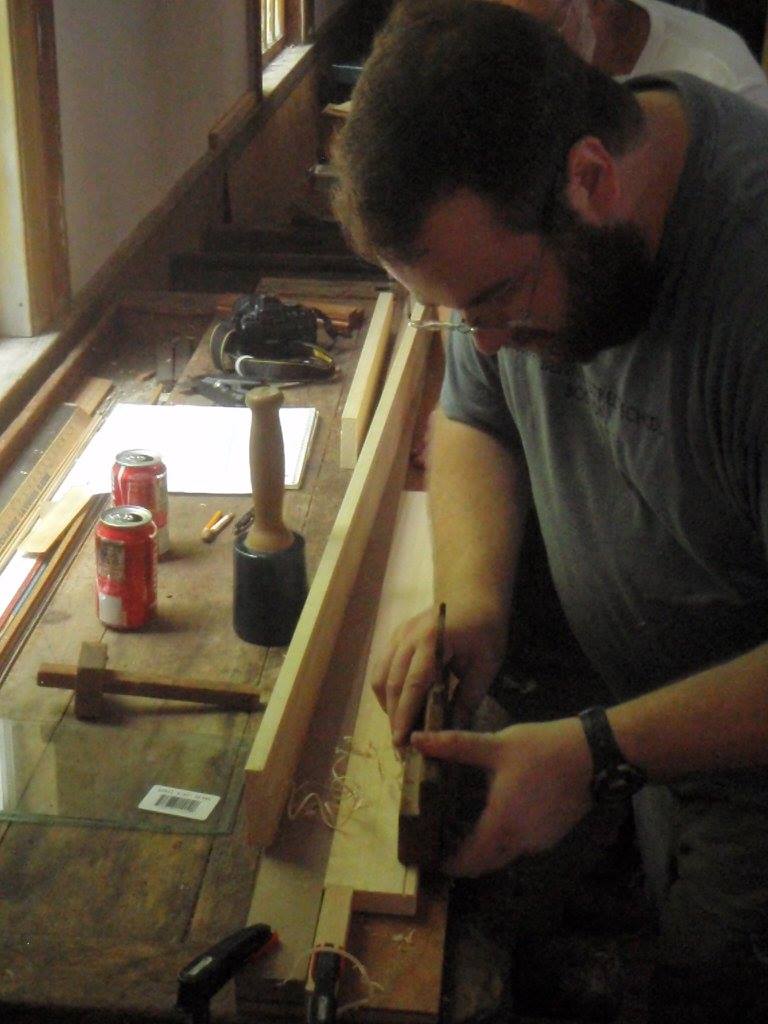
Demonstrating the use of a molding plane on a sticking board. (Photo by Carol Coutinho)

One of the joys of an event at Eastfield Village is to work by natural light in a beautiful and immersive setting — in this case Don Carpentier’s village of carefully moved and restored historic buildings — taverns, trade shops, homes and outbuildings.
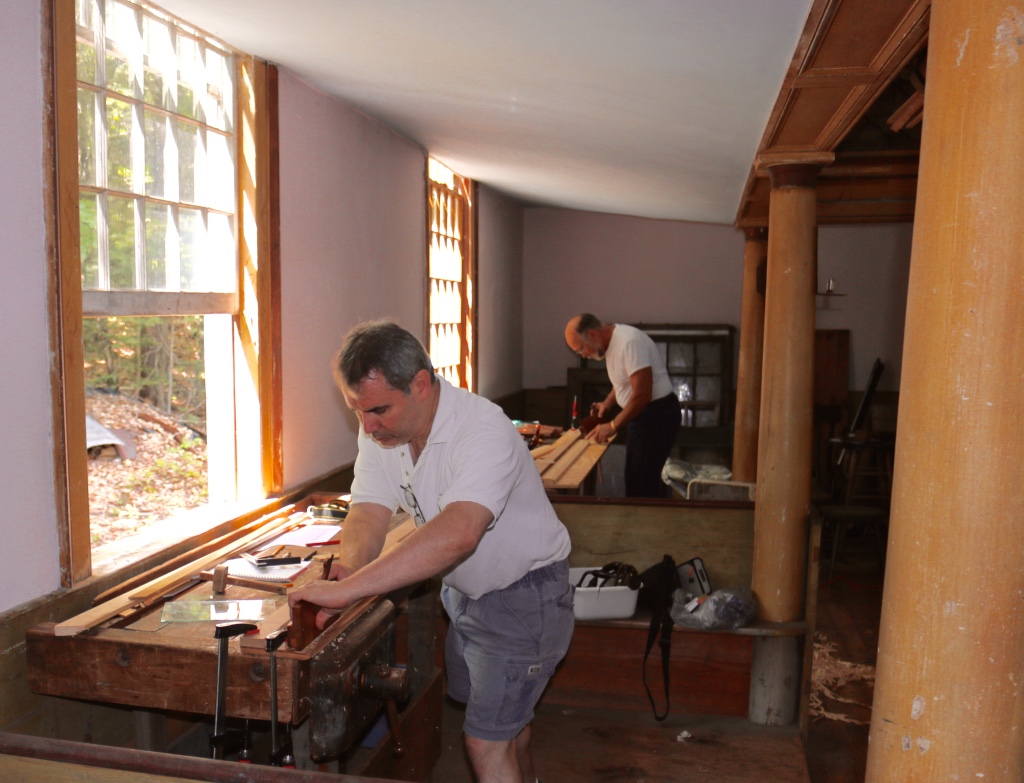
Brian and Tom working with the molding planes.

After an orientation to the tools and classroom setup I demonstrated how to evaluate a molding plane and how to tune up an iron.  We also talked about the wide variety of profiles that can be created from even a very modest set of molding planes. The profiles below can be created using a beading plane, a pair of hollows and rounds (say #8) and a rabbet plane.
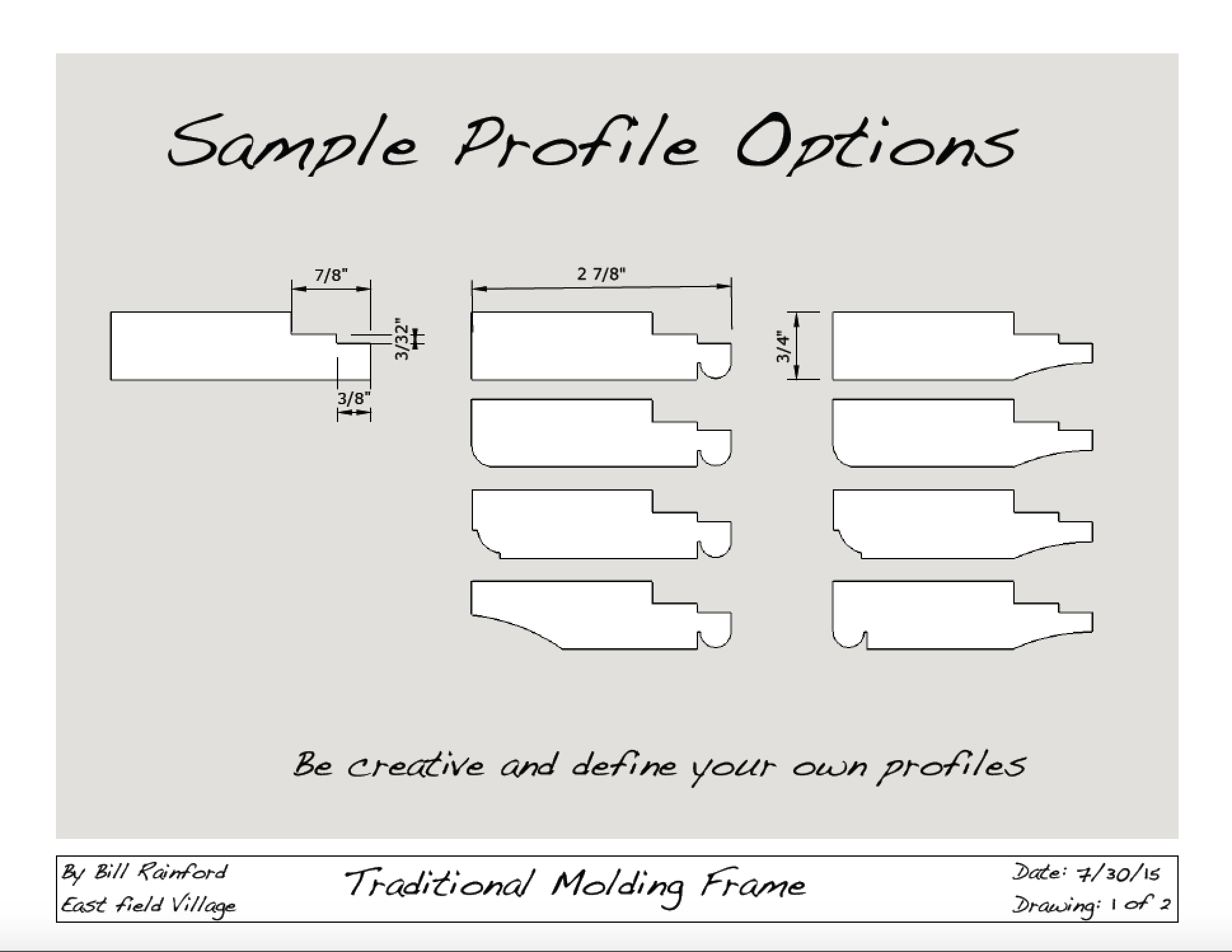
A sampling of how a few simple profiles can generate a large variety of frames.

And with hollows and rounds the profiles are only limited by your imagination.

Students tuned up their planes, squared up their stock, and tested their plane setup on some scrap and set about making the stepped rabbet needed to hold the glass in place and the plywood back.  The plywood back is carefully screwed in place and helps created a very solid/rigid frame compared to the floating backs held in by stamped metal retainers we see on many modern store bought frames. The  long piece of plywood with an MDF fence and screws at the end to secure the stock is called a ‘sticking board’ and can be as long or as short as your project stock requires.
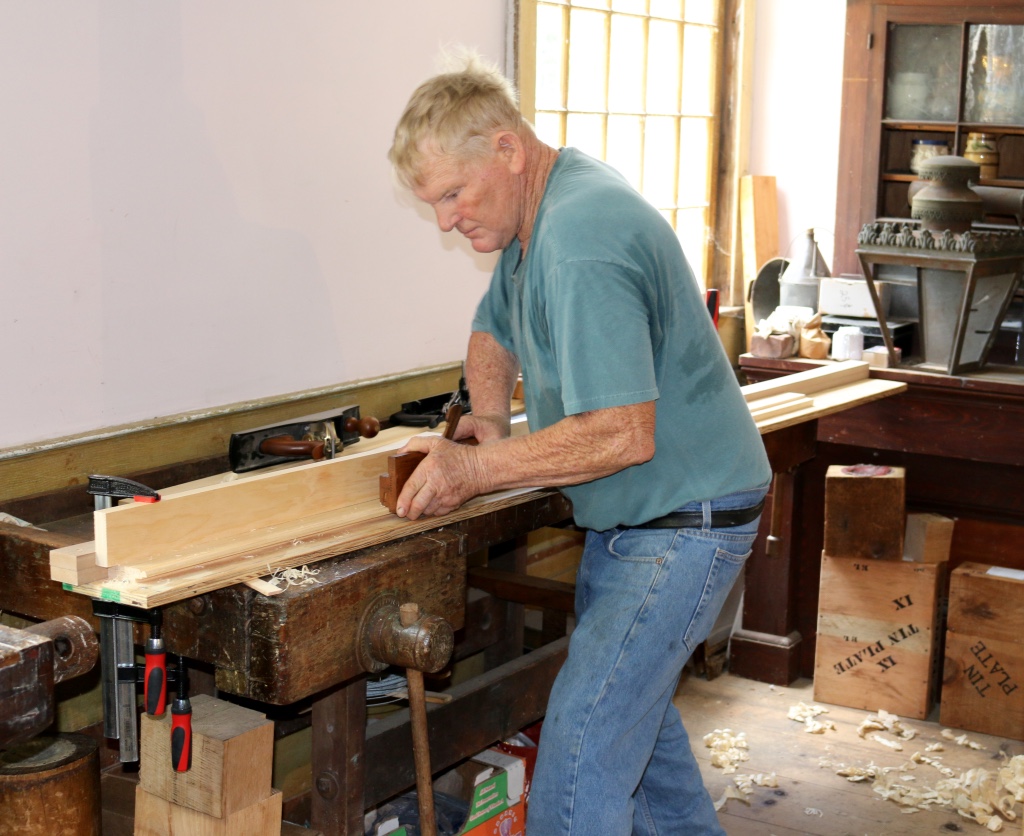
Don making a profile on the edge of his frame stock.

Next up students started molding their chosen profile(s). We talked about how to work backwards withe the molding planes building on the work of an earlier swipe, how to adjust irons as needed and how to get a nice finish on the profile.
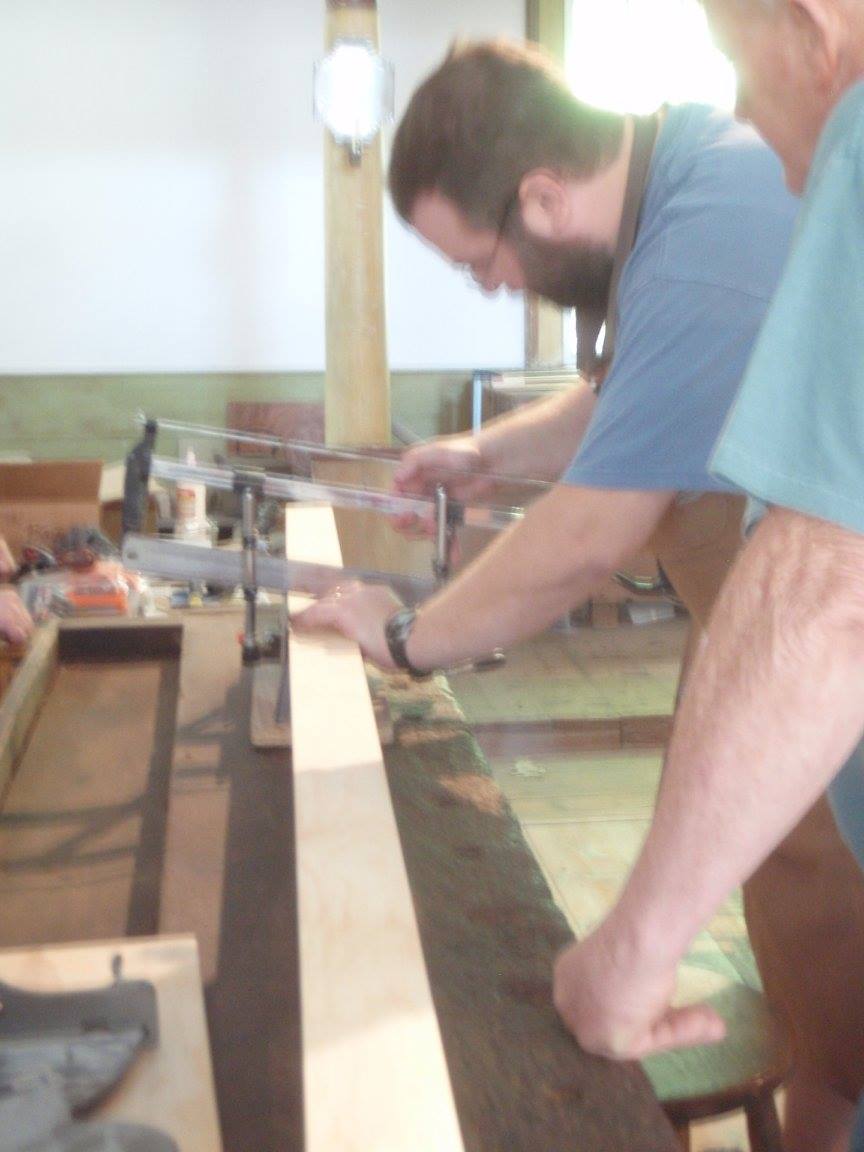
Making the miters with a miter box. (Photo by Carol Coutinho)

With a fully molded piece of stock now it was time to layout your cuts and cut the miters. In this case students left the line knowing that we could creep up on it by using my Lion Mitre-Master (large metal frame-makers guillotine) or a shooting board with 45 degree insert to clean up the corners and ensure we have a nice tight miter at each corner.
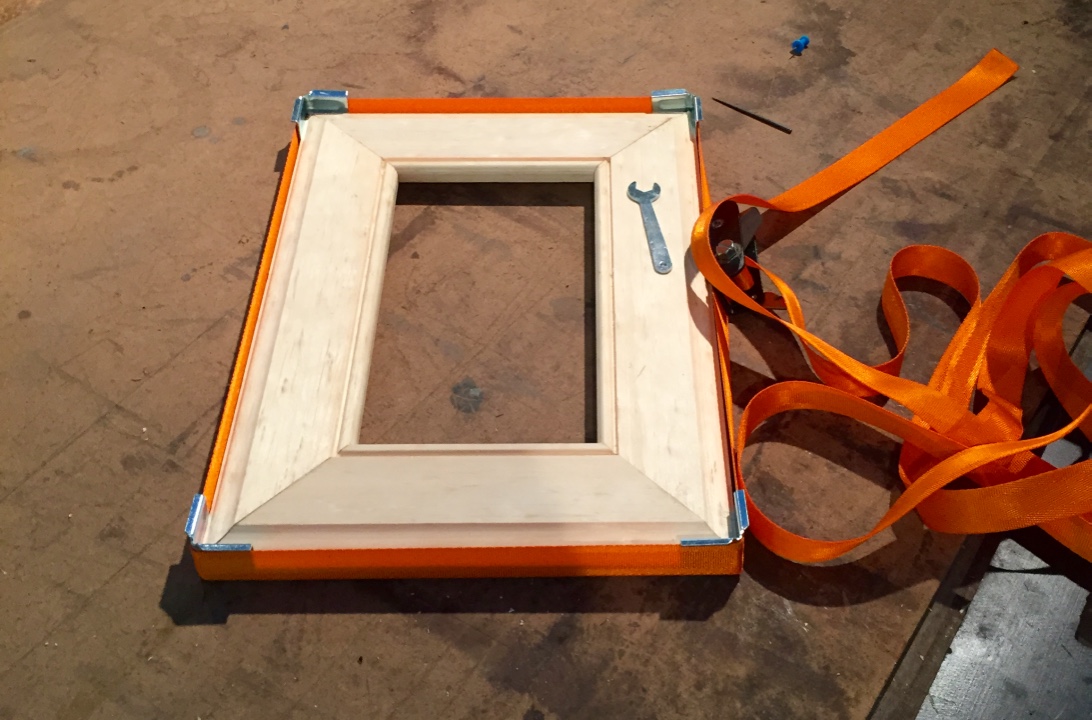
Frame baking in the band clamps

With the woodworking complete, next up was a test fit in the band clamps and then final gluing of the frame. While the frames baked in the clamps it was time to cut the glass to size and test fit it. We did this with a self-oiling glass cutter and a layout I made on the bench. Once the glass was fit it was time to layout and countersink the plywood back which was made if 1/4″ thick Baltic birch plywood and secured with #6 1/2″ waxed screws. We used bit braces and egg-beater drills to make quick work of this step.

Hanging hardware came in the form of a self leveling hanger (Think saw-tooth that hangs on single nail) which is affixed with two tiny brads.  An appropriate finish would be stain and shellac or a nice bright milk-paint.
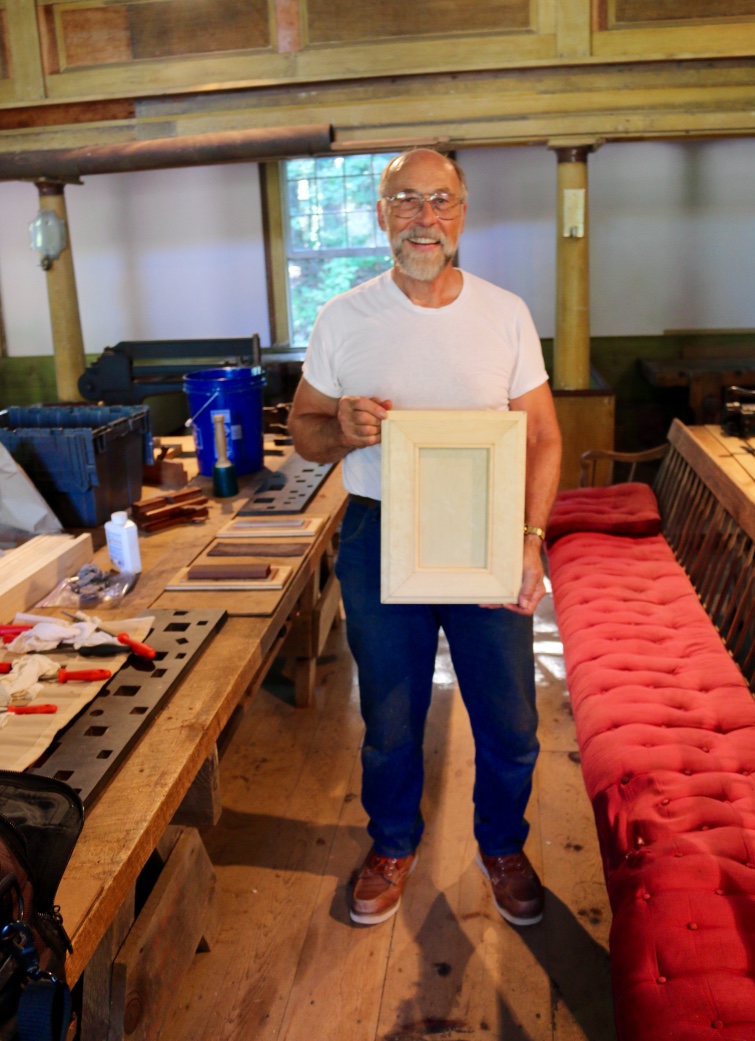
Tom with his finished picture frame.

I’m happy to report that everyone in the class was able to complete their frame, and I had a great time working with Tom, Don, Carol and Brian. (Carol I’m sorry that I didn’t have any photos of you working to add to this post, but I did make use of some of those photos of me you share with me — thanks again) .

If you’d like to make a frame of your own the plans I put together for this workshop can be seen and downloaded from the link below.  The seemingly odd size of this frame was dictated by two factors — the smallest size glass I can get at my local home center is 10×12″ so if you cut it in half you wind up with two 6×10″ pieces which allows each student to have a spare in case their glass cutting didn’t go well and they need a spare or they find time to make a second frame. The size is also dictated by the sticking board and stock. I wanted something that would fit on the 8′ sticking boards I had and allow some extra space in layout and for cutting and to have a bit for testing/trial. The plans below could be scaled up or down to fit whatever size frame you desire.
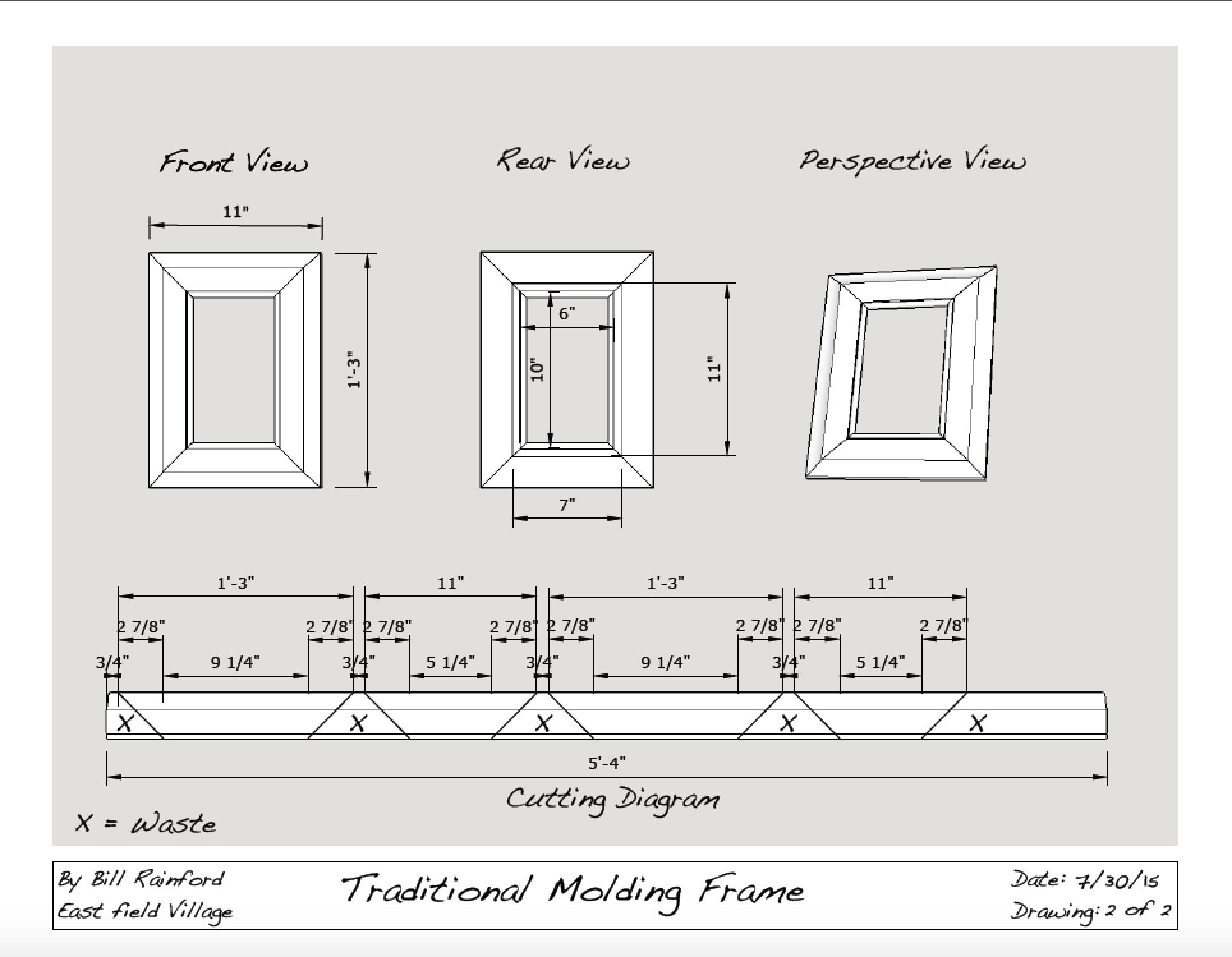
Picture Frame Cutting Diagram

Click here to download PDF Version of the handouts I made for this class.

If you make a frame of your own and take some photos of it, please share it in the comments below. It’s a great project that can add some unique personality to your pictures and add valuable skills to your woodworking repertoire.

Take care,
-Bill
The Noble Ax

The ax is a noble tool. One of, if not the earliest tools used by man it has been by our side since time immemorial. Different cultures mythologize different axes as part of their cultural heritage, from prehistoric cave drawings, to vikings to Native Americans to western pioneers but at their core the ax and its purpose is the same.  All of these cultures had similar needs– to provide food, shelter, and protection for its citizens.

Over time this commonality seemed to fade away, relegated to a cob-webbed corner of the barn or missing from the home altogether as many people live in a world where providing for food, shelter, protection etc is derived from modern trade and conveniences.  For those that remember their father or grandfather using an ax and want to re-capture that piece of their heritage, even finding a decent ax in a modern store will often only turn up cheap caricatures of what an ax used to be.

Rather than lament this loss I fell down the hand-tool rabbet hole many years ago and I have no intention of returning to ignorant life I led when I thought power tools and jigs were the best way forward. Sure I still have plenty of power tools for some mundane tasks like thicknessing wood in volume, but more often than not I reach for a hand tool — to enjoy the relative quiet (always good as their is a baby in the house), the energy efficiency (I can stand to lose more weight so burning calories is better than burning kilowatts), the speed, the accuracy and connection to the past.

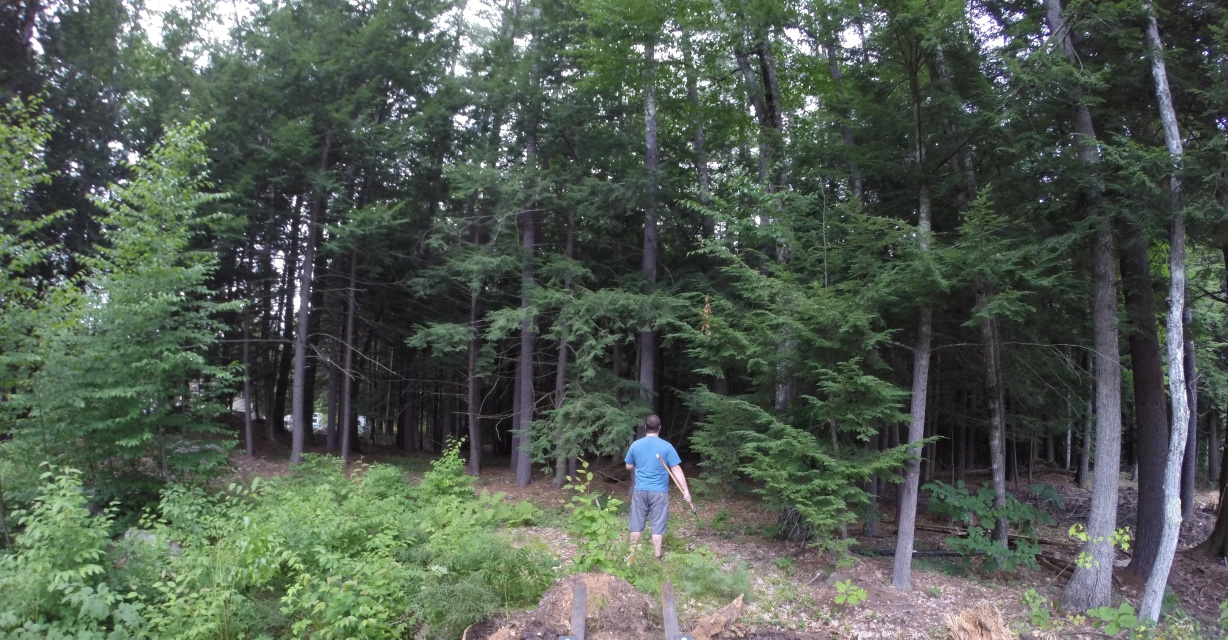
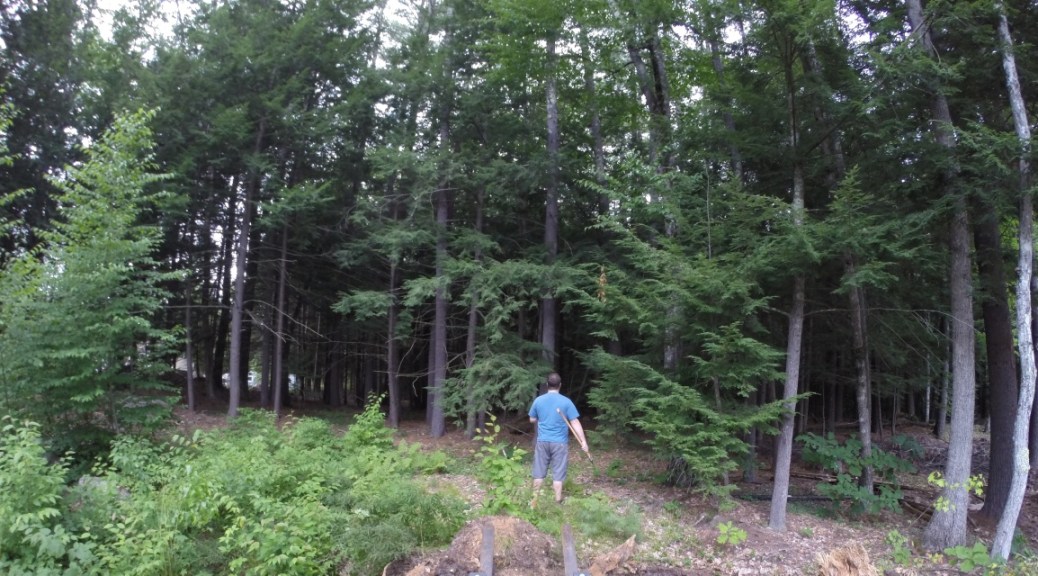
Wandering out into the woods with an ax....
Wandering out into the woods with an ax….

Nothing I wax on about in this post is new or novel in the woodworking community, but it strikes a nerve for me that can at times be hard to articulate. A quote from early in Roy’s first book aptly summarizes a core bit of his philosophy that is near and dear to my own heart:

“I teach traditional hand-tool woodworking — how to start with a tree and an axe and make one thing after another until you have a house and everything in it. The satisfactions of this work are immediate and personal. You find the tree, fell it, shape the wood, and join it together. The mistakes and successes, the accidents and discoveries are between you and the tree.” — Roy Underhill ‘The Woodwright’s Shop: A Practical Guide to Traditional Woodcraft’

I owe a big debt of gratitude to Roy Underhill for helping me get in touch with my inner Carpenter/Joyner via his show, his books and in person classes. At NBSS I got real familiar with a felling ax and a hewing ax for hewing timbers, but I never took down a tree by hand using an ax. Even though I had the axes on hand I always used my trusty chainsaw. On a recent weekend of clearing trees in the yard I decided to get an item off my bucket list, grab my trusty Gransfors Bruks felling ax (sharpened/maintained so that I could shave with it if need be), and fell a tree by hand.

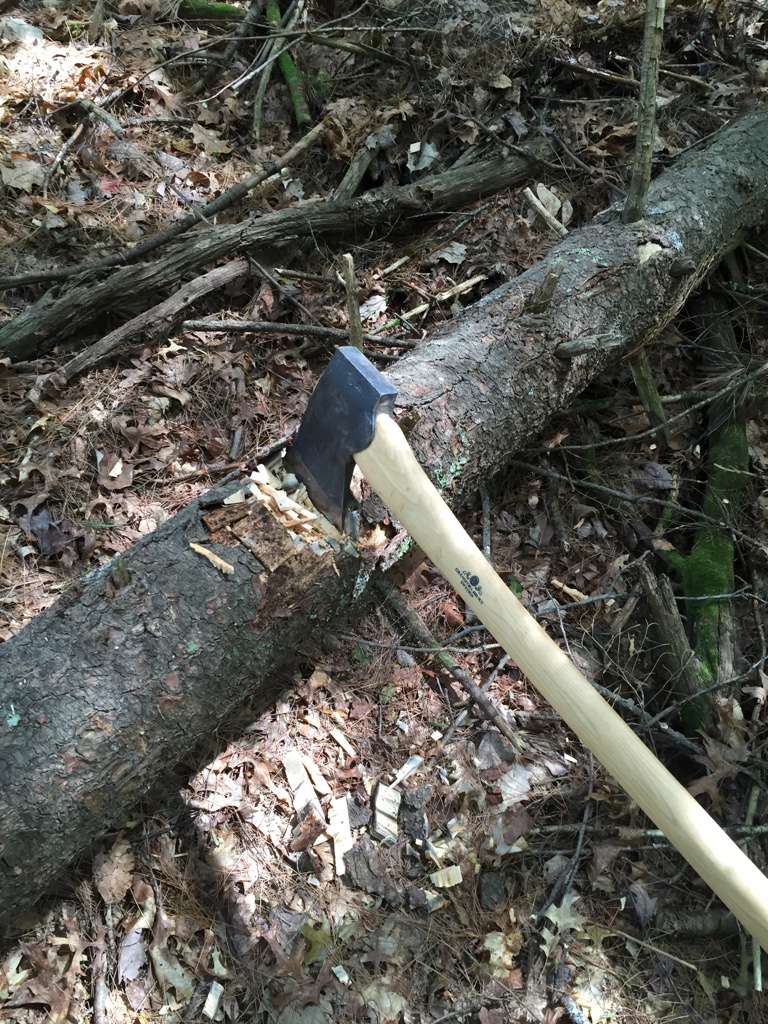
Bucking a tree into a log

I wandered out in the woods and trimmed some dead branches to clear a bit of a path. Whack — nice clean cut and a lot less work compared to my tree saw on a pole. Let’s go bigger. I took down a small pine tree about 8′ tall. In a few minutes the tree was down. Still too easy. Let’s go bigger. A standing dead remnant of a tree. Now the blood is flowing and adrenaline is kicking in, but apparently there was no fear of death by crushing. Let’s go for something bigger still.  I found a medium sized (~40′ tall) eastern white pine that was between me and where I wanted to dump some stumps in the back acreage. I notched in where I wanted the tree to fall. Each strike with the ax severed fibers or popped out chunks as I worked my way into the tree. I then notched in from the opposite side, though higher, so the tree would hinge over where I wanted. Timber! Down it went. Time to de-limb it and buck it into a movable log size. Bucking the tree into logs was a similar process of working through the tree as I did when felling it, though this time I was going completely through rather than creating notches to pivot on.  Once I got the logs down to about 8′ sections I was able to drag them out of the way, put them up on some rocks to keep them off the ground and make use of this newly created path.  The logs will start to season over the dry winter and we’ll see if they become firewood or maybe some other use around the house or yard.

It was a great workout and came with a sense of accomplishment that stayed with me along with the realization that there are some muscles in my back and shoulders that clearly are not getting enough use. 😉 I felt more a part of a continuum dating back to those earlier generations who started at the tree and made all the items they needed to survive and eventually thrive. It also gave me a new appreciation for the amount of human energy invested in a lot of those earlier buildings.

If you have the opportunity to take down a tree by hand, I encourage you to learn how to do it safely and then give it a try and make something from some of that wood once it is seasoned. It’s good for the mind, the body and the environment.

If you’d like to learn more about the proper use of the ax or see the more eloquent and entertaining philosophizing of Roy Underhill you may want to check out some of these videos:

  1. Great Video Clip of Roy Underhill in Philosopher Mode talking about historic Axes. (I agree with Chris that Roy should have decimated that podium here.)
  2.  Roy’s Ted talk — ‘Have Broad Ax, Will Travel’  here.
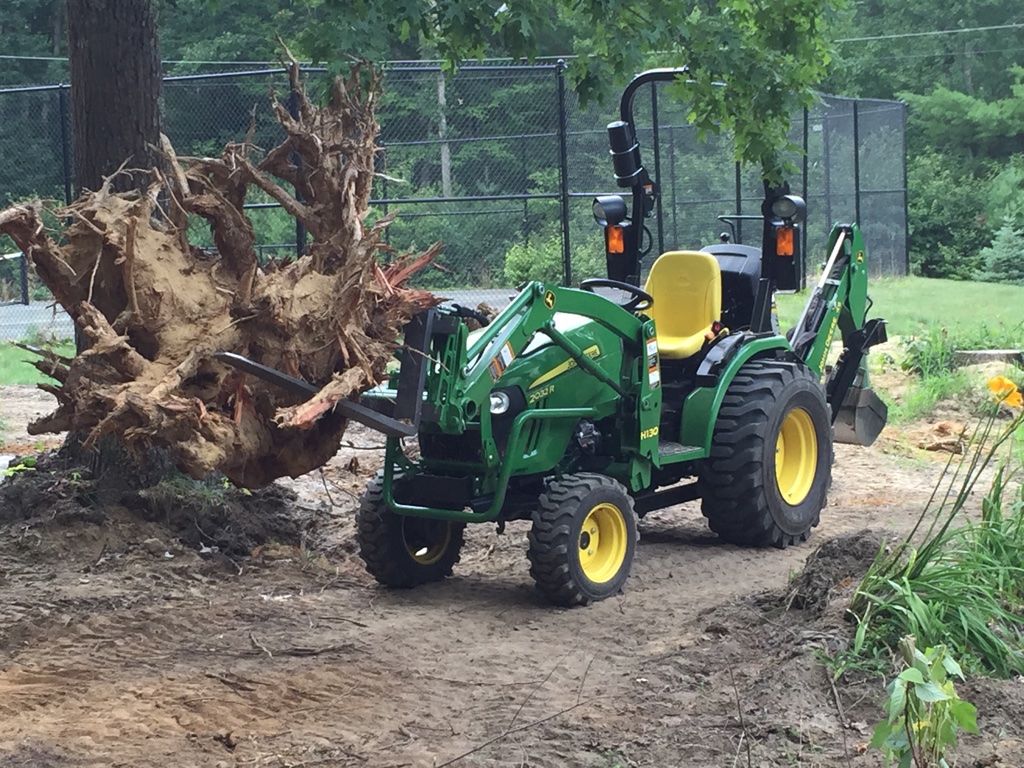
Moving ever larger stumps

What have I been up to when I haven’t been swinging an ax?

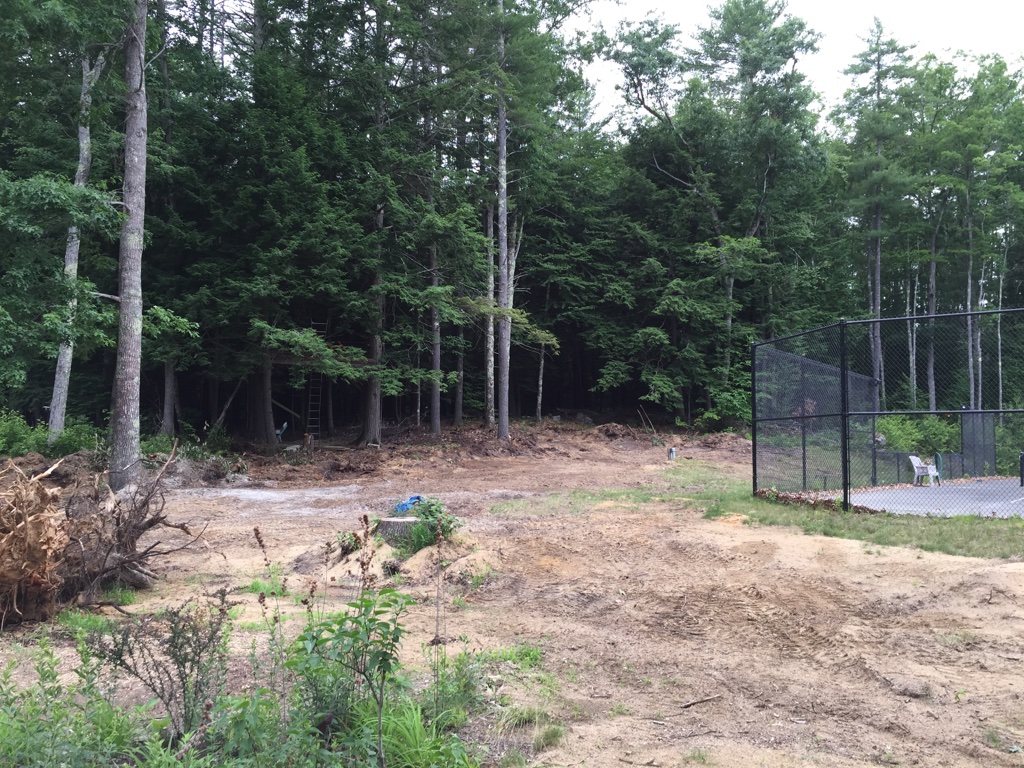
I apologize that I have not been blogging as much this summer as I have in the past, but with work, teaching, a < 1 year old baby and a big project in the works I’ve been spread thin. My free time has been spent on a different sort of project — one that will have been worth the wait. Since April I’ve been spending most of my free time, nights and weekends clearing land out in the back yard to make room for a timber framed shed/barn and I am finally in the home stretch. I’ve removed about 50 stumps, some of them as heavy as the tractor I used to dig them out with and I have cleared about a quarter of an acre of dense woods. It was a LOT more work than I thought, but similar to tree felling experience has been good exercise and a personal accomplishment I am proud of. A little more grading/leveling and blending the transition from yard to woods and I’ll be ready to break ground on a barn/outbuilding.

Finally some clear land...
Finally some clear land…

I’ll be documenting the process from beginning to end in video, in photos on the blog and with some content partners so I hope you will stay tuned for that along with the regular stream of blog posts.

I hope everyone is enjoying the warm weather.

Take care,
-Bill