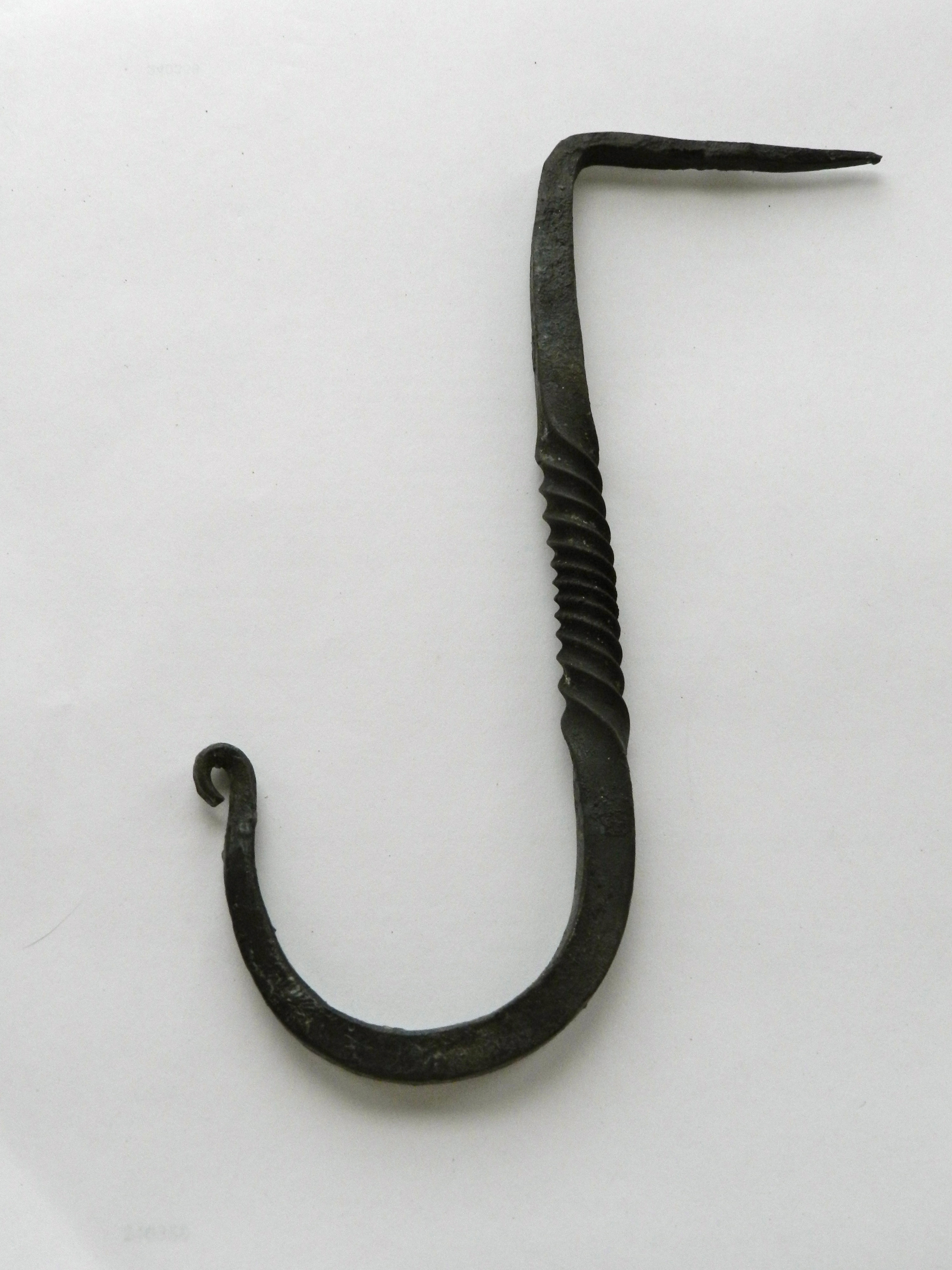
I recently had the opportunity to take one of the ‘Taste of Blacksmithing’ classes at the Prospect Hill Forge in Waltham MA as part of the NBSS group event there. It’s something I wanted to take for a long time and I am happy I finally got to take it. During the class we learned some basic techniques and principles of how to work metal, then Carl and Mike let us try it for ourselves. The project for the class was a drive hook — which is a hook you would drive into a timber framed post or similar and then use like any other hook. (see below)
Completed Drive Hook. First thing I ever forged -- I really like it. You would drive it into a post and use it like any other hook. Has nice twisting detail.
I’m looking forward to talking more classes there in the future.
You can find out more about the Prospect Hill Forge here. Carl and Mike were great instructors, and like me worked in Software/High Tech. 🙂
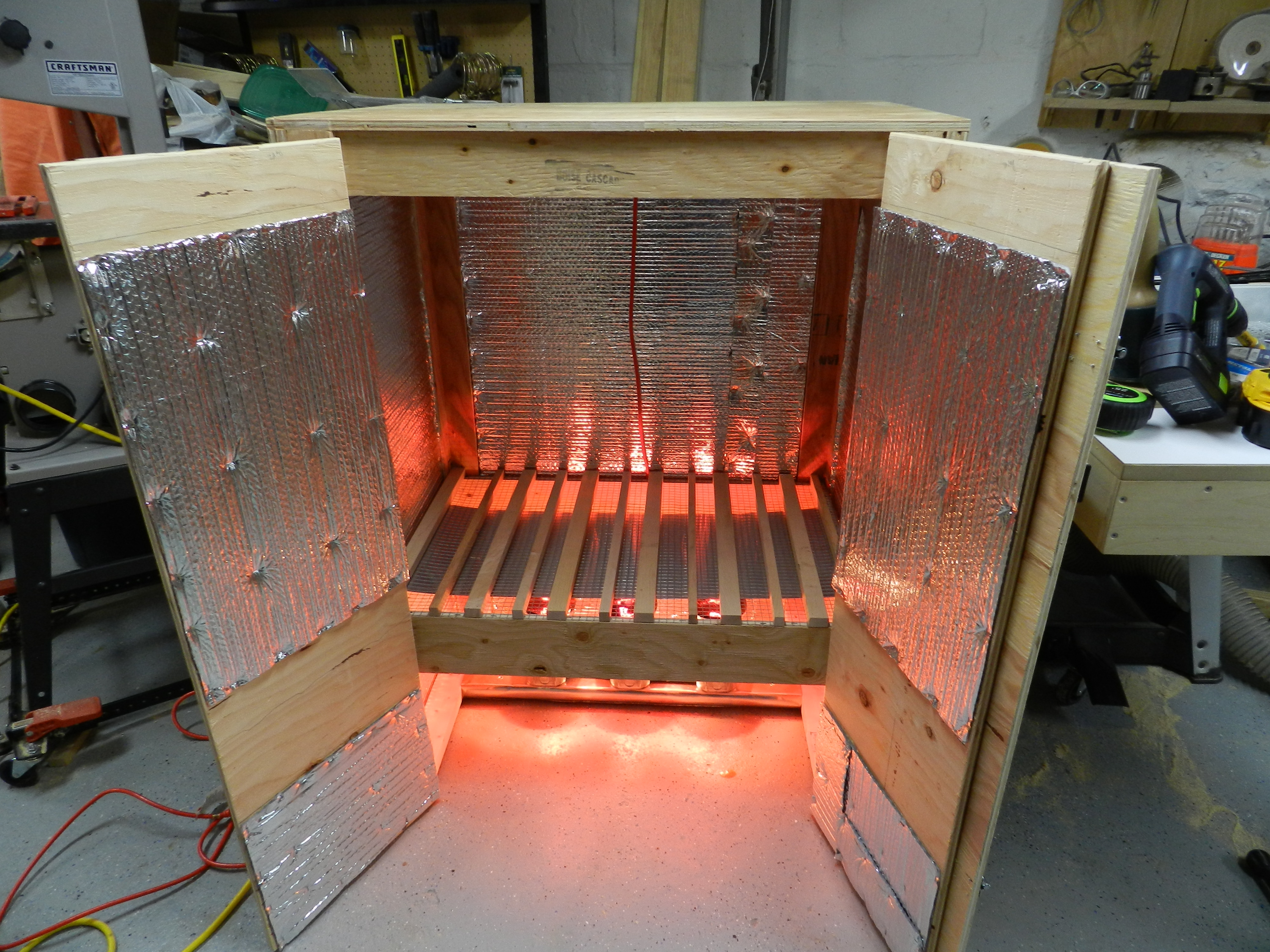
This weekend I finally finished my new Kiln — a Kiln that would make Binford and Tim Allen happy. My wife is ready to kill me as its one more huge thing to move up to NH soon, but I want to get back into making some more Windsor chairs once we get settled in our new house this spring. I took a workshop last summer at NBSS and made a continuous arm Windsor chair and hope to make some more for our new place.
The design is based largely on one my friend Pete Galbert came up with and shared on his blog here with a few minor changes/tweaks based on the engineer in me and what materials I had on hand. I’m looking forward to it having a long service life.
Warmed up kiln is ready for business
Highlights:
2′ x 3′ x 4′
Thermostatically controlled
Reflective insulation
Cord storage
Chest handles
Leveling feet
Room for sizable pieces
Next up chair making project will be a shave horse.
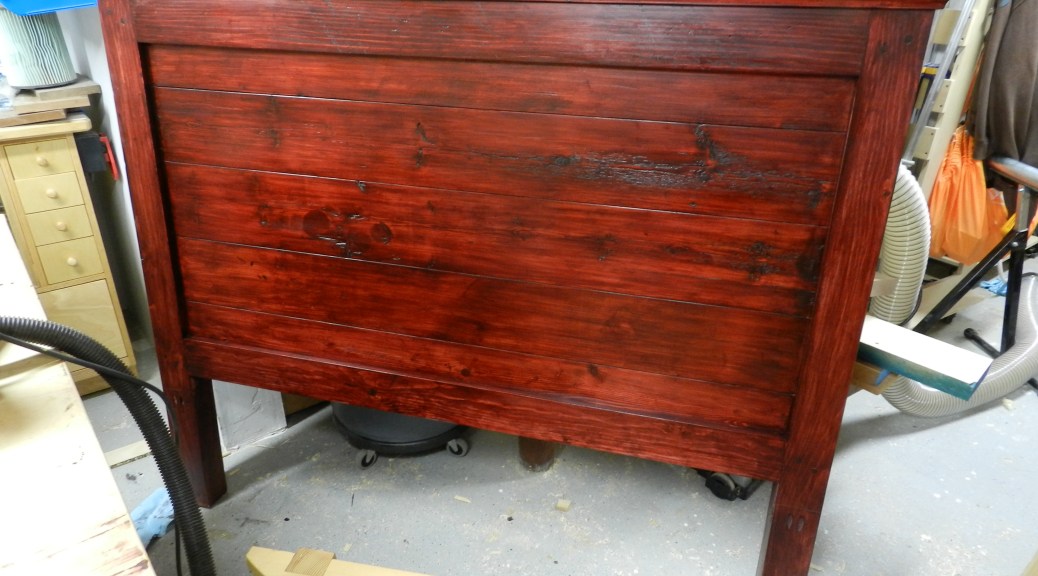
A while back I completed a headboard and night stand for a friend of mine from NBSS — Erin who is a very talented jeweler. She made my dovetailed wedding band which I love. (You can check out some of Erin’s other work here http://erindeluca.com/ Tell her Bill sent you 🙂 )
I designed and built the project from reclaimed old growth eastern white pine which was previously a barn in CT. Reclaiming the wood and keeping the well earned patina of time took a lot longer than I originally anticipated, but I am very happy with the results.
Tips on reclaiming old wood:
Select wood with interesting character and tight/straight grain
Use a metal detector to search for nails or other metal which could damage your planer and jointer knives (and keep rechecking — cleared everything I could originally detect, but as I milled down a piece I found a deeper embedded piece of cut nail that took a big nick out of my planer knives) So from then on I make repeated passes with the metal detector even as I plane down the wood.
Be judicious with your planing — it would be very easy to just power through all the tool marks and character and lose a lot of the history of the wood
Use traditional joinery and woodworking techniques (I think reclaimed wood looks better with traditional designs)
Project highlights:
Old growth detail — some pieces had well over 150 years worth of tight growth rings and many well preserved hand tool marks, nail holes etc
Through mortise and tenon joinery that is draw bored and pinned
The piece had to make it through some very tight places and I built it in such a way that the legs could bolt off to make it through narrow places (See pics for more details of this)
I also concealed leveling feet to make it easier to stabilize on an uneven floor etc
Matching night stand has similar character and design to match the headboard. Still has great old saw marks in it
Finish included stain, dye for tinting, polyurethane and hand rubbed wax finish
Unpacking and first impressions of the Domino. (I’ve been slow to get online so these pics are a few weeks old and I am working to get caught up on my backlog)
I was chosen to be one of the first 25 North American Test/Demo users of the new Festool Domino XL which is the Domino’s big brother.
Initial Impressions:
Like all my other Festools this tool seems to be solidly built and very well designed
Fence adjustments and setup are familiar to all who have used the original Domino
I like that I has the Festool quick connect power cord that can easily work with Rail Saw and Jigsaw
Solves an interesting problem set (loose tenon joinery) in an interesting way that certainly gives my Biscuit joiner a run for its money (It will be interesting to examine the speed comparison to using both systems and cost per domino vs cost per biscuit)
Tool feels well balanced given its size and heft
New generation Systainers are a definite improvement compared to the 1st generation. Instead of 2 locks its one turn on the front to engage the locking. I also like that old generation units can be attached to the bottom of the new ones, though a little sad its only one way — old units are always relegated to the bottom. I have a few (~4) extra Systainers from McFeelys filled with square drive screw assortments, but I wish the price point would come down on at least the old generation systainer as I’d really stock up on them but they can be prohibitively expensive for other tools.
Domino XL Systainer and Domino Tenon Assortment Systainer all have new removable plastic trays instead of the wood dividers in the previous generation. I liked the use of wood in the original generation as it had more feeling of craftsmanship instead of plastic fantastic, but I do like how the new plastic trays can be moved around. I could see if I knew ahead of time what I was working on at a job site just loading up the Domino Systainer’s trays with what I need and traveling a little lighter.
Next post — more of the tool in action and using Domino fences.
Check out the slideshow below (additional comments in the captions):
This is a project I’ve been wanting for a while now.
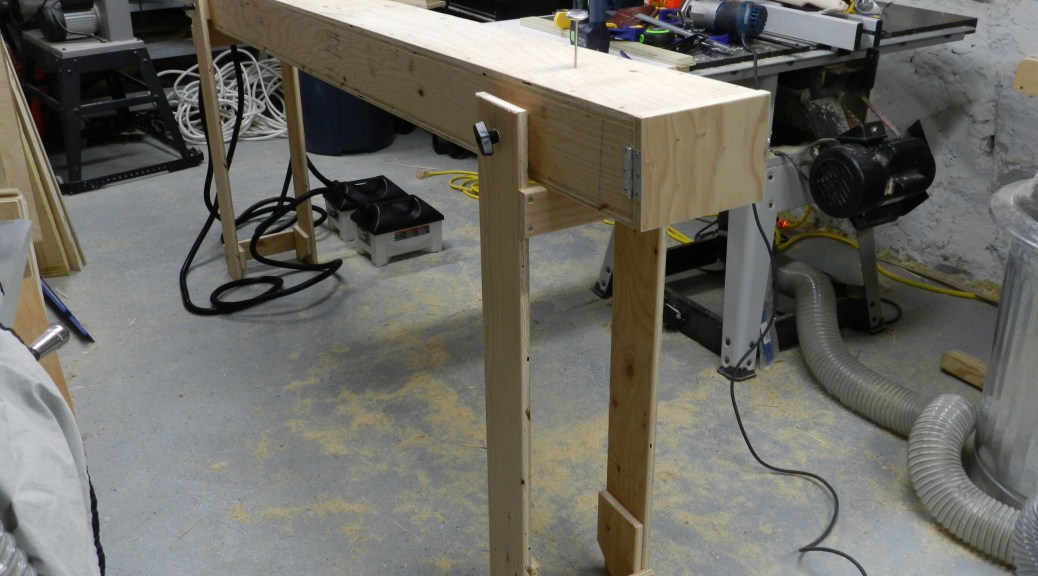
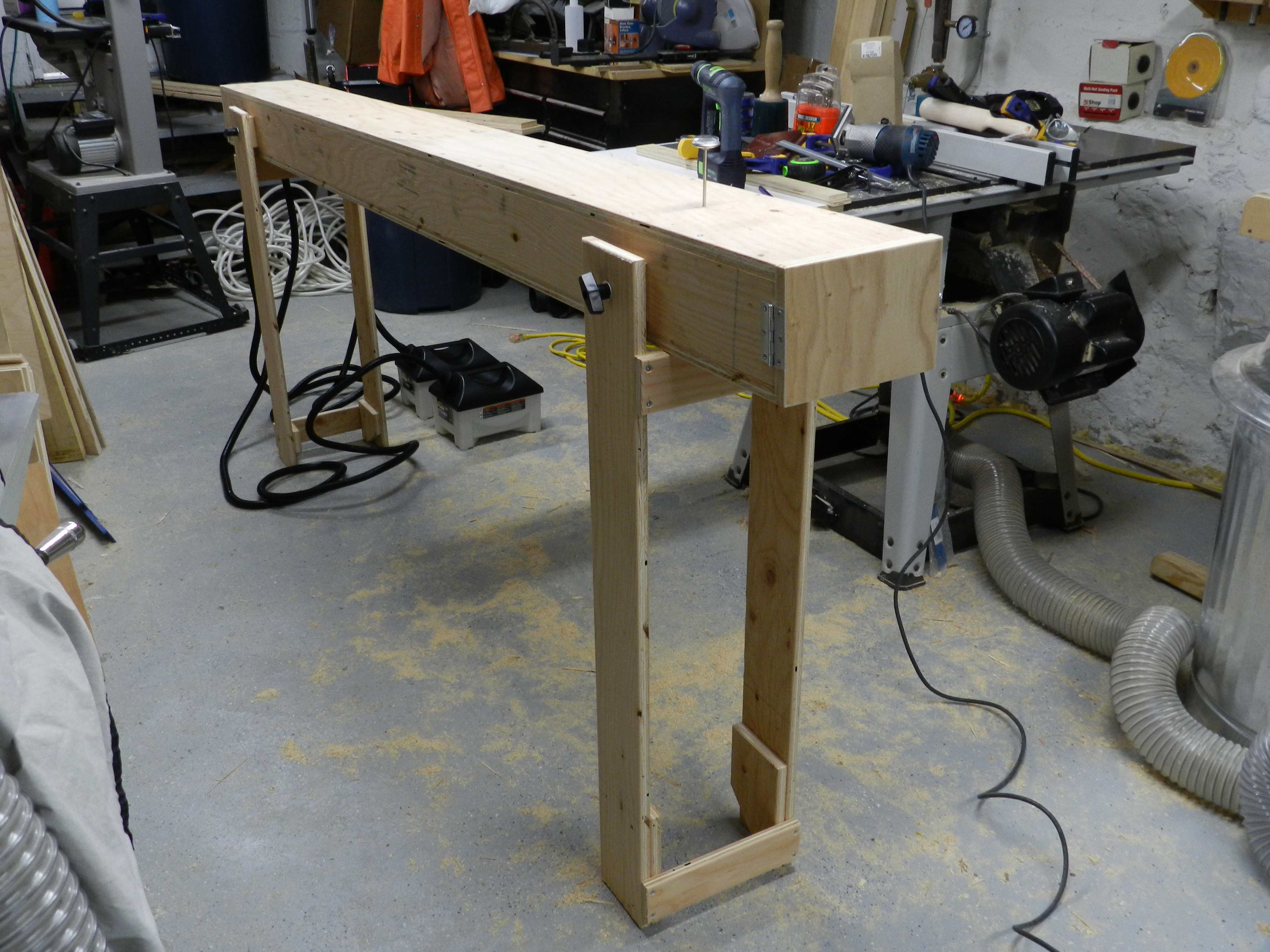
It’s an 8′ long steam box for steaming Windsor Chair and Architectural parts. It’s powered by 2 Wagner wallpaper steamers so it should have plenty of steam to get the job done even given it’s large size. Interior opening is 4″ x 6.5″x 8′ so plenty of room for most anything I would want to steam bend.
Completed 8′ long steam box. Note the reinforced legs that open to the correct angles for drainage.
Highlights of this unit:
Tight fitting steam entry ports which make use of threaded hose fittings
Folding legs so I can take the unit with me when I travel or to save shop space when not in use
Made from a single sheet of CDX Plywood
Some will say it is overbuilt for a Steam Box, but I hope to get a long service life out of it and most of the outside parts (legs etc) can all be remounted on another unit when the time comes to replace the core box.
Below is a slide show of the Steam Box being built along with some tips in the captions.
I recently obtained a Festool CT36 Dust Extractor and wanted to share some initial impressions of it. So far I am really impressed with it.
My other dust collectors are a Rigid 5HP wet/dry vac with Hepa filters and a Delta full size dust collector with cannister style filter and cyclone stage.
Each of those tools has a very different dedicated purpose which could potentially overlap in functionality, but the CT36 has earned it’s keep.
Pros:
Collects noticeably more dust compared to a shop vac attached to a domestic tool
Adjustable suction control (you can control how intensely the vac sucks up air)
Nice solid rubberized fitting secures firmly to tools
Tools can be plugged into the dust collector and it turns on and off suction with the tool — I really like this feature since it saves on electricity, noise, etc (albeit this is not a completely new feature as I’ve seen it on older Porter Cable and Fein vacs in years gone by, but they never had enough overall features to warrant the price)
True Hepa certified unit (Great for all of us RRPs out there)
Anti-static hose (I didn’t have high hopes for that, but compared to my porter cable regular plastic hose, it does make a difference in terms of what sticks to it)
On unit storage for the hose and carry handle
Kickstand to stop unit from rolling around
Ability to lock some systainers to the unit — great for work on the go as you can package up what you need quickly into groups
Long 3 prong/grounded power cord
Replacable bags are great for when you are dealing with fine materials you don’t want blowing around your shop — fine wood, leaded paint etc
Cons:
Replaceable bags — helps the filters stay cleaner longer, but adds to cost of collecting dust. Looks like for RRP contractors there are some new bags that will allow for easier disposable that seem promising.
I don’t see a blower mode (Something my rigid vac has which comes in handy every once in a while — like say when you are filling an office with packing peanuts as part of a morale event)
Kickstand is all plastic and could be broken with a hard drop. (Mine arrived broken via shipping but Festool was great about sending a replacement — it was easy to install and works great)
Price point is pretty high compared to a domestic shop vac and accessory kit to add on common functionality like the rigid pipes, crevice tool, floor tool etc are a separate option in their own systainer drives it even higher. Though once you get over the price hurdle it really is a well engineered machine and saves you time cleaning up especially at a job site.
Here is a small slide show of the CT36 Dust Extractor:
This slideshow requires JavaScript.
A Joiner's Guide To Traditional Woodworking and Preservation

 Rainford Restorations