Drafting in the Digital Age

“An ounce of prevention is worth a pound of cure” — Benjamin Franklin

When it comes to design and drafting old Ben’s quote rings as today as it did in the 1700s. A good design and a clear set of plans can spare you from a lot of unnecessary frustration or wasted material. When I went to High School in the 1990’s I had the opportunity to take classes in traditional drafting on paper and using AutoCAD on old DOS based PCs that were old even at the time. The computer was viewed as the future, but the extra time for smaller projects and prices/availability of good software was a hindrance. For the sake of expediency and my wallet I generally broke out the drawing board when I needed to make a set of plans.
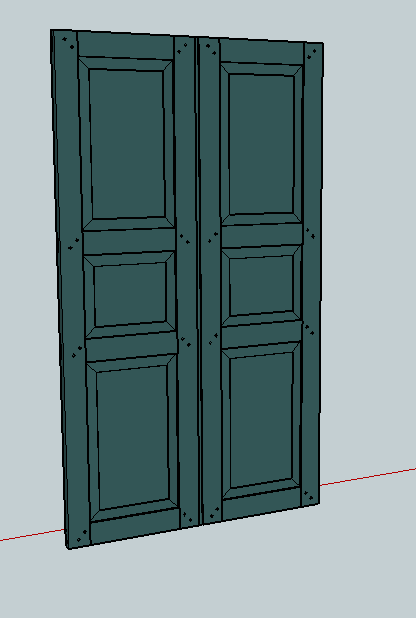
Workshop Shutters In Color + Perspective

Years later when I went to the North Bennet Street School they also espoused the use of traditional drafting with leads and full size drawings. No messing with expensive computers and ever-changing software. This works great for chairs and pieces with lots of complex curves. But for timber frames and buildings, often with many repeating elements a small change in the design could literally send you back to the drawing board for hours.
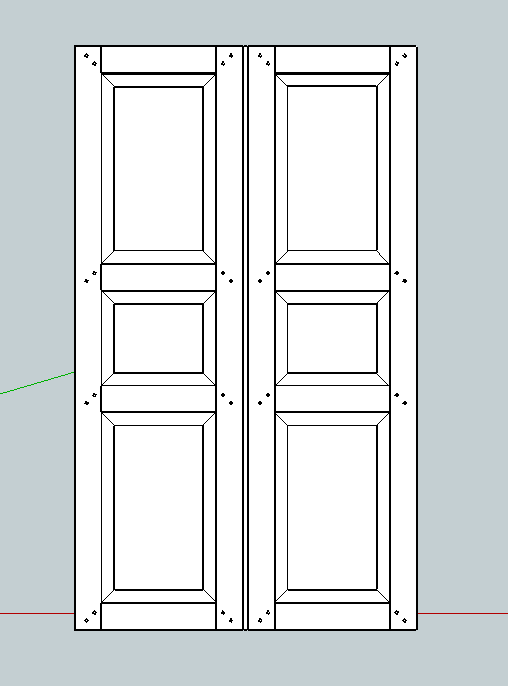
Workshop Shutters
Workshop Shutters

I recently got a copy of SketchUp and around the holidays found a real good deal on Robert Lang’s SketchUp for Woodworkers Shop Class on Demand Videos and watched them around Christmas. SketchUp took a bit of getting used to compared to my old AutoCAD days, but after watching Bob’s videos, and with my background as a software engineer and traditional draftsman I got up to speed quickly. (You may have noticed a proliferation in some computer generated renderings in recent posts) Bob Lang’s videos start with simple projects and tools and increase in complexity. I recommend getting both videos as the second video (‘Advanced Techniques’) was the most interesting to me wherein he shows the user how to create dovetails, work in the round, layout the model for printing dimensioned renderings etc.
Shutters Workshop
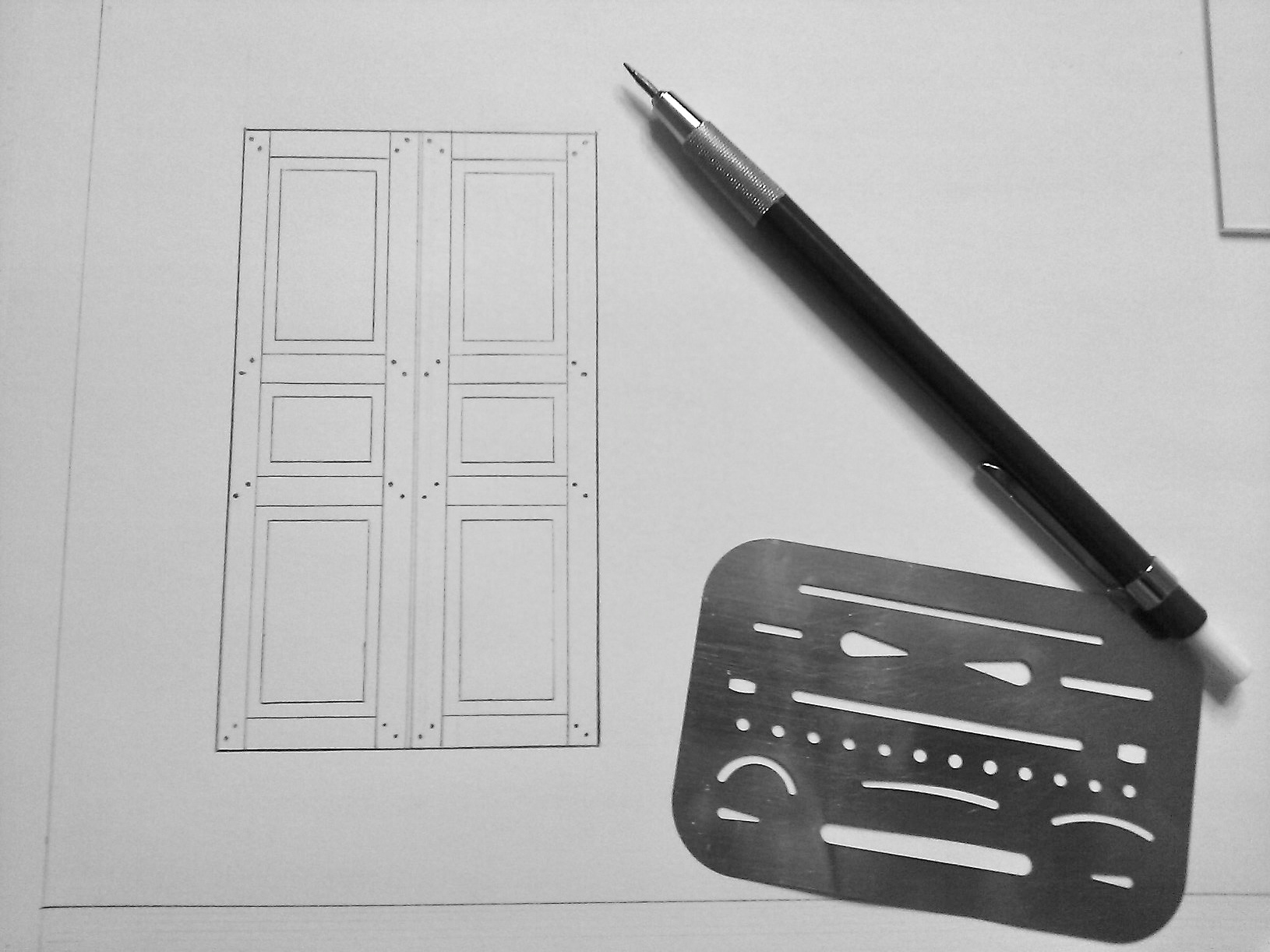
Hand Drawn Shutters

Save a Tree, Burn some Pixels

About a year ago I designed some traditional interior shutters for my workshop — I started out drafting them by hand. The plans sat on my TODO list for a few months and now with SketchUp in hand I decided to explore some other design possibilities with the raised panels.
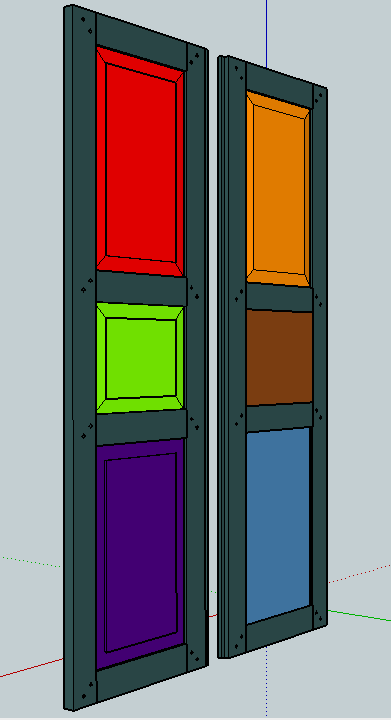
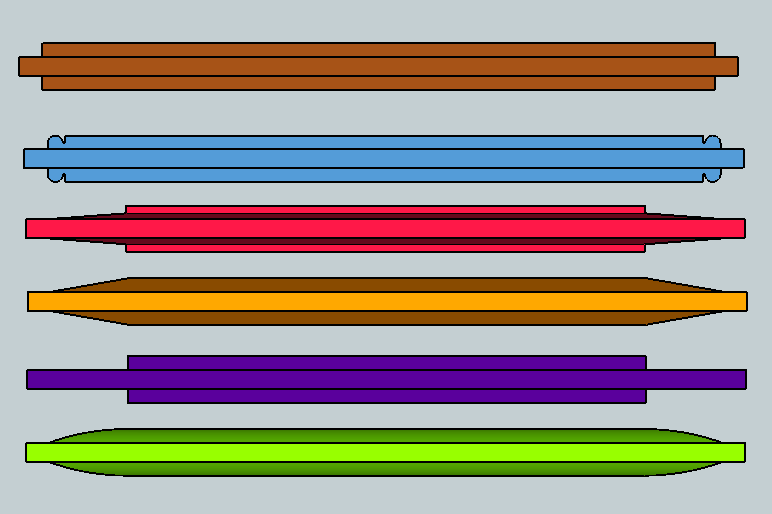
Various Panel Options

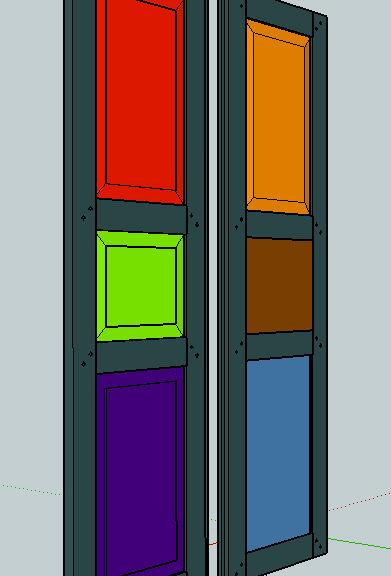
Design Options Explored (Colors added for easier reference here, I’m not planning to build any shutters for a circus):

  1. Red — Raised, Sunk Fielded Panel
  2. Orange — Raised and Fielded Panel
  3. Green — Raised and Fielded Panel (rounded fielding)
  4. Brown — Flat Panel
  5. Purple — Raised Panel
  6. Blue — Bead and Butt
Panel Details
Panel Details

In the end I settled on #1 above which was part of my original design, but this software saved me from having to experiment with a few test panels to see how things looked from different angles — a nice time and effort saver which offset the perceived longer time it took me to draft this project in SketchUp in the first place. Each project I get a little faster with SketchUp and I think part of why I feel like it takes longer is you generally need to complete your model in most if not all details as opposed to some shortcuts I can take when drafting by hand. (Though I think I am getting a bit OCD as I created all the mortises, draw bored pins etc in full 3D)
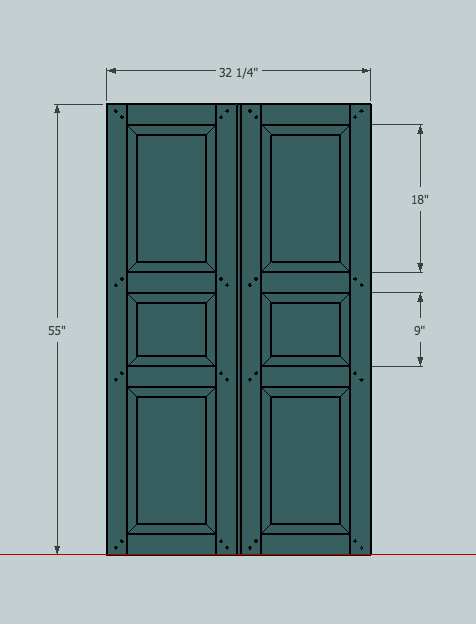
Dimensioned Shutters in Color -- Rittenhouse Blue
Dimensioned Shutters in Color — Rittenhouse Blue

With SketchUp you can also experiment with colors and textures. Above you can see my shutters in Rittenhouse Blue to match my existing trim out in the shop. For other projects I’ve used actual textures which help give you a feel for how a surface would look with real wood grain etc.
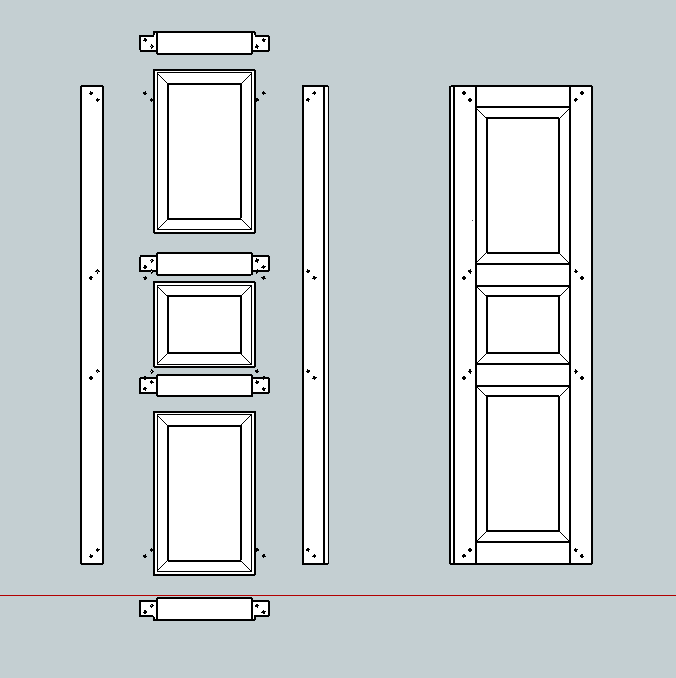
Exploded View
Exploded View

The other big time saver is how fast you can generate other views — beyond top, bottom, front and back you can quickly generate an exploded view….
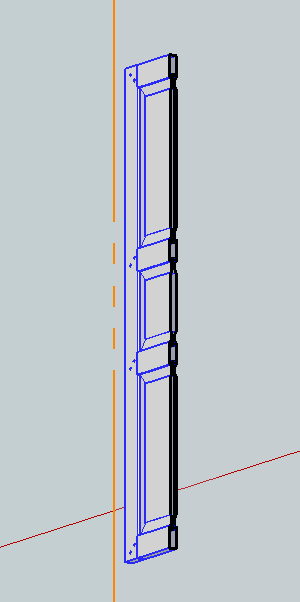
Section View
Section View

Or a section view…

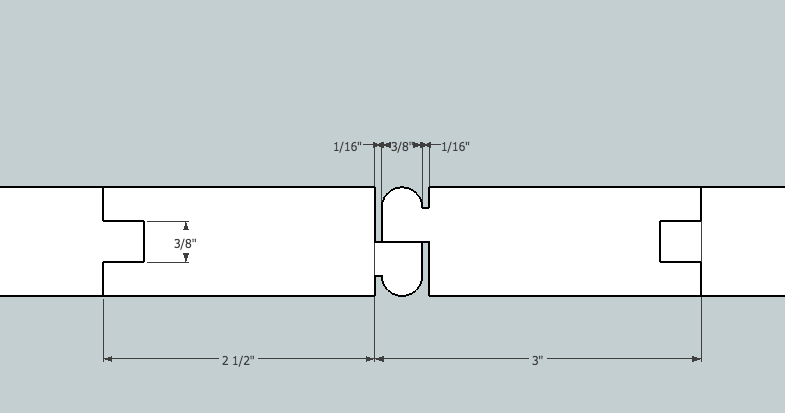
Molding Details Dimensioned

or a dimensioned detail view. The dimensioning goes in quickly and the model can be probed in the future if you missed a dimension and want to see exactly how big a part or detail should be. All of these views help me create additional visual aids for this blog and for my teaching as I think a lot of woodworkers are visual learners. You can also share your models with other users or download thousands of models from the 3D Warehouse to save you some time.

I also like the fact that I can draft from the couch in front of the TV at night when I am too tired to be out in the shop and don’t want to be in another room hunched over the drafting board. If you have been waiting for a good reason to try out SketchUp, or draft something new you have no excuse — if you are reading this blog you are likely on a device that can be used to run SketchUp.  🙂

I look forward to seeing some of your new creations and hearing what others think about using the program.

Take care,
-Bill

P.S. If you’d like to build one of these shutters with me in person, there are still 1 or 2 seats left in my upcoming workshop at NBSS on this very topic. You can find more details here.
P.P.S. If you’d liked to check out Robert Lang’s SketchUp For Woodworker’s Shop Class on Demand Videos or DVDs  I bought my copies from here. (I don’t get any sort of kickback for this, just recommending a good resource)
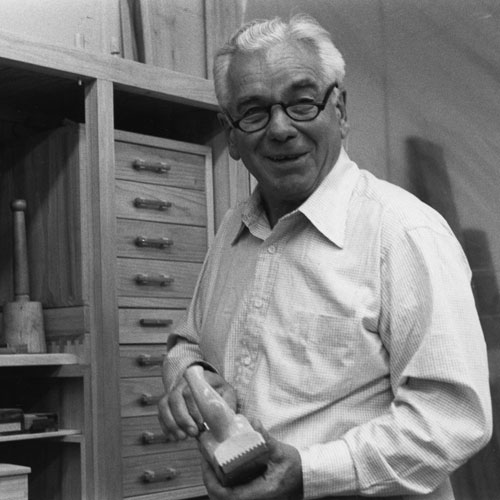
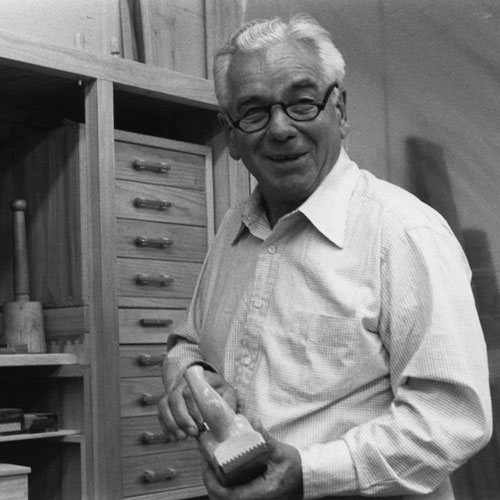
Tage Frid — The Great Dane

Woodworking is a lifelong journey of discovery and rediscovery. Along the way you’ll meet a lot of great folks and interesting characters who are surprisingly willing to share advice and help you out. The craft has been passed down this way for millenia.

Everything Old is New Again

Modern woodworking media seems to go in cycles much like clothing styles or car designs. Right now it’s popular to study the early works of Moxon, Roubo and Nicholson etc., or prove you have the best router or table saw trick. Others are interested in espousing the mix of old and new tools and techniques which is not a new concept. Manual training programs like those at NBSS have been doing it for over 125 years and the Shakers before them etc.

I want to buck the current trend and take a trip back to the 20th century. When I got started in traditional woodworking one of the first teachers I had was Tage Frid via the  ‘Tage Frid Teaches Woodworking’ 3 volume set with its iconic white covers. I haven’t seen these books or Tage’s work come up much lately and thought it would be helpful to blow the dust off those books hopefully re-kindle some interest as I think they are a great resource.

Tage Frid

Tage (Pronounced ‘Tay’) taught me and countless other woodworkers the basics via his books and teaching.  He grew up in Denmark and apprenticed as a cabinetmaker. His time as a journeyman took him to various other shops including the Royal Danish Cabinetmakers. In 1948, at the age of 33, the American Craft Council persuaded him to immigrate to New York and teach woodworking. Tage lead the woodworking program at the School for American Craftsman in Alfred NY which was later moved to the Rochester Institute for Technology. From 1962-1985 Tage was a professor of Woodworking and Furniture Design at RISD helping to propel that program to national prominence.

Tage Frid
Tage Frid

Also notable was Tage’s involvement with Fine Woodworking where he worked as an editor from it’s inception in 1975, through 171 issues until his passing in 2004. Described as having a sharp tongue and an ‘impish’ smile you can get a small taste it it through his writing and interviews which often have some memorable nuggets.

He could cut a dovetail while joking and flirting with the ladies. He referred to nails in furniture as ‘Swedish dowels.’ When critiquing a piece of work, which was nerve-wracking for students, the blow was slightly blunted by his sarcastic humor.  Hank Gilpin recounts some memorable zingers:

“Oh, good curve. Too bad it’s the wrong one”
“Nice dovetails. What’d you use — a chainsaw?”
“Beautiful legs Henry. What were you thinking about — an elephant?”
And the classic: “Congratulations, you’ve just figured out the most complicated way to hold a board 30 inches off the floor.” [*]

The goal was not to put anyone down, it was to help each student stay humble and push him or herself to reach new heights in a fatherly kind of way. I had a similar experience during my own training and find myself rehashing some Frid one liners and Rich Friberg-isms in my own shop and classroom. Thankfully the flavor of sarcasm I learned from Rich is a little less harsh, but still fun.

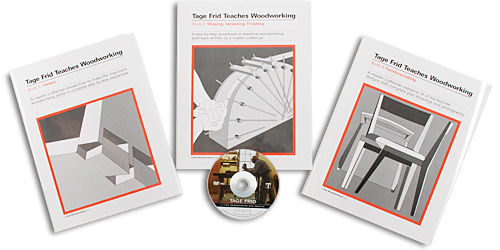
Tage Frid Teaches Woodworking Boxed Set by The Taunton Press

Teaching

When asked about teaching repetitive topics Frid had the following to say:

Don’t you get bored demonstrating the same old dovetail?
“Maybe you left too early. I always demonstrate difficult joints and techniques depending on what the audience wants. The dovetail is just the overture. What I like about teaching is that I learn something new every day. A student asks me, ‘Why can’t I do it this way?’ and I think, ‘Why not?’ Then we figure it out.” — Tage Frid (excepted from an old interview in Fine Woodworking you can read here.)

Levity aside, Frid’s teachings focused on teaching solid joinery — form should follow function, wood has a beautify of its own that should be enhanced and not hidden and instilling an innate sense if proportion via a keen eye for detail.

“The best tool is the eye. Train the eye. The eye guides your hands to achieve the form. If the eye says ‘It’s right’, it is right” — Tage Frid [*]

With a solid grounding in the basics and exposure to a wide range of tools and techniques students are able to take on whatever challenge a project or shop can throw at them. During his lengthy career as a teacher, writer, editor and studio craftsman Frid helped teach several generations of woodworkers. You can see his work live on through his students and their students.

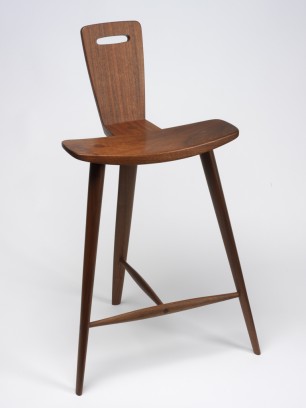
Tage Frid Stool
Tage Frid 3 Legged Stool

Design

Working in the Danish-modern style a lot of Frid’s pieces had a distinctive look compared to many of his American contemporaries. They were generally lighter looking with delicate lines and curves that celebrated the grain. The designs are especially interesting when you view them in the context of the time they were produced — the 1940s-1980s.  Many of them were years ahead of what we think of as the the mainstream designs of the time .

For me, one of his most iconic pieces is the now famous 3 legged stool. If you read his 3rd book you’ll learn about how he came up with the design while watching a horse show and sitting on a fence. It was an interesting case study as he explains some of the revisions he went through to hone the design. These stools have been on my mental to-do list for about a decade now and I hope to eventually build some for myself.

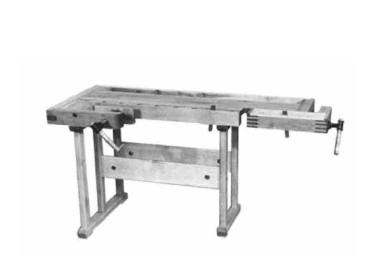
When he first arrived in the US in the 1940s there were no good places to get a solid workbench. As a result Frid had to design and build a bench for himself and for his classrooms.  Based on a traditional continental design with a shoulder vise and a tail vise the bench below was well suited for a cabinet maker. Over the years many a student, both in person and via his writing, would build and use one of these benches or a similar variant.  In some upcoming posts you’ll see me build a scaled up version for my own shop.

Tage Frid Workbench
Tage Frid Workbench

What’s with the book report on Tage Frid?

Tage Frid’s work has shaped several aspects of my woodworking, design and teaching and I had a laundry list of odds and ends I wanted to share with you here. I also have been working to finish off my Tage Frid inspired bench and wanted to set the stage for it.  And lastly because once I saw it, I could not un-see it — my Dad (who was my first woodworking instructor) is a bit of a doppelganger for Tage Frid. (Check out the picture below and compare it to the first picture of Tage Frid in this post) They both have very similar body shapes, taste in glasses, hairline and half smiles. I can’t talk too much because I look a lot like my Dad, I’m just the taller model at 6′-2″, so I suspect there will be a similar picture of me someday in the shop.

William D. Rainford -- My Dad -- And Tage Frid Lookalike
William D. Rainford — My Dad — And Tage Frid Lookalike

If you are interested to learn more about Tage Frid please check out the links below, it’s worth the time.

Other Tage Frid Resources:

Time to get back out into the shop — it’s cold outside.

Take care,
-Bill

P.S. I never got to meet Tage Frid in person, he passed away while I was living out in Seattle but I would have loved to meet him. If anyone knew him personally I’d be curious to know a few things I haven’t been able to find online:

  • What happened to his shop, bench and tools? Are they in a museum somewhere? Did they go to his grandson?
  • Anyone have a picture of him in the classroom near the iconic benches he used to build?

Bolt Stretcher

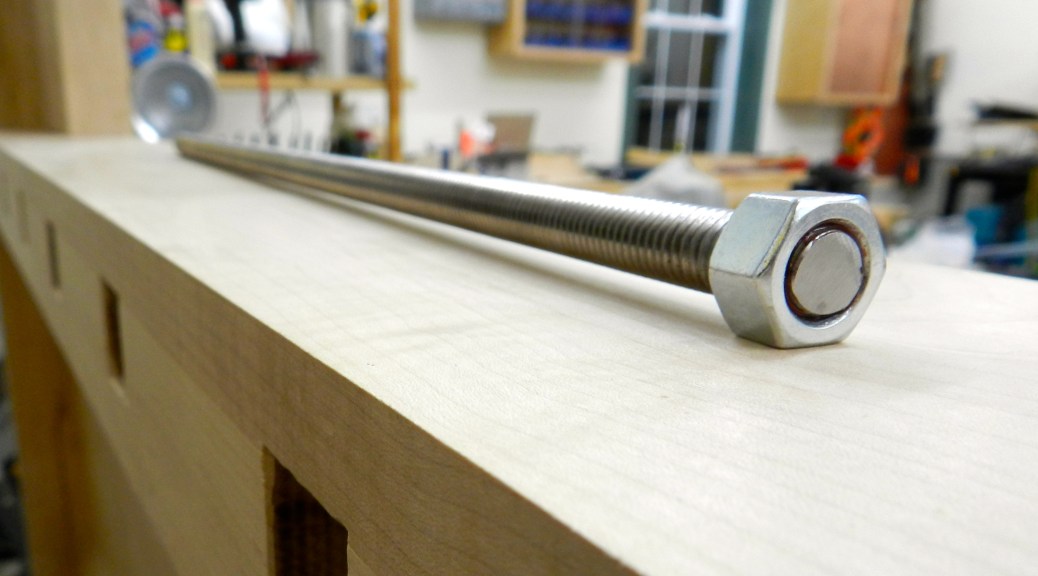
What do you do when you need a very long bolt? Most hardware stores only stock bolts up to about 10″ or 12″ in the sizes most woodworkers use — 1/4″, 5/16″,  3/8″ and 1/2″ diameter.

Time to break out the bolt stretcher?

Assuming you don’t have such a mythical machine you can make your own longer bolts.

Start with some threaded rod and appropriately sized nuts…

Filing off the rough machined edge

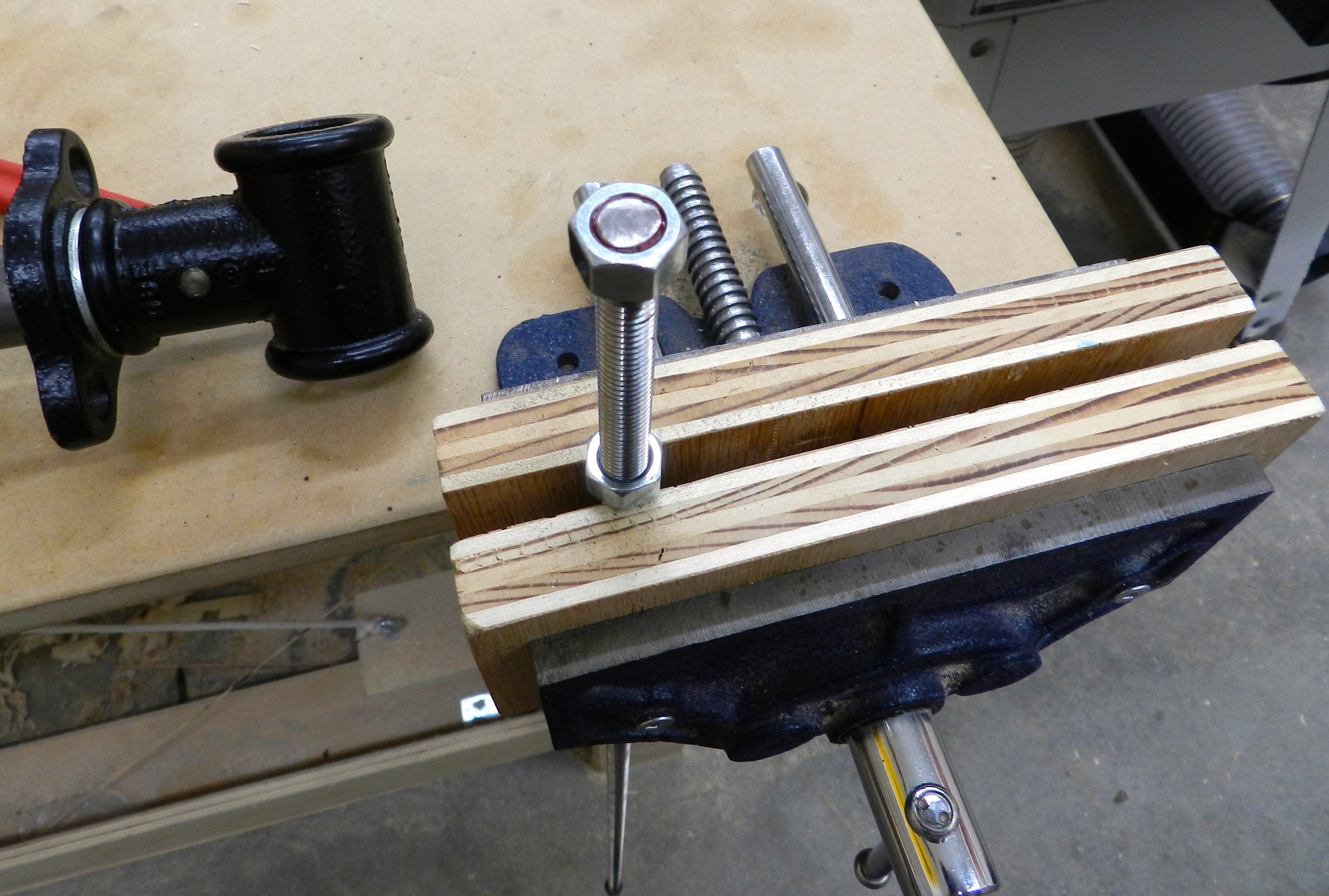
File off any paint and machine/mill marks from the end of the threaded rod.

TIP: Place a nut a 1/2 in or so down onto the threaded rod before filing. Once you finish your filing you can remove the nut, and in the process will clean out the top threads which may have been deformed by the filing. Use should also use this technique when cutting threaded rod or bolts.

Why do I need such a long bolt?

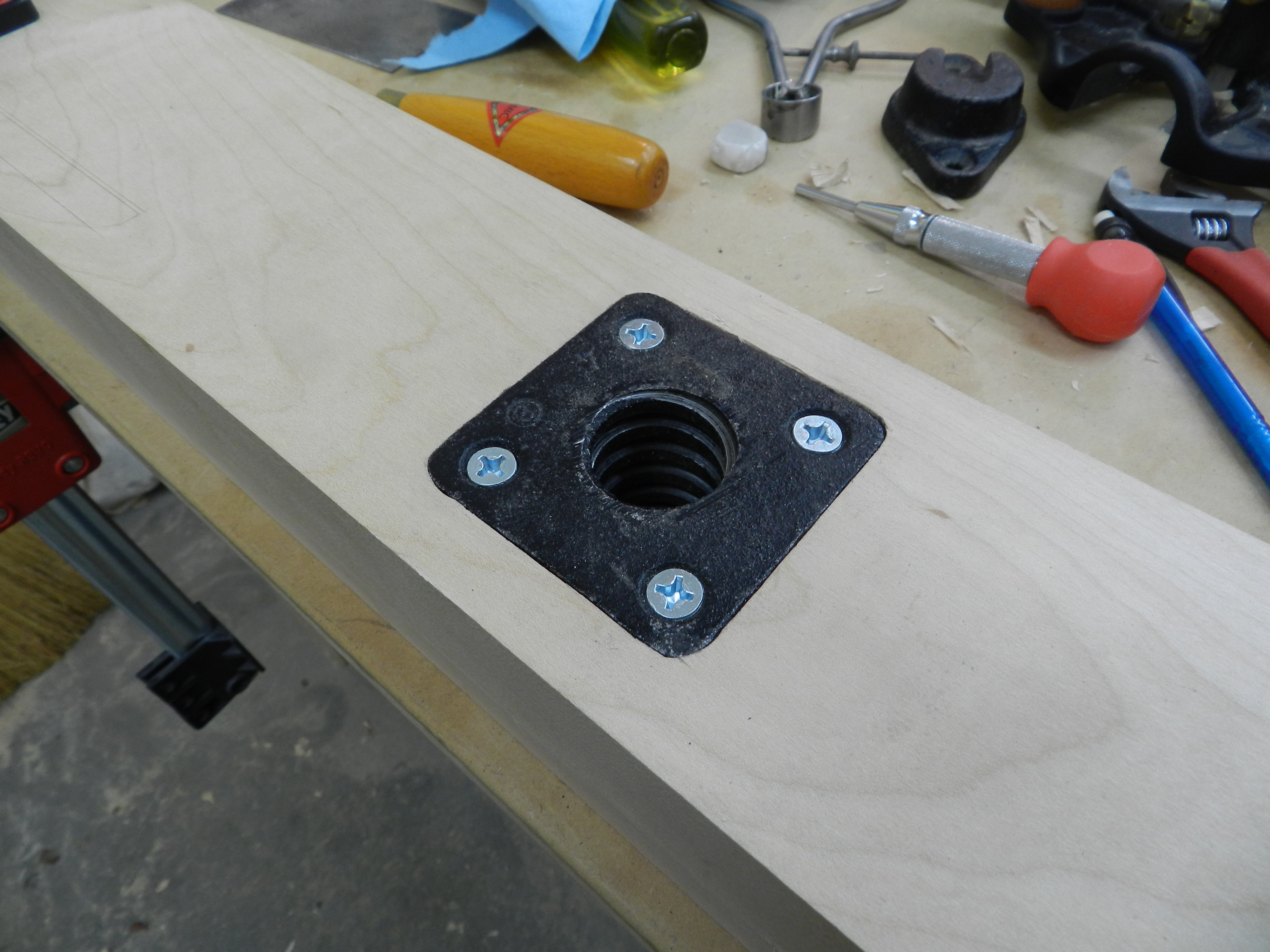
In this case, I am building a workbench with a shoulder vise — this bolt helps make sure the massive vise screw does not blow out the wood joinery.

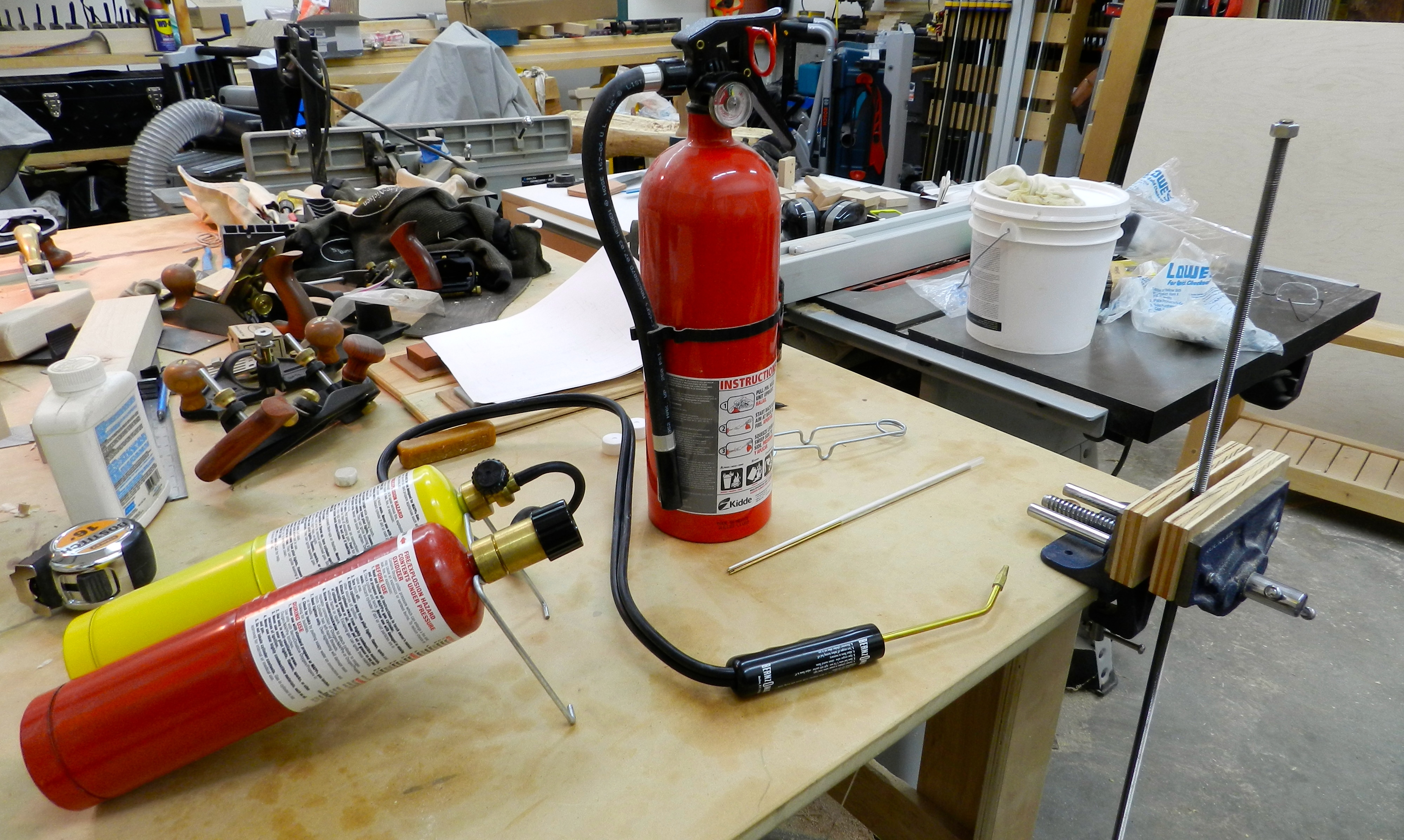
From Tage Frid Teaches Woodworking Volume 3 he suggest brazing a nut onto the end of a threaded rod, so I figured I’d give that a shot…

Mapp + Oxygen cutting and welding torch used for brazing

Time to break out the Mapp + Oxygen cutting/welding/brazing torch and some brazing rod which works much like solder. (Make sure you work in a well ventilated space and take all necessary safety precautions). Clean the mating surfaces and apply flux, then braze the nut to the threaded rod.

Brazed nut
Brazed nut

Once it cools down you can file off any excess and use this newly made bolt. I’m no expert on welding, but the amount of hardware, time, and cleanup seemed excessive. Even with some filing, wire brush work and then some polishing I was not happy with the result — this end of the bolt would be visible in the finished bench. The coloring was off and now the nut looked a little off.

Is there another way?

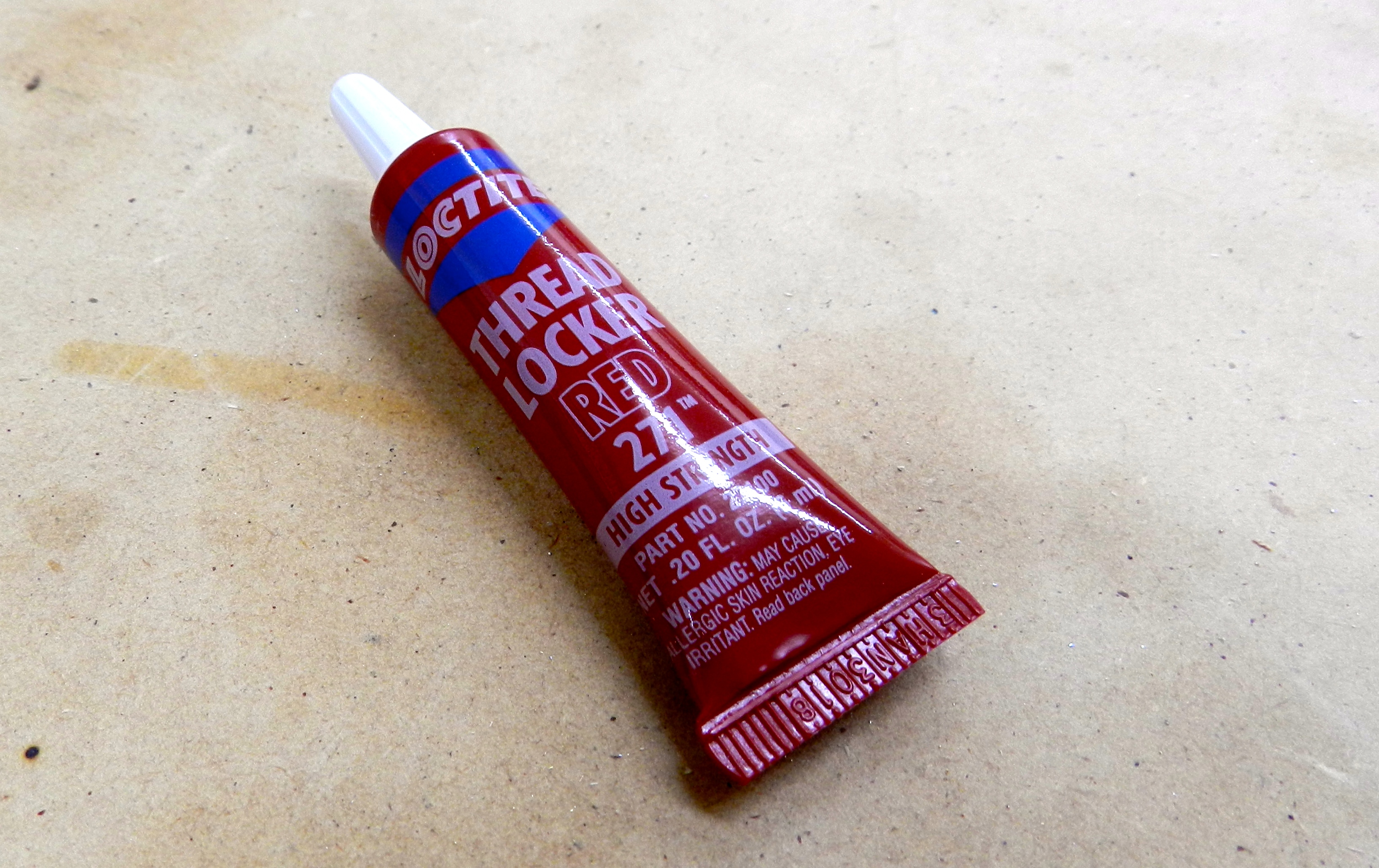
I thought back to my days working on my Mustang and old F-150 and a remembered good old Locktite Red Threadlocker 271.

Locktite 271 Red Threadlocker

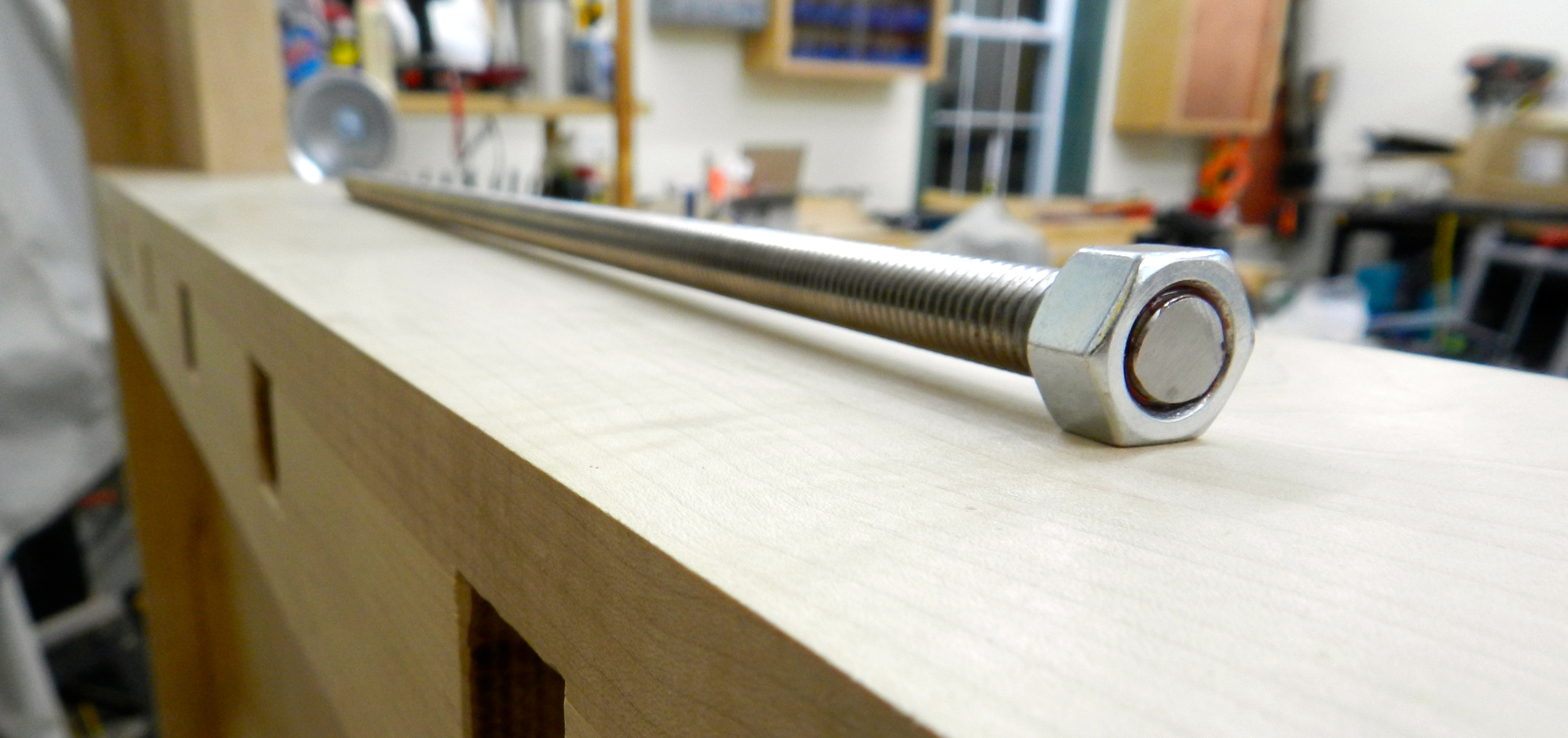
This little tube packs a heck of a grip. You apply some threadlocker on the threads and inside of the nut, put them together and let it cure for 24 hours. You would need to exceed 500 degrees F and 245 ft/lbs of torque in order to break the bond — so in other words, plenty of strength for my use.

Threadlocker curing
Threadlocker curing

Once cured I cut the bolt to length, filed off the hacksaw marks and cleaned up the leading threads using the tip above.

15" Long Bolt
15″ Long Bolt

Now I have a nice custom sized bolt ready to go. If the need arises I hope you’ll give these techniques a try. If you do, let me know in the comments.

Take care,
-Bill

Where did all the paraffin wax go?

Paraffin wax has many uses around the shop and can often be found in my tool belt or shop apron. It’s something I often take for granted and rarely thought about until recently when I needed to replenish my stock and could not find it in any of the usual places…

The Hunt for Paraffin Wax:

I tried all the places I’d swear I had seen it before…

  • My local food stores — Shaws, Hannafords, Market Basket, and Stop and Shop
  • The big box stores — Target and Walmart. (Walmart even listed it in stock on the website with a product ID but after searching on my own nobody in the store had a clue about it and all claimed people regularly come into the store expecting them to have things the website says are in-stock but nowhere to be found)
  • Any other place I thought might reasonably have it — Walgreens, Rite-Aid, CVS, True Value

No luck.

The next best idea I had was to try some craft stores. Michael’s and AC Moore didn’t list it on their websites, but Hobby Lobby claimed to carry some but was sold out online. After clearing snow in the evening and feeling a bit of cabin fever I decided to give Hobby Lobby a try in person. After hunting around I finally found some in the candle-making section. Given all my hunting around I bought the last two 1lb blocks of paraffin — likely a lifetime supply for most woodworkers.

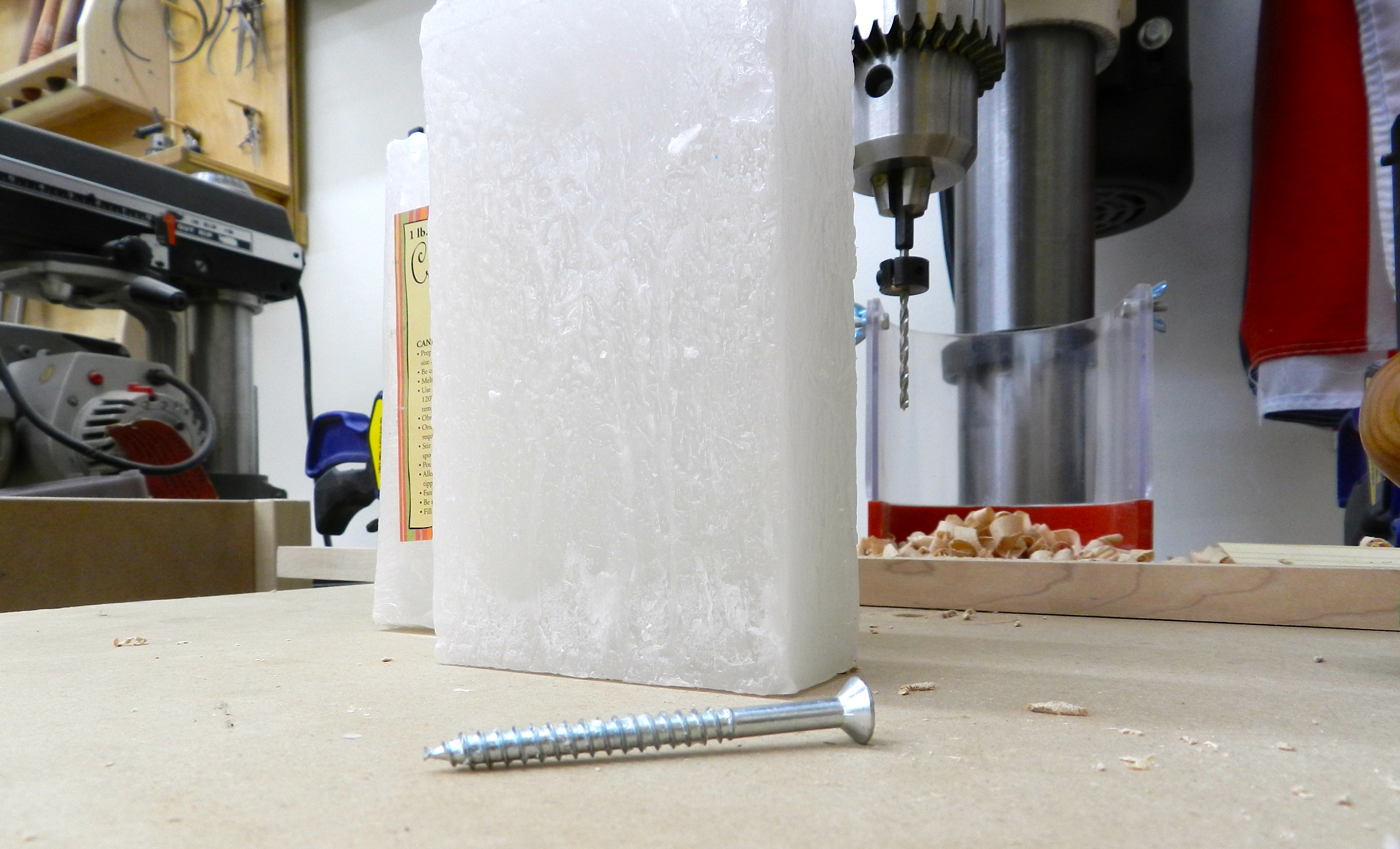
The Strategic Paraffin Wax Reserve

My favorite workshop uses for paraffin wax:

  • Lubricating screws — especially when driven into hard woods or when the screw made of a softer metal like brass it lubricates the threads and makes it easier to drive the screw. It does not affect the screws ability to hold in the wood, and is accomplished quickly by dragging the threads through a block of wax
  • As part of a workbench and similar shop finish — From Tage Frid and other sources he would dissolve paraffin with turpentine and boiled linseed oil and use it as a durable renewable workbench finish
  • Sealing metal and tools — by dipping them into melted paraffin
  • Lubricating planes and saw blades — a quick rub with some paraffin will help your planes and saws glide easily through the wood
  • Lubricating wood on wood moving parts — such as the tail and shoulder vises in a traditional workbench or on a drawer slide
Waxed Screws In Hard Maple

Tips on working with paraffin:

  • You can cut up the block of wax into any size chunk you like using a large kitchen knife. I tend to use a block about the size of a hotel bar of soap
  • Be careful in the summer as it can melt in the sun, so be careful where you store it in warmer weather. I normally have an old Altoids tin in my toolbox to keep it from getting on everything
  • For making a finish be careful as paraffin is flammable so you’ll want to melt it in a double boiler or slice it very thin or use an old cheese grater to increase the surface area before mixing it with your solvent(s)

Where did all the paraffin wax go?

Paraffin wax is generally a bi-product of the gasoline production industry and is most often used to make candles, seal jars, and as a USDA approved coating for candies and some fruits and vegetables. For folks that used to can their own food they would often seal the jars with paraffin wax (often marketed as ‘Gulf Wax’ in the food store near the Ball Jars — it came in a white box and was cut neatly into 4 bars.) From looking online it seems the USDA has advised against using wax to seal your preserves and canning seems to be less popular in recent years as most food stores no longer stock Ball jars and that sort of thing — replaced by ziploc containers and other modern plastic disposable junk. Without the connection to food, I could see food stores dropping it from their shelves.

I suspect there might be more to the story, so if you have a better theory on why paraffin seems to be a lot harder to find, or have spotted some recently, please share your thoughts in the comments section below.

Take care,
-Bill

A Few Good Carpenters

A good carpenter can be hard to find. Many of us like to think that in earlier times there were was an abundance of exceptional carpenters, but this sort of lament is not a new phenomenon. Check out the interesting except below from the 1850s:

“The Author’s Experience.

These facts and reflections have been impressing themselves upon the mind of the Author of this work for twenty years past, while he has been serving the Public as a practical carpenter. During much of this time it has been his fortune to have large jobs on hand, employing many journeymen mechanics, who claimed to understand their trade, and demanded full wages. But it has been one of the most serious and oppressive of his cares, that these journeymen knew so little of their business.

Few Good Carpenters

They had, by habit, acquired the use of tools, and could perform a job of work after it had been laid out for them; but not more than one man in ten could himself lay out a frame readily and correctly.

Why Apprentices do not Learn

Now, it is not commonly because apprentices are unwilling to learn, or incapable of learning, that this is so, but it is because they have not the adequate instruction to enable them to become master-workmen.”

— William E. Bell ‘Carpentry Made Easy: The Science and Art of Framing’ (1858)

I think Bell’s comments ring as true today as they did when he wrote the above in 1858. I won’t focus on the lazy workmen uninterested in learning, but I will focus on those who want to keep learning new skills. As with many of life’s pursuits, you’ll get out of it what you put into it, and there is much to be learned if you know where to look.

Finding a good carpenter

Most of the best carpenters and woodworkers I know get the majority of their work via word of mouth and are booking months out at a time and  thus don’t have to invest much in marketing. If you’re looking to find one of the ‘few good carpenters’, ask around at a local woodworking school, shop, guild, club or friends and family for referrals and interview your next carpenter.

Learning More

One of the best ways to learn a woodworking skill is to take a class or workshop.

I have a few upcoming workshops this spring at the North Bennet Street School (details below) and there are some seats available if you are interested in joining me.

Molding planes
Molding planes

Making Traditional Moldings Using Hand Planes @ The North Bennet Street School

Saturday, April 12 – Sunday April 13 2014

8:30 AM – 4:30 PM Register

Instructor: Bill Rainford
$365

Learn to use traditional molding and joinery planes to produce beautiful traditional molding profiles. Learn the basics of tuning and using these planes. Build a basic sticking board, used to hold the moldings you are making. Layout and execute historic profiles. We discuss the history of traditional moldings, examine planes/profiles students bring (optional) and, if there is time, an introduction to carved moldings.

Shutters Workshop
Shutters Workshop

Introduction To Shutters @ The North Bennet Street School

Saturday, March 15 – Sunday March 16, 2014

8:30 AM – 4:30 PM Register

Instructor: Bill Rainford
$365

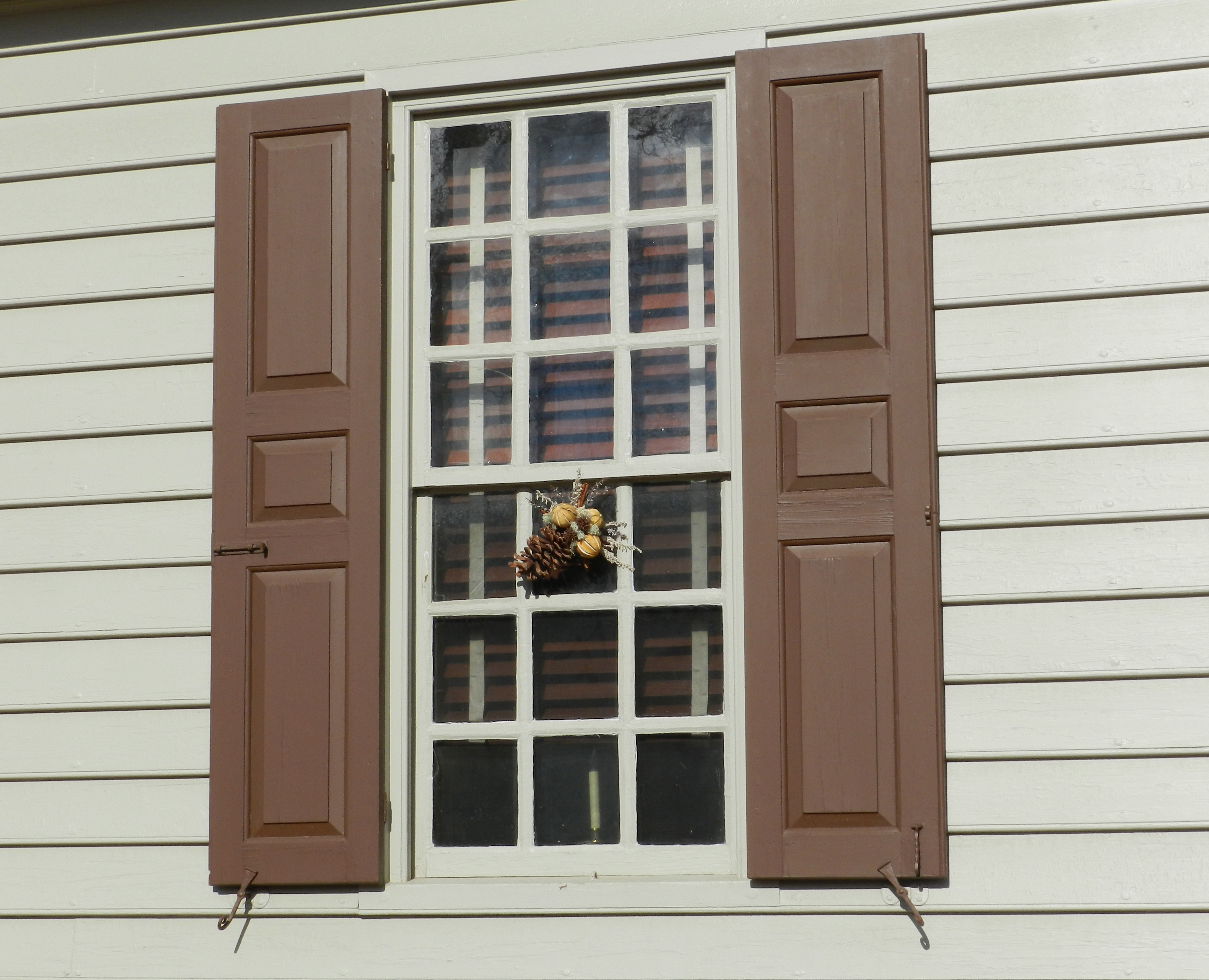
Learn about traditional wooden shutters in this two-day workshop. Using traditional joinery, students build a sample shutter and learn the skills needed to layout and build shutters for custom projects. Discussion includes interior and exterior uses, fielded panels and louvered styles. Students should be able to plane and square up a board by hand and have some experience laying out and cutting traditional mortise-and-tenon joinery by hand. Some experience with tuned hand tools and power tools is required.

Traditional Shutters


If the above does not appeal to you, there are several schools around the country that teach solid woodworking and carpentry skills. I encourage your to explore classes at any of these schools: The North Bennet Street School in Boston, The College of the Redwoods in California, The Heartwood School, The Shelter Institute in Maine, Philadelphia Furniture Workshop, The Kelly Mehler School of Woodworking, Phil Lowe’s Furniture Institute of MassachusettsConnecticut Valley School of Woodworking, and Roy Underhill’s The Woodwright’s School

If you’re not able to make it to one of the above schools there are scores of books that can help you along your woodworking journey. I think every carpenter would benefit from reading all 4 volumes of Audel’s Carpenter’s Guide, Tage Frid Teaches Woodworking Vol 1-3, Bell’s Carpentry Made Easy: The Science and Art of Framing, and Get Your House Right.

Woodworking is a life long journey and I hope that you will continue pursuing new aspects of the craft.

Take care,
-Bill