A Visit with the Frid Family

This past weekend I had an amazing opportunity to visit the home of Peter Frid — Tage’s son, and visit with his family.  Beyond seeing some of the many items Tage made it was great to hear stories of what life was like with Tage and Emma from Peter, his wife Kathy, their son Oliver and his wife Cherie.
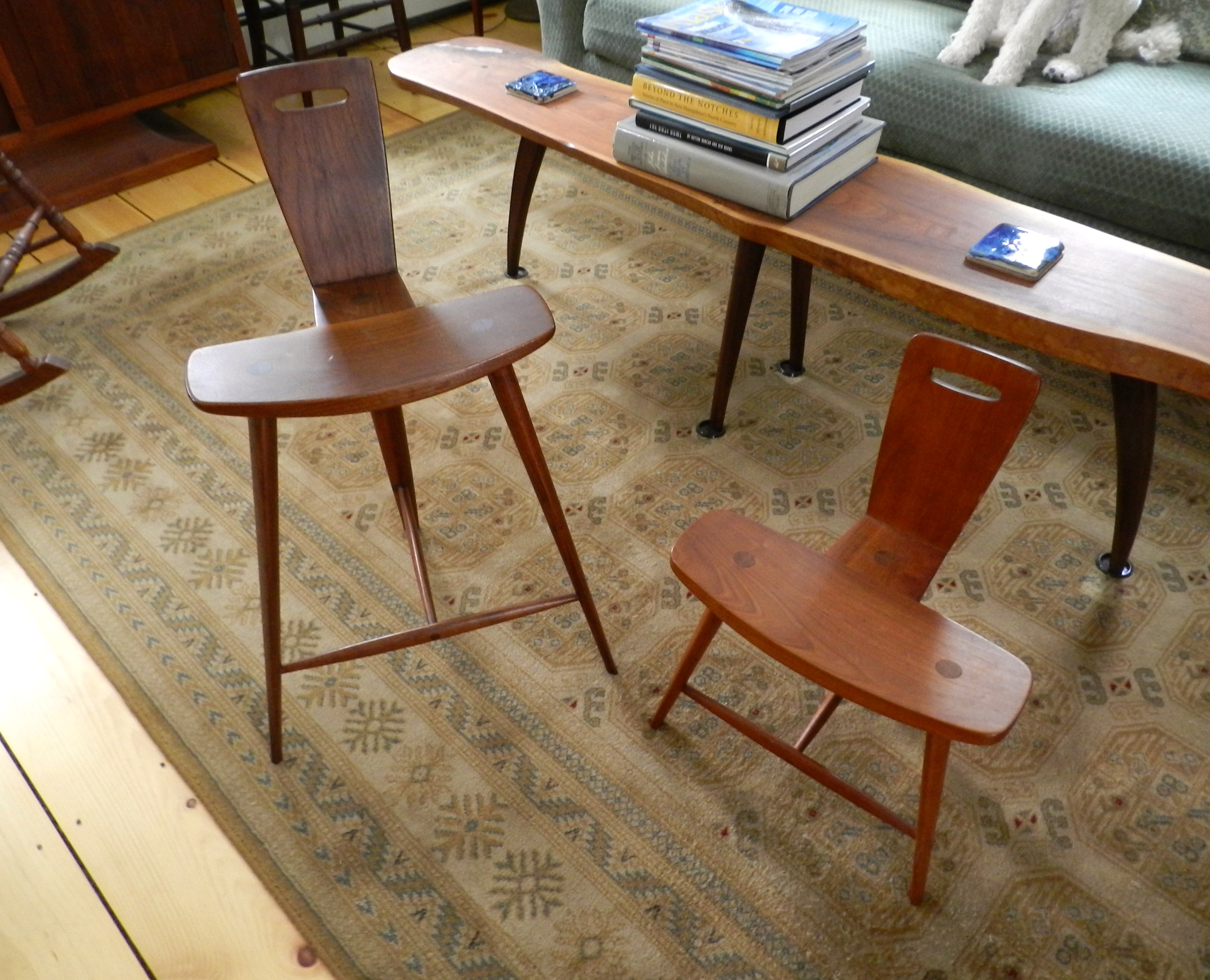
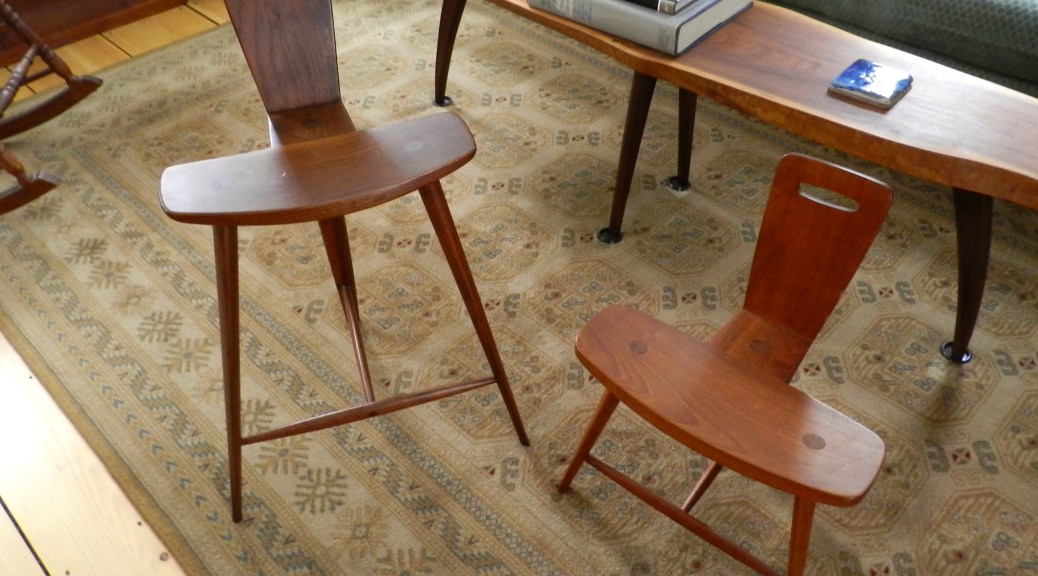
Tage Frid's iconic 3 legged stools and natural edge coffee table
Tage Frid’s iconic 3 legged stools and natural edge coffee table

I was very exited to see Tage’s iconic 3 legged stools in person — building a pair has been on my mile long todo list since I first learned about them years ago. I tried unsuccessfully to see these chairs at the MFA and RISD museum but every time I went they were not on display. Not only did I get to see them, but I got the chance to sit on one of them as well. The stool is very stable and surprisingly supportive given its seemingly diminutive stature. It was also just as comfortable to sit in it facing forward as it was to sit in it backwards. I had read the story about how Tage came up with the idea for the stool while sitting on a fence at a horse show, but it was neat to hear that the reason Tage and Emma were at the show was because Peter and his sister were riding in that very show.

Also shown in the picture above is a very nice natural edge coffee table with inlaid metal that is seen in the Gallery section of Tage’s 3rd book.
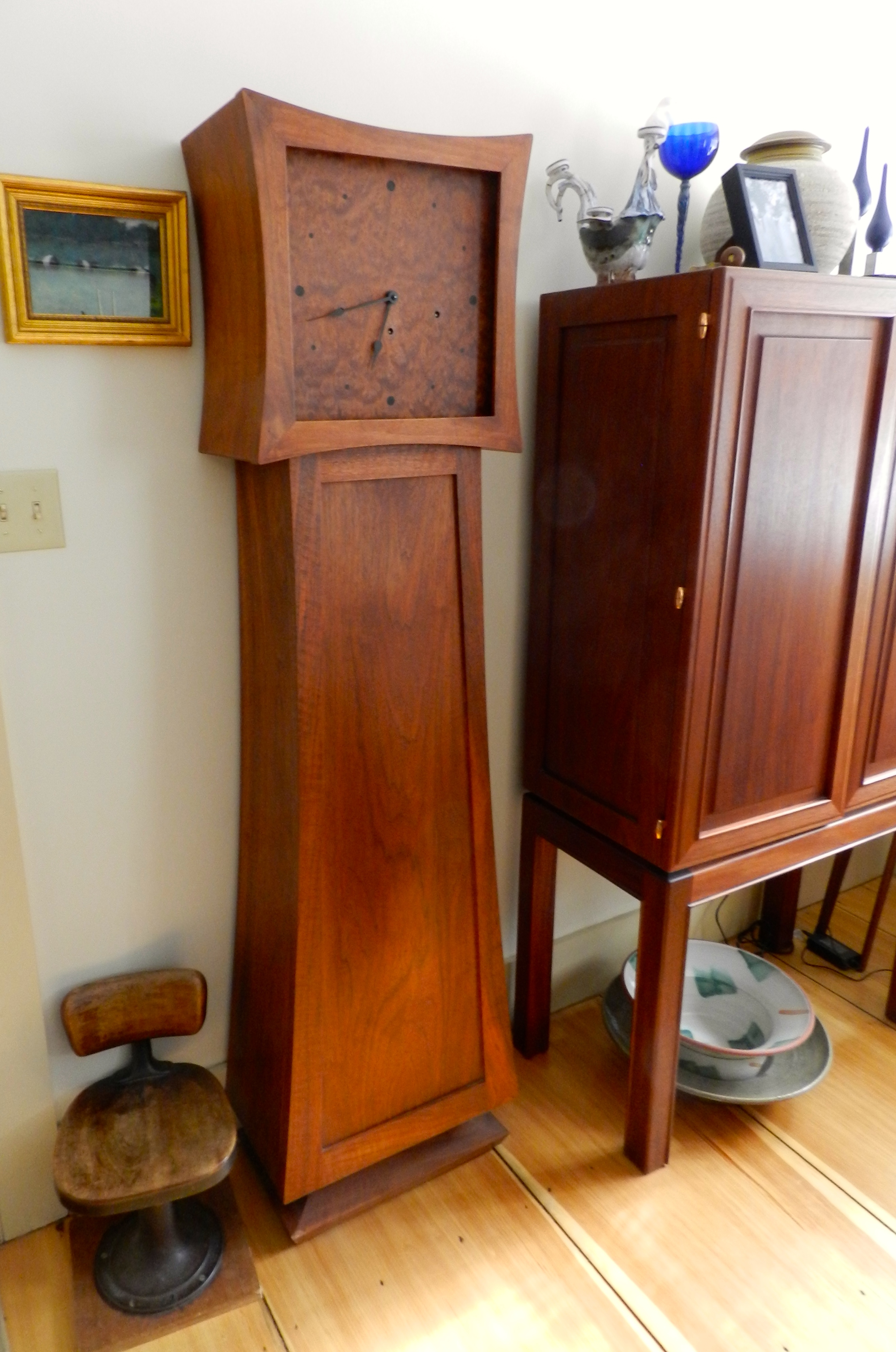
Tage Frid's Grandmother Clock
Tage Frid’s Grandmother Clock

In another room was Tage’s famous ‘Grandmother Clock.’ The black and white photos of Volume 3 of Tage Frid Teaches Woodworking do not do it justice as the wood has aged beautifully. Inside the case are all the traditional polished brass movements you would expect to find in a large case clock.
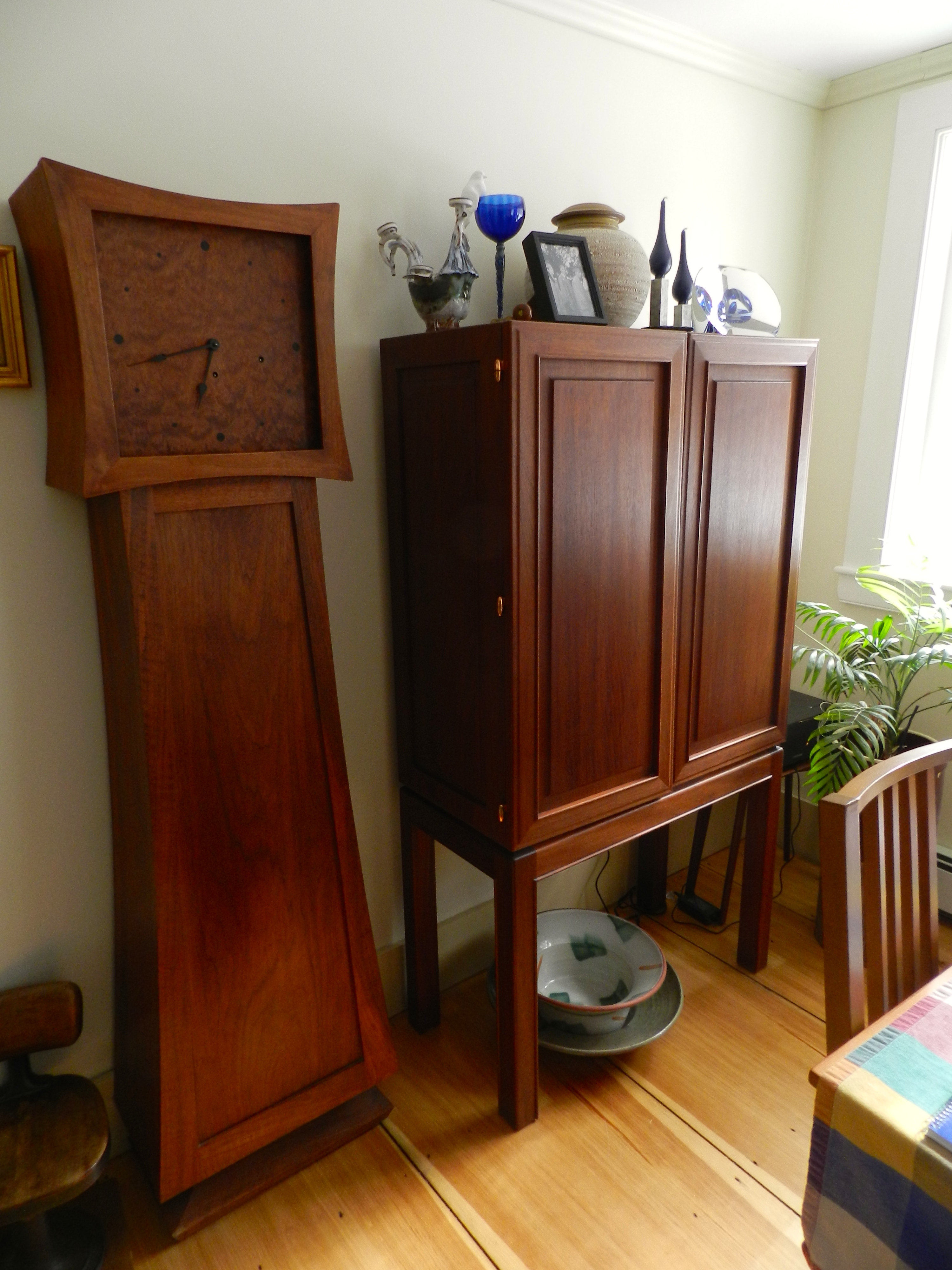
Grandmother Clock and Bar Cabinet

Adjacent to the clock is a beautiful liquor cabinet that is also from the Gallery section of Volume 3. It is made from mahogany and the panel details on the side and top are carved in. The cabinet also has beautiful copper/bronze hinges that pivot on an egg shaped knuckle.
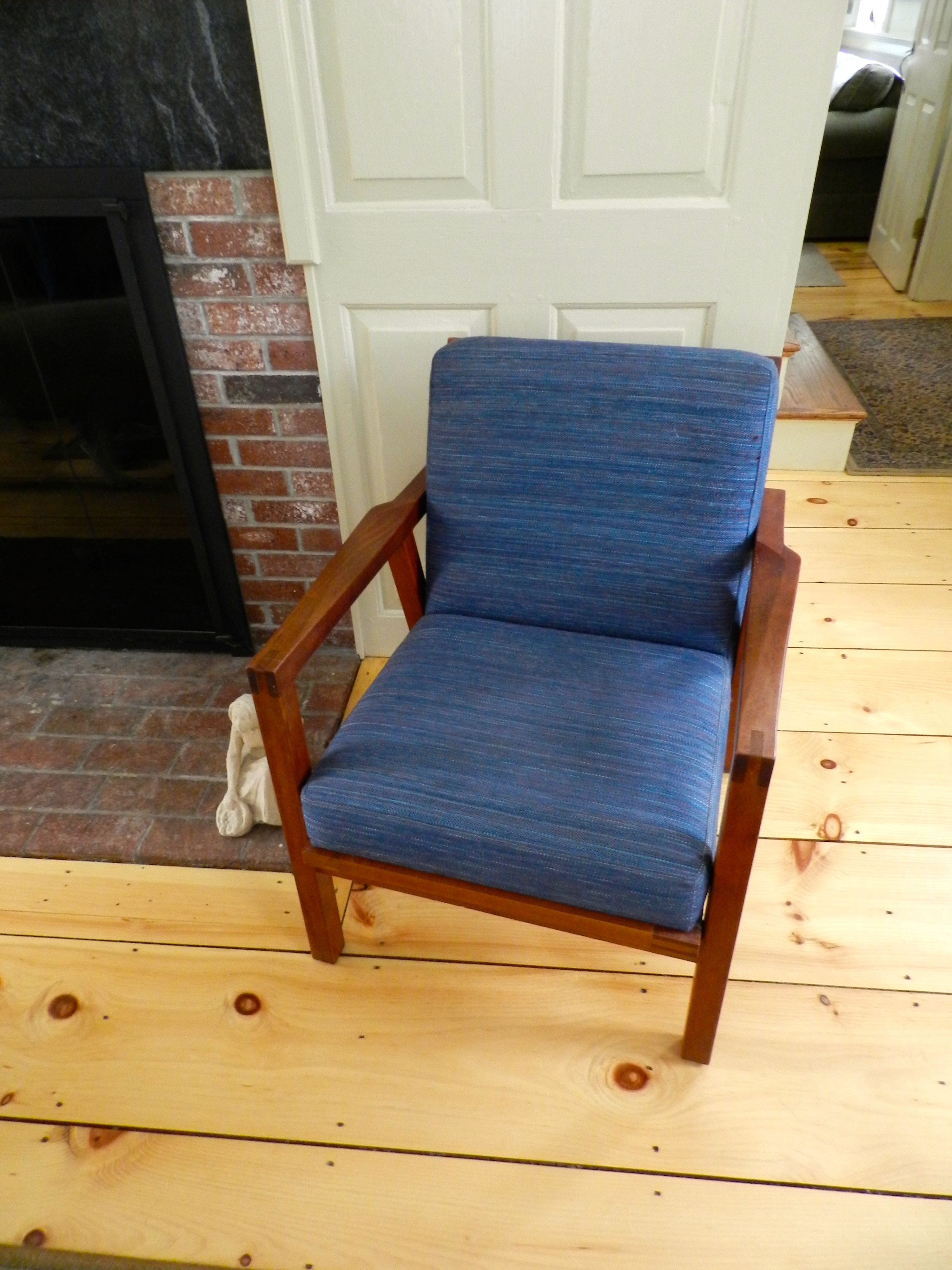
Tage's favorite chair to sit in
Tage’s favorite chair to sit in

Shown above and below is Tage’s favorite chair to sit in. With clean lines, expressed construction, and thickly upholstered cushions I can see why he liked this chair a lot. Like most Danish modern furniture the lines are clean, the details are subtle and piece has a visually light feel.
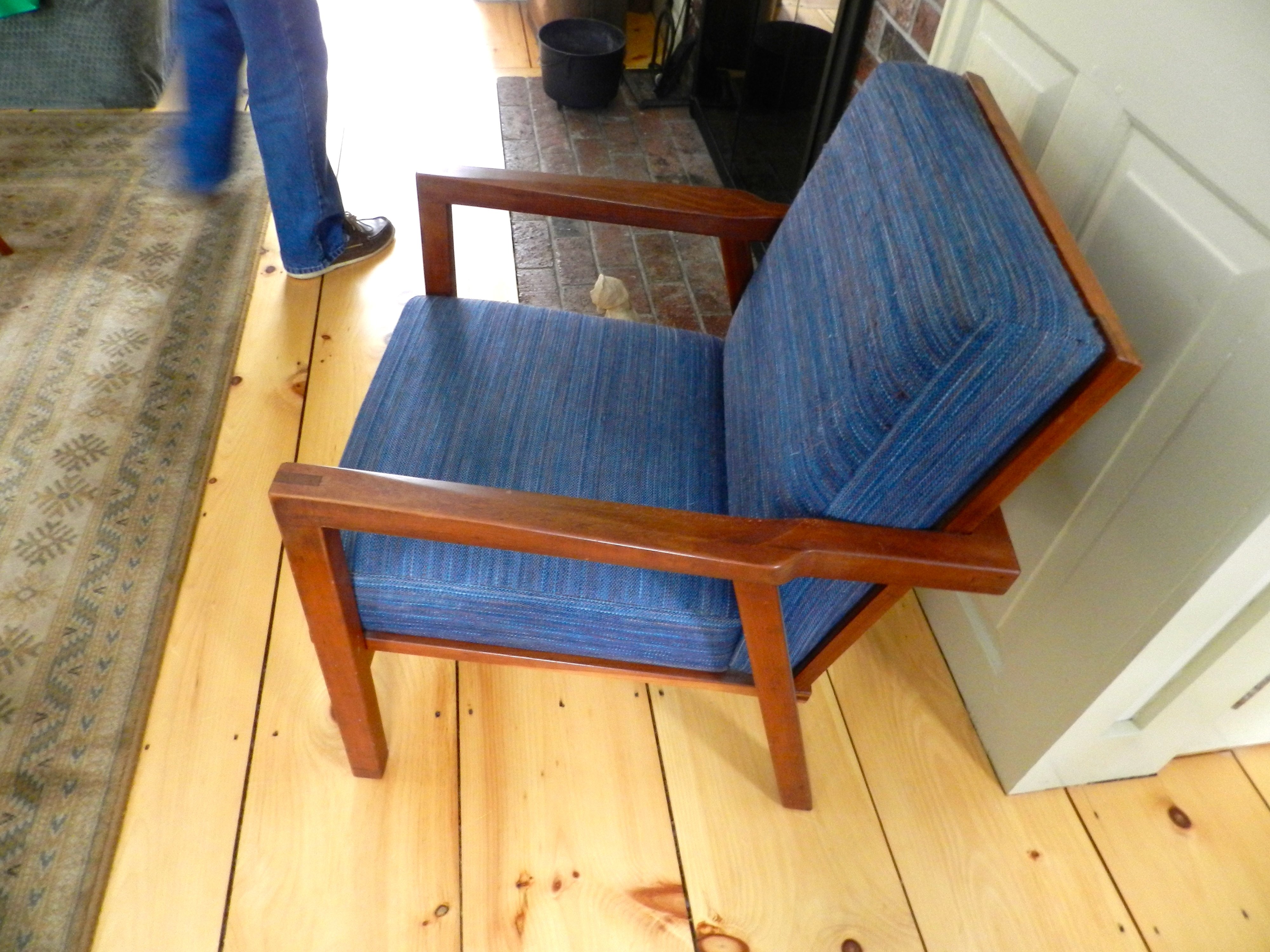
Expressed joinery and clean lines on this comfortable chair

The profile view reminds me of some cues from a morris chair and the forward lean of the legs reminds me of some of the chrome accents on cars from the 1950s — even while standing still it wants to be moving.
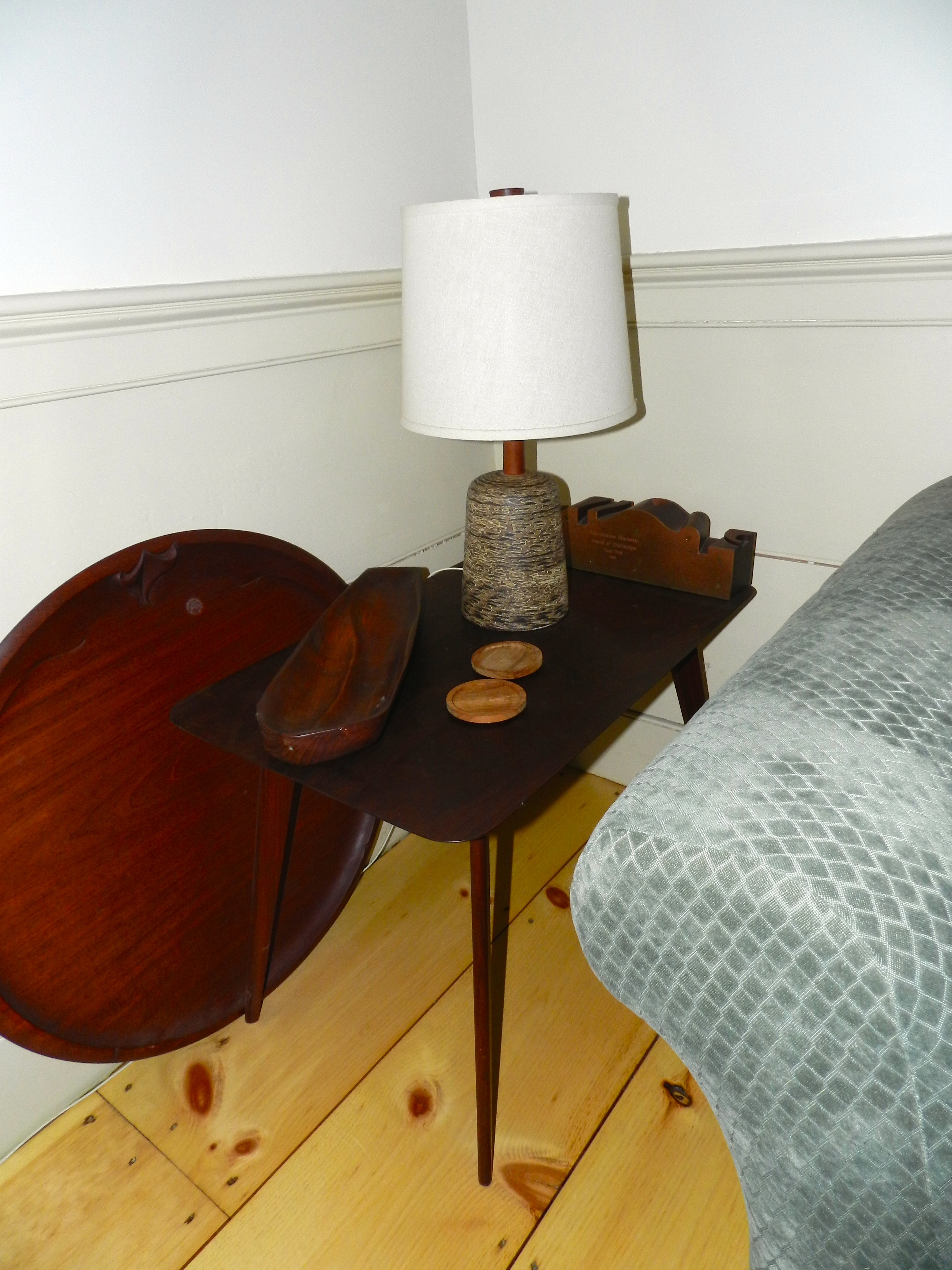
Tage Frid End Table
Tage Frid End Table

The end table above has another great story behind it. In some of Tage’s writings and articles he mentioned the rocky start he had when first arriving at the School for American Craftsmen wherein the facilities were not well setup and some folks were not eager to hear what Tage had to say. One morning while the students were attending lectures with another instructor Tage took a large board and started milling and working it. By mid-day he finished construction of the table and by the end of the day he even applied a scraped lacquer finish. This feat caused quite the sensation at the school and suddenly a lot more folks wanted to hear what Tage had to say as the existing way the program operated would have taken about 2 weeks for students to carry out this work and with inferior finish results. (You can read more about this story and many others in the Smithsonian interview of Tage Frid available online here.). The table has a delicate look that was ahead of its time and has aged well.
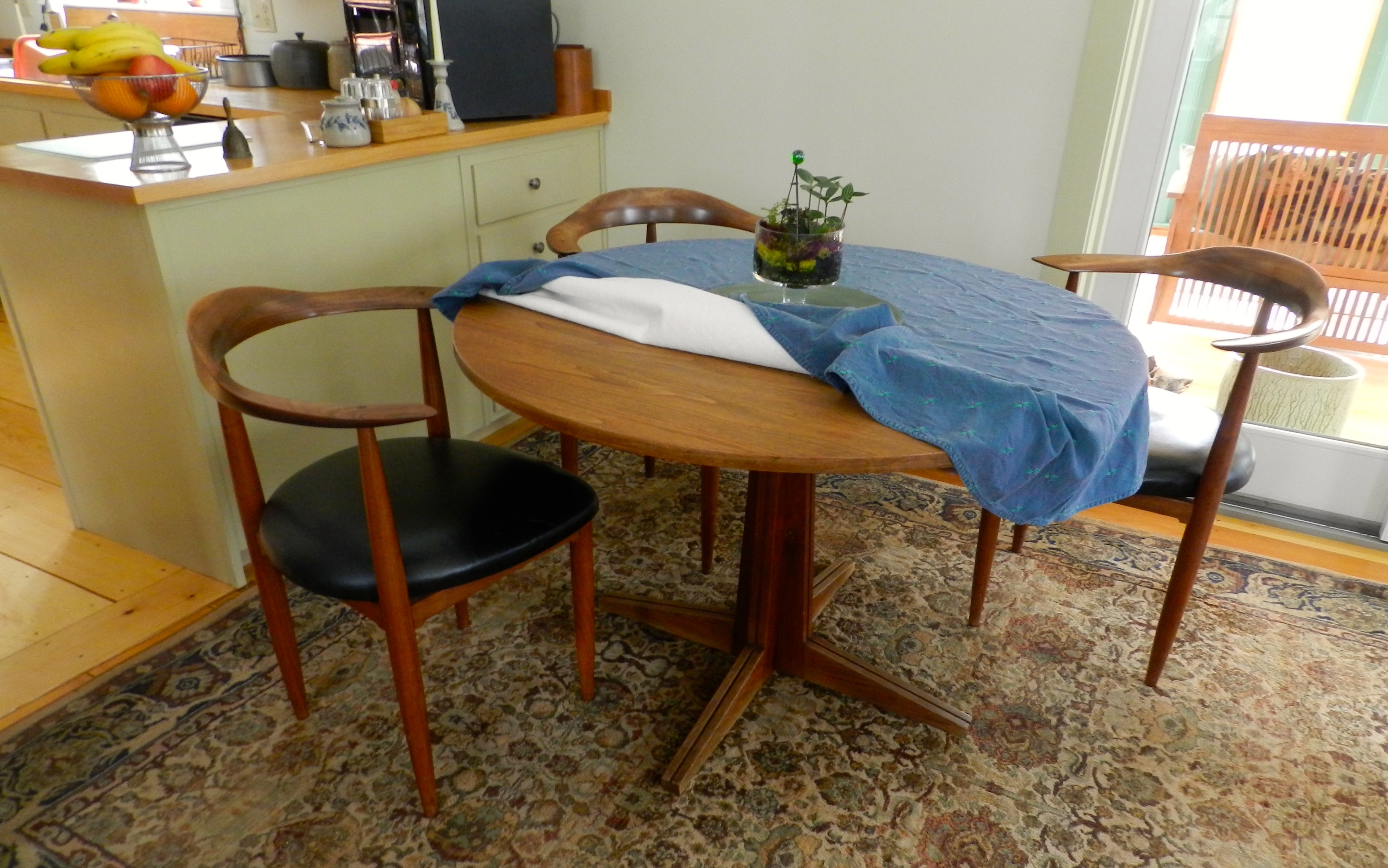
Round pedestal table and corner chairs
Circular pedestal pull-out table and corner chairs

In the above photo you can see the circular pedestal pull out table Tage made in Chapter 4 of Volume 3 of his book. The table base has some interesting design details that hide where the table expands from. The book details the intricate and interesting sliding mechanism that supports the removable table leaf. Also shown are some corner chairs with upholstered seats. They are comfortable when sitting upright and support you well even if you sit with a more relaxed or slouched posture.

While not a cabinetmaker by trade I suspect the knack for woodworking and artistic creativity is in the genes as Peter built numerous very nice cabinets and built-ins around the house, including the kitchen cabinets and tops shown in the background of the above photo and a very nice computer desk. Oliver is an art teacher and accomplished painter and you can see some of his work here.
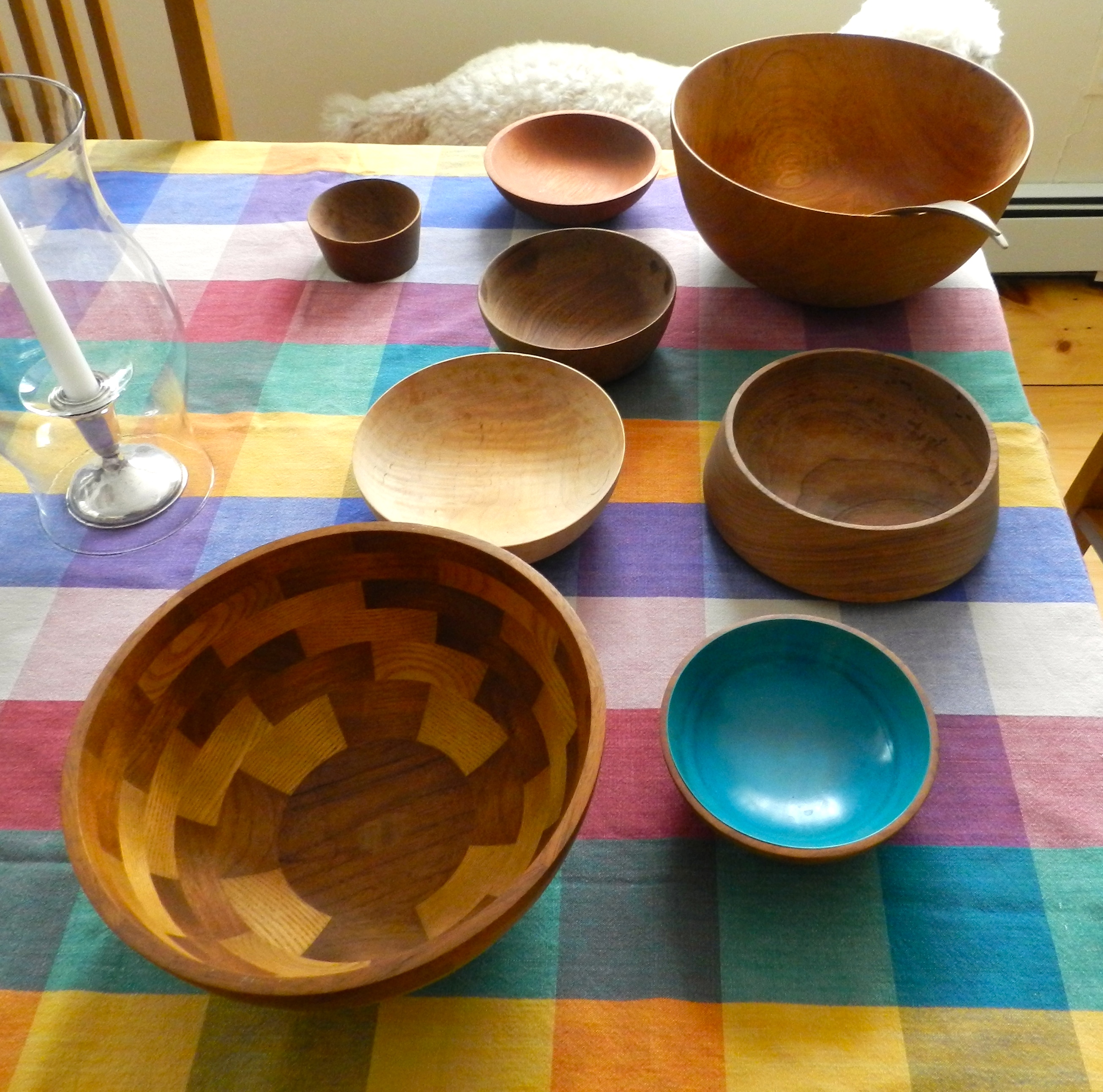
A sampling of Tage's bowl turning
A sampling of Tage’s bowl turning

Tage also did a fair amount of bowl turning especially in his later years. Above are a few samples of his turning work. The large checkered/segmented bowl and blue lacquered bowl in the foreground were two of my favorites. The large salad bow near the top of the photo is also interesting. Rather than create a large tenon or undercut a tenon for use with a bowl chuck it seems that Tage used 4 wood dowels to presumably affix the large bowl blank to a faceplate or similar — thus maximizing the size of the bowl he could get from the blank and also allowing him to easily cut it off of the faceplate when the turning was completed.
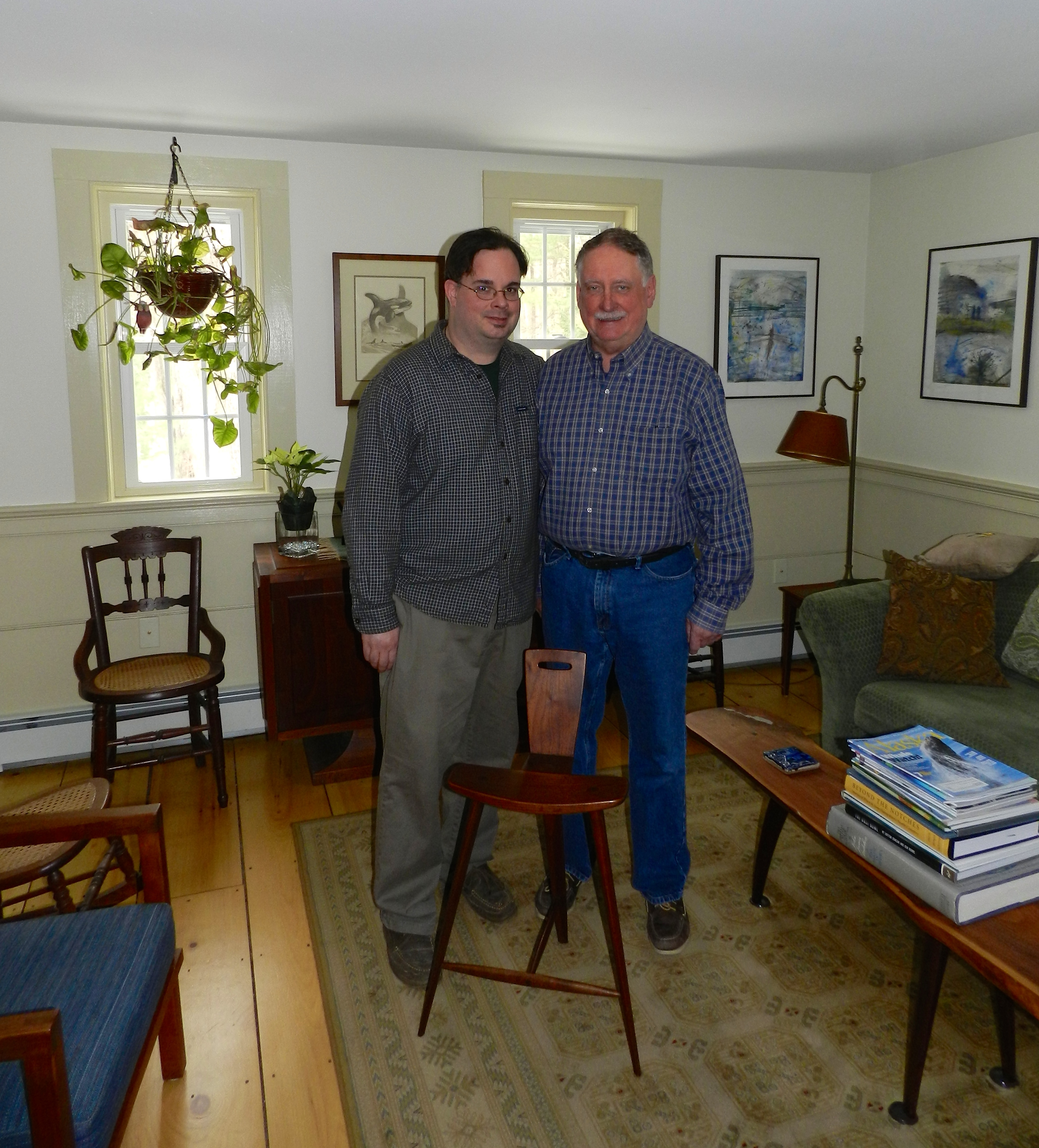
Peter Frid (Left) and Oliver Frid (Right)
Peter Frid (Right) and Oliver Frid (Left)

Pictured in this last photo are Peter Frid (Tage’s Son) on the right, and Oliver Frid (Tage’s Grandson) on the left. I want to thank Peter for opening up his home to me, a thank you to Oliver for the introduction and a big thanks to Kathy and Cherie and the whole Frid family for their hospitality and allowing me to poke around admire some of Tage’s work. It was an inspirational visit and reminds me how I need to get back out into the workshop and finish off my Frid inspired workbench.

Take care,
-Bill

P.S. If you’d like to learn more about Tage Frid and his work, please check out my earlier post about him here.

P.P.S I also got to see some of Tage Frid’s workbenches and will be exploring those more in a future post.
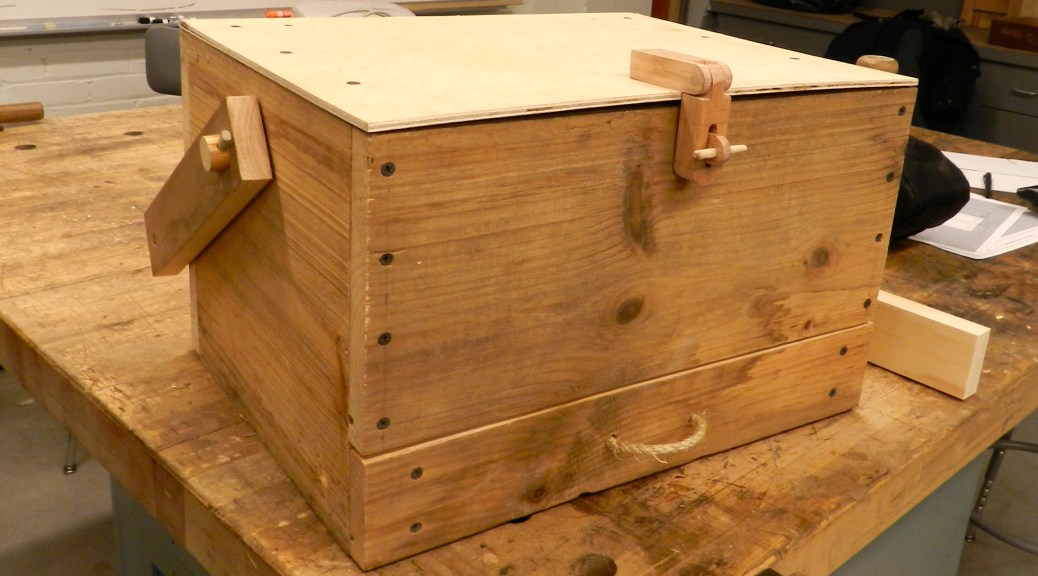
Jordan’s Toolbox

Some woodworking projects are for fun, some are skill builders, some are to keep the lights on and some are for necessity. As they say “necessity is the mother of invention.” When taking a woodworking workshop at the North Bennet Street School one of the challenges is often lugging all your tools to class. The school is set in the North End of Boston and most folks take public transportation to get to the school as parking in that area is expensive and in short supply. I’ve seen folks use bags, backpacks, plastic toolboxes, 5 gallon buckets, rolling carts, suitcases, you name it. I can still remember lugging big toolboxes on the subway when I was student.

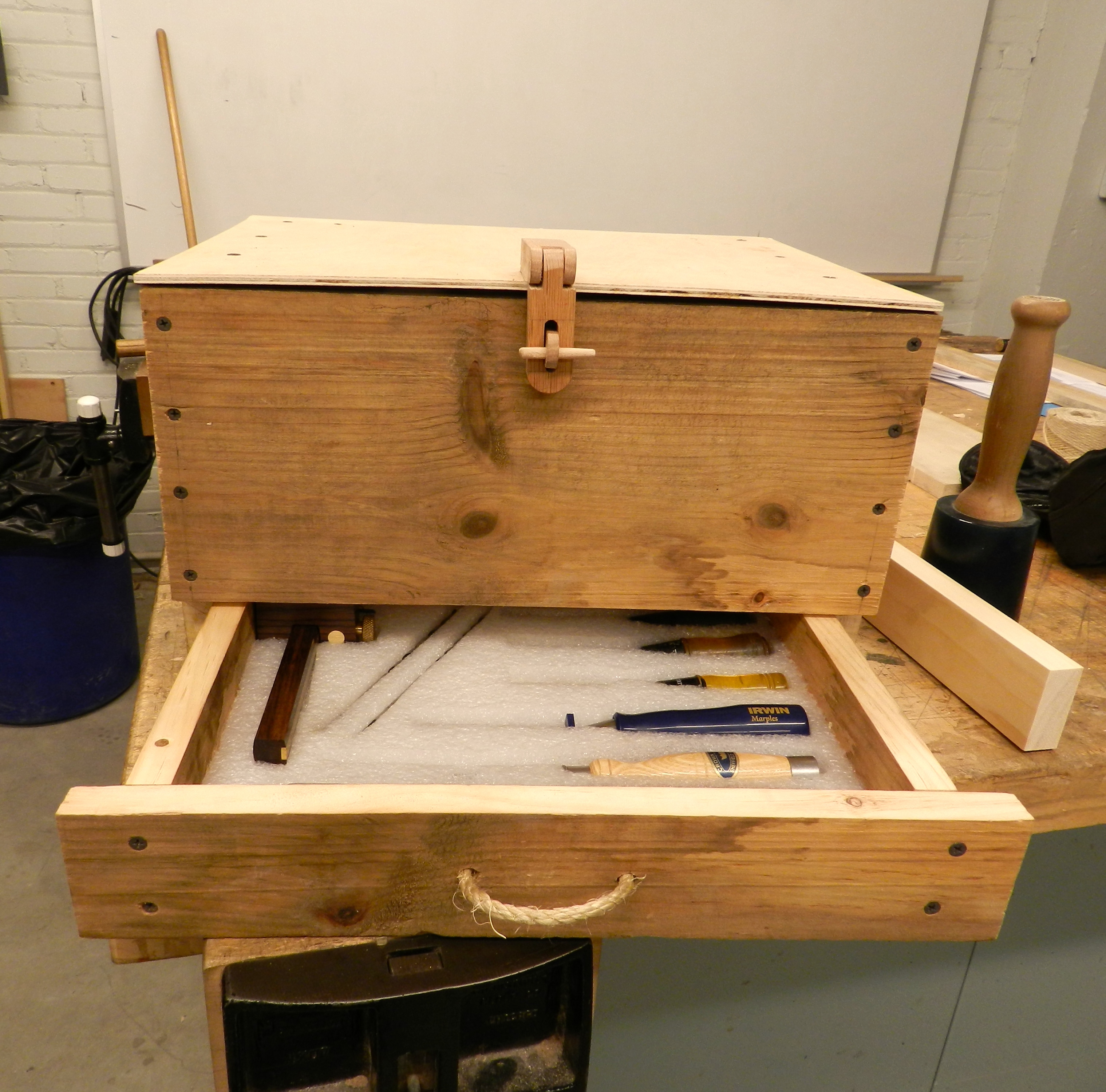
This past weekend one of my students, Jordan Ruiz, showed up to my Introduction To Shutters Workshop with the toolbox you see below:

Closed toolbox with oak hasp

He designed it off the top of his head and made it mostly from a single pine board.

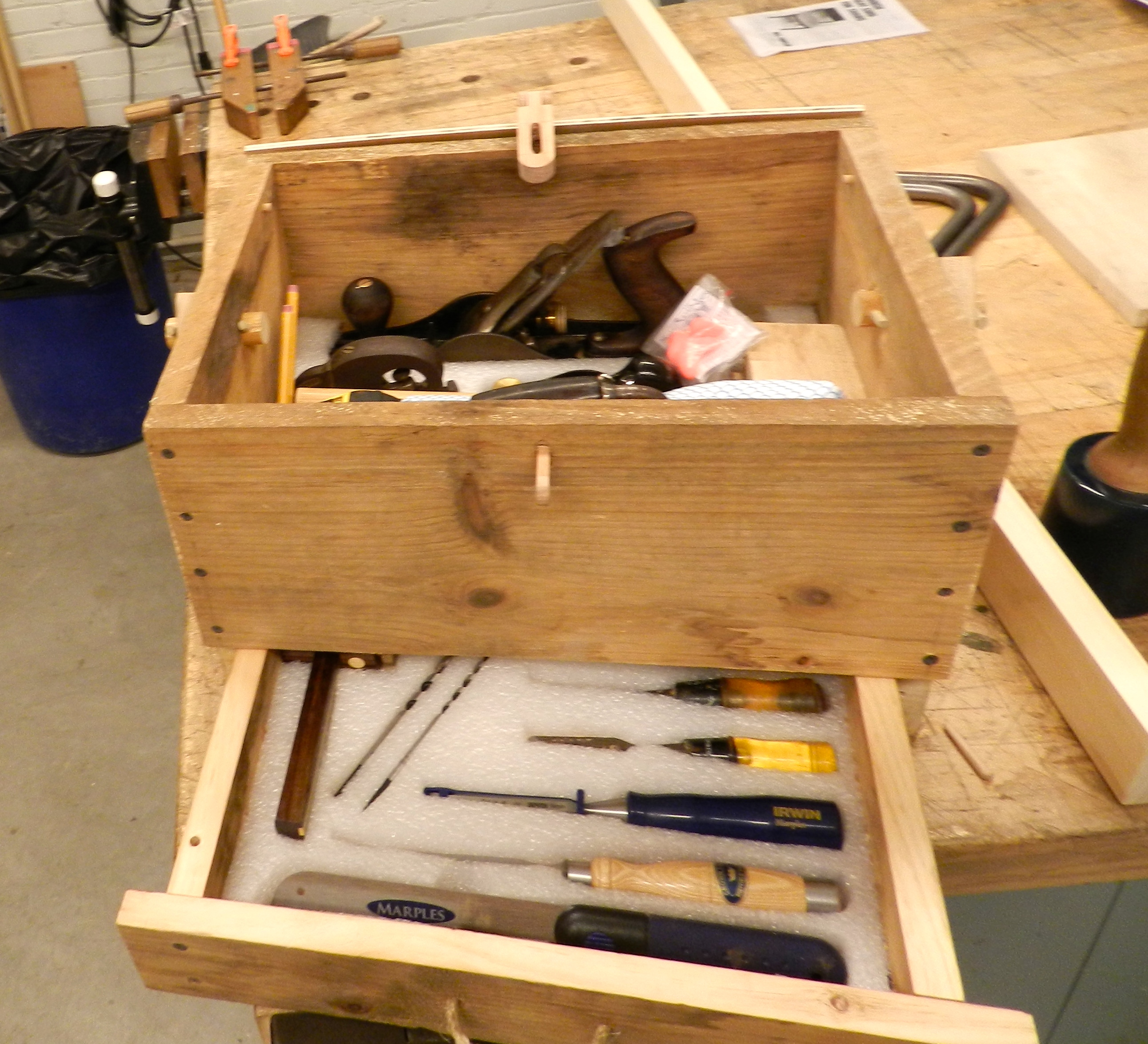
Open drawer
Open drawer

What I like about his utilitarian design is how he translated a lot of the traditional hardware needs into wooden or other natural equivalents. Note the oak hasp which is articulated and secured with wooden pins. A hemp rope drawer pull. Dowels to secure the moving wooden tote handle, sliding top secured by a captured dowel etc.

French fitted packing foam to keep the tools in place

I also like how Jordan used some packing foam to ‘French Fit’ all of the tools into his toolbox.

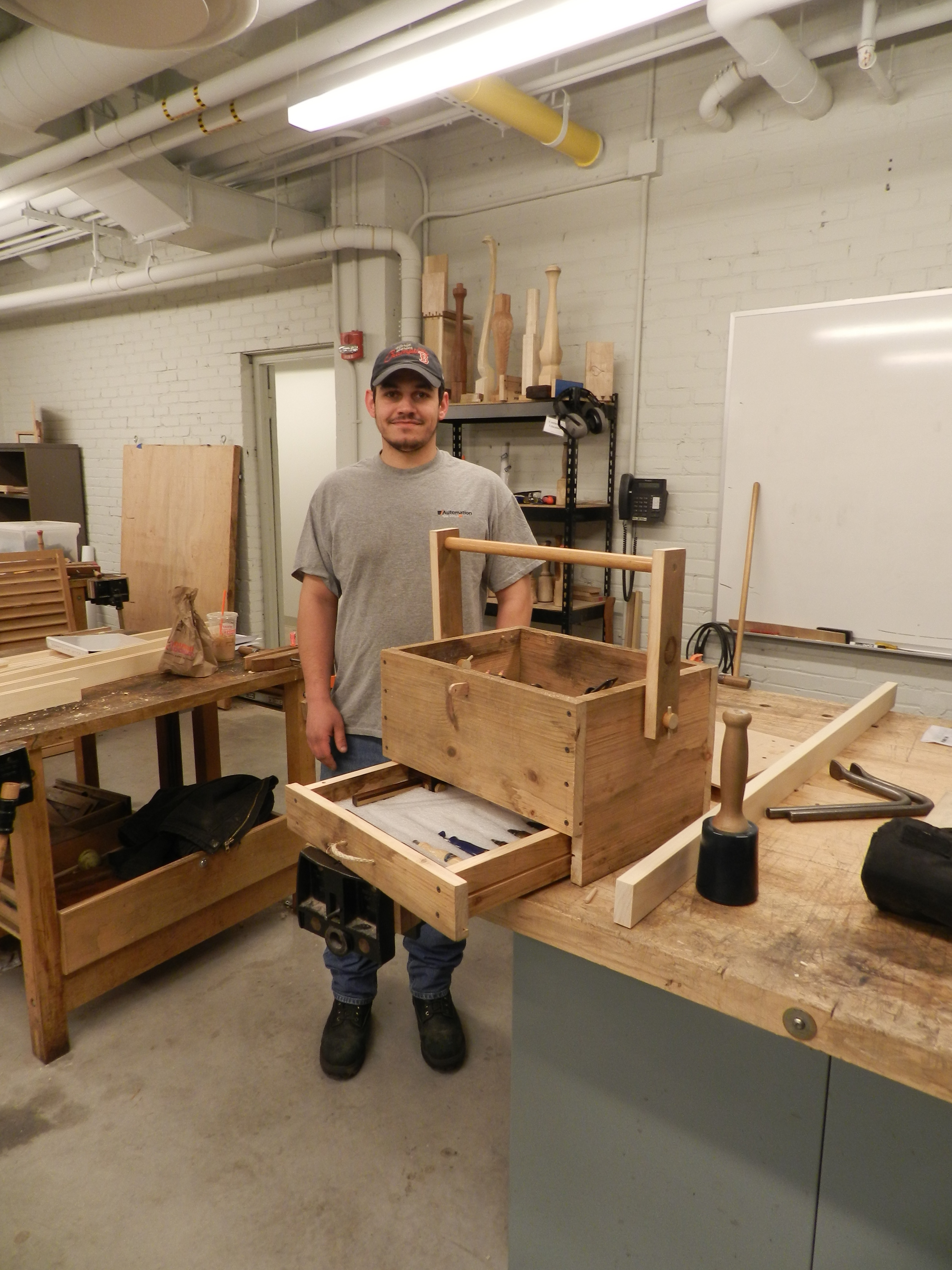
Jordan Ruiz with his toolbox

If he’s willing to do all that work to prepare for a workshop I can only imagine the dedication and creativity he’ll have at the job site. I think Jordan has a bright future ahead of him in the woodworking field. (He also made a very nice shutter as seen in the previous post)

Take care,
-Bill

A Good Shutter Can Be Hard To Find

You don’t often see a good working pair of shutters on a newly constructed home. Most times you see a pre-fab set of vinyl shutters screwed on to the side of a house or no shutters at all. The vinyl shutters usually have no hardware and often are not properly sized for the windows they are adjacent to. I want to reverse that trend and make sure at least a few folks know how to make a traditional wooden shutter.

Shop plans for my Shutters Workshop

I designed and taught an Introduction to Shutters Workshop at the North Bennet Street School this past weekend which was a lot of fun. Beyond my usual hand drawn plans I also modeled this project in SketchUp. (You can read more about that effort here).

The class hard at work

In the class students learned how to make a shutter using traditional hand tools and via power equipment. They were able to weigh the pros and cons of each against their skill sets and use what was most appropriate to their project. (Some folks will be repairing a few shutters, others will be making enough for an entire home)

Making octagonal pins

After building the frames, cutting all the mortises and tenons, and fielding the panels, everyone learned about traditional draw-boring. By making and using tapered octagonal pins and driving them through the offset hole drilled into the tenon, the joint is drawn together. This joint uses no glue, is quite strong and can be serviced in the future if a rotten piece needs to be replaced.

John finishing up his shutter

We also discussed many design options, regional variations and examined several examples we had on hand. It was a busy two days, but I’m hopeful that we’ll see some proper new shutters start popping up in the area.

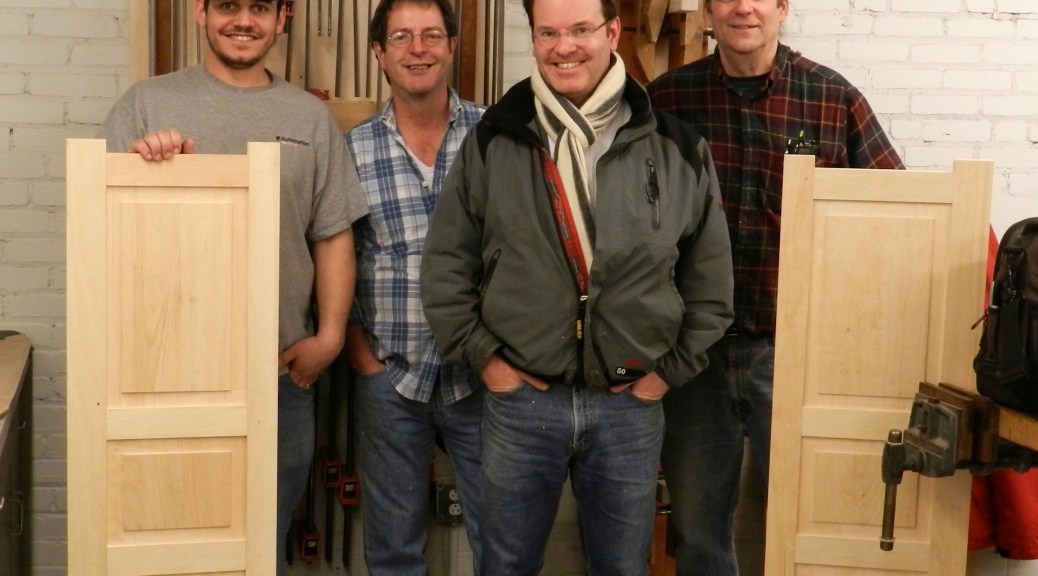
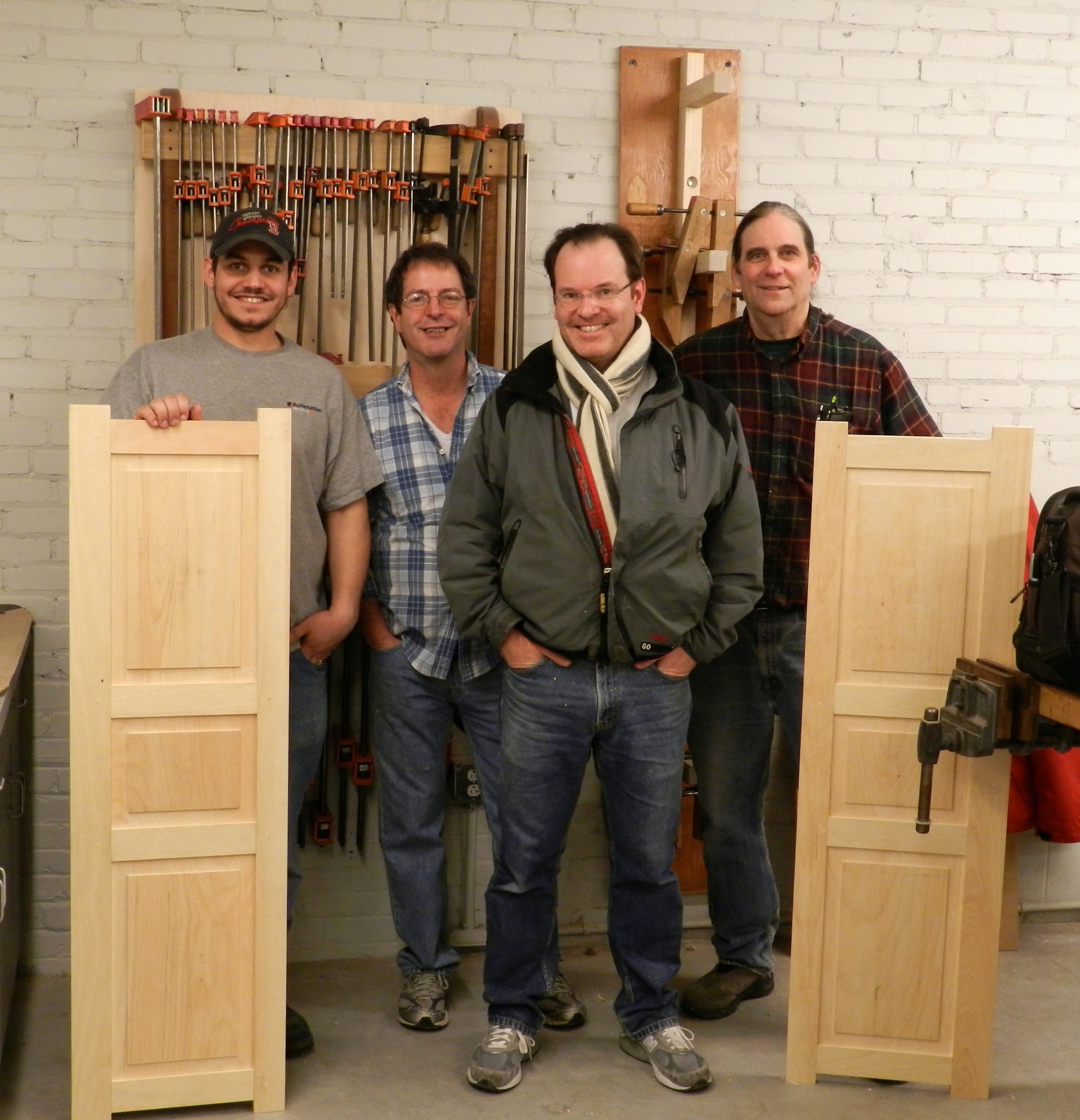
Group picture with some finished shutters

Take care,
-Bill

P.S. I have several more workshops coming up at NBSS over the next 3 months if you are interested in joining me — there are still a few seats available. Up next is Traditional Molding with wooden Molding Planes in April, Saw Horses and Saw Hurdles in May, and Making a Window Sash in June.  You can learn more about each of them here.

Boxes for every occasion…

Building customized storage solutions is one of the joys of being a woodworker. I never seem to have enough storage at home or in the shop. On days when I don’t have a lot of time in the shop, when I have some nice scraps I want to use or when I want a quick warm-up, I often find myself making boxes and other storage solutions for items I want to take care of. Below are three posts I recently made for Popular Woodworking on their ‘Woodworking Daily’ blog to explore some of my thoughts on this topic. I hope that they will inspire you to get out into the shop and make something today.

Aging 100 Years in a Day

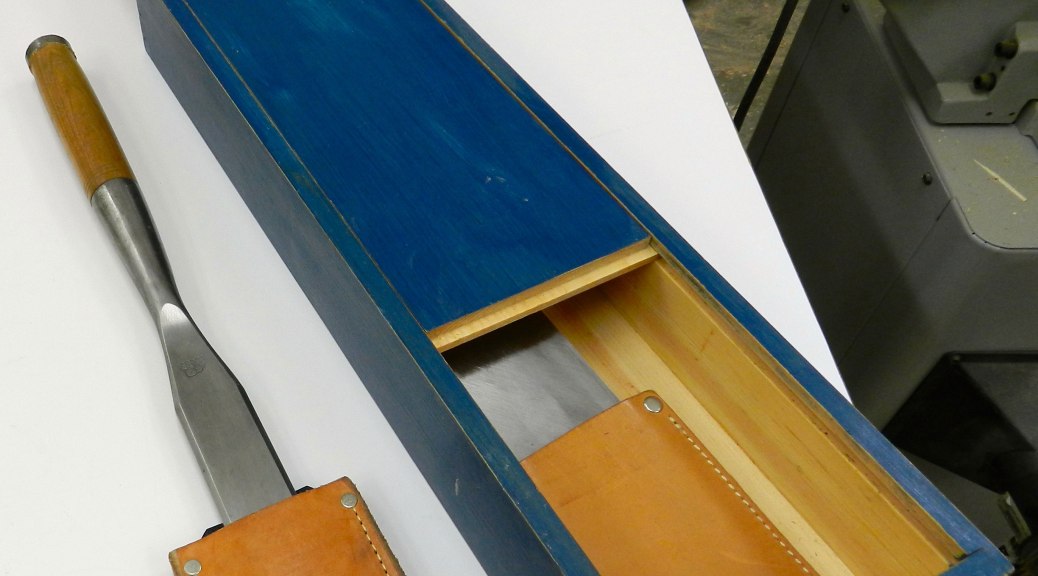
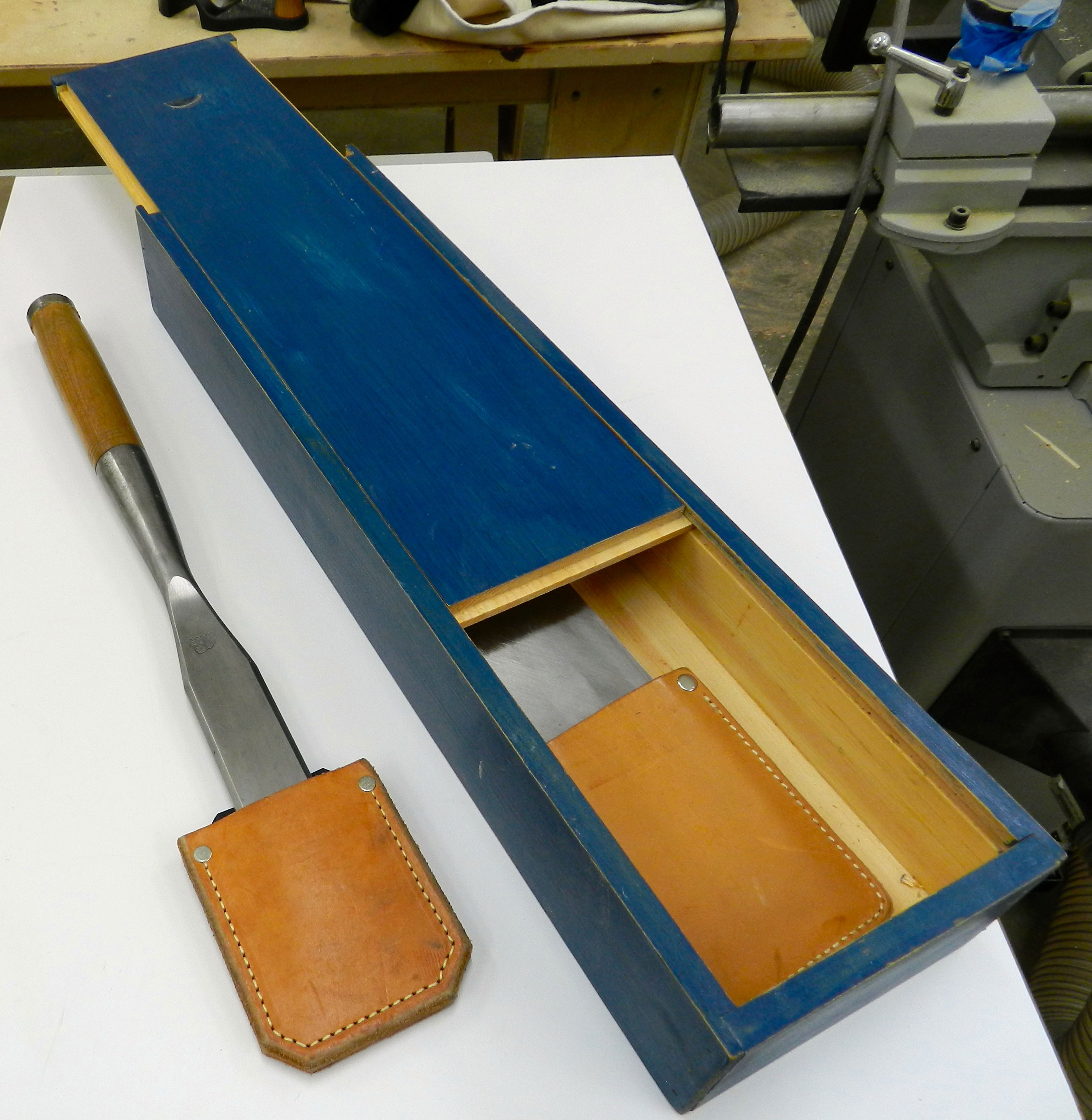
Sliding top timber framing chisel box

You can check out this post on making a sliding top timber framing chisel box from eastern white pine, simple rabbet joints and cut nails. It features a weathered finish made from milk paint and wax that will only look better with age and use. You can read the post here.

Working in the Round

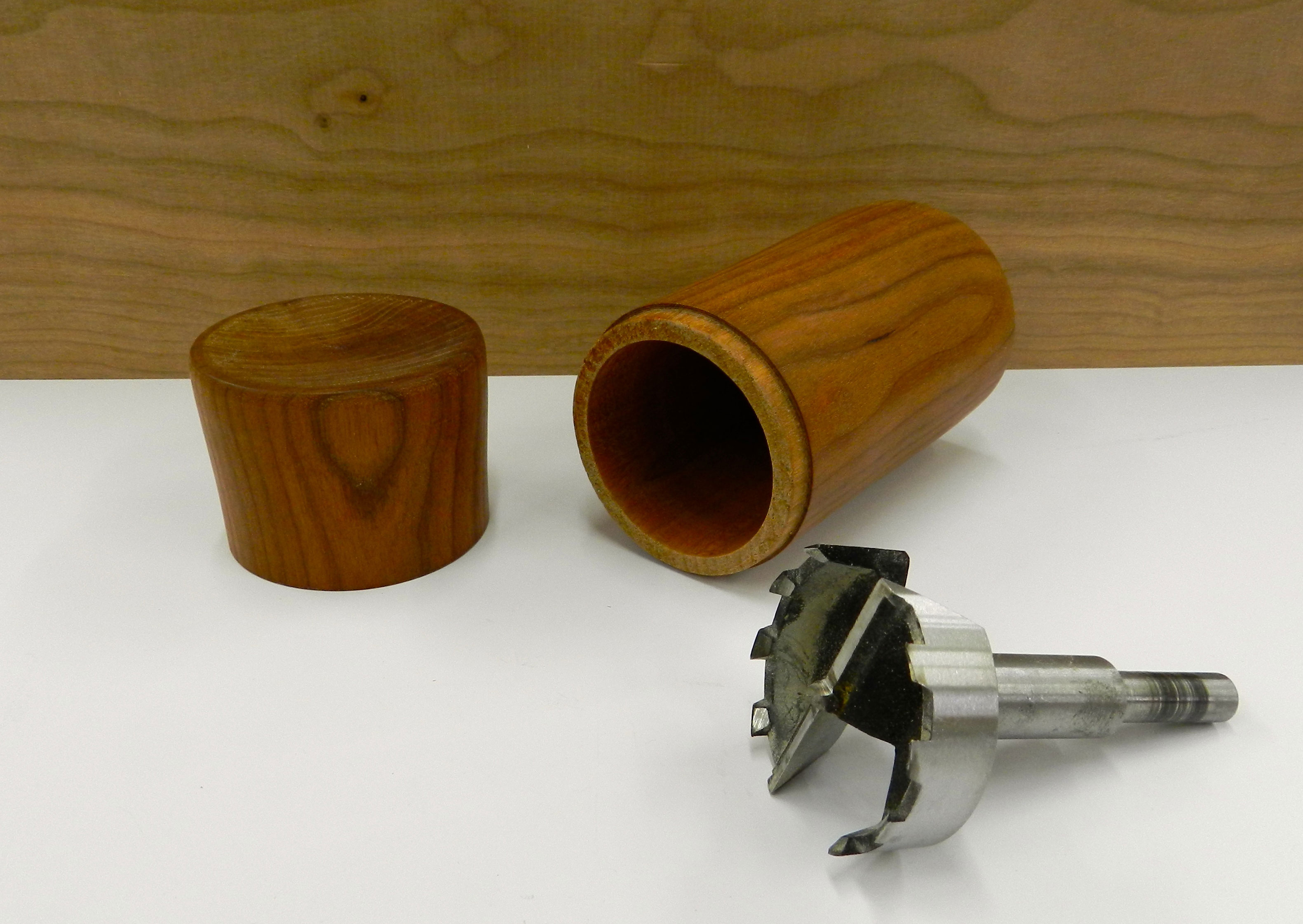
Turned Box
Turned Box

This turned cherry box is a great way to start turning round boxes. The hollowing is done via a large Forstner bit. You can learn more about how to do this here.

A Great Box to Have Dinner With

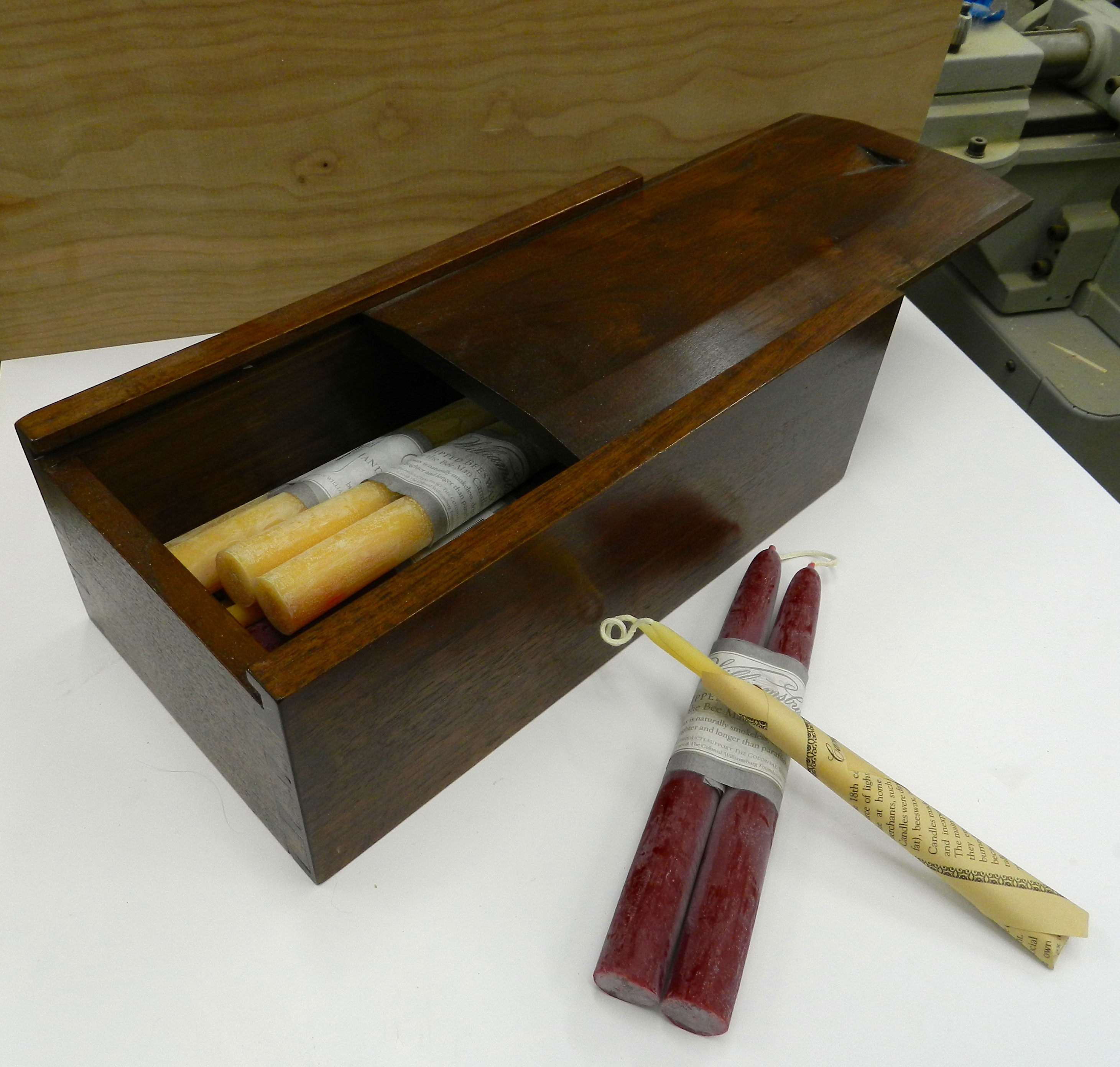
Dovetailed Candle Box

This walnut candle box was one of the first projects I built as a student at NBSS and we still use it today. I’ve seen similar boxes for sale at Colonial Williamsburg (Prentis Store) and various Shaker Villages, so even in our modern times there is apparently still some demand for candle boxes. Learn about some of the details you can apply to your own shop built version. You can read more about it here.

Take care,
-Bill

There’s a Better Way…

A tip I sent in to Fine Homebuilding was converted into a video clip as part of Chuck Miller’s “There’s a Better Way…” blog on FineHomebuilding.com

"There's a Better Way" To hold your sharpening stone on the job site
“There’s a Better Way” To hold your sharpening stone on the job site

You can watch the video for free here.

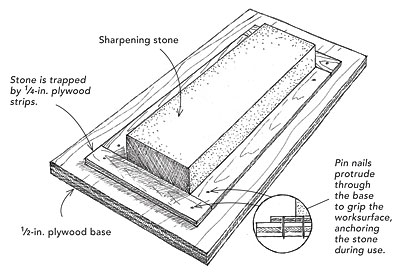
Self Anchoring Sharpening Stone Holder

You can also check out the original tip in an earlier post here.

Take care,
-Bill