Category Archives: Workshop

Making a Jointer Plane with Willard ‘Bill’ Anderson — Part 1

A single iron jointer plane is one of those tools you have use yourself to truly appreciate. Over Labor Day weekend I was fortunate enough to have the opportunity to make one of these planes with Willard ‘Bill’ Anderson at the Woodwright’s School in Pittsboro, NC.
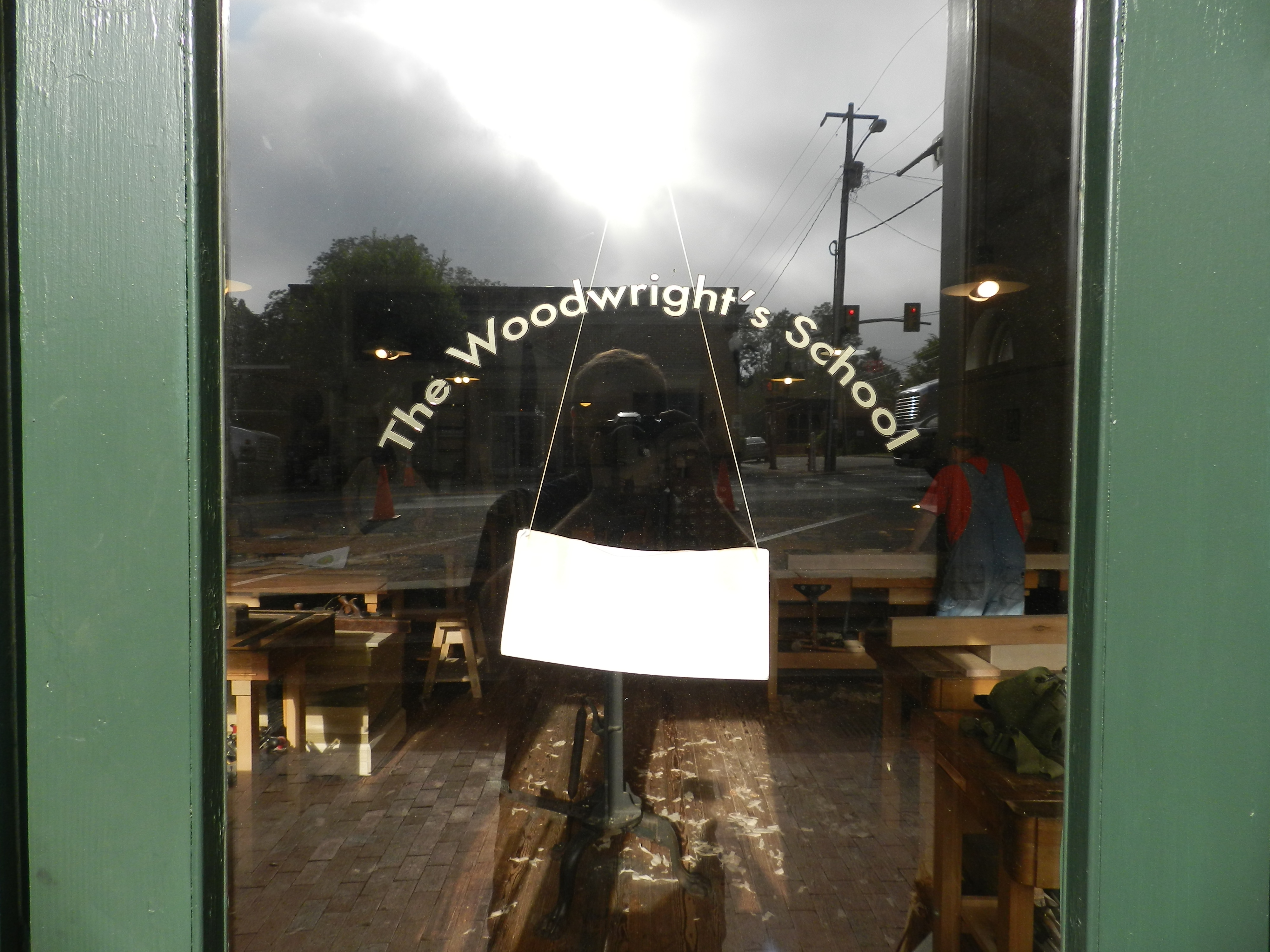
Entrance to the Woodwright's School
Entrance to the Woodwright’s School

Bill is a passionate woodworker and skilled teacher. You may recognize him from his appearances on Roy’s television show or the articles that he’s written. He’s a molding plane aficionado and has studied plane-making and general furniture-making with many masters in the field. He recently retired from being a Scientist for the EPA so I see a lot of parallels to my own life working in software.
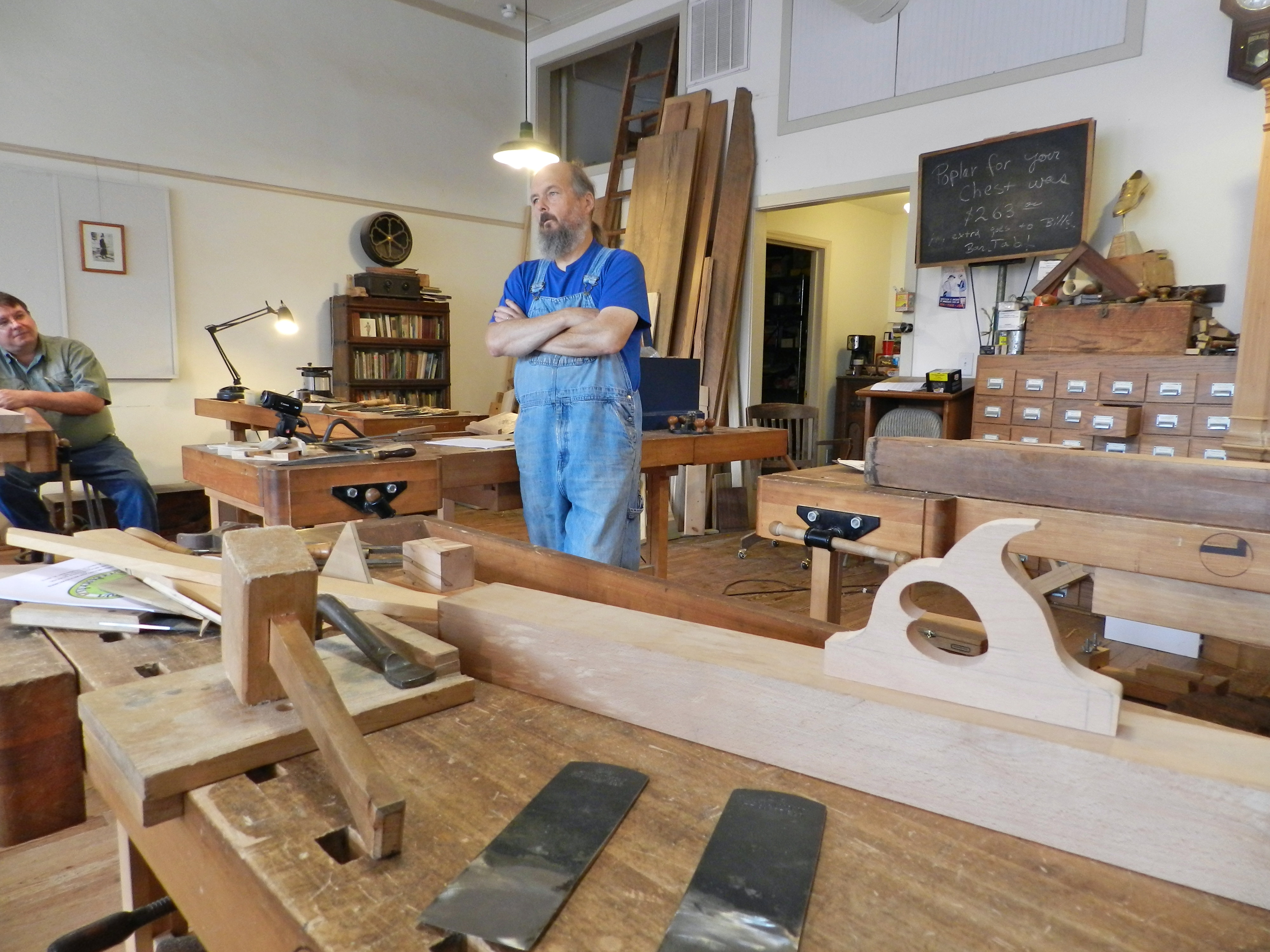
Getting started, with Bill Anderson

The plane is made of air dried American Beech and a new old stock English iron.
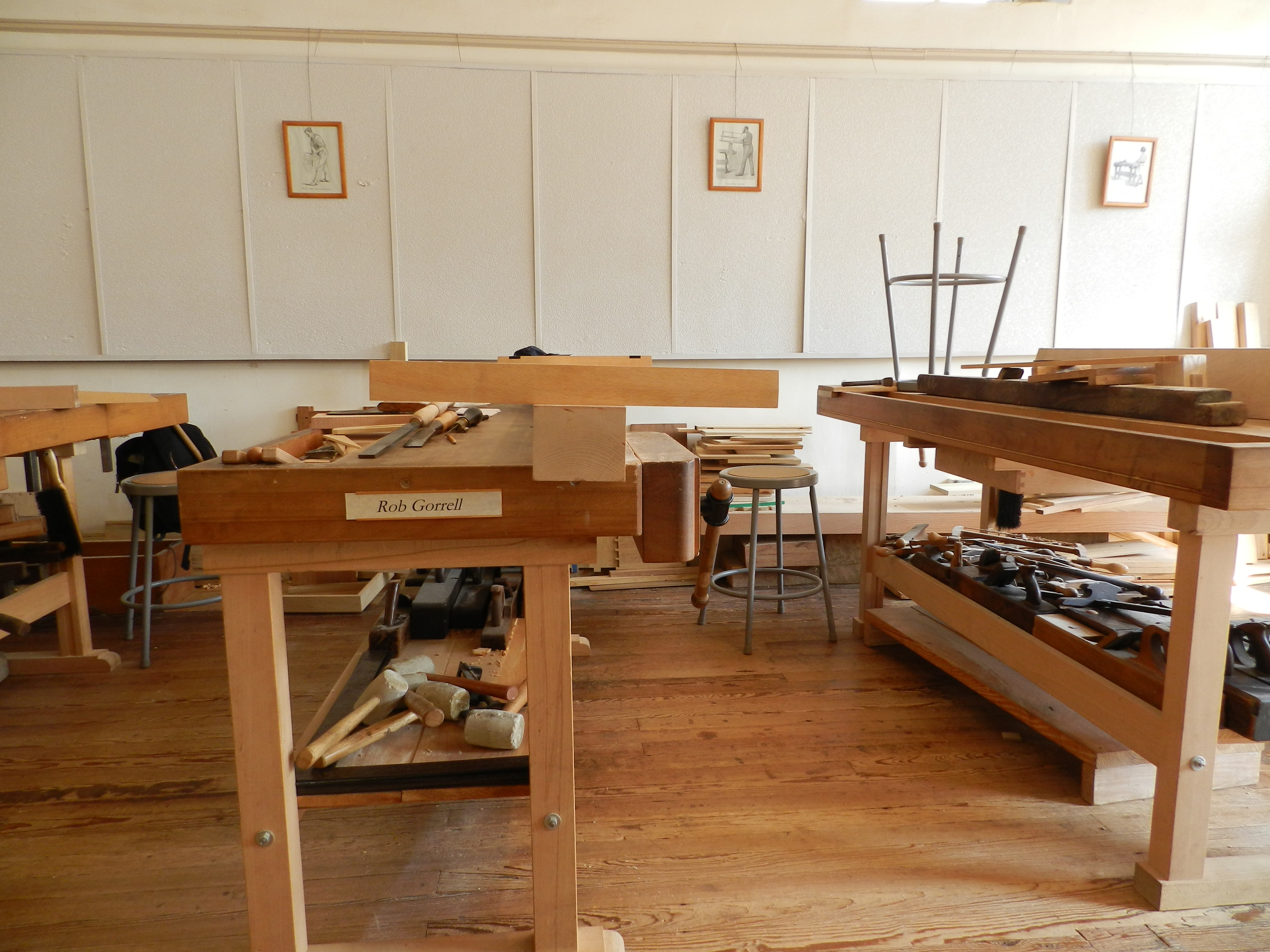
Squaring up the air dried beech blank

We started out by squaring up the stock using a wooden straightedge and winding sticks.
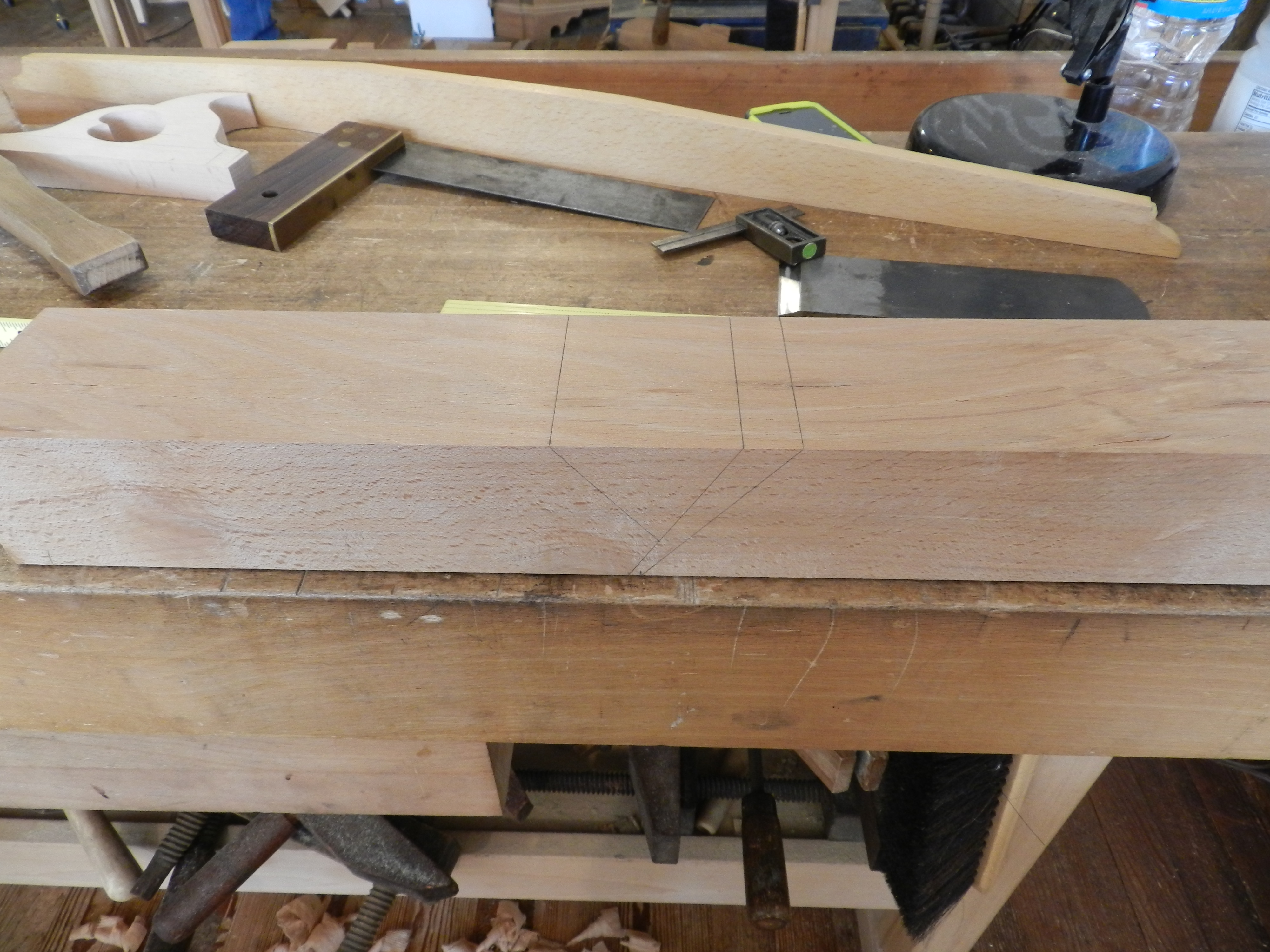
Laying out the mouth and abutments

Next up was laying out the mouth and throat. The mortises are all chopped by hand with a chisel and refined via a series of floats and scrapers. It was my first time using that many different floats, and for what looks like it might be a fairly coarse tool, when sharpened leaves a remarkably good surface.
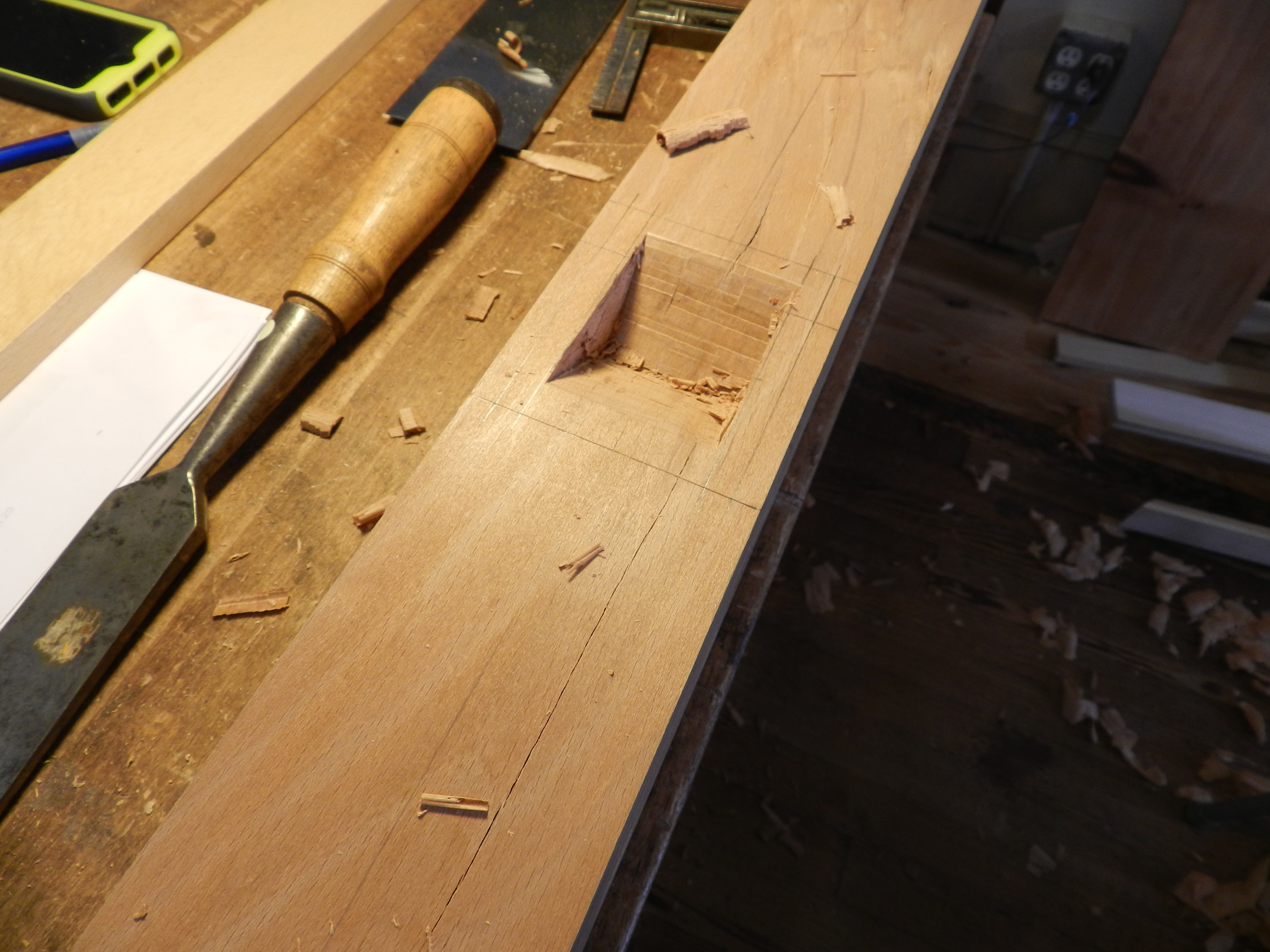
Chopping the mortise by hand

As we worked through the throat mortise a key was to make sure you don’t overshoot and chop through the abutment.
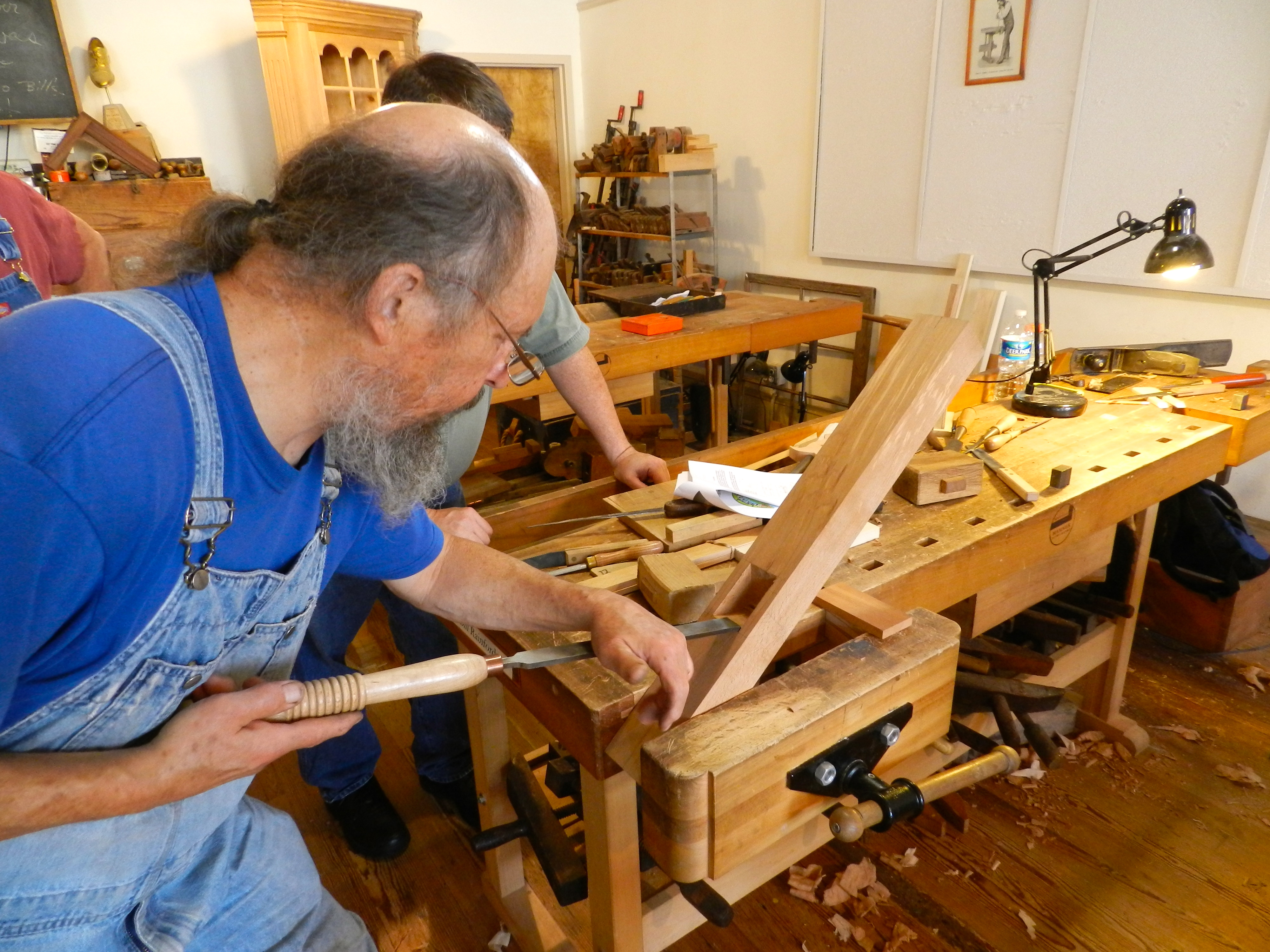
Scraping
Scraping

One of the last steps in refining the abutment and sides of the throat was to scrape the surface using a scraper chisel.
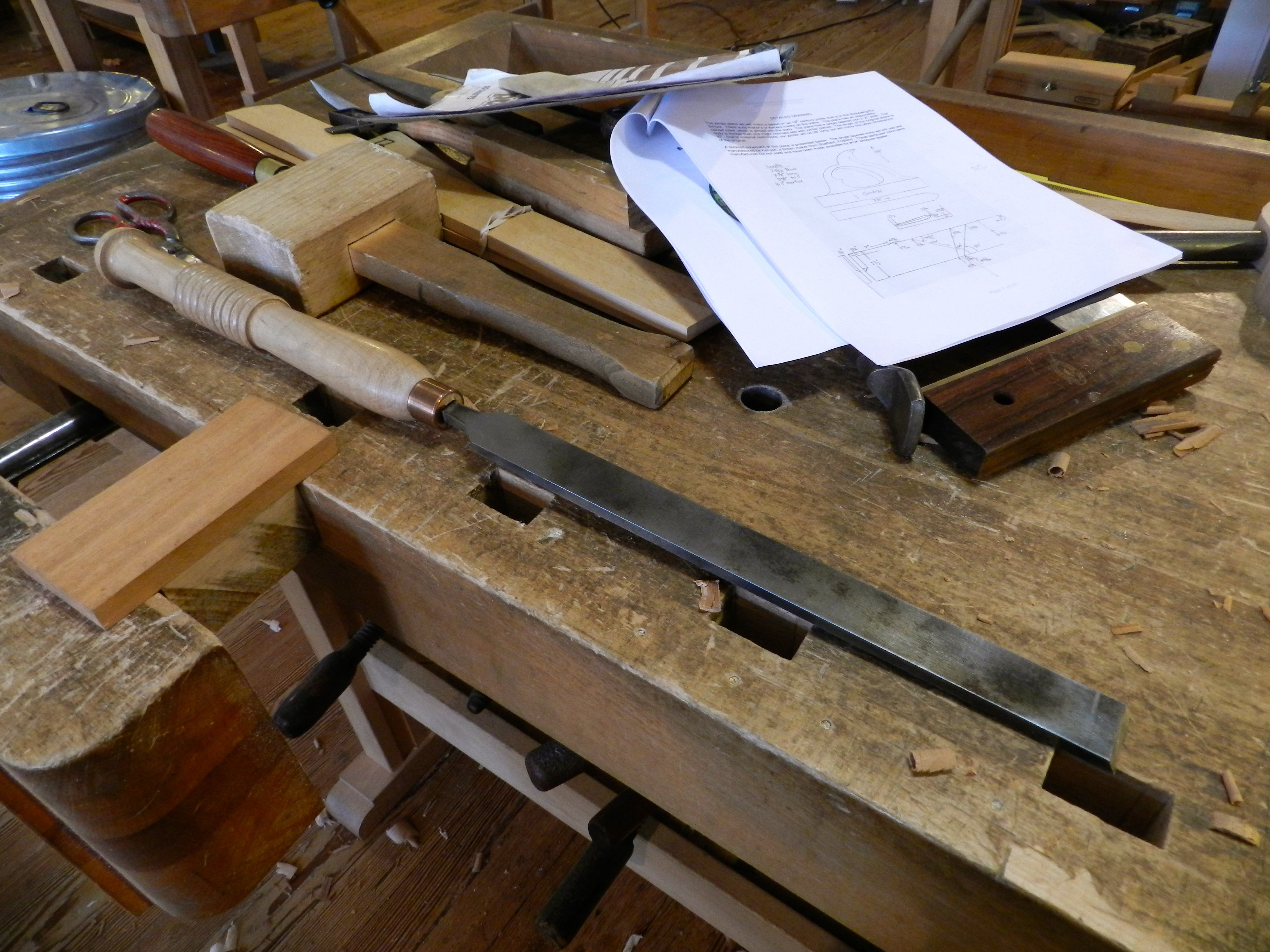
A very nice scraping chisel that Bill made

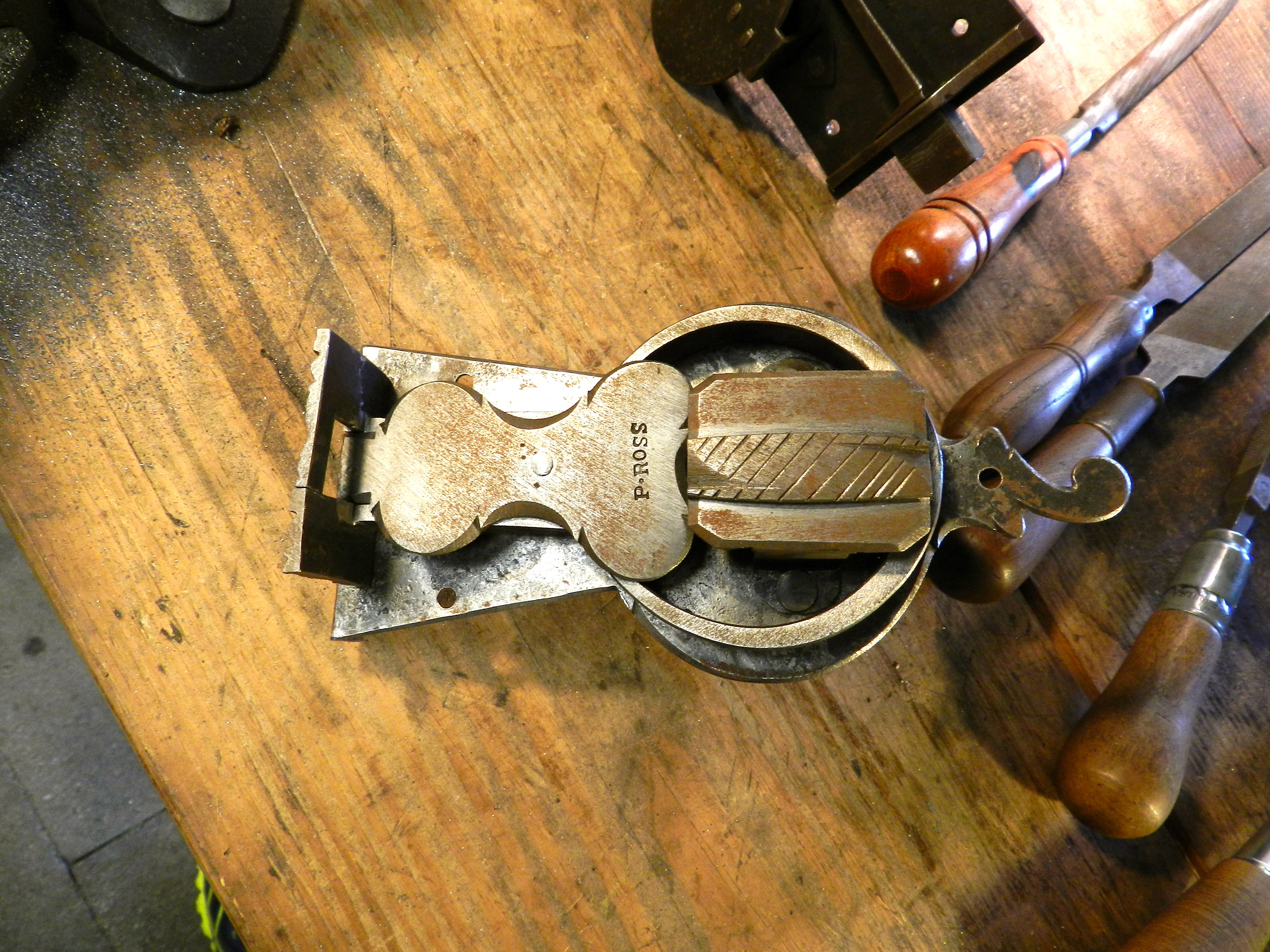
This beast of a chisel was made by Bill and heat treated by Peter Ross. It was based on some research Bill did into traditional plane making tools. The long bar of tool steel and handle allow you to put a lot of your weight into it as you scrape the surface flat. The cutting edge is a very steep angle similar to a scraper you’d use with a lathe (upside down compared to the lathe tool) but works well since you are only removing a little bit of material at a time.
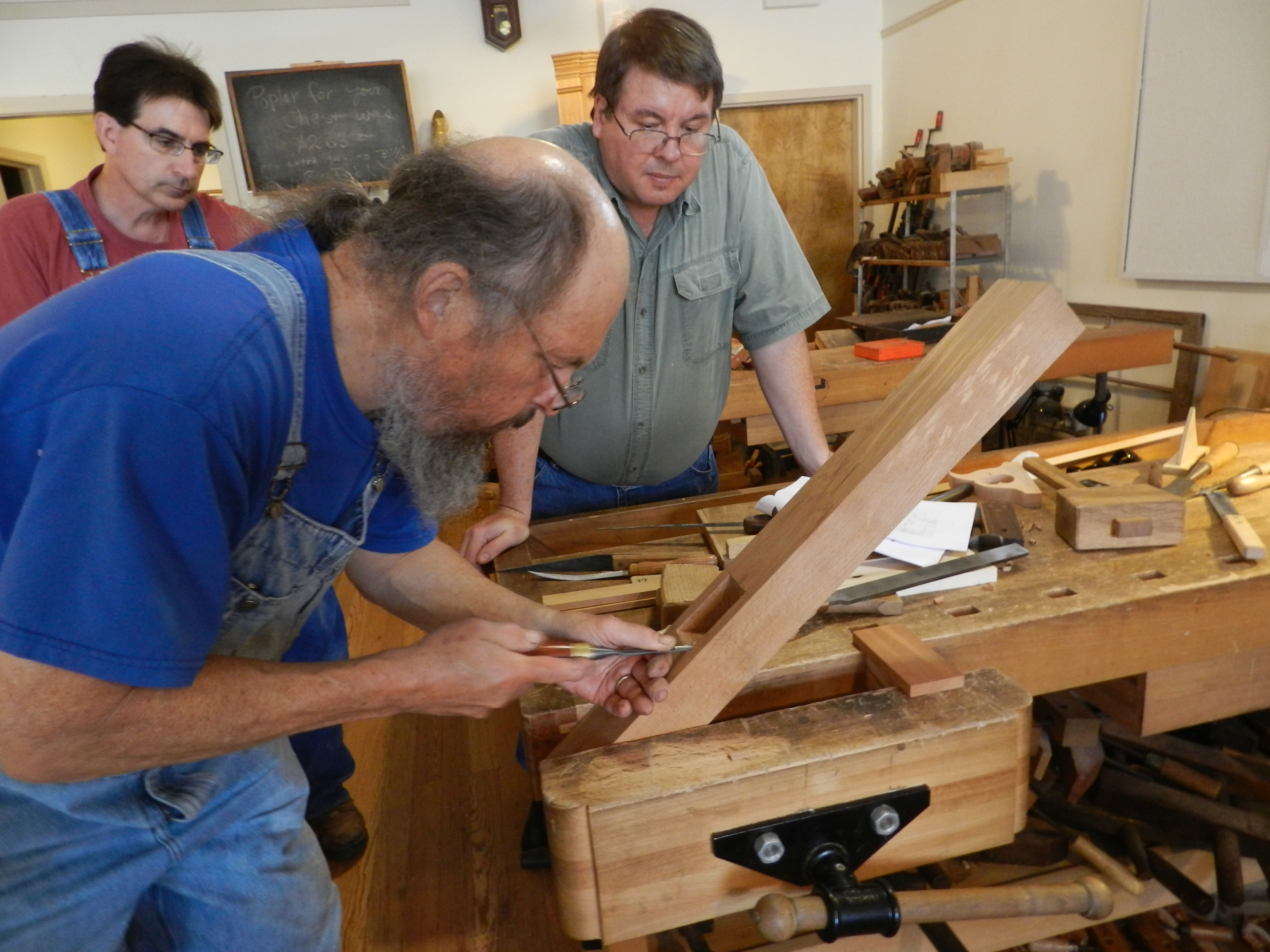
Paring away any fuzz

Regular bench chisels are used to clean up any fuzz in the corners. Next up is cutting in for the wedge and cleaning up a cheeks. This is an operation that requires a steady hand and the ability to work to an exacting standard. You want your test wedge, and eventually your actual wedge, to fit tightly against the abutment so the iron does not move when you are working with the plane. I took my time and was very happy with the results.
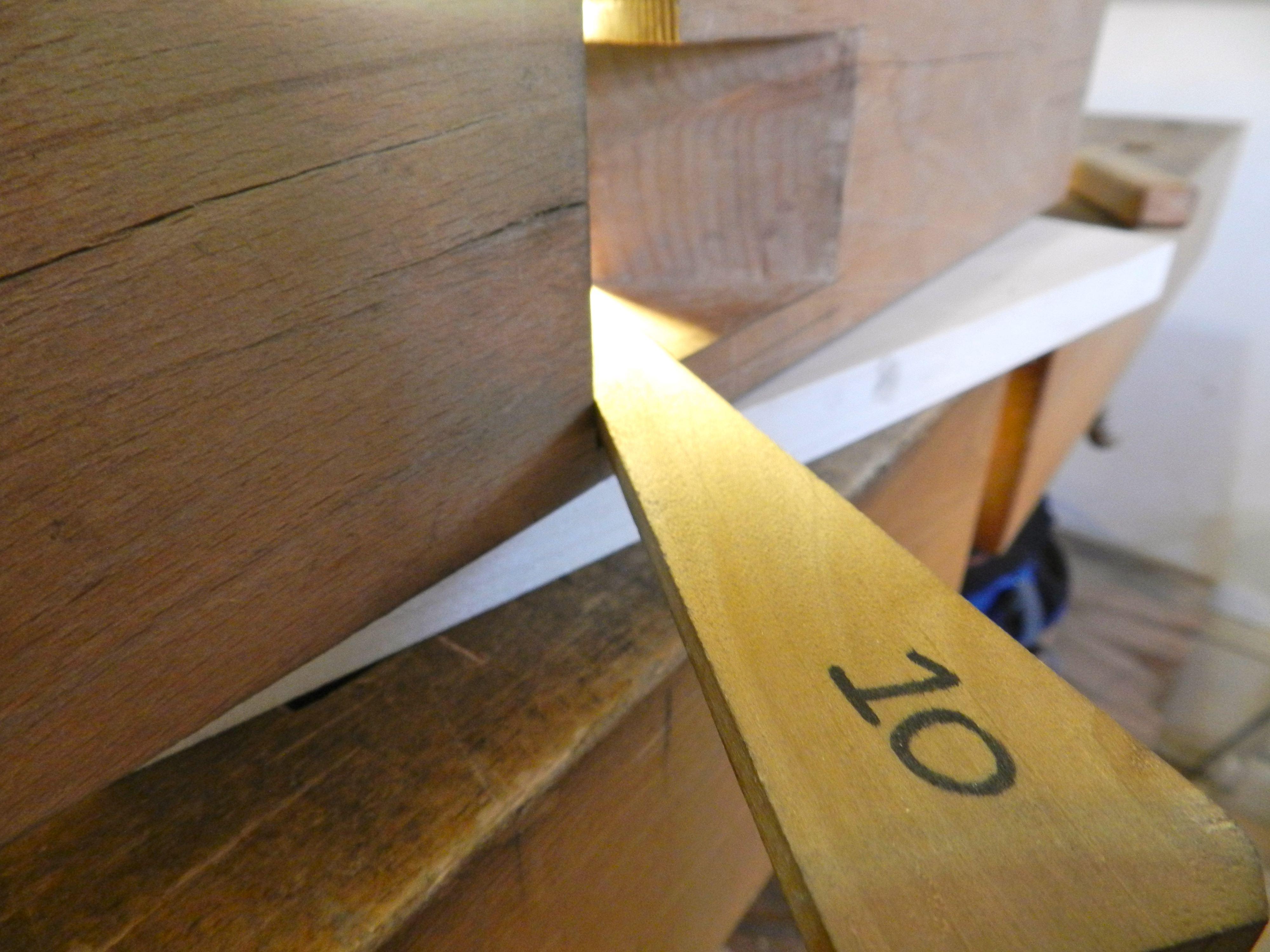
Fitting with test wedges

In upcoming posts I will document more about my experience in building and finishing this plane.

In the meantime, if you’d like to learn more about Bill Anderson or take a class with him, and I highly encourage you to do so, please check out his website here.

-Bill
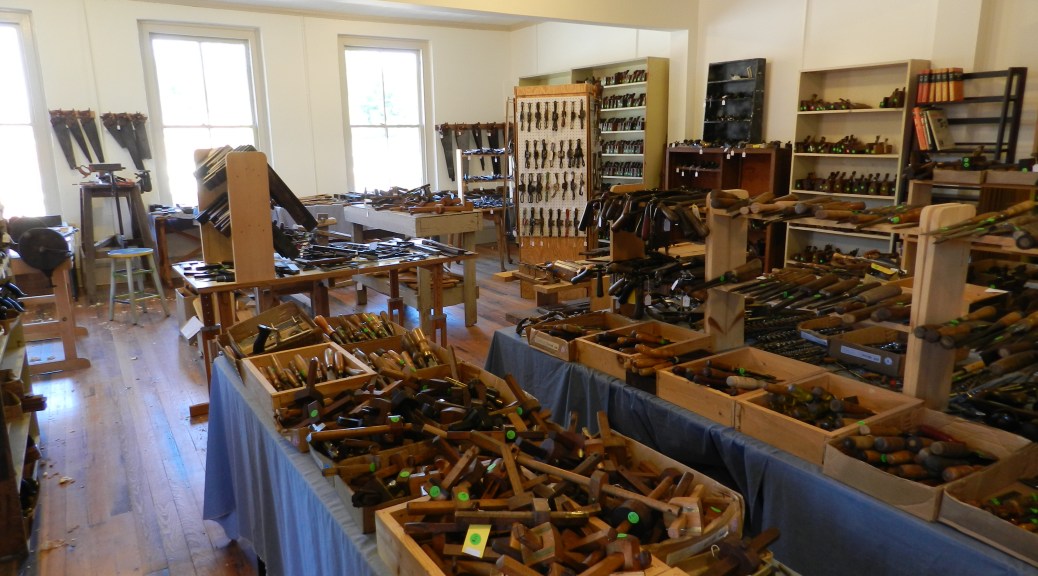
The Tool Store at the Woodwright’s School

The Woodwright’s School is already hallowed ground for a lot of woodworkers, but hovering above workshop is Ed Lebetkin’s Antique Tool store….

Up the stairs and take a right at the large model plane

Before heading up there, I was warned to leave my wallet behind as there would be a lot of temptation at the top of the stairs….Ed’s store is filled with just about every kind of traditional woodworking tool and accessory you could want.

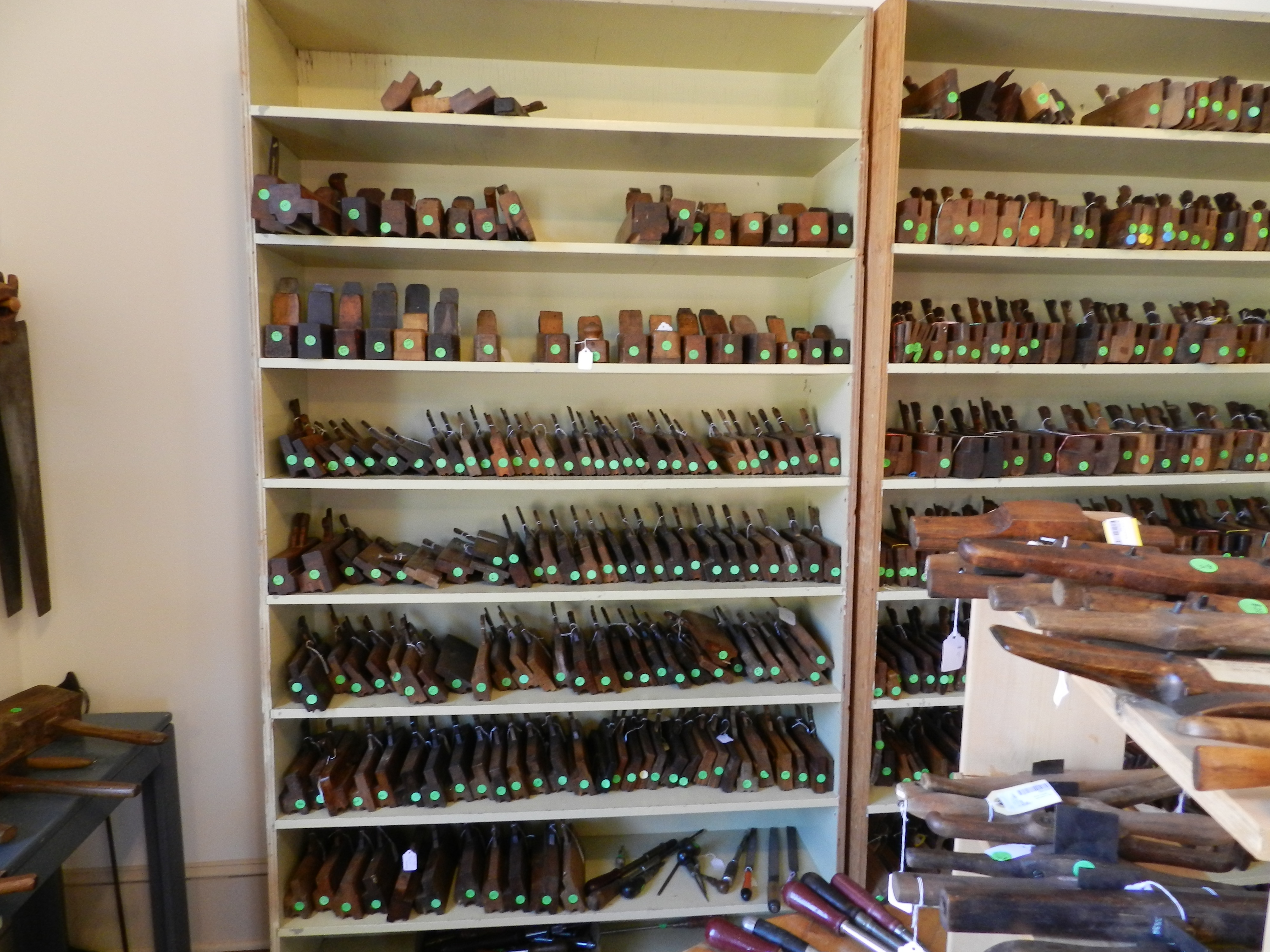
Wide angle view of Ed's Antique Tool Store
Wide angle view of Ed’s Antique Tool Store

An amazing assortment of chisels, planes of every kind, marking gauges, braces and bits.

Wall of molding planes

One whole wall of the shop is filled with molding planes .

Chisels, mallets, auger bits etc.

New stuff is always coming and going so you’ll want to visit often — or see about renting a space to camp out and be first to check out the new arrivals. 😉

Self-advancing Boring Machine

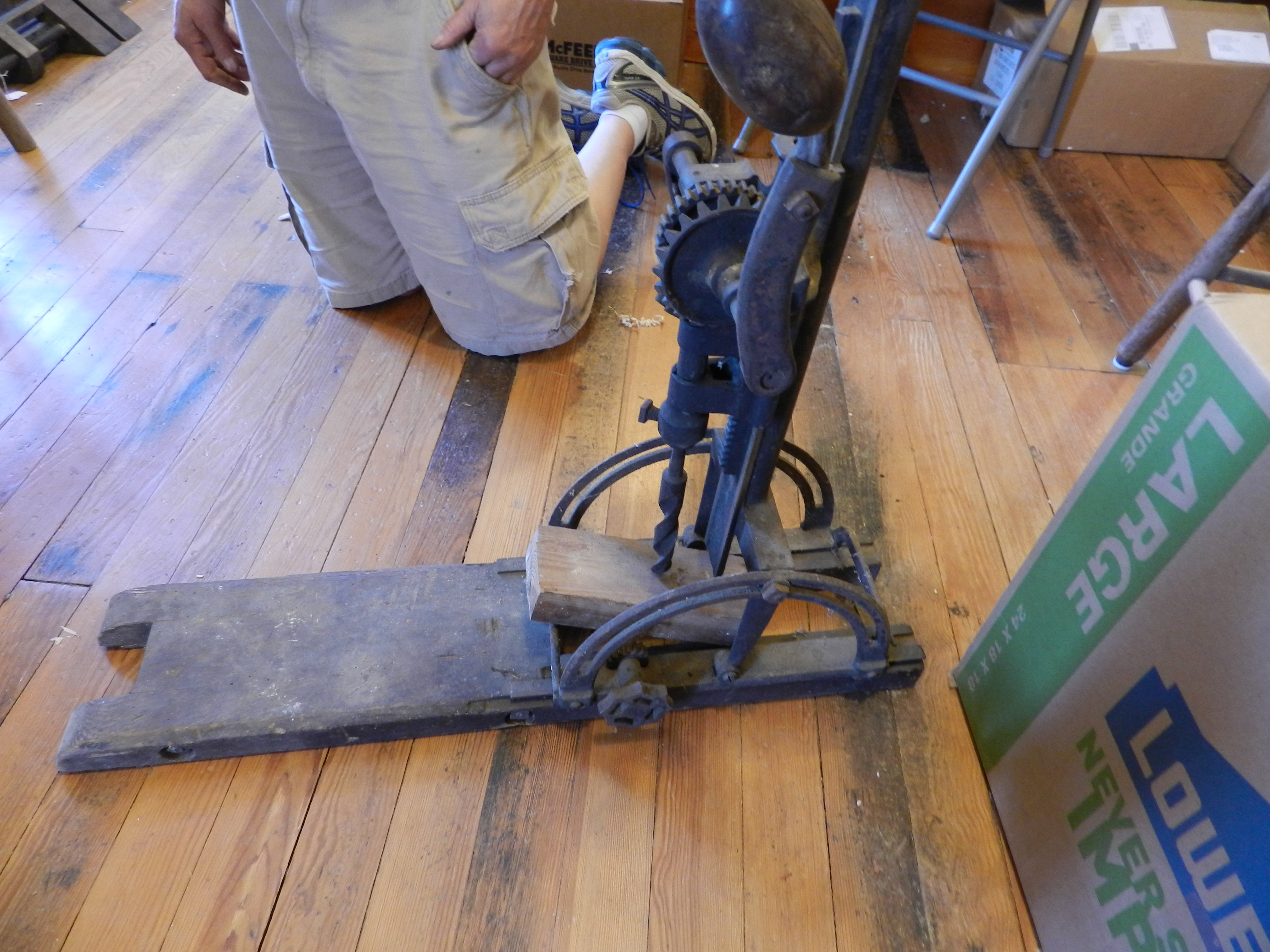
During my visit I was enamored with an unusual boring machine. The castings on the tilt mechanism look similar to my old Swan boring machine but what made this machine unusual was the mechanism to advance the business end of the unit horizontally via the large knob on the bottom — rather than the whole dance of shimmying yourself and the unit up the timber and re-aligning the auger to make the next hole. The runners and support structure for it was all metal which leads me to believe it was a later design towards the end of that era.

New toys from Ed's tool shop
New toys from Ed’s tool shop

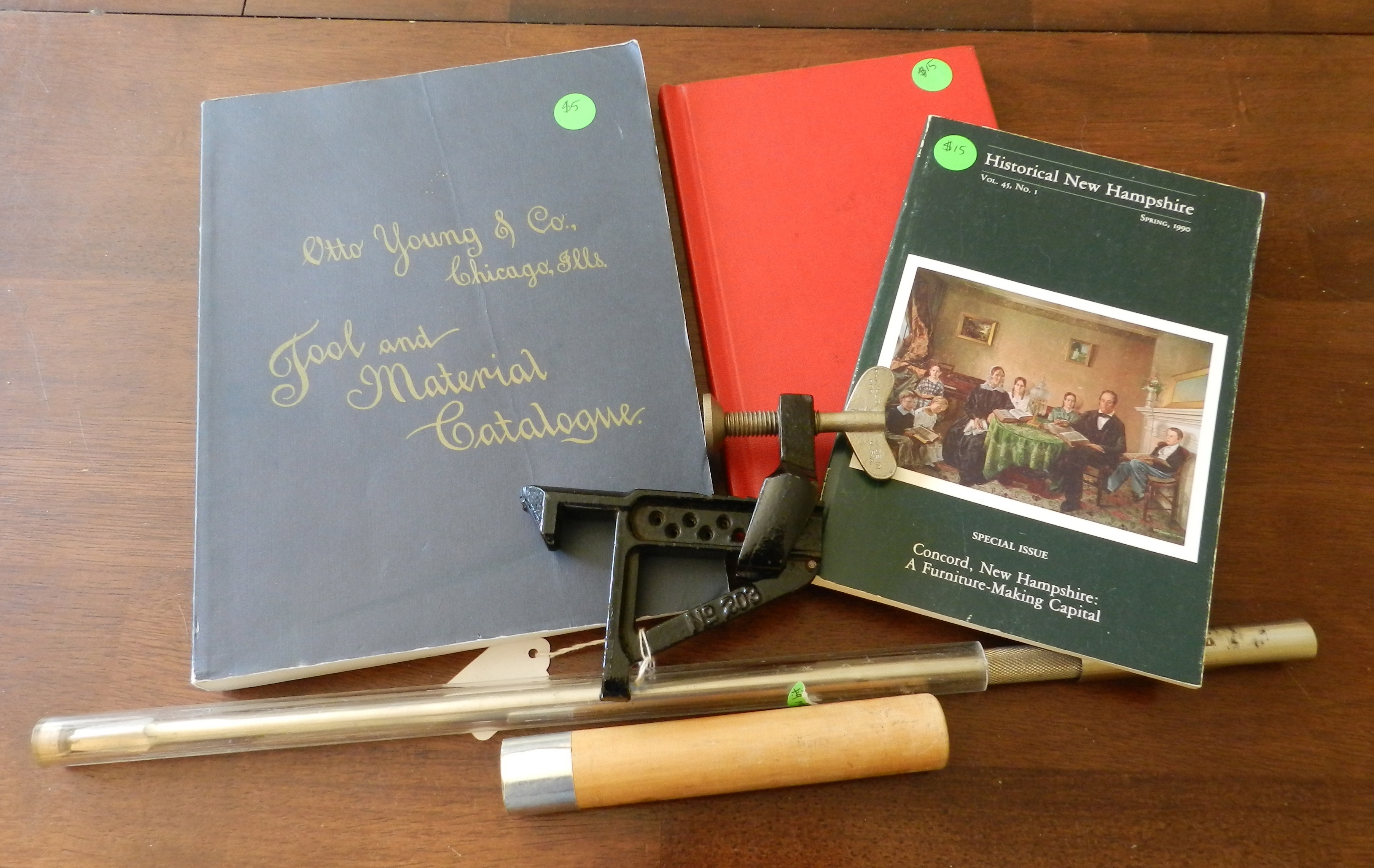
I tried my best to get out without buying anything — especially since the Nashua Live Free or Die Tool Show and Auction is coming up in a couple of weeks, but it’s like Ed knew I was coming. I found a great reprint book on Concord NH furniture makers, a book on the Shaker Barn full of tools at the Shelburne Museum in VT which I wrote about here, a MWTCA reprint of a tool catalog, a nice old Stanley auger bit extension for use with a bit brace, and a Stanley 203 bench clamp. This neat little clamp is something I’ve looked at in the past — and makes a nice addition to any bench with a sliding deadman. I look forward to giving it a try.

I’m looking forward to my next visit. If you’d like to plan a visit to the tool store or contact Ed you can find his contact info on the store’s web page here. Ed’s a great guy. If you meet him, be sure to tell him I sent you. 🙂

Take care,
-Bill

Making Your Mark — Name Stamps with Peter Ross

How do you mark your wooden tools ?

Carve your name into it? No.
Burn your name into it with a branding iron? Meh.
Sharpie? That’s so ’90s.
If you really want to be a traditional woodworker you’ll want to use a hand made metal name-stamp. I’ve seen some of these stamps over the years in tool sales, but never found my name or initials, so I figured it was time to take matters into my own hands. This past week I had the opportunity to take a workshop at the Woodwright’s School making a metal name-stamp. I had a great time during the class and will cover some of the highlights here:

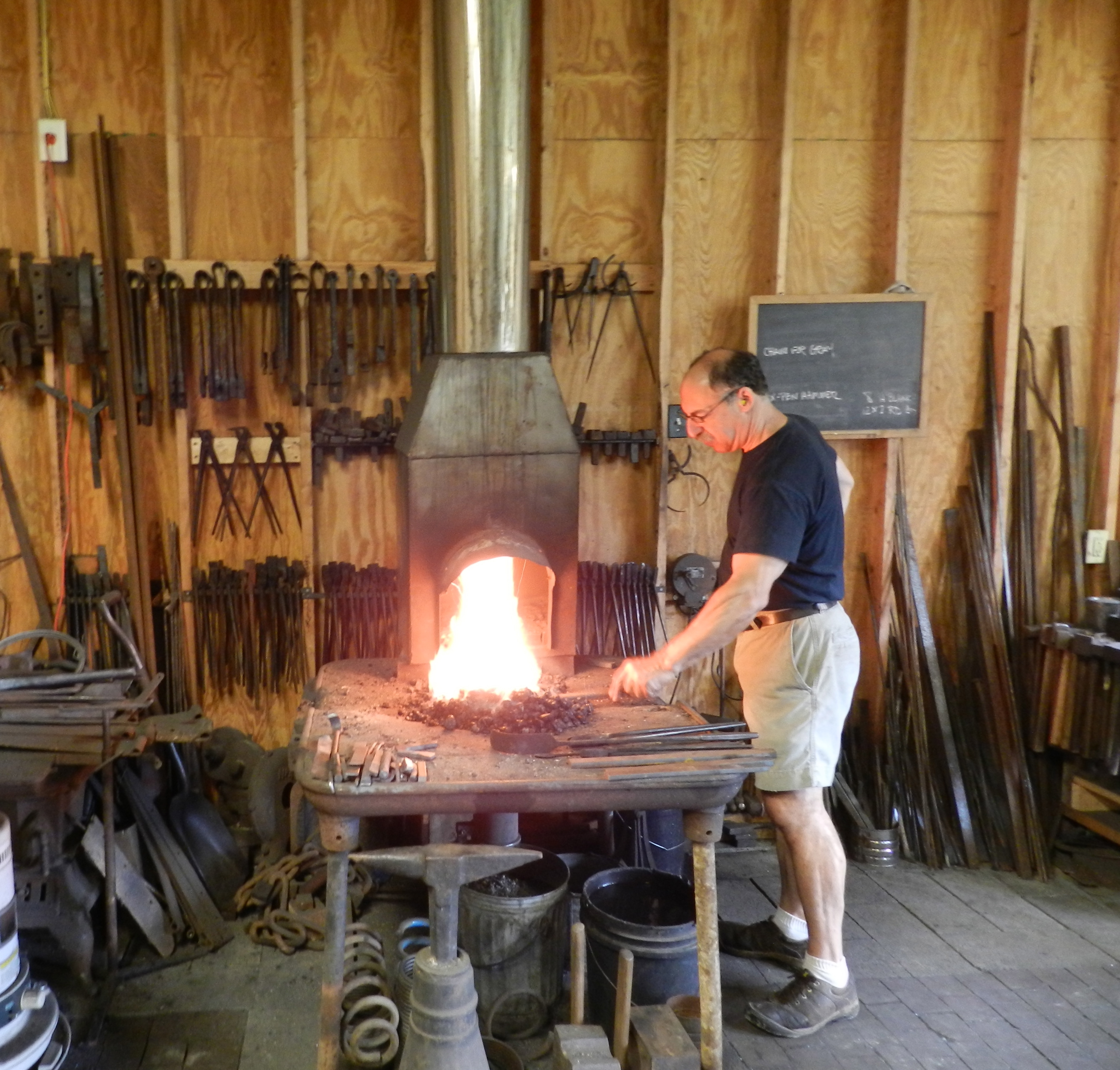
Master Blacksmith Peter Ross at the forge

The class is held in the forge/workshop of Master Blacksmith Peter Ross who was the long time master of the blacksmith shop at Colonial Williamsburg. Pete is a friendly person and a great instructor.

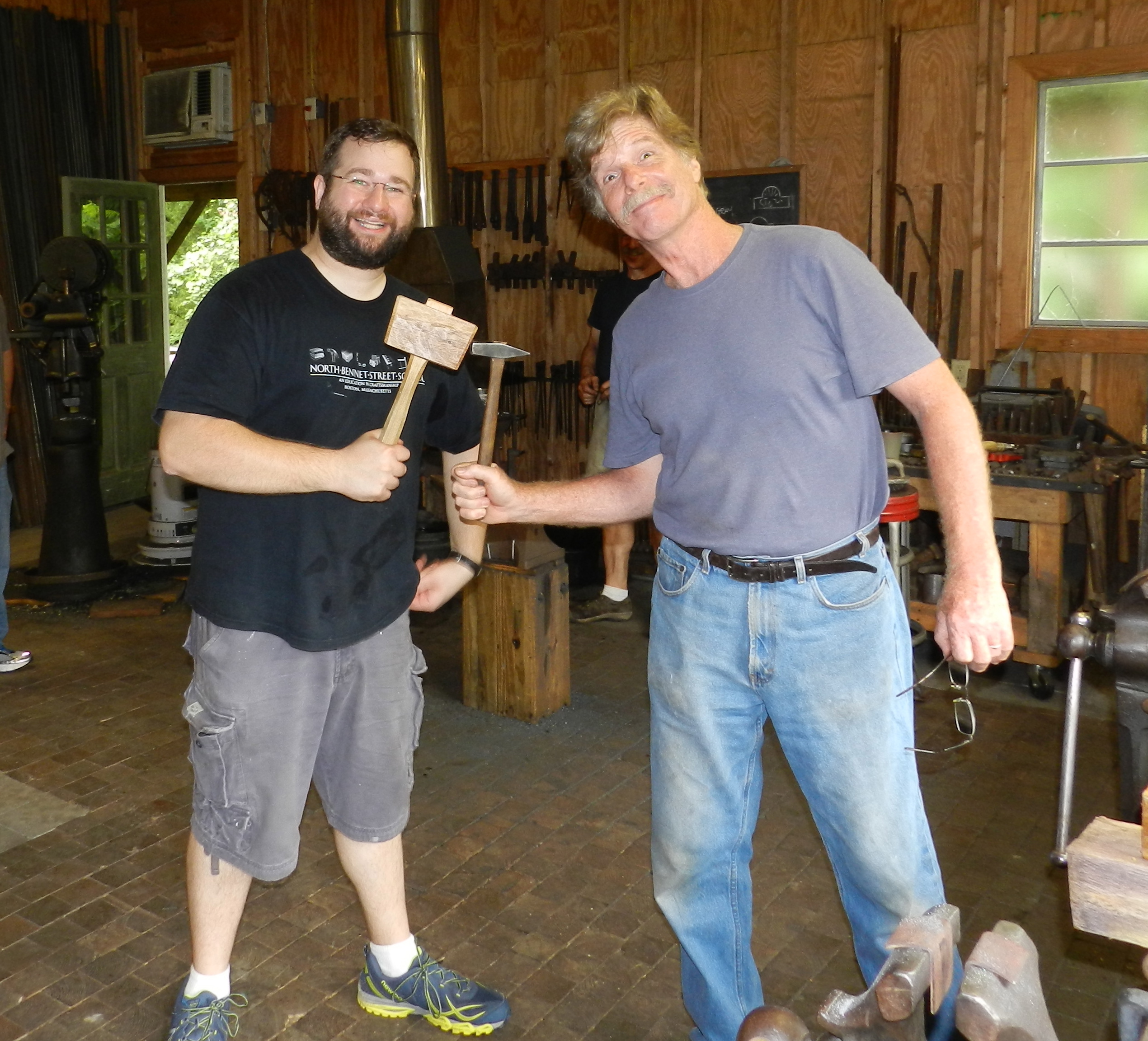
In the afternoon Roy came by to visit. (Bill Rainford with Roy Underhill)

During the afternoon we were visited by Roy Underhill who came by to make sure we weren’t making counterfeit Nikes or anything illegal. 😉  It was great to chat with Roy for a few minutes and he’s every bit as nice in person as he is on TV.

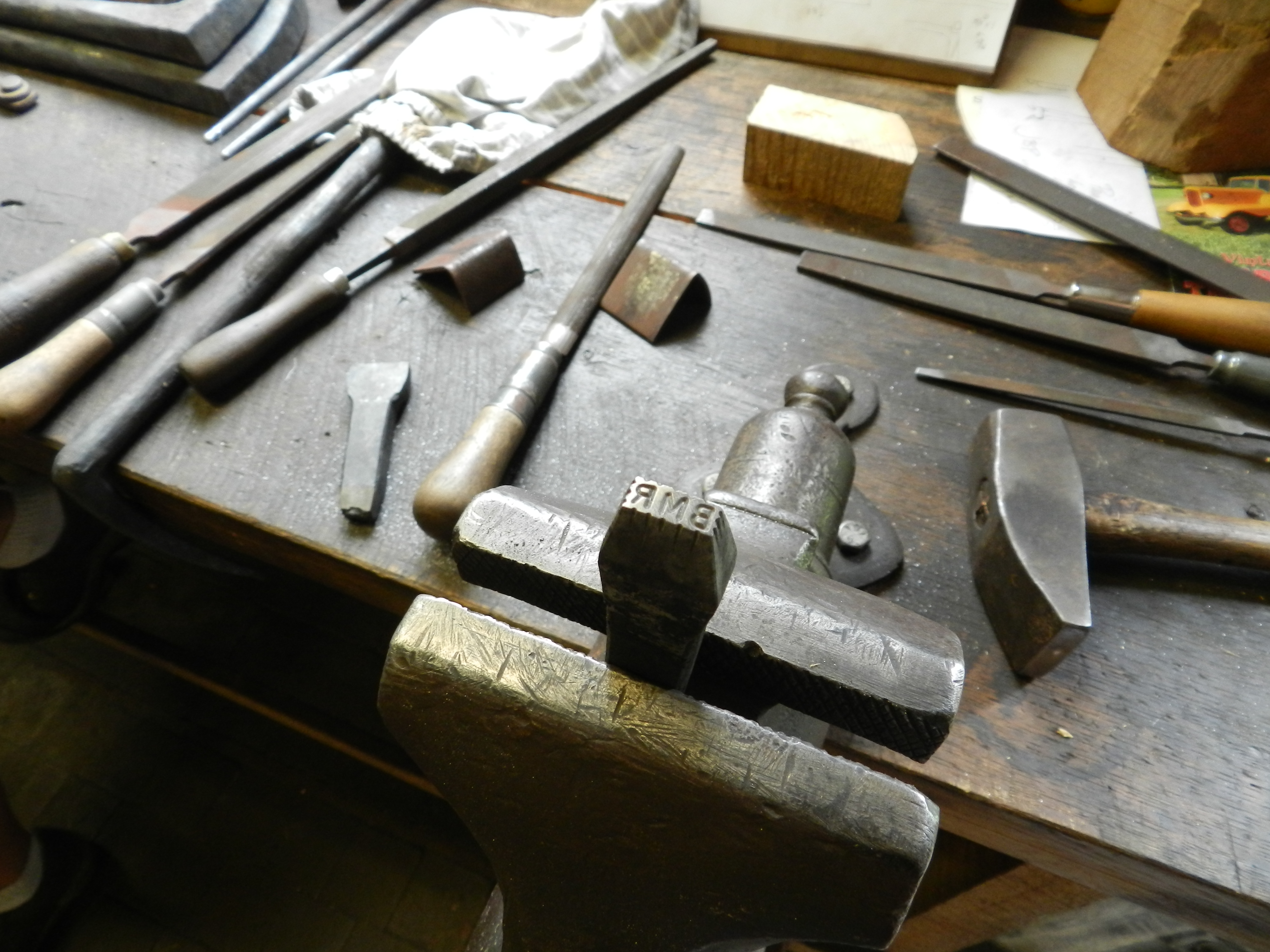
My first stamp 'BMR' which will be used to mark some of my tools with my initials.
My first stamp ‘BMR’ which will be used to mark some of my tools with my initials.

Now on to business….for my first stamp I made one with my initials ‘BMR’ so that I can label some of my tools. By stamping some of my old wooden planes I’ll officially be part of the long line of owners who had them before me and those who will have them after me.

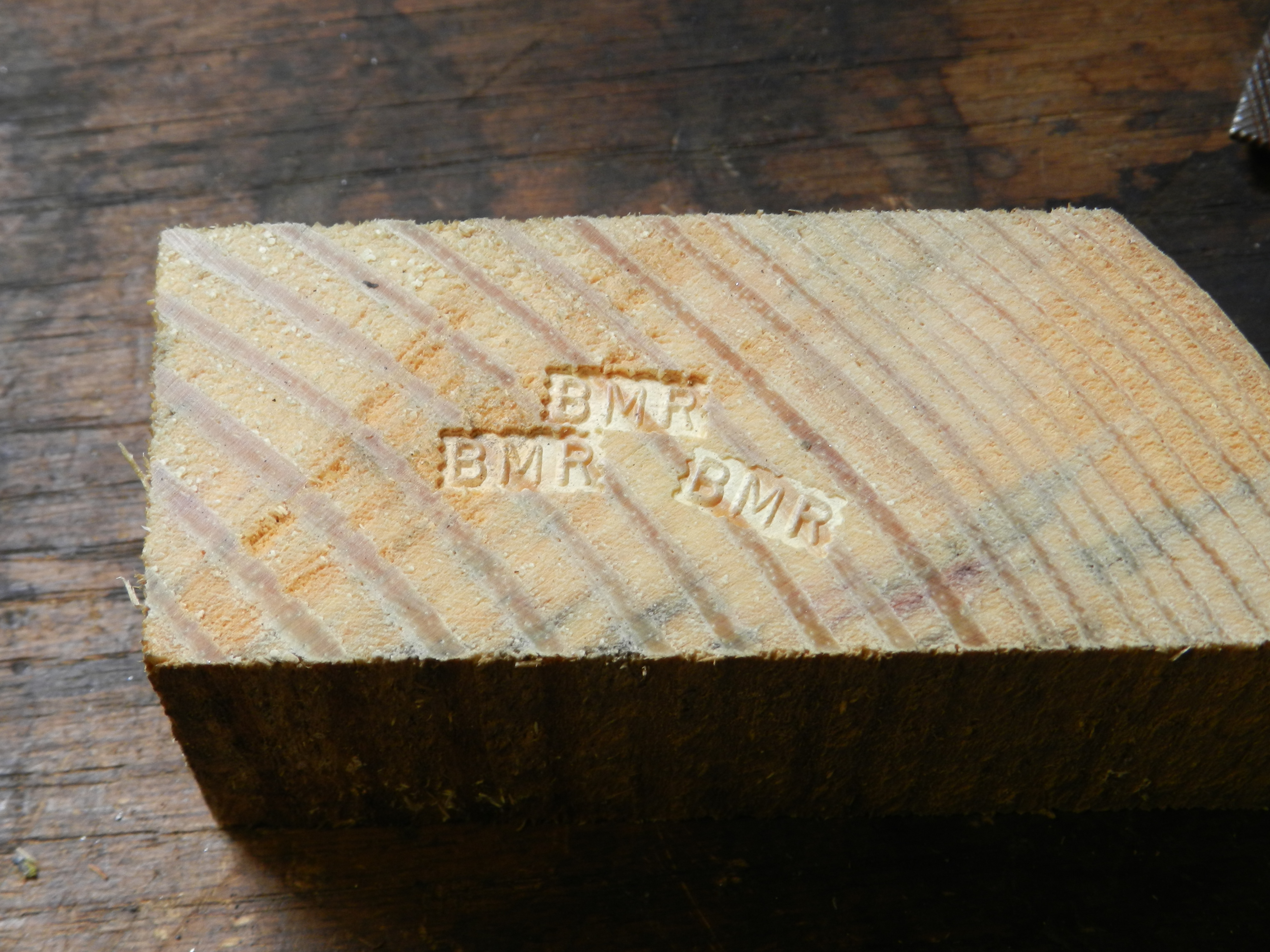
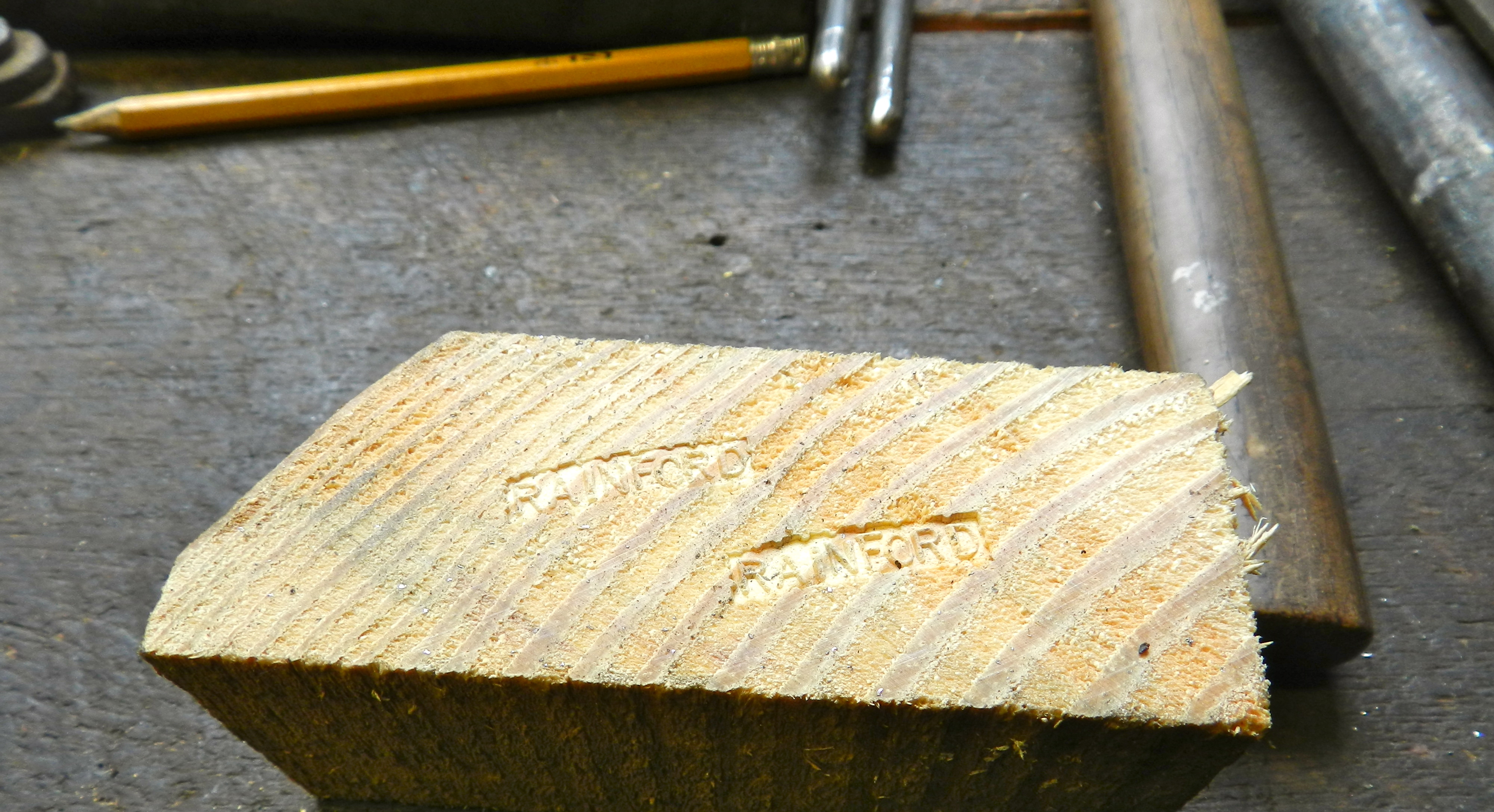
Testing my Initials stamp in some end grain

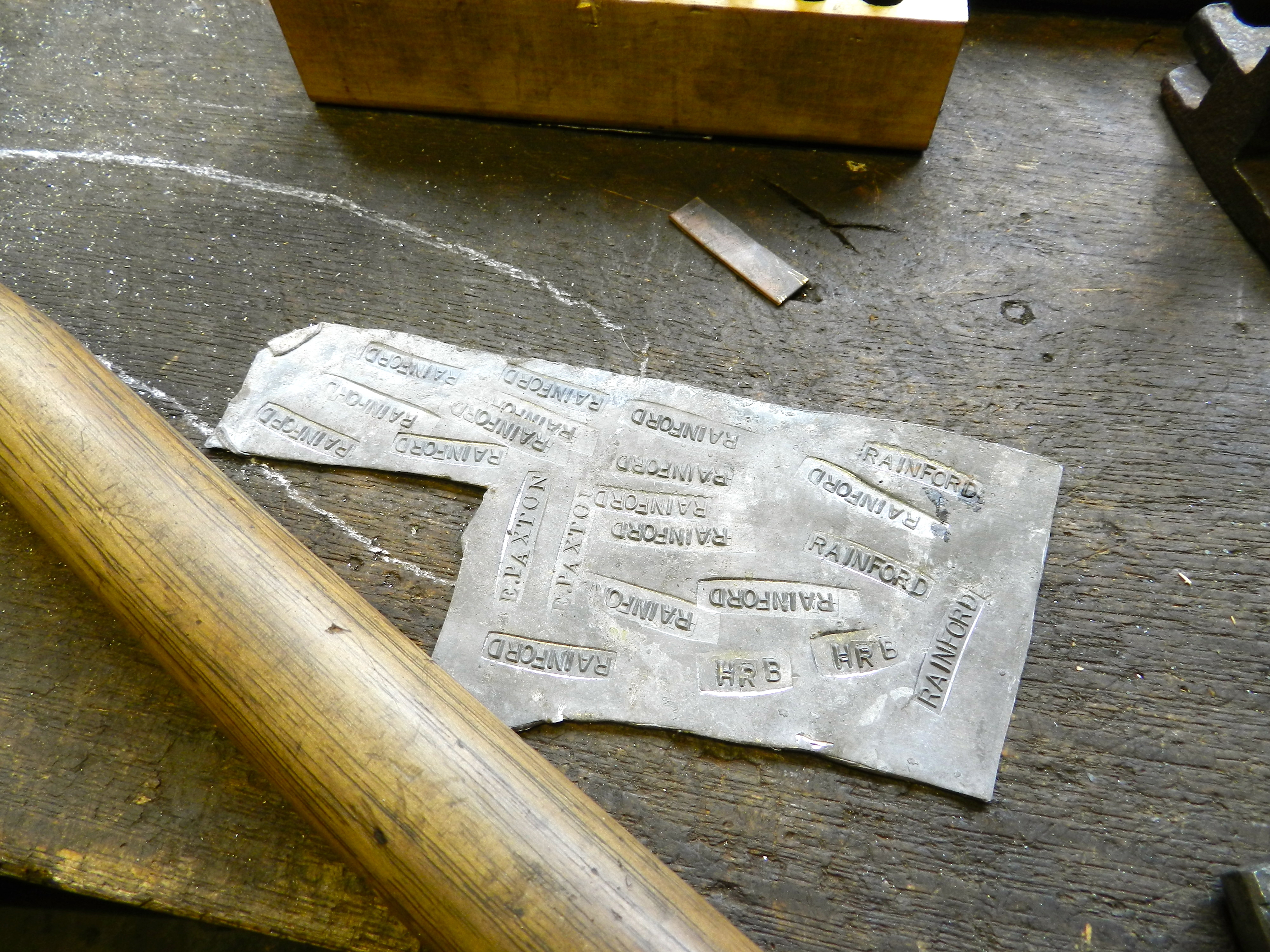
After forging the rough blank we learned to use the various types of files and letter stamps needed to make a nice stamp. Along the way we’d test the stamps in the end grain of some wood and in lead flashing.

Testing the stamps on some lead flashing

Why do you use end grain wood and lead flashing?!

The stamps work by crushing some fibers and leaving others proud, thus creating a 3D surface that can be read — much like you see in the maker’s marks on the toe of a molding plane. The lead does a great job showing you crisply where your stamp is pressing and where you may need to work on it some more.

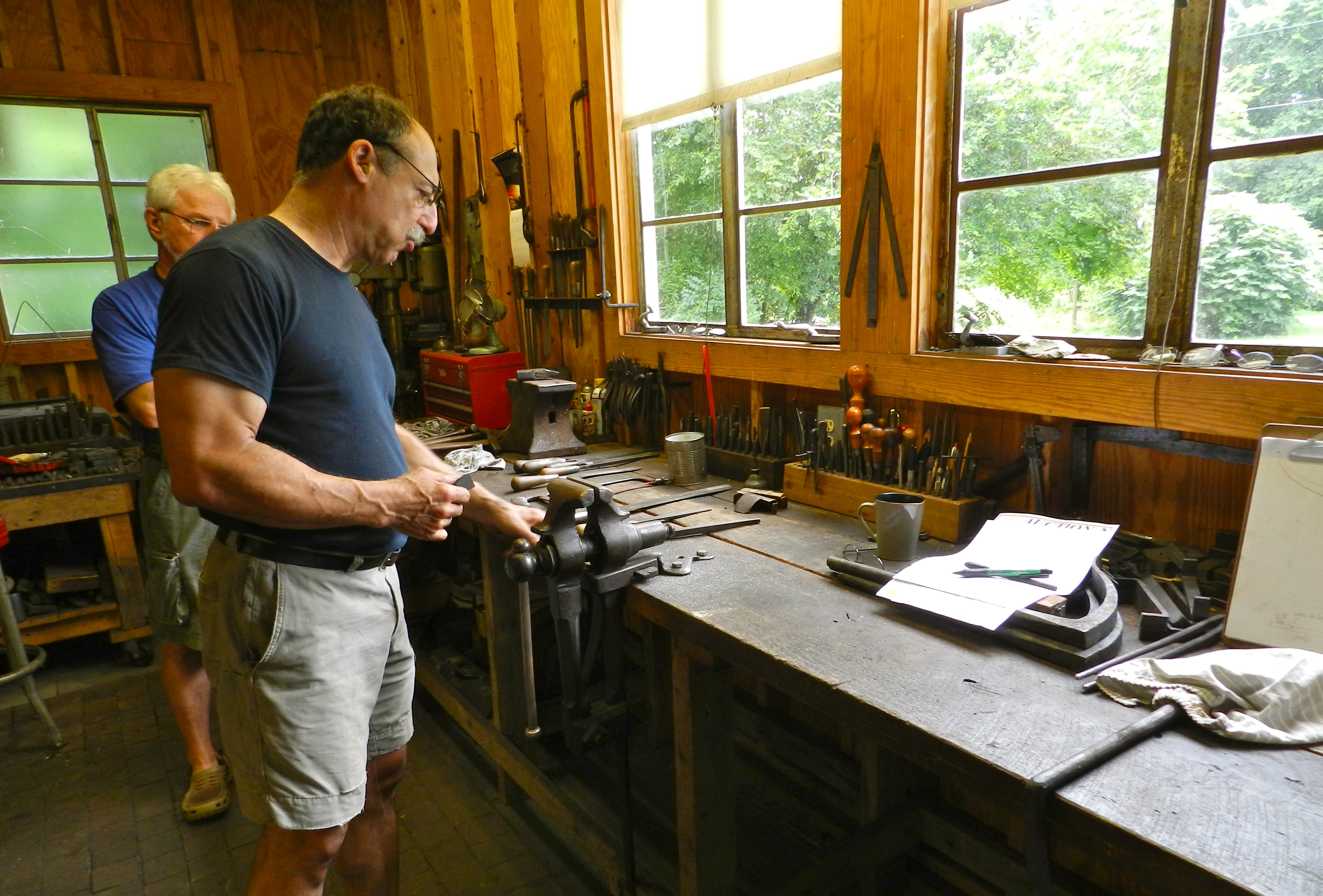
Peter teaching the class how to file and use the leg vise

Peter demonstrated how to properly file and also how tough the surface of the stamps become once they were case hardened — the files were no match.

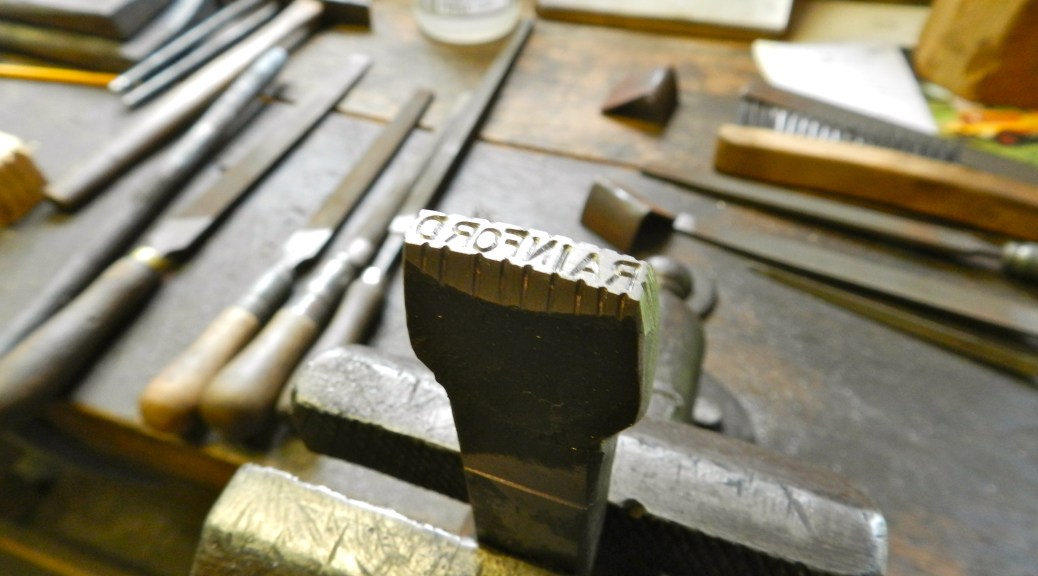
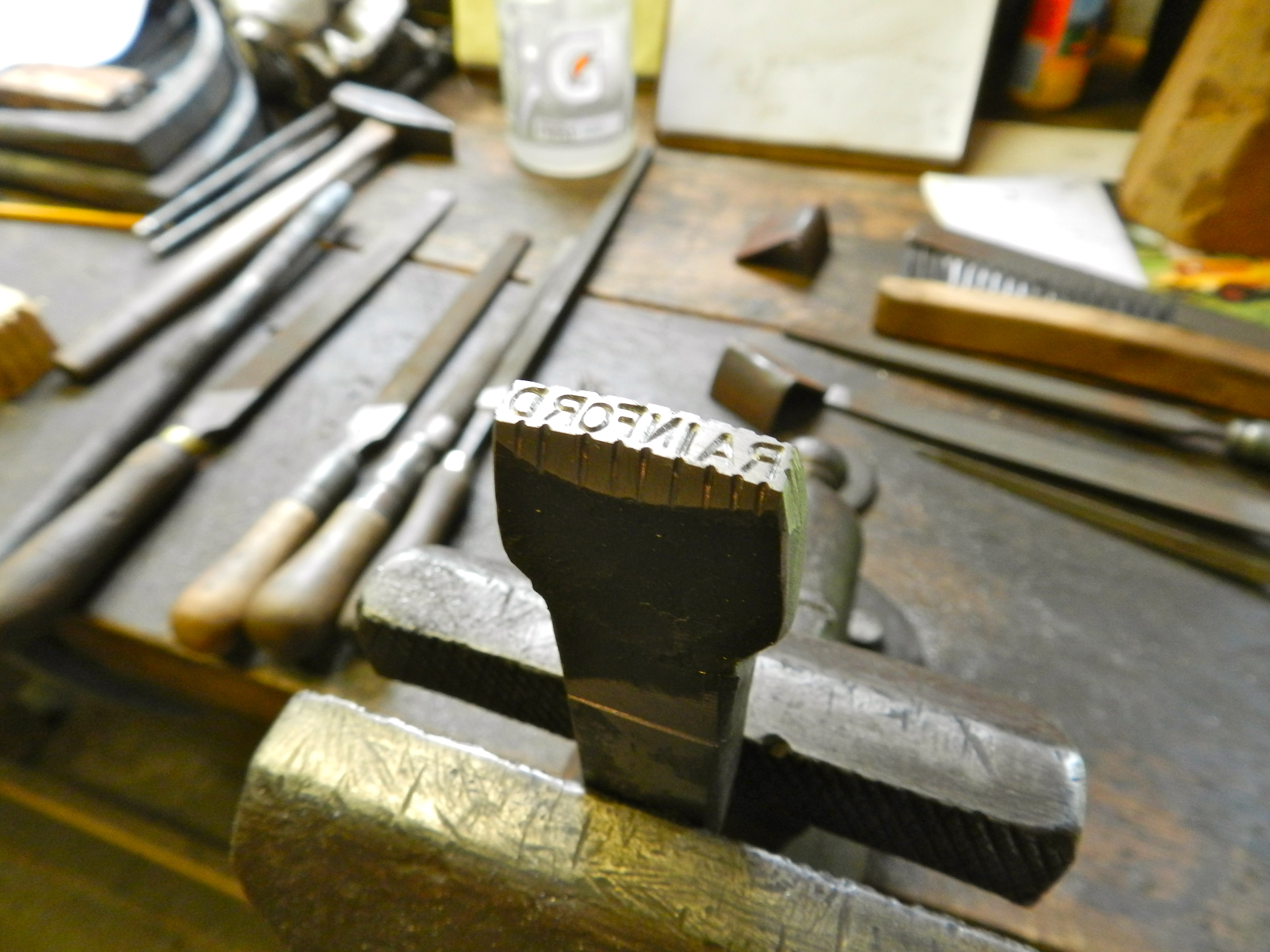
My second stamp -- 'RAINFORD' with a slight curve over the length of the stamp
My second stamp — ‘RAINFORD’ with a slight curve over the length of the stamp

Making a longer name stamp was even more challenging since the letters are all set free hand you could very easily mess it up with any given letter. If you do mess it up, file off the mistake and try again, and again as needed.

Testing my second stamp

For my second stamp I made my last name and curved it a bit to make a gentle arch. Around the edge of the stamp you could decorate it any way you wanted, the most common being a traditional sawtooth-like border.

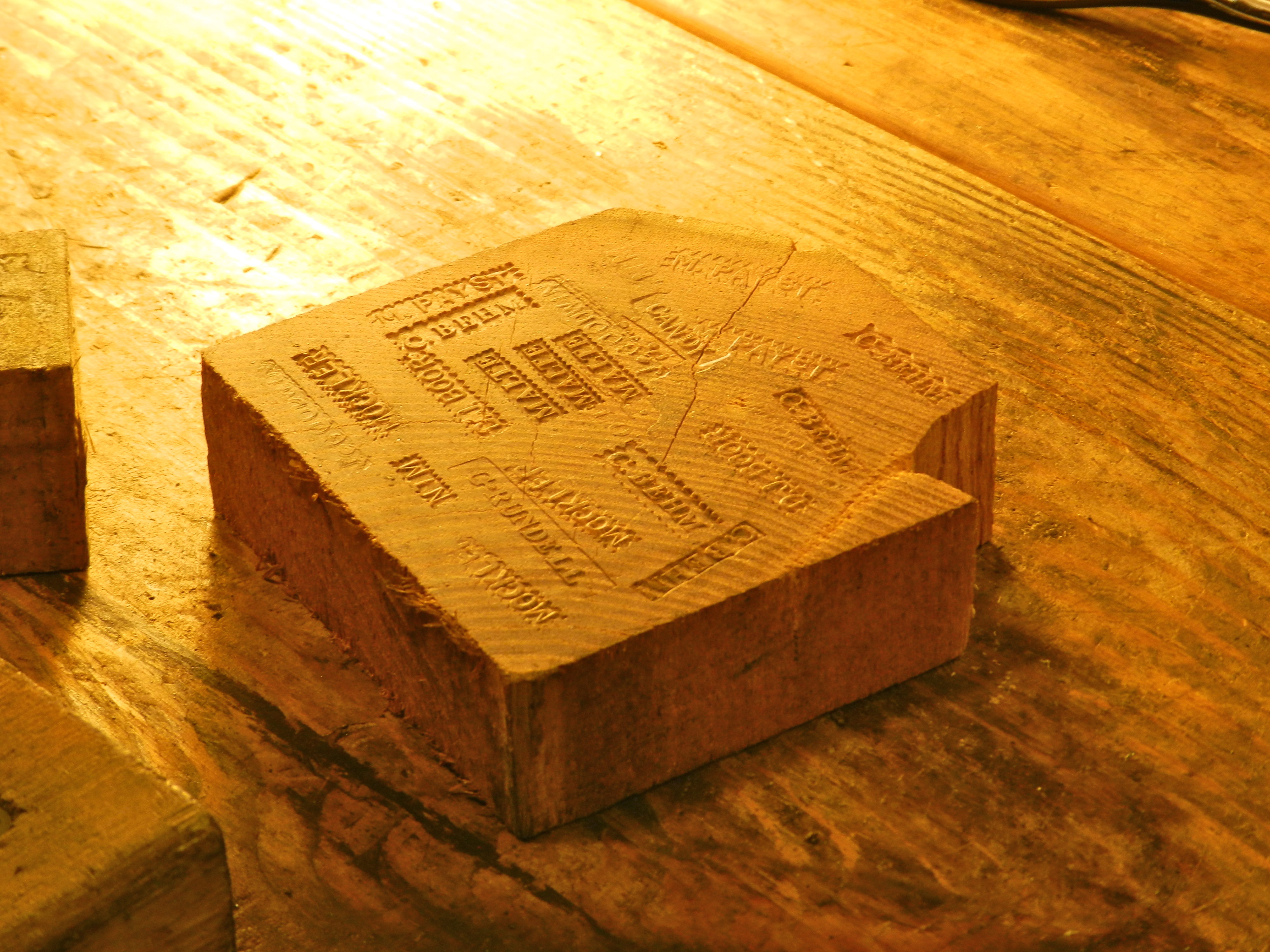
Another test block showing some of the variation across the stamps

Most if not all folks in the class got a chance to make a couple of name stamps and practice their filing skills.

A beautiful lock that Pete made

Beyond the class itself we also got a chance to see some of the amazing work Peter does in his shop. From beautiful locks, to tools, to massive Roubo holdfasts it was neat to see the variety of black and whitesmithing tasks Peter carries out in his shop.

If you are interested in taking this workshop, please check out the Woodwright’s School website here. I had a great time and look forward to my next workshop at the Woodwright’s School.

Installing Doors and Windows as Performance Art

This past Saturday I taught a workshop on installing doors and windows at the North Bennet Street School’s Arlington location. While it is the last workshop that will be taught at that location before the big move this summer into the new facility back in the North End of Boston it did not feel as much like the end of an era — it felt like the beginning of something new. The Arlington location was where I learned as a student and where I first started teaching workshops at NBSS so while I am a little sad to see the old shop get packed up, I look forward to seeing where we can push going forward with new classes and new opportunities.

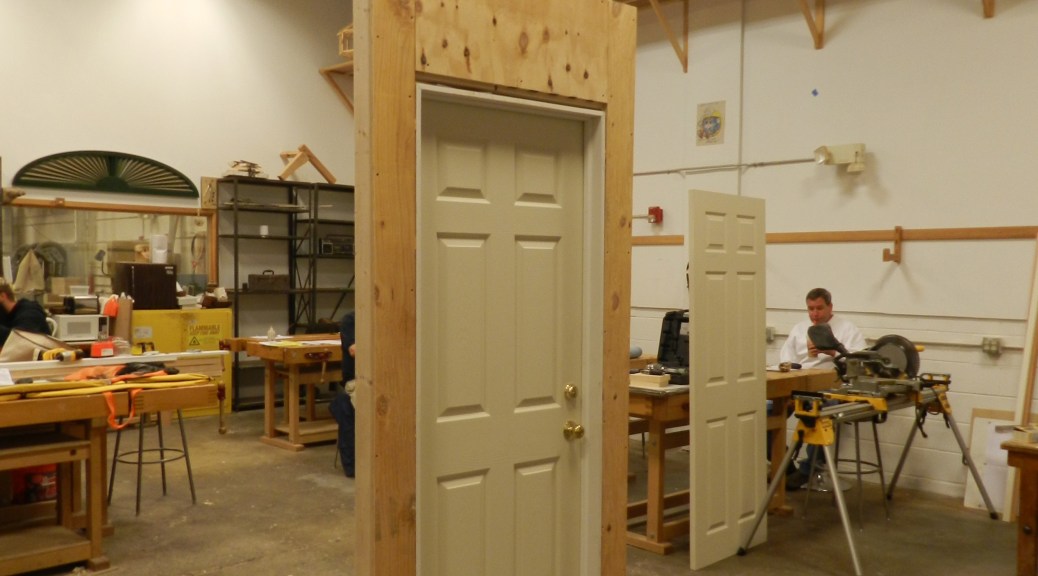
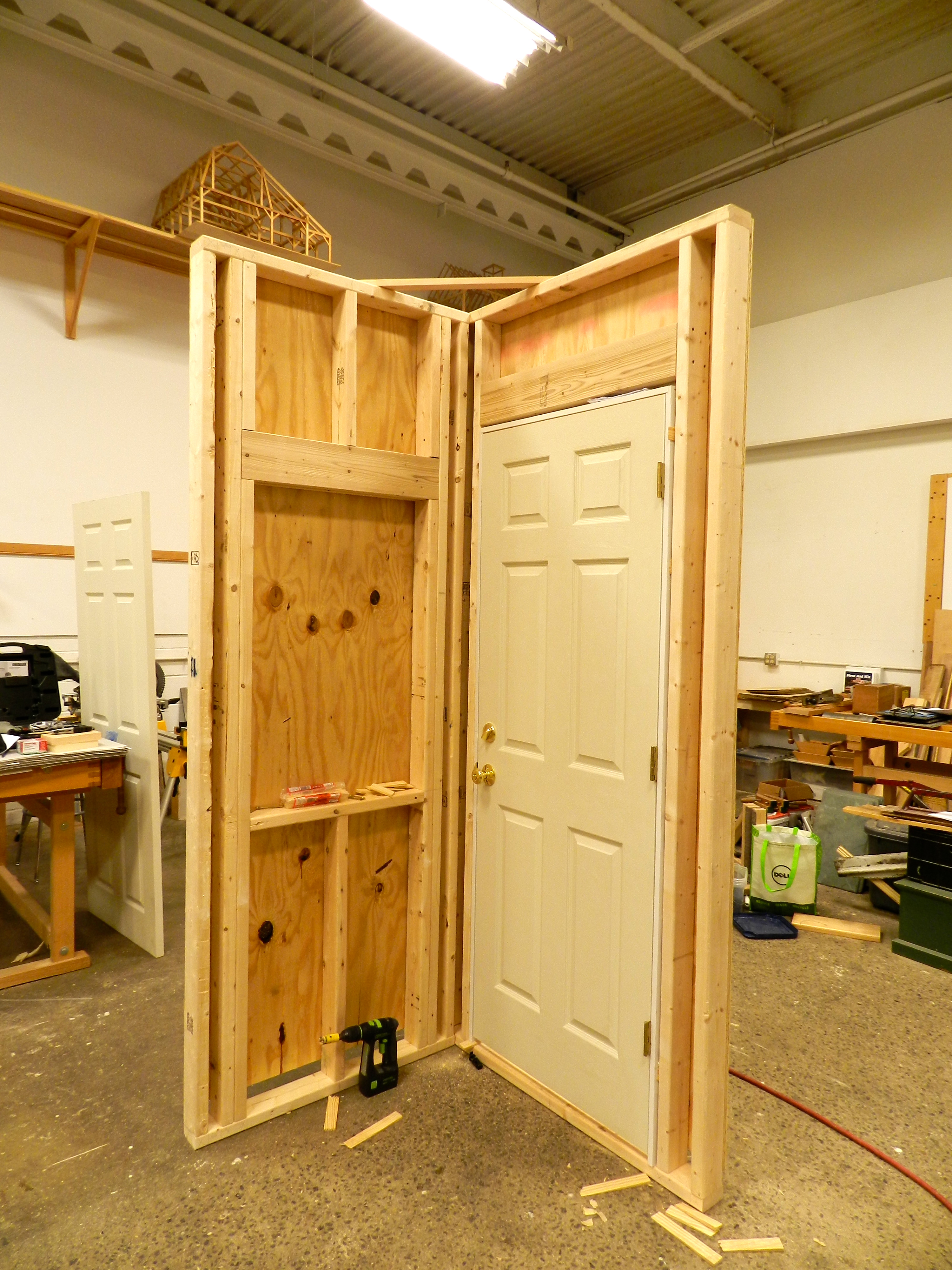
Door and Window Framing Mockup

In designing this class part of the challenge was to make accessible to a wide audience and also be reasonable with the materials. The format of this workshop was a full day of me demonstrating, lecturing a bit, answering questions and letting the class try some of the hands on operations.  By the time I got home I was on my feet for about 14 hours that day and felt like I completed a long piece of performance art.

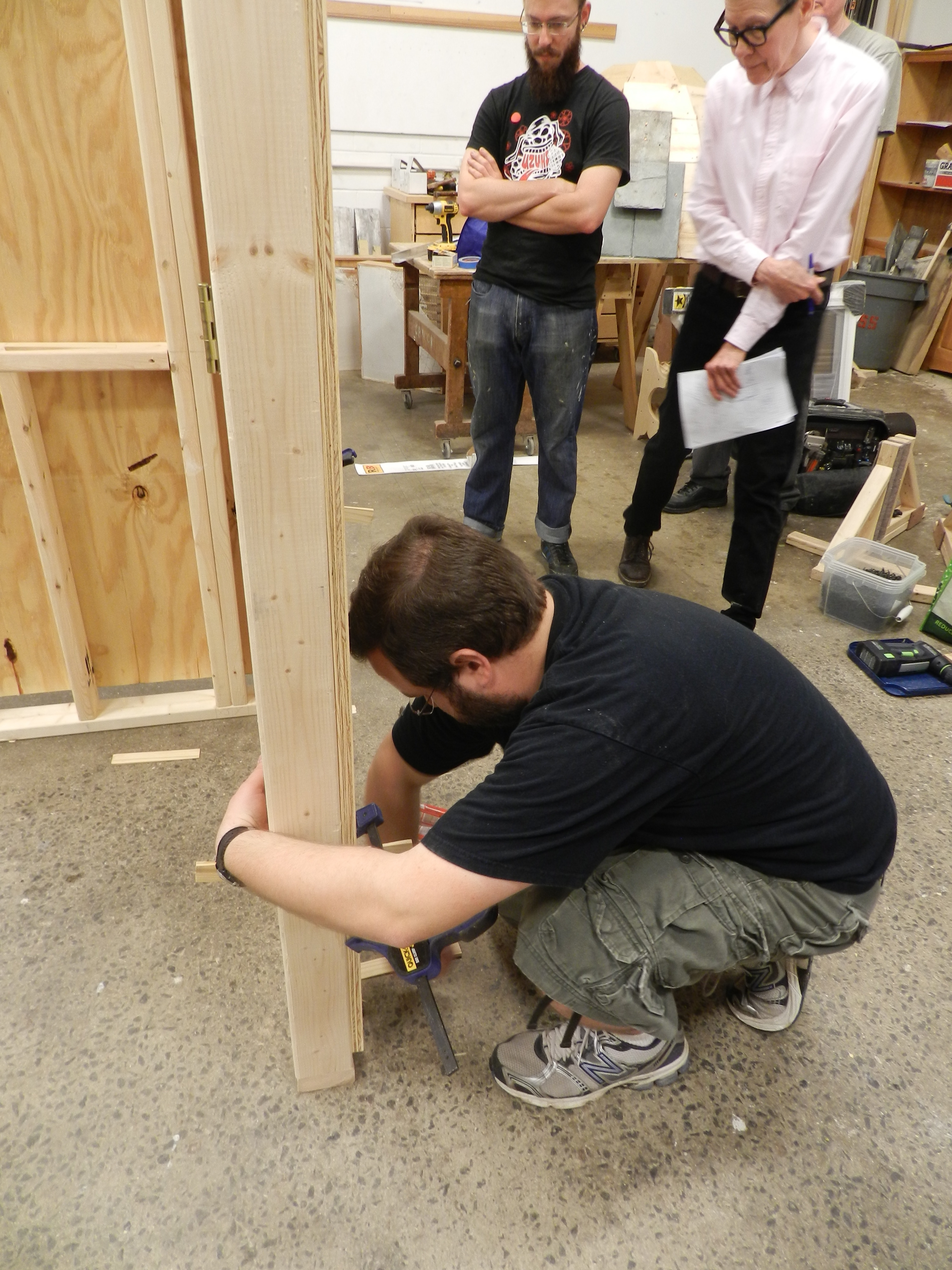
Using shims to center and plumb up the door

We covered a lot of material given this was only a one day class:

  • basics of stick framing
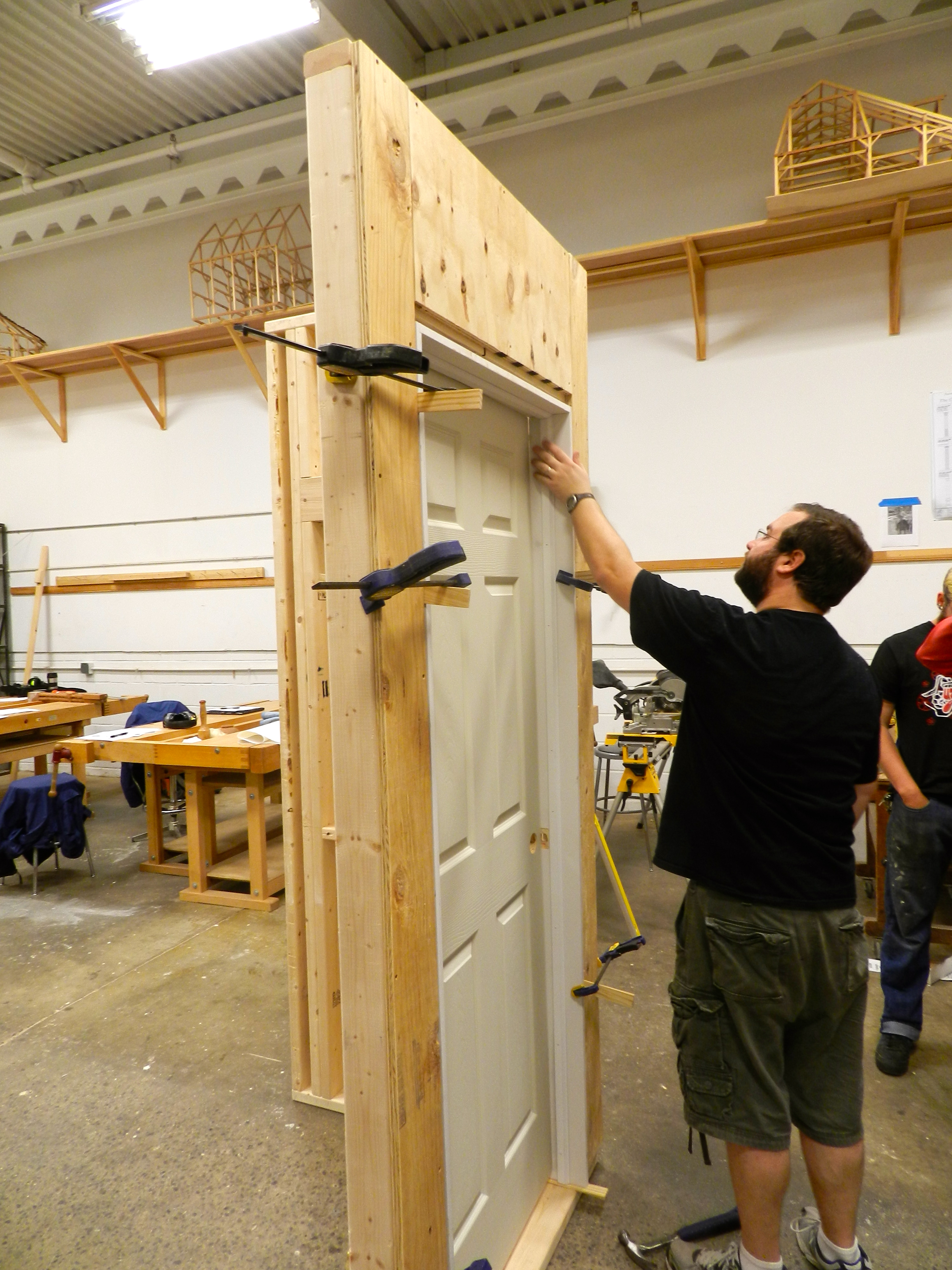
  • how to install a new pre-hung door and adjust it
  • how to install a door knob and lockset
  • how to trim out the door
  • how to cut sheathing for a framed out window opening
  • installing and leveling a window
  • how to wrap and flash around a window
  • how to cut a stool and trim out a window
  • And MANY general questions along the way
Bill demonstrating how to adjust the door's opening
Bill demonstrating how to adjust the door’s opening

If there are carpentry, preservation carpentry, or general woodworking workshops you’d like to see offered at the school or in my own shop, please let me know as I’m always looking to teach something new and entertaining.

The Road to Roy Underhill: Workshops With the Woodwright

Jointer Plane Making & Name Stamp Workshops

 At the Woodright’s School in Pittsboro NC


Are you interested in meeting and taking a woodworking class with Roy Underhill of the Woodwright’s Shop and Woodwright’s School? (Along with Peter Ross the former master of the Colonial Williamsburg Anderson Forge and Bill Anderson a master plane maker – both of which have been on Roy’s show)

I talked to Roy and the guys and they were willing to do a special run of the two workshops below on the following dates*: Arrive July 8th class 9-12th leave the 13th at Roy’s School in Pittsboro NC

* (Given the very long drive from NH down to NC I wanted to try and get a few days in a row down at Roy’s school to get the most I could out of the trip, and I am very appreciative they were willing to do so, but we need a few more people to sign up in order to run it) So if you are interested in one or both of these sessions I encourage you to sign up soon.


http://www.woodwrightschool.com/name-stamps-w-peter-ross/

1 Day class $145 + $40 materials

Peter Ross Name Stamp Workshop

http://www.woodwrightschool.com/making-bench-planes-wbill/

3 Day class $425 + $115 materials (beech + plane iron etc) to make a massive single iron jointer plane

Jointer Plane Workshop

Total: $725 Tuition and materials for 4 days + your own food and lodging. I will be driving down (11hour drive from NH) and if folks from NBSS or the general Boston area are interested in joining me I can carpool. Hotels in the area are $55-100/night.  Info from Roy on what it’s like to take a class at his school can be found here.

I also hear there is a good pizzeria behind the school that Roy has been known occasionally have a drink with the students after class and above the school is an old time used tool shop that has similar stuff to what we hunt for at the Nashua Tool show.

If folks are interested, we could also take an extra day to go see nearby Old Salem, which is home to the Museum of Southern Decorative Arts and a Moravian living history museum much like Colonial Williamsburg. http://www.oldsalem.org/ It’s kind of a crazy adventure, but I think it would be a memorable experience.

For more info, please contact me or sign up at Roy’s site:

You can reach Bill Rainford at: (My firstname ‘dot’ lastname at facebook.com) — or via my blog or my linkedin page

Woodwright’s School Registration Page

New Workshops at NBSS Spring 2013

Just a quick note: I will be teaching some new workshops this spring at the North Bennet Street School’s Arlington, MA location.  My teaching schedule can be found here. I look forward to seeing some of you in class this spring or summer.

-Bill
Introduction to shutters @ The North Bennet Street School

Saturday, May 4 – Sunday May 5

8:30 AM – 4:30 PM Register

Instructor: Bill Rainford
$375

Shutters Workshop
Shutters Workshop

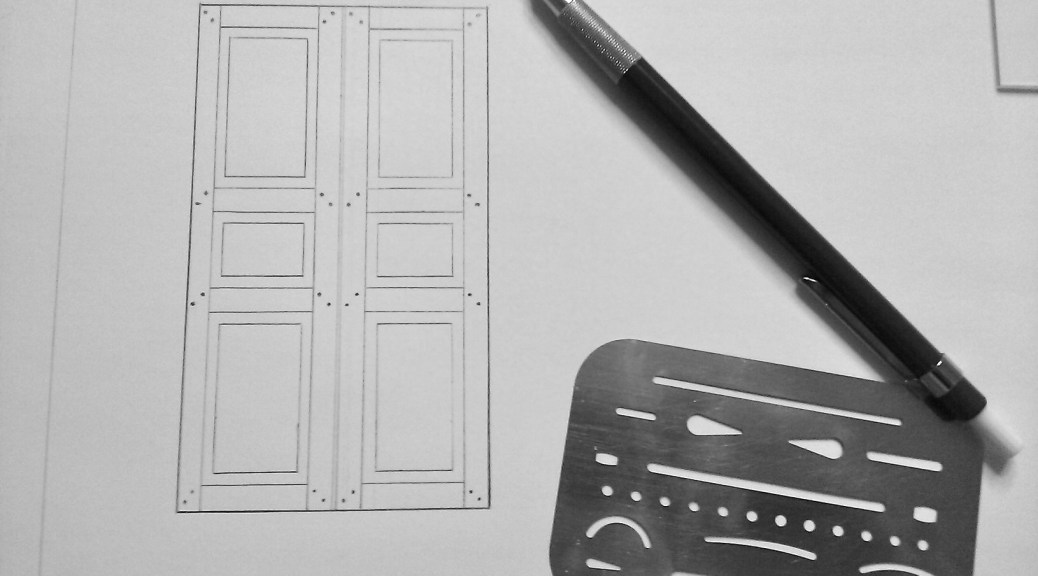
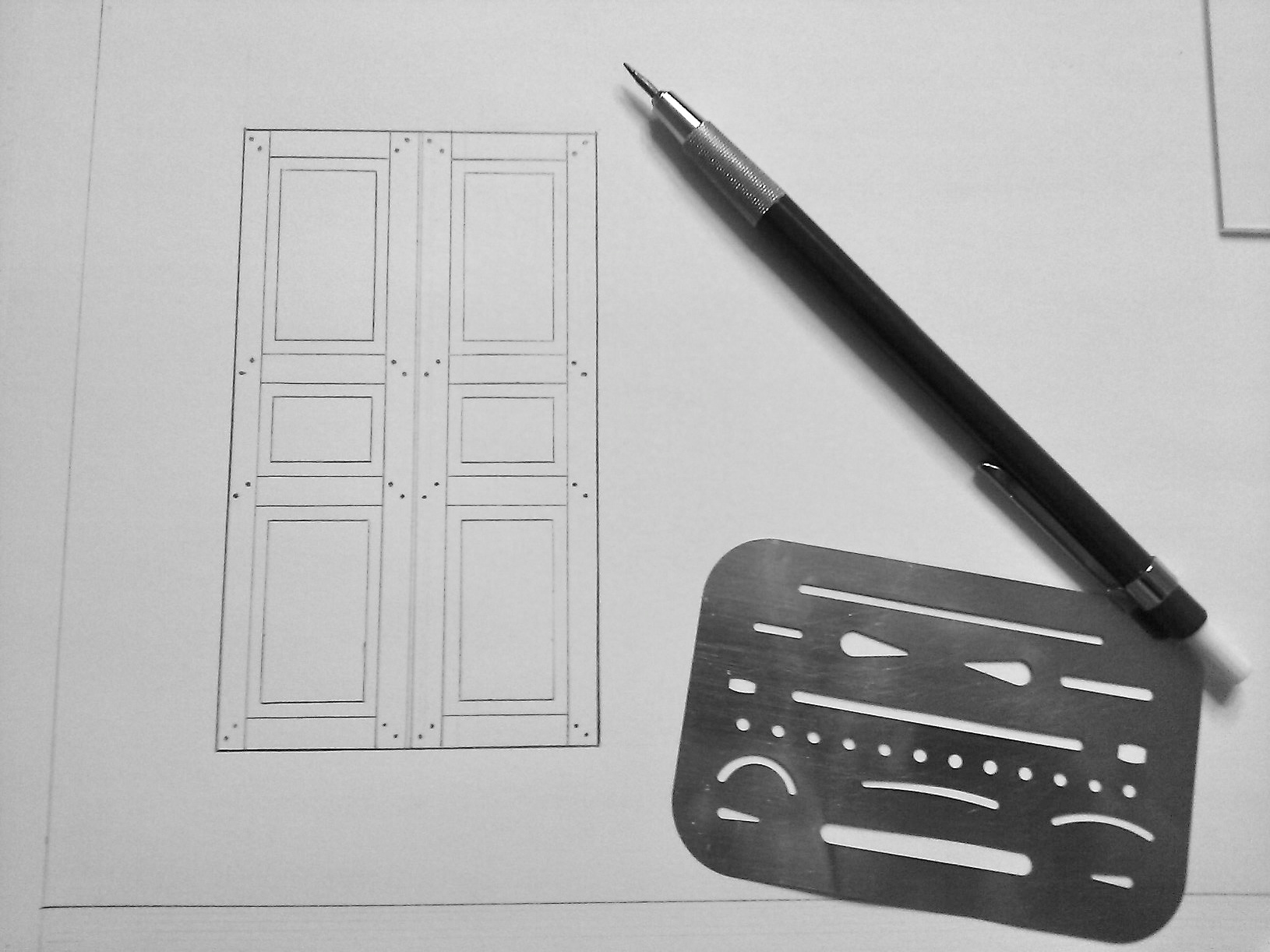
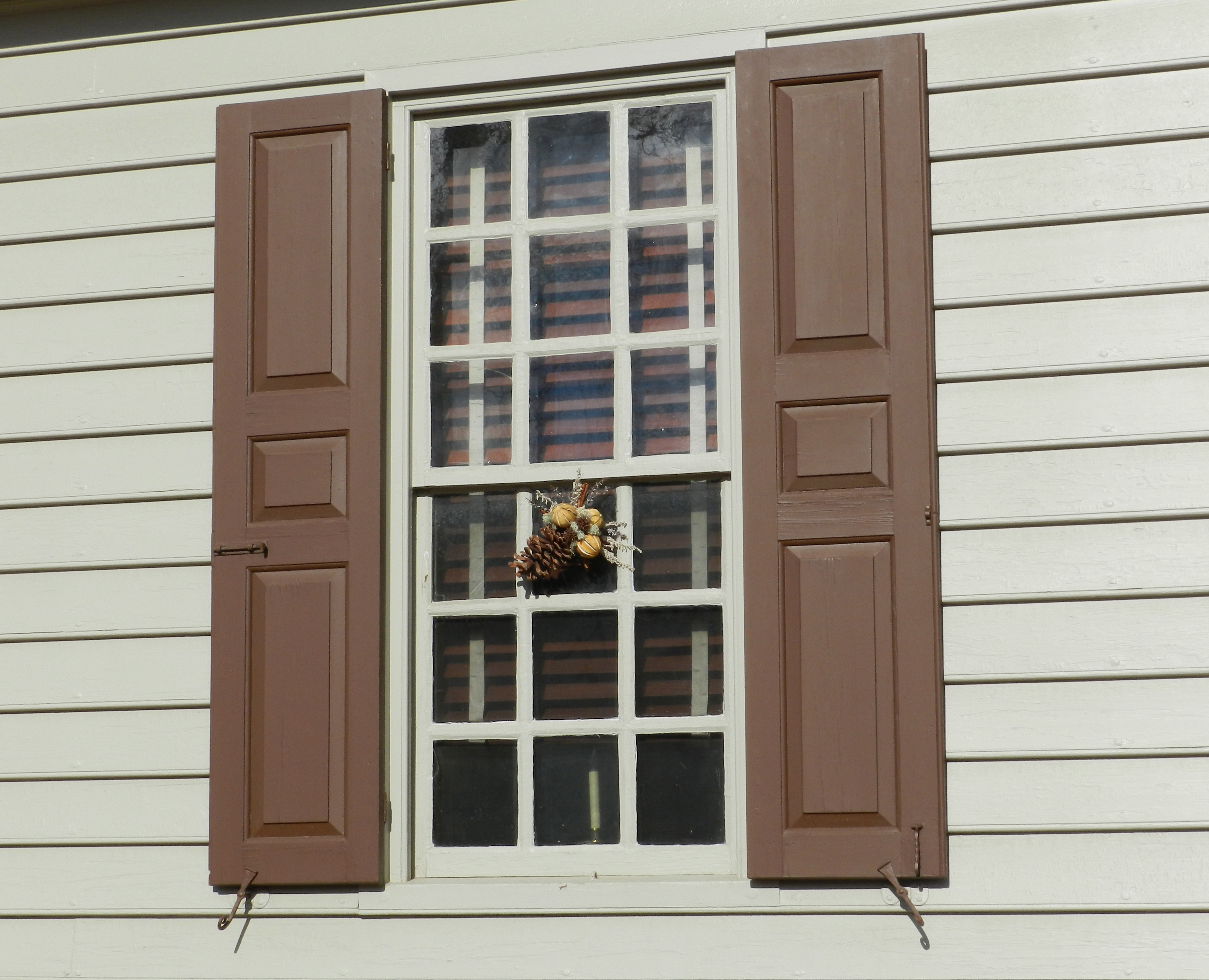
Learn about traditional wooden shutters in this two-day workshop. Using traditional joinery, students will build a sample shutter and learn the skills needed to layout and build shutters for your own home. Discussion includes interior and exterior uses, fielded panels and louvered styles Students should be able to plane and square up a board by hand and have some experience laying out and cutting traditional mortise and tenon joinery by hand. Some experience with tuned hand tools and power tools is required. PLEASE NOTE THIS CLASS WILL BE HELD IN ARLINGTON.
Traditional Shutters

Register

Hanging doors and windows: demo and discussion @ The North Bennet Street School

Saturday, June 8

8:30 AM – 4:30 PM Register

Instructor: Bill Rainford
$50

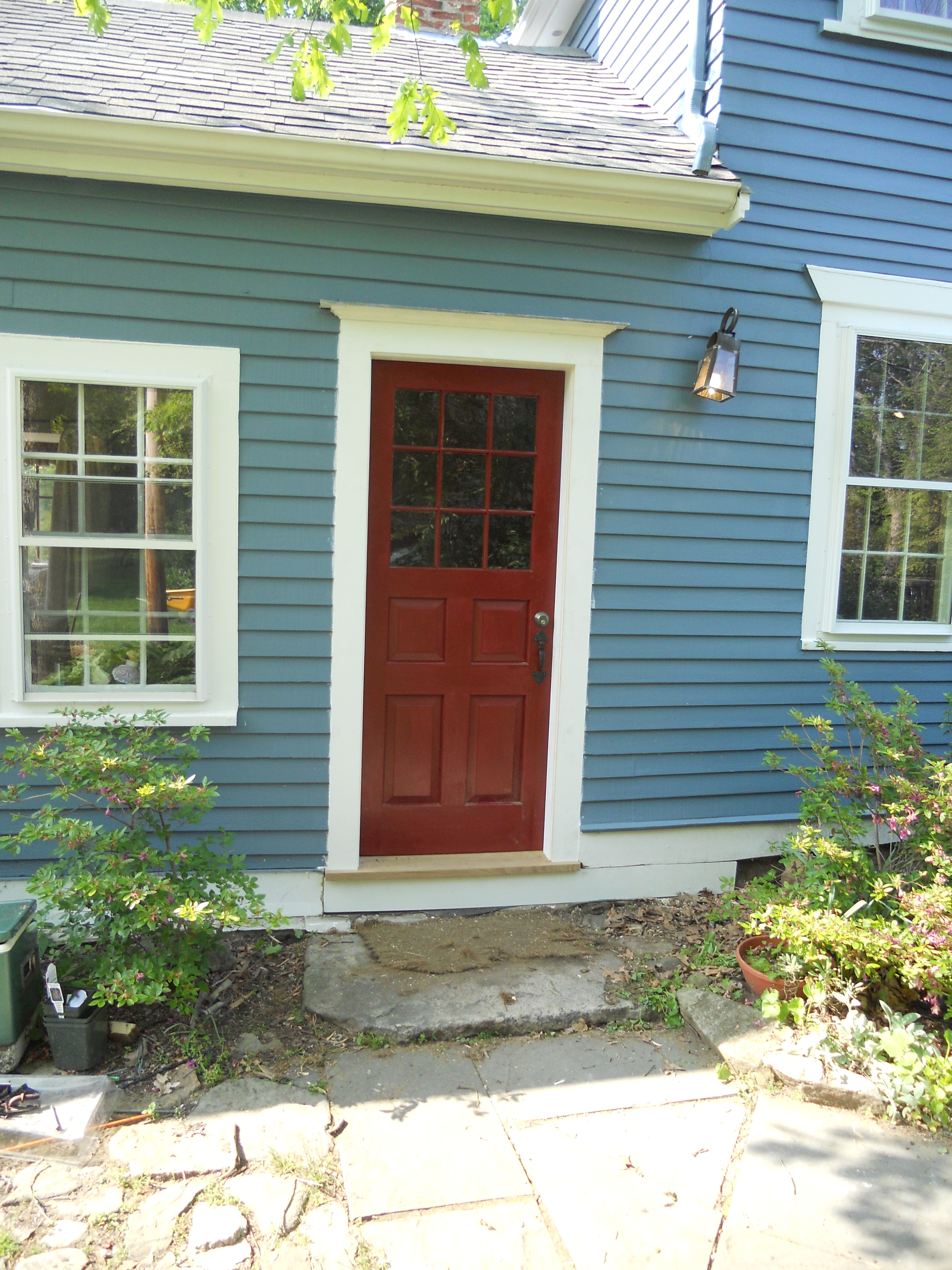
Completed door
Completed door

This one-day demonstration workshop includes installing a modern door, cutting to accommodate a door knob and lock set, mortising hinges, installing a modern window and related trim and flashing. We cover the proper tools for these projects and include ample time for questions throughout the day. PLEASE NOTE THIS CLASS WILL BE HELD IN ARLINGTON.

Register

Building Walls and Slinging Mud

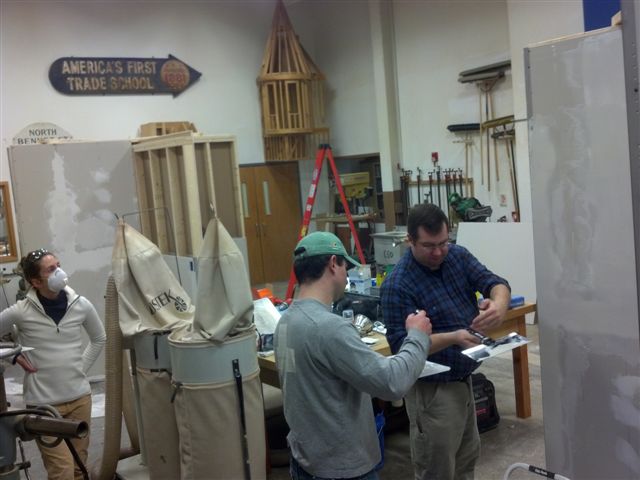
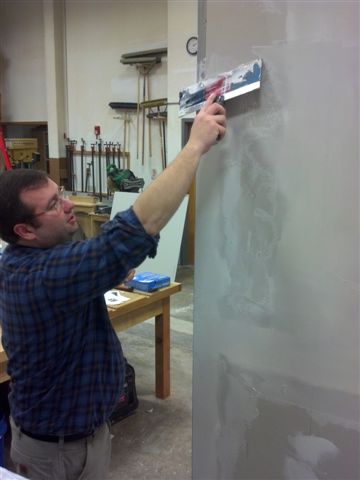
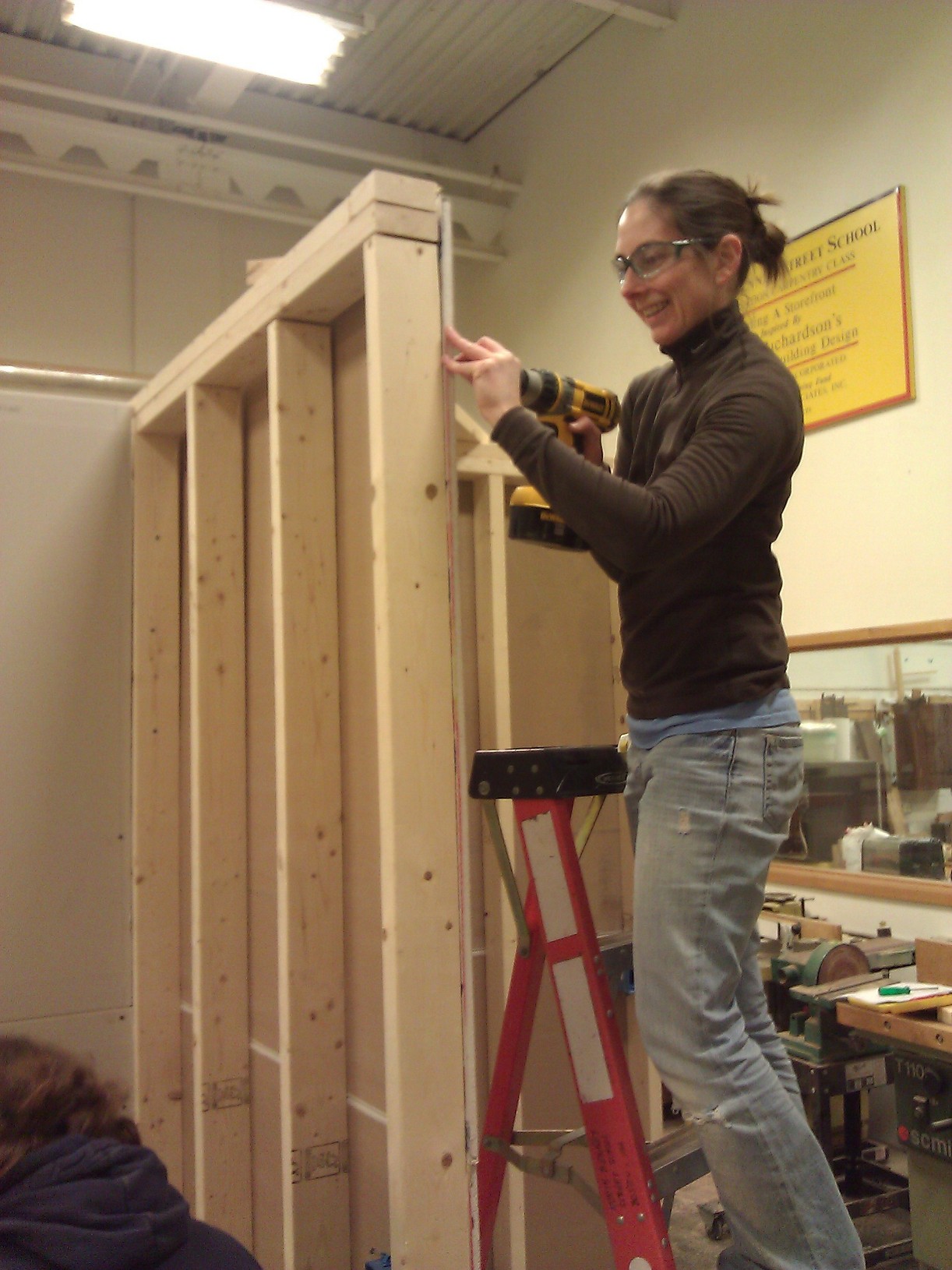
This past weekend at the North Bennet Street School I taught a new 2 day workshop that I designed on framing, drywall, mud and texture work. It was an opportunity for students to learn the techniques necessary to properly install or repair drywall around their homes, improve their finishing and texture skills and ask questions.

Bill Teaching
Bill discussing technique

It was a lot of material to cover in 2 days, but the class was enthusiastic and put in the hard work necessary to get through all the major exercises.  Below is a highlight reel from the class:

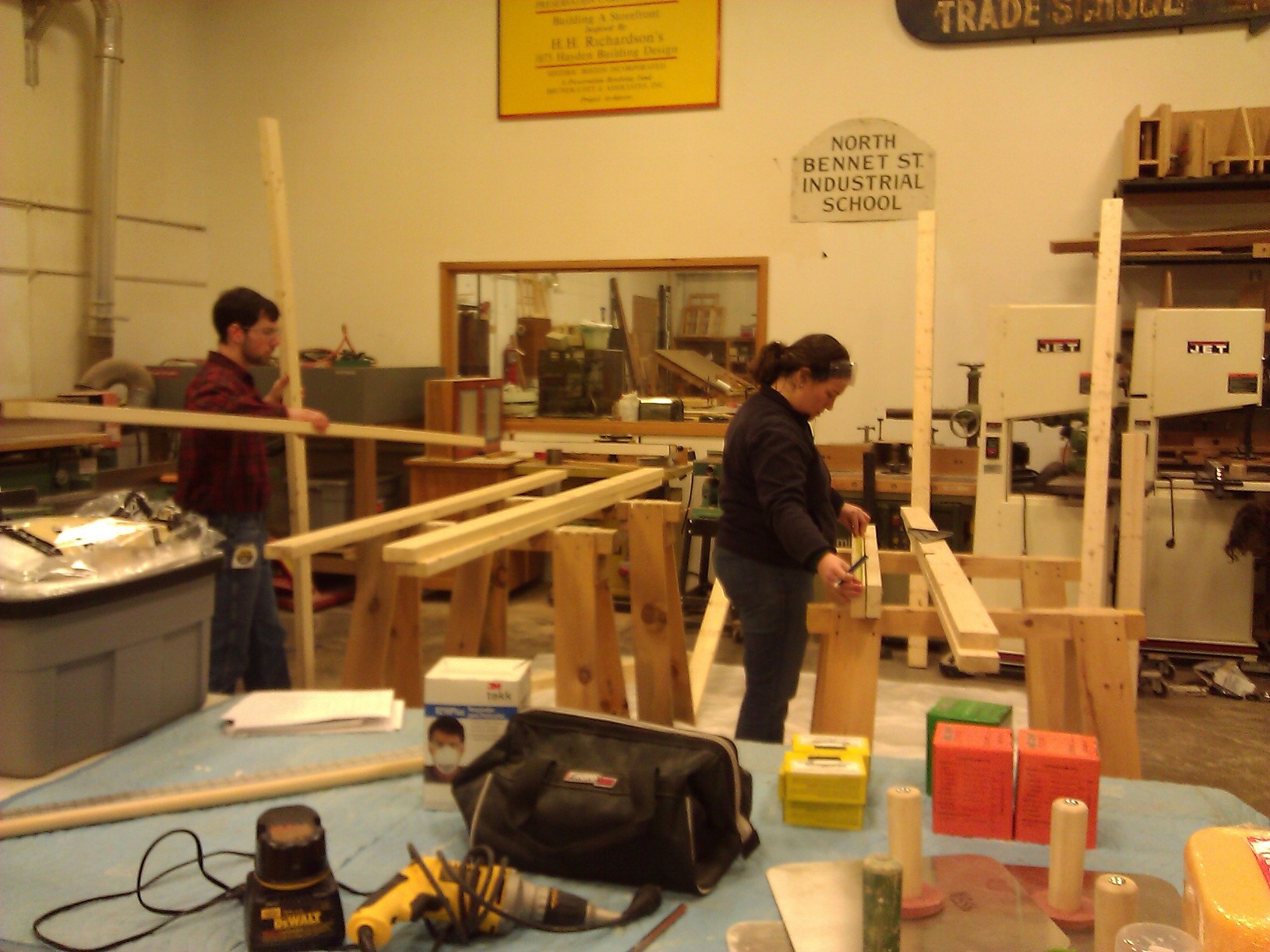
Laying out the frames

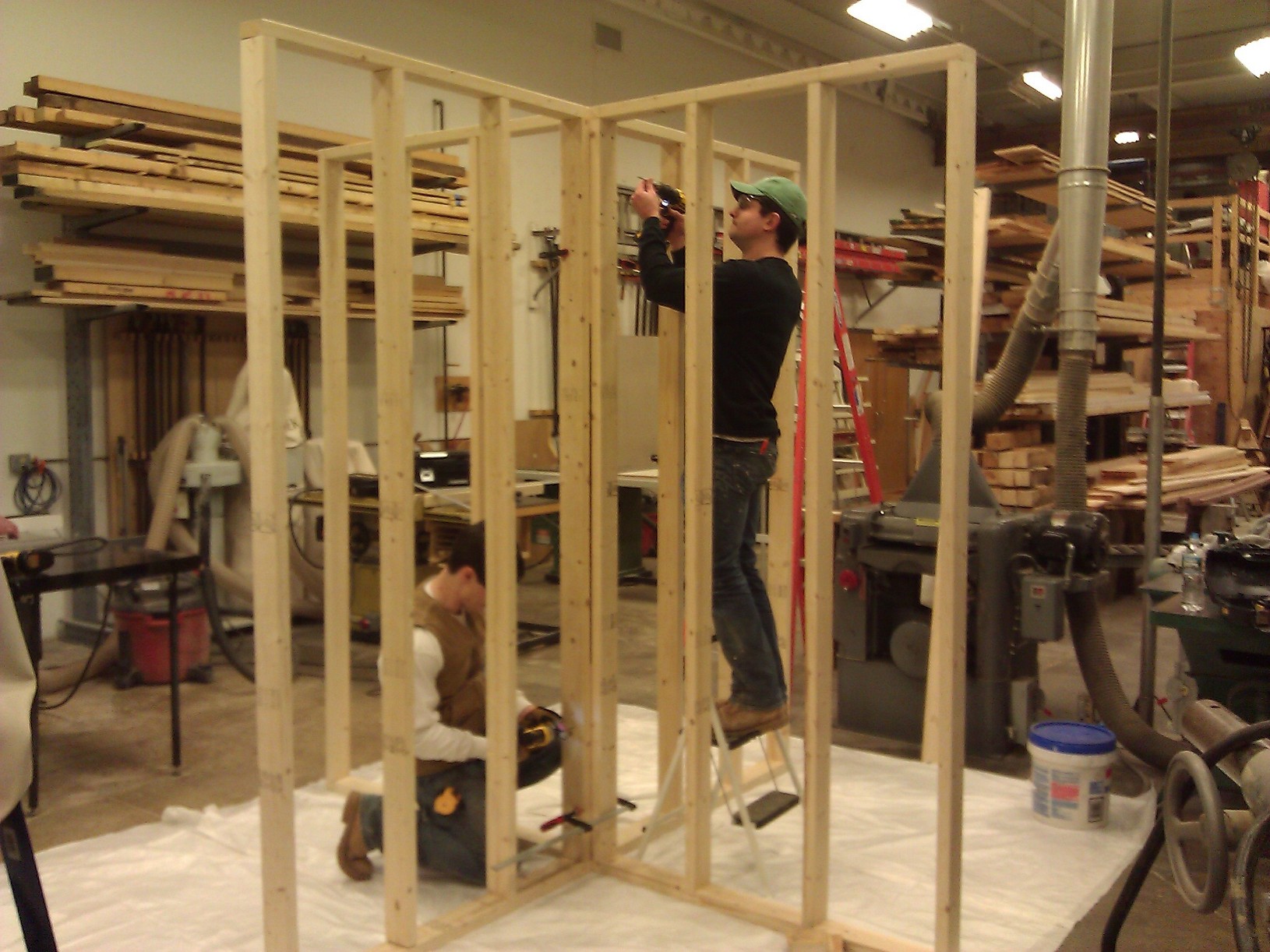
Once each student finished his/her frame they were assembled into wall sections.

Assembling the frame sections

Each student had their own workspace to practice in.

Students cutting and hanging sheetrock
Cutting and hanging Sheetrock

Cutting, hanging, coursing, cleaning up edges etc.

Bill Demonstrating Technique
Bill demonstrating how to blend coats of mud

Hands on demonstrations of technique

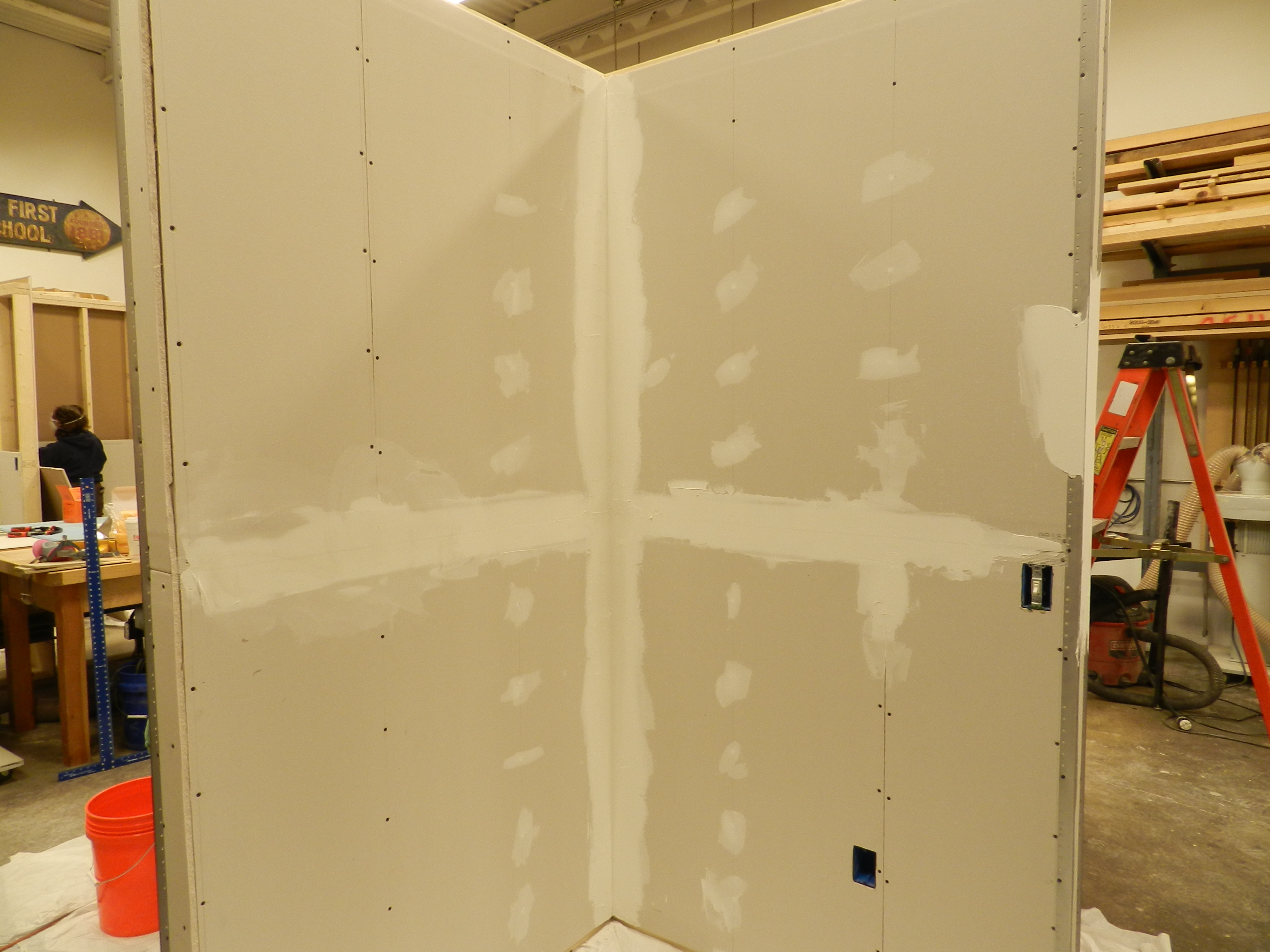
Taping and initial mud work

Working around obstructions like outlet boxes, taping, and initial coat of mud.

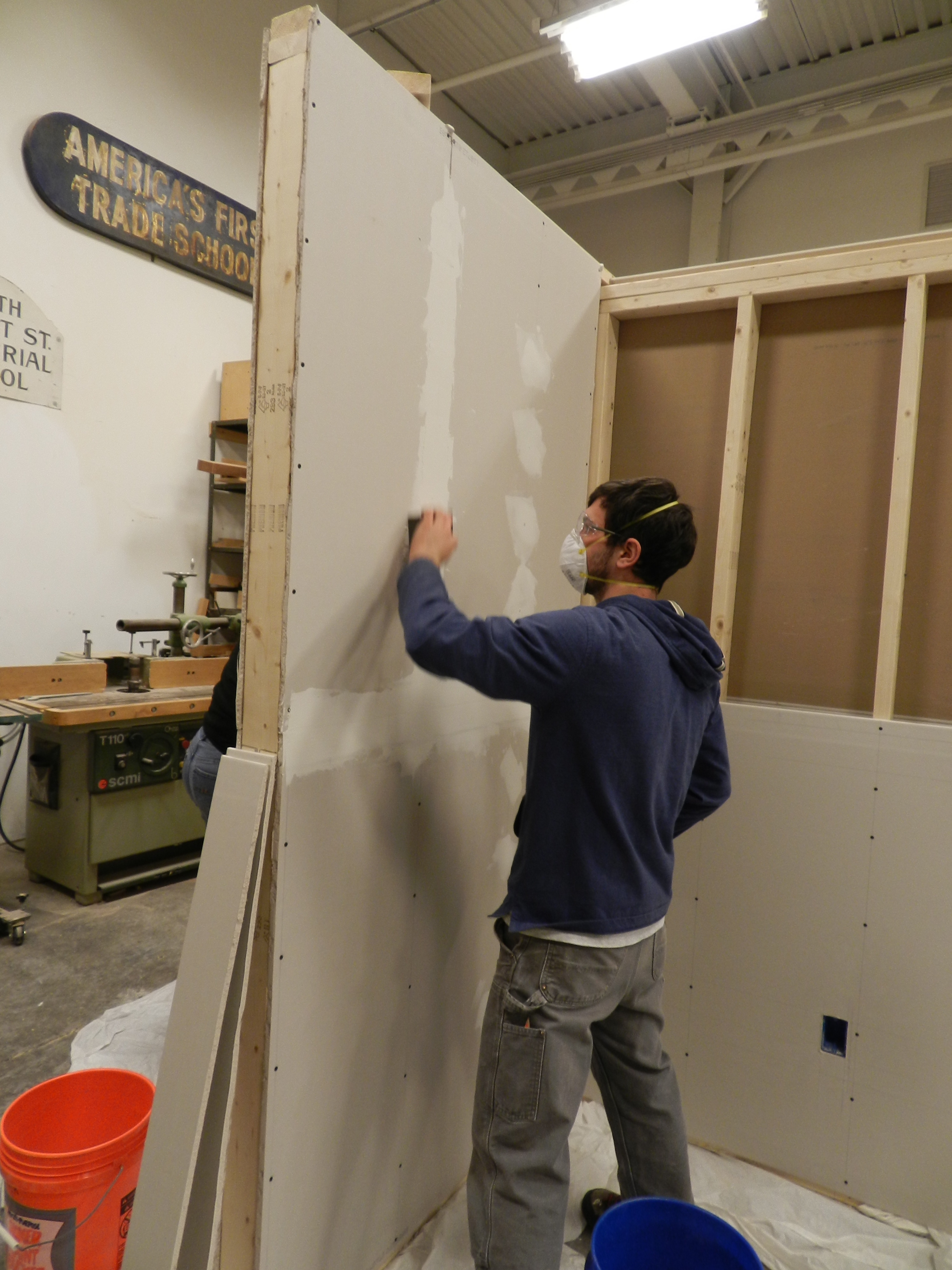
Wet and Dry Sanding
Wet and Dry Sanding

Sanding the initial coat of mud and applying subsequent coats.

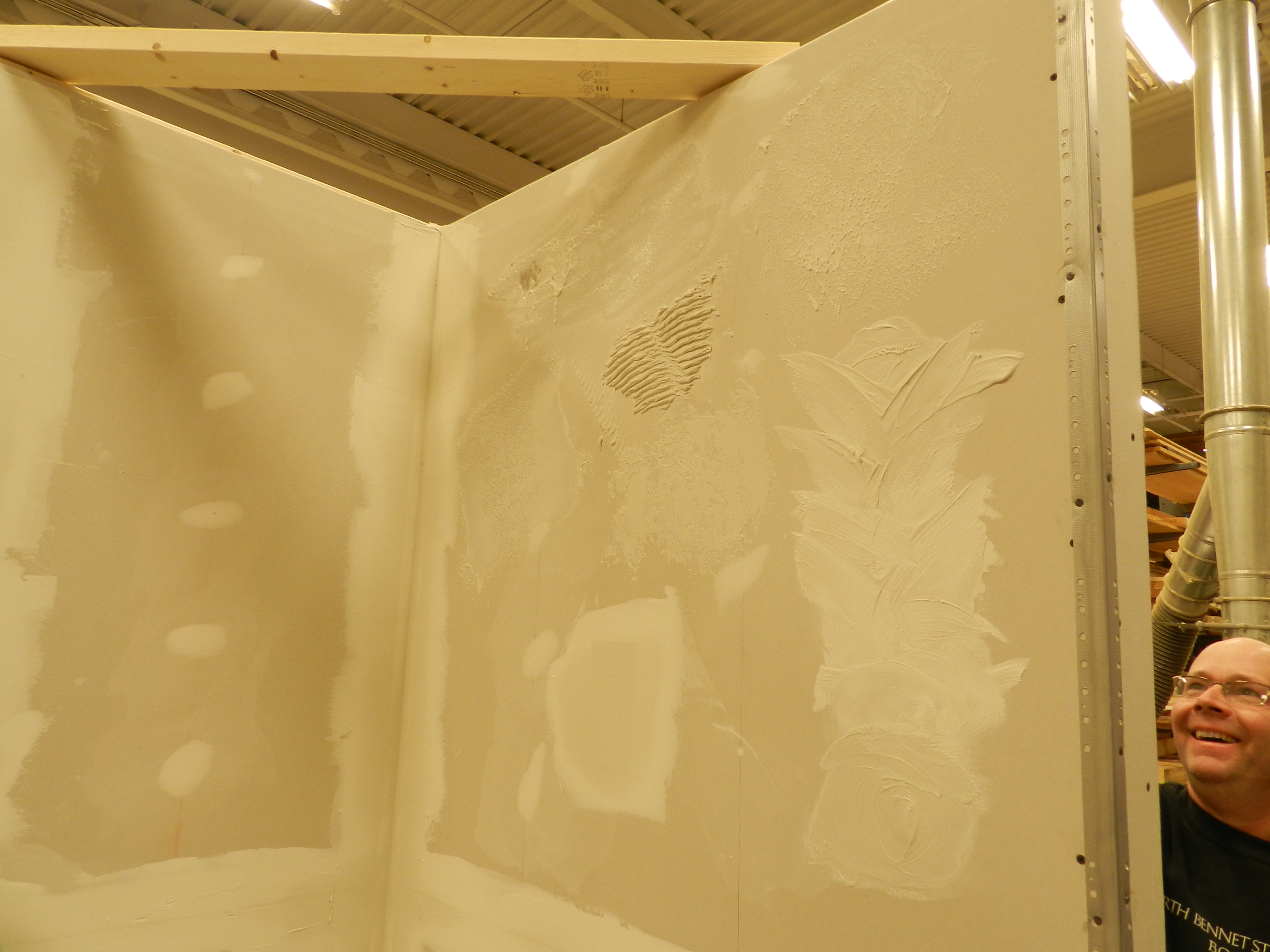
Applying Texture
Applying Texture

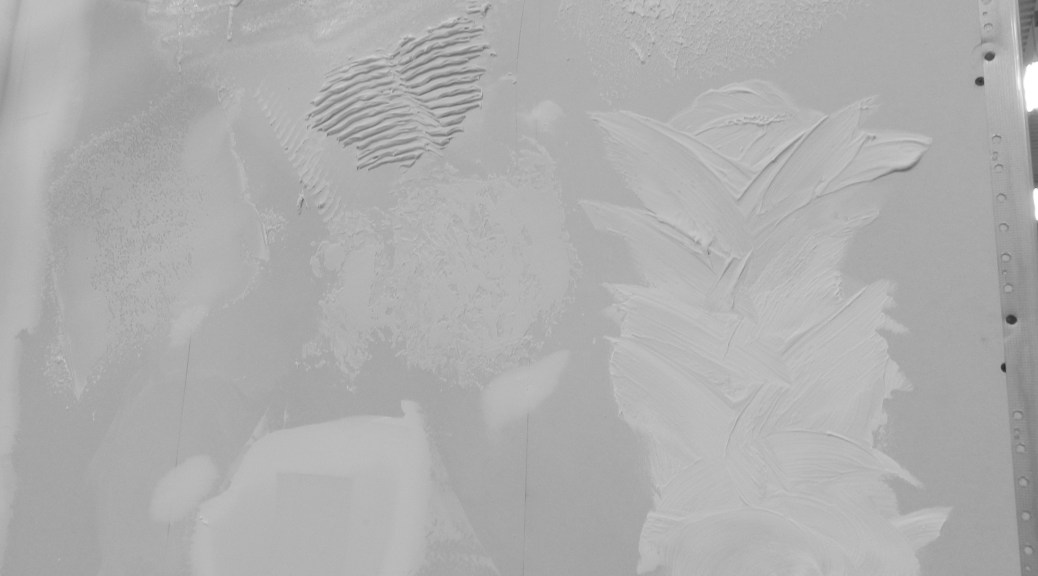
Patching, repairs and applying various finishing and texture techniques.

It was an informative and enjoyable experience and I look forward to teaching similar workshops in the future. If you have requests for other workshop topics you’d like to see covered, please let me know.