Category Archives: Woodworking Techniques

Posted related to woodworking techniques

The Humble Hewing Bench

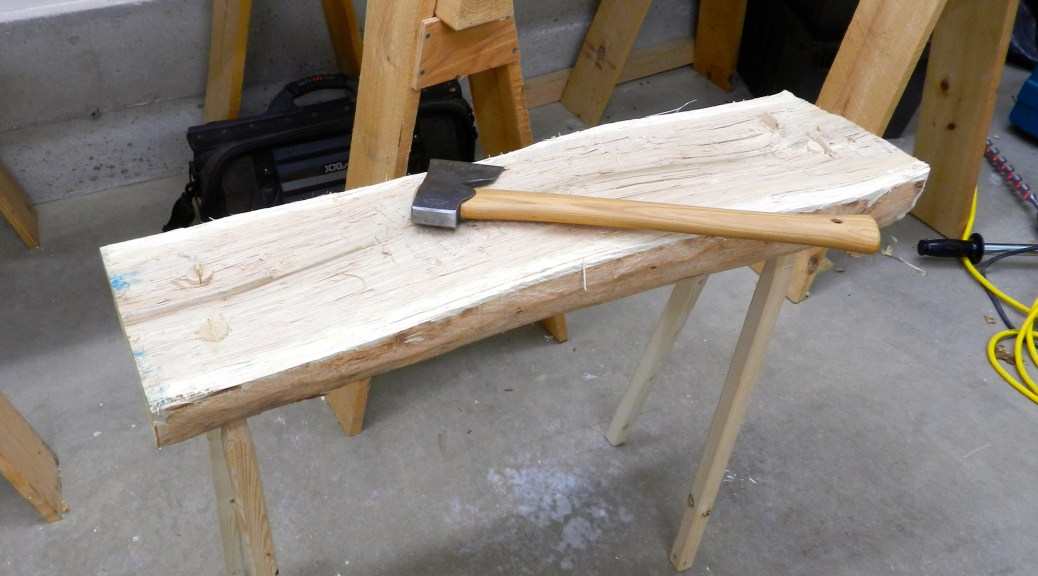
If you’ve watched Roy Underhill on the Woodwright’s Shop with any regularity then no doubt you’ve seen him using a hewing bench. It’s a great little bench made from half a log on 4 modest legs.  Roy’s used it for hewing, trimming, holding, sitting and many other common shop uses. It’s a project you can complete in an afternoon and will serve you well for many years in the shop.

Why would anyone really want this rough little bench?

If you do any sort of green woodworking it’s nice to have a place you can quickly hew a blank in the shop with a hatchet or similar small ax. When the ax hits the long grain of the bench it will not dig in the way it would if you were using the end grain of a stump or similar log section. (It also protects the reference surfaces of your real workbench) For tapering the end of treenails, splitting wood or roughing a green turning blank  it has been a priceless addition to the workshop.  It also makes a nice place to sit when people visit the shop. 😉

How do I make one of these benches?

Like any good Roy anecdote it starts with “First you find a tree….”
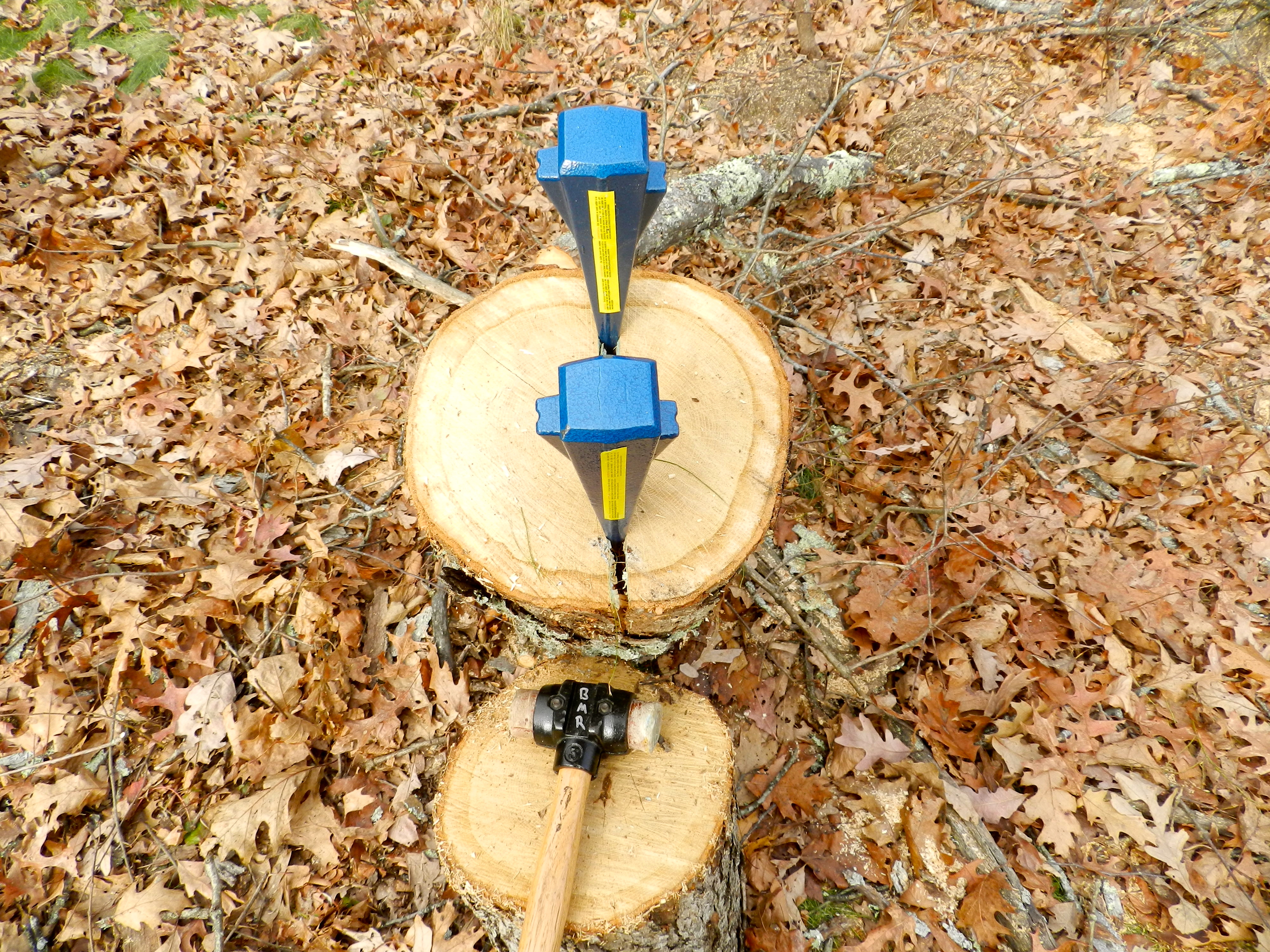
Splitting the oak log with metal wedges and a heavy leather faced mallet

In this case I took a 12-15″ wide and 30″ long section of white oak from a large tree I recently felled in my yard. This tree was over 130 years old so the growth rings are nice and tight. Using metal wedges and a large leather faced mallet I use for my timber framing I split the log in half.
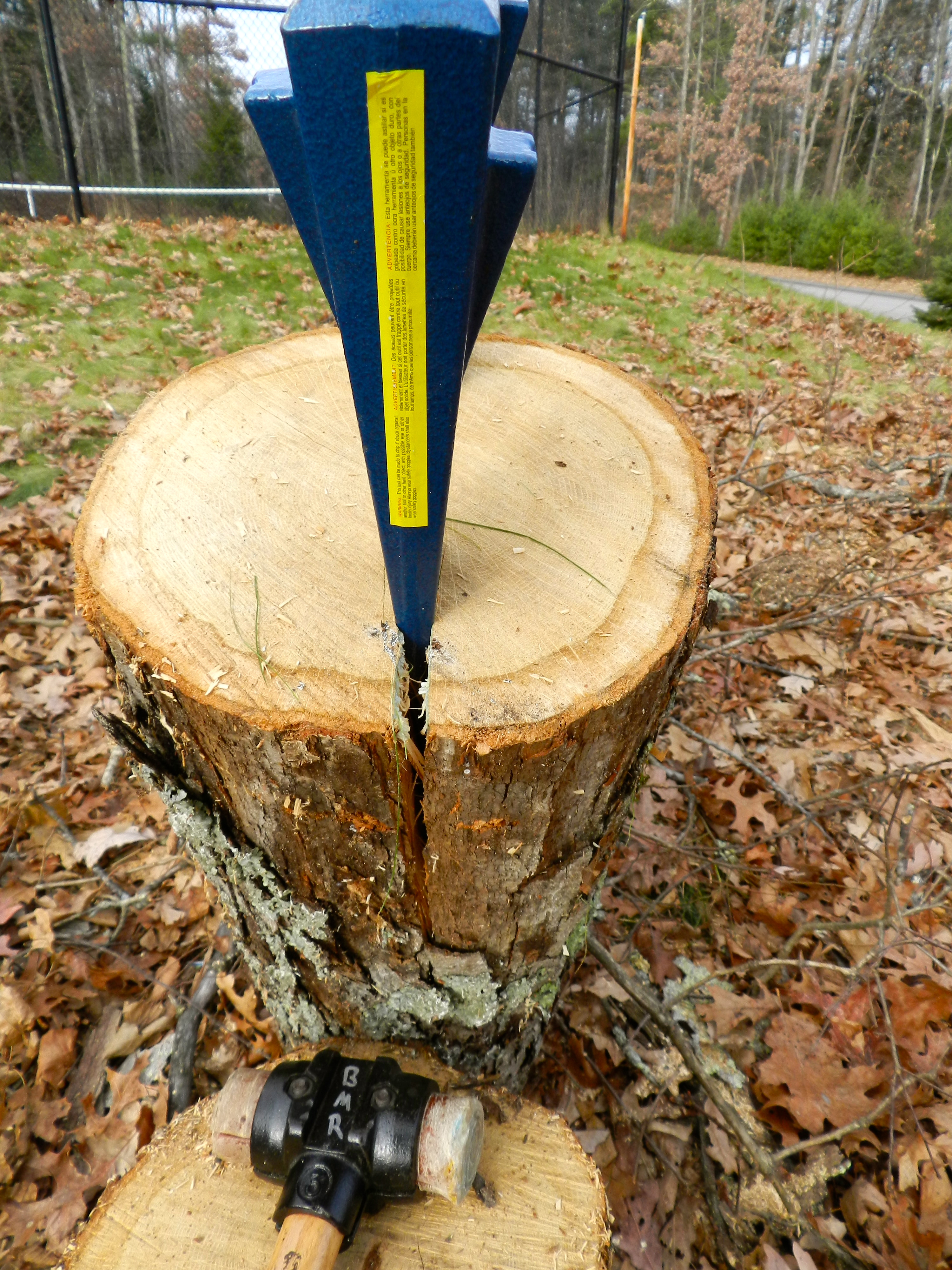
Watch to make sure the split runs the way you want down the log

If the wedges alone cannot do the whole job of splitting for you, a froe can help it along.
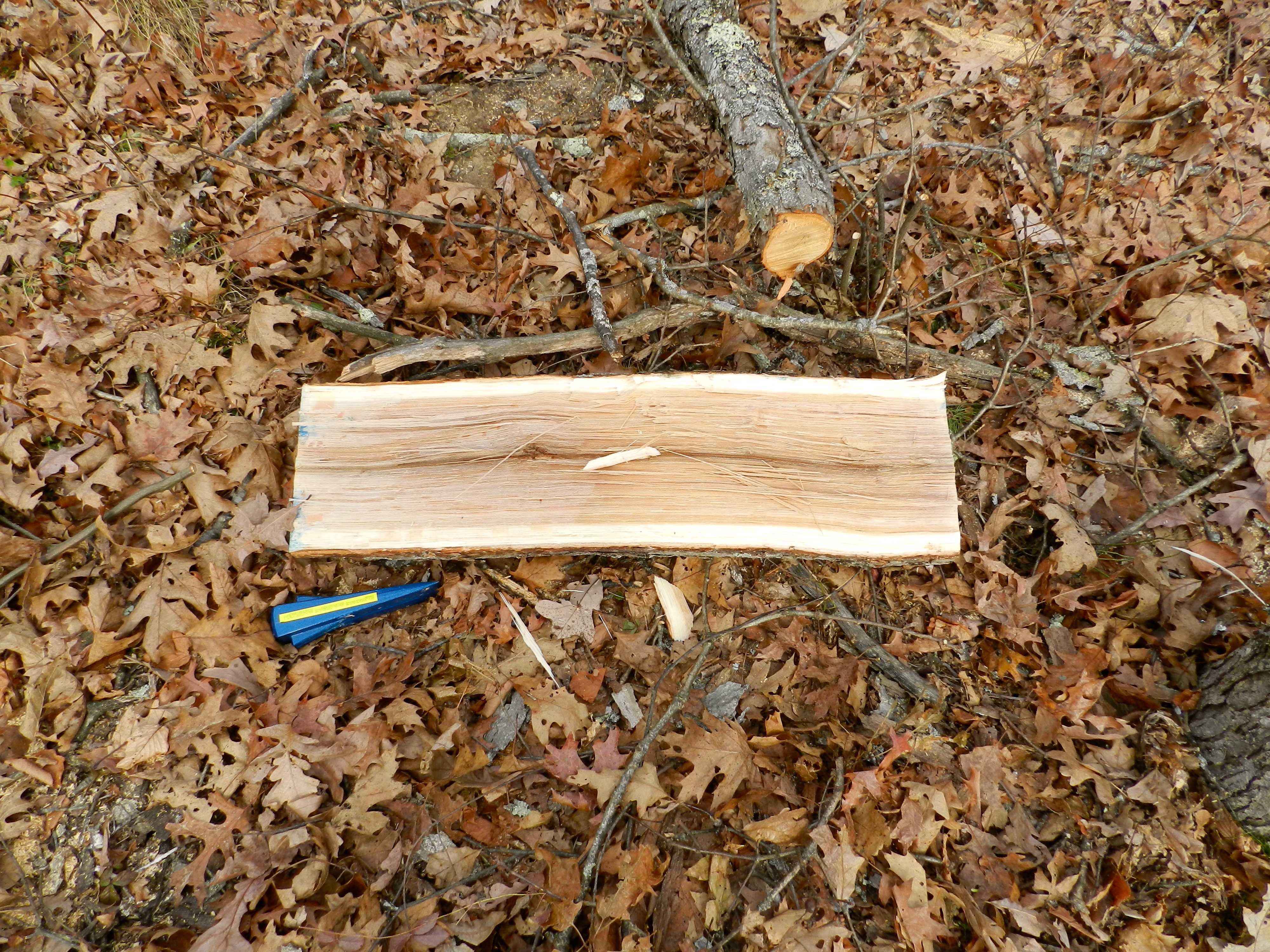
Log split in half. You can clearly see the heartwood and the sapwood

After letting the slabs sit for a few days, it was time to de-bark the logs. If you don’t have a dedicated de-barking spud you can use any tough metal roughly chisel shaped tool or ax. In this case I used a 16lb post hold digger as shown below.
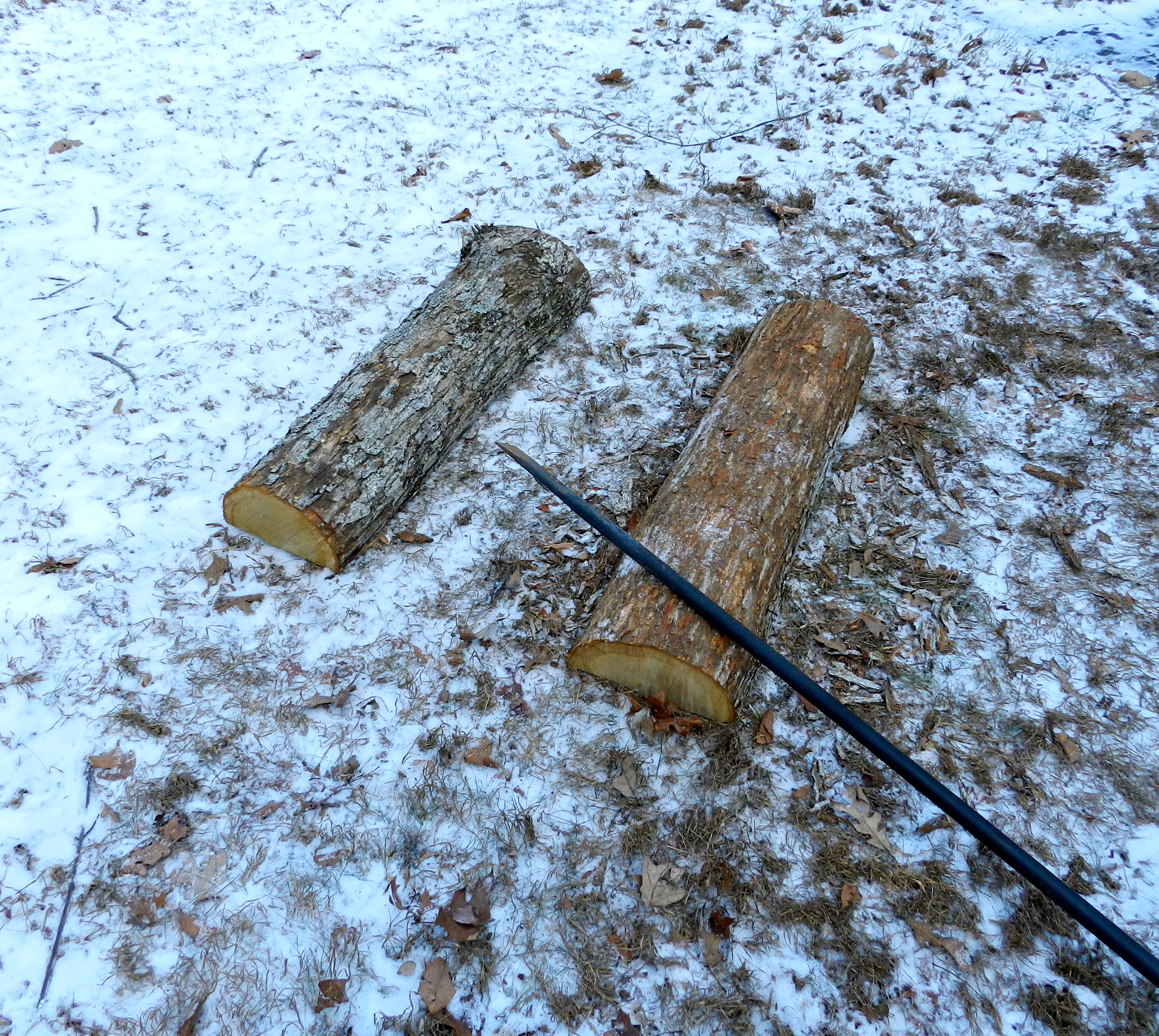
De-barking the log on the right. A metal post hole digging bar makes a good impromptu barking spud.

Back again in the shop I squared up the edges of the log with a hatchet. Being a green piece of wood this razor sharp ax made quick work of it.
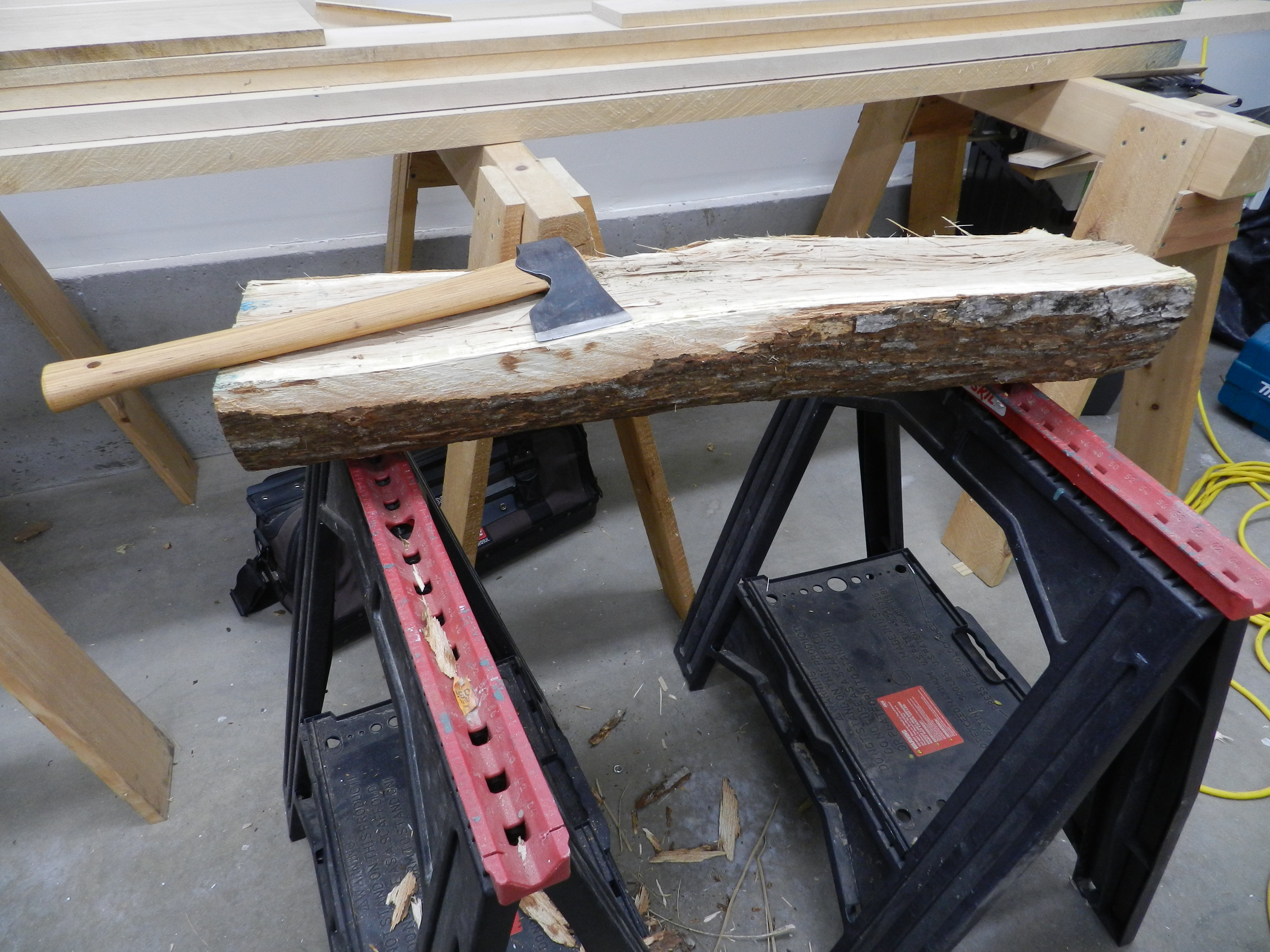
Square up the edges with a hatchet

I flipped the log over and removed any remaining bark.
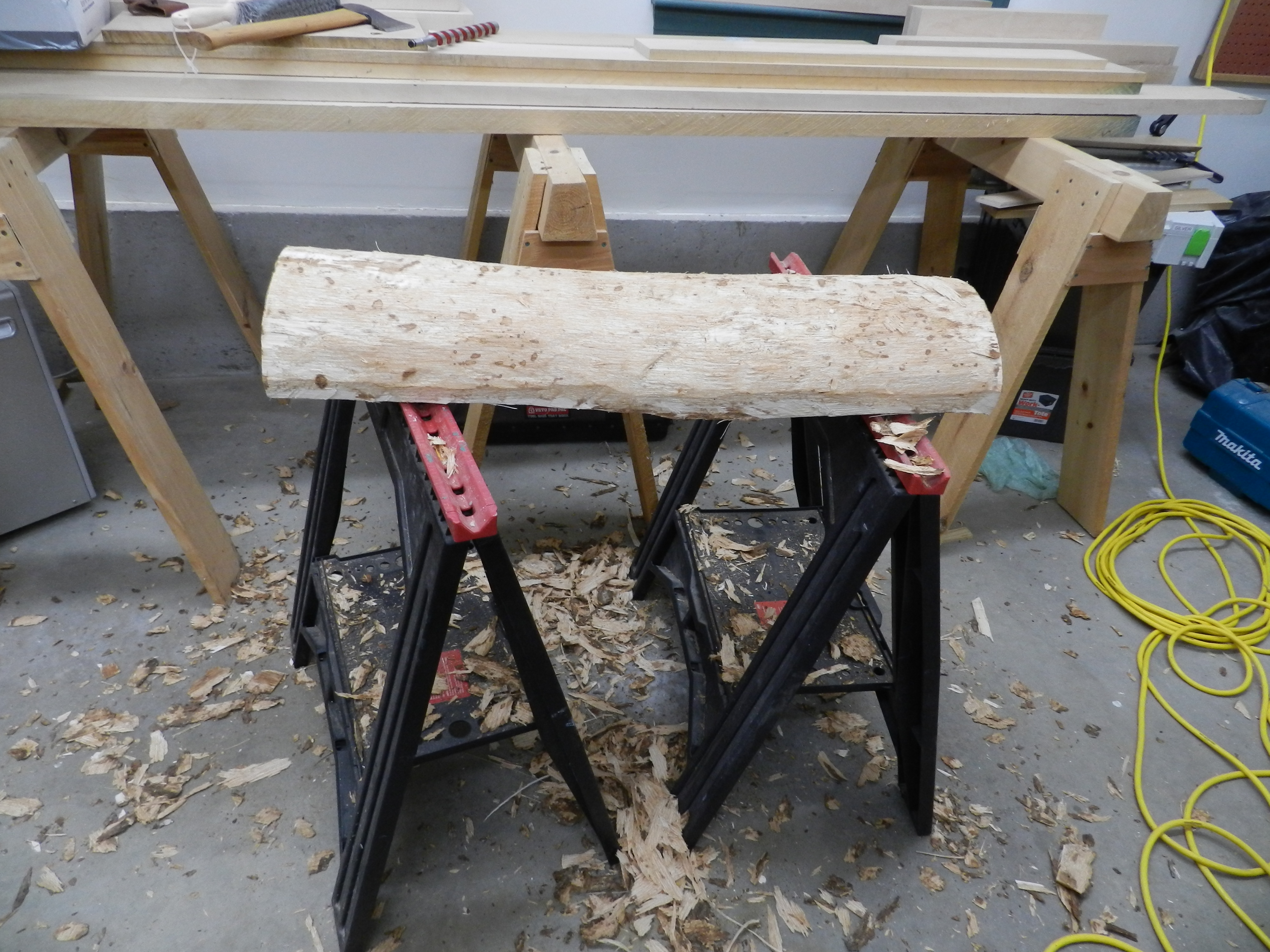
Remove any remaining bark with the hatchet

Now time for the legs…

Ideally you want to split out some 1.5 inch diameter legs. In my case it was snowing and I didn’t have suitable wood on hand to do that, plus the largest ship auger bit I had on hand was 1″. I ripped down some nice straight grained 2x3s I had on hand to 1 1/4″ by 30″ long. I put them on the lathe and turned down the top 6″ to 1″ diameter. I then used a block plane to chamfer the edges.
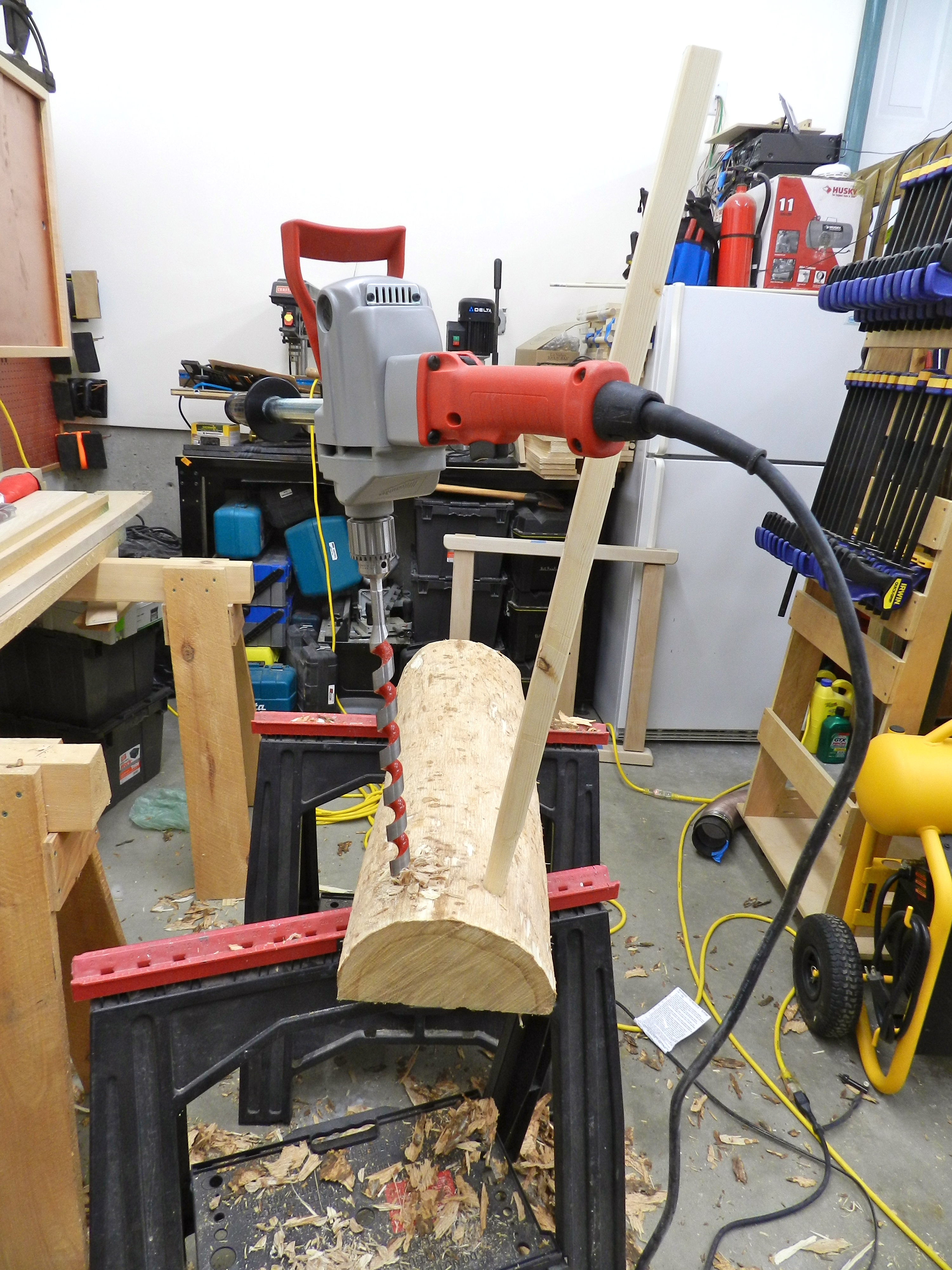
Split or rip some leg stock. Drill holes with an auger and set your legs

Using a ship auger bit I bored a through hole into the log to allow the legs to splay a bit in both directions. After you set the first leg you’ll want to visually reference that first leg when drilling the next leg. Repeat this process for all 4 legs. After test fitting you’ll want to cut a kerf in the end of each tenon and re-install the legs. Make sure those kerfs are perpendicular to the grain of the log so you don’t split it with the wedges. Then glue and wedge the tenons. If you have ever built a windsor chair, this is a cruder version of the same process you’d use to fit the legs and level the feet.
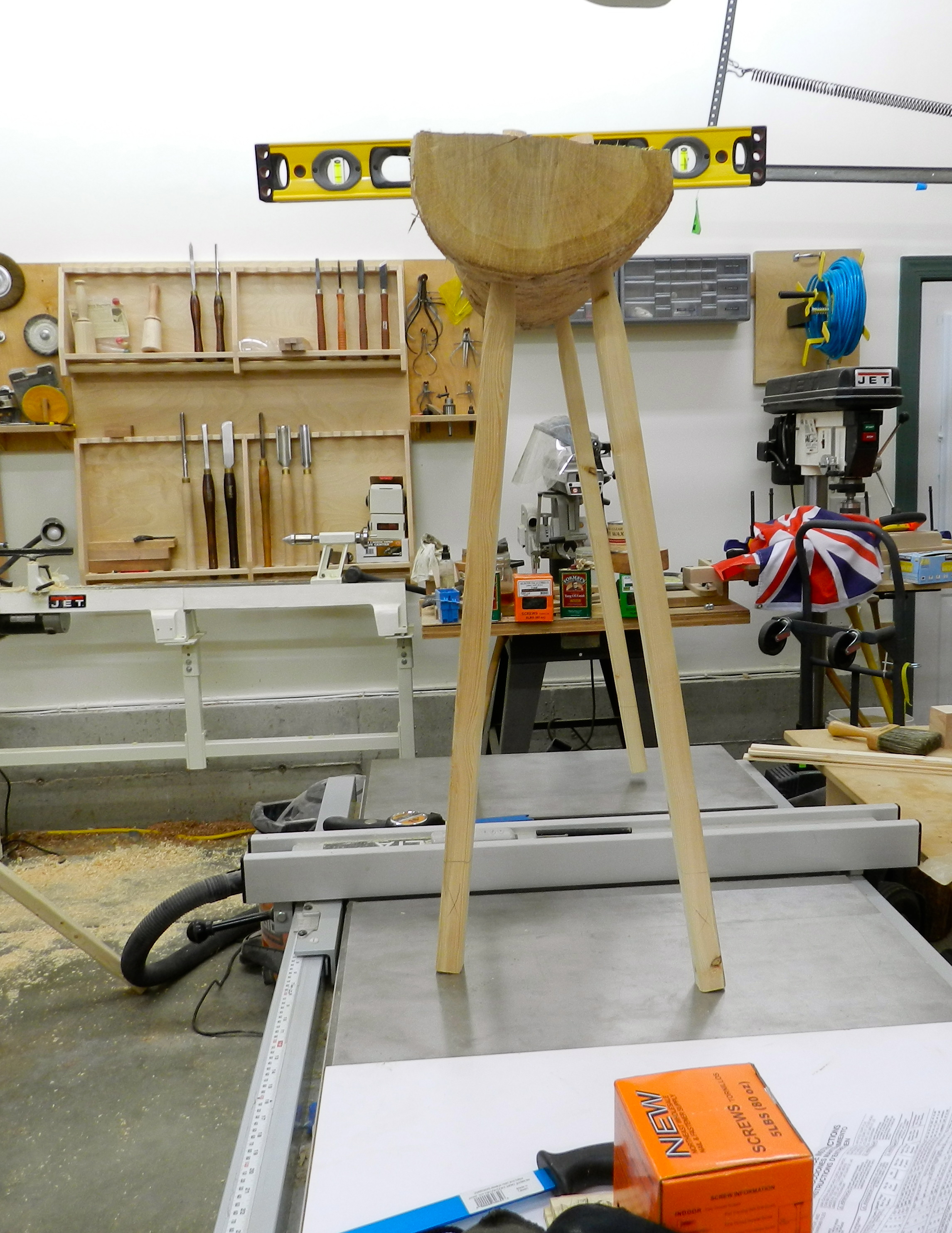
Test fit on a level surface like a table saw

With the legs installed I put the bench on a known level surface, in this case my table saw. Using a compass or similar tool mark higher up on the legs and cut them where you marked them. Then chamfer the ends of the feet and you’re almost done.
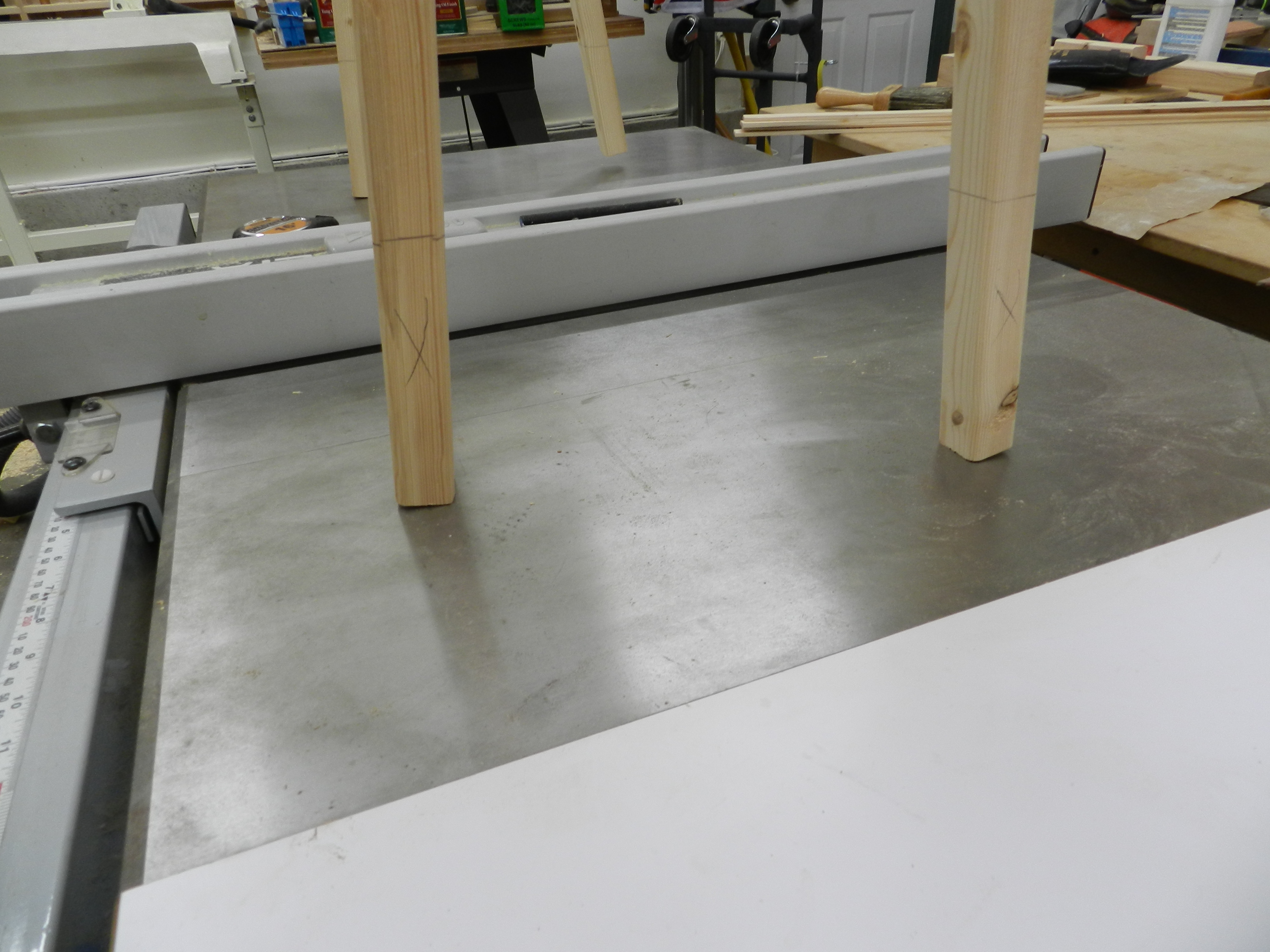
Mark what you want to remove to reduce the height and level the feet

Next I applied some end grain sealer (from Land Ark/Heritage Finishes) to reduce the likelihood of splitting in my heated shop. I also trimmed off the wedges and tenons.
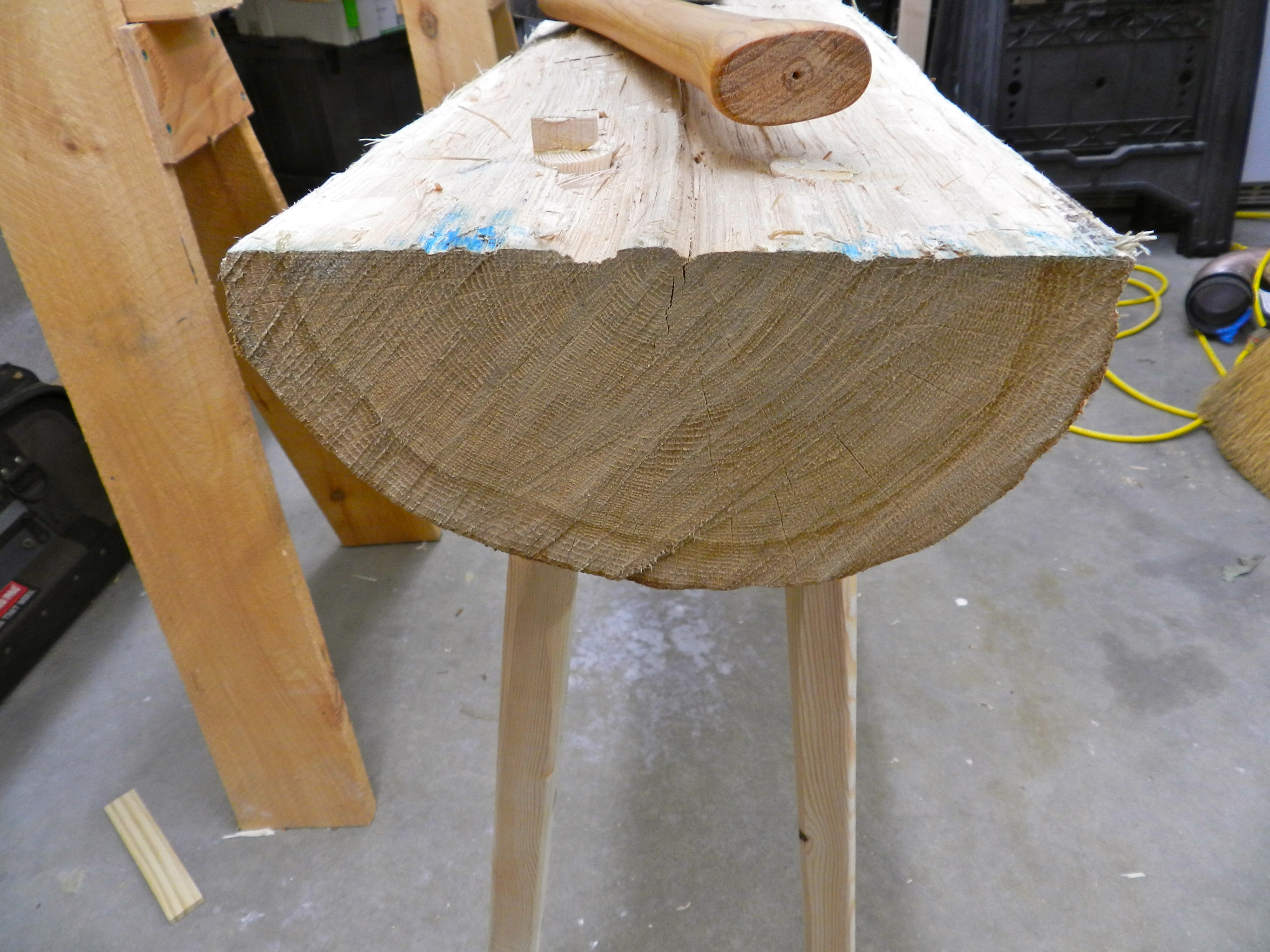
Seal the end grain to reduce checking

Now the bench is read for use in the shop. This bench, with it’s delicate looking legs, can hold me standing on it, so it should have no problem handling my in shop hewing needs.
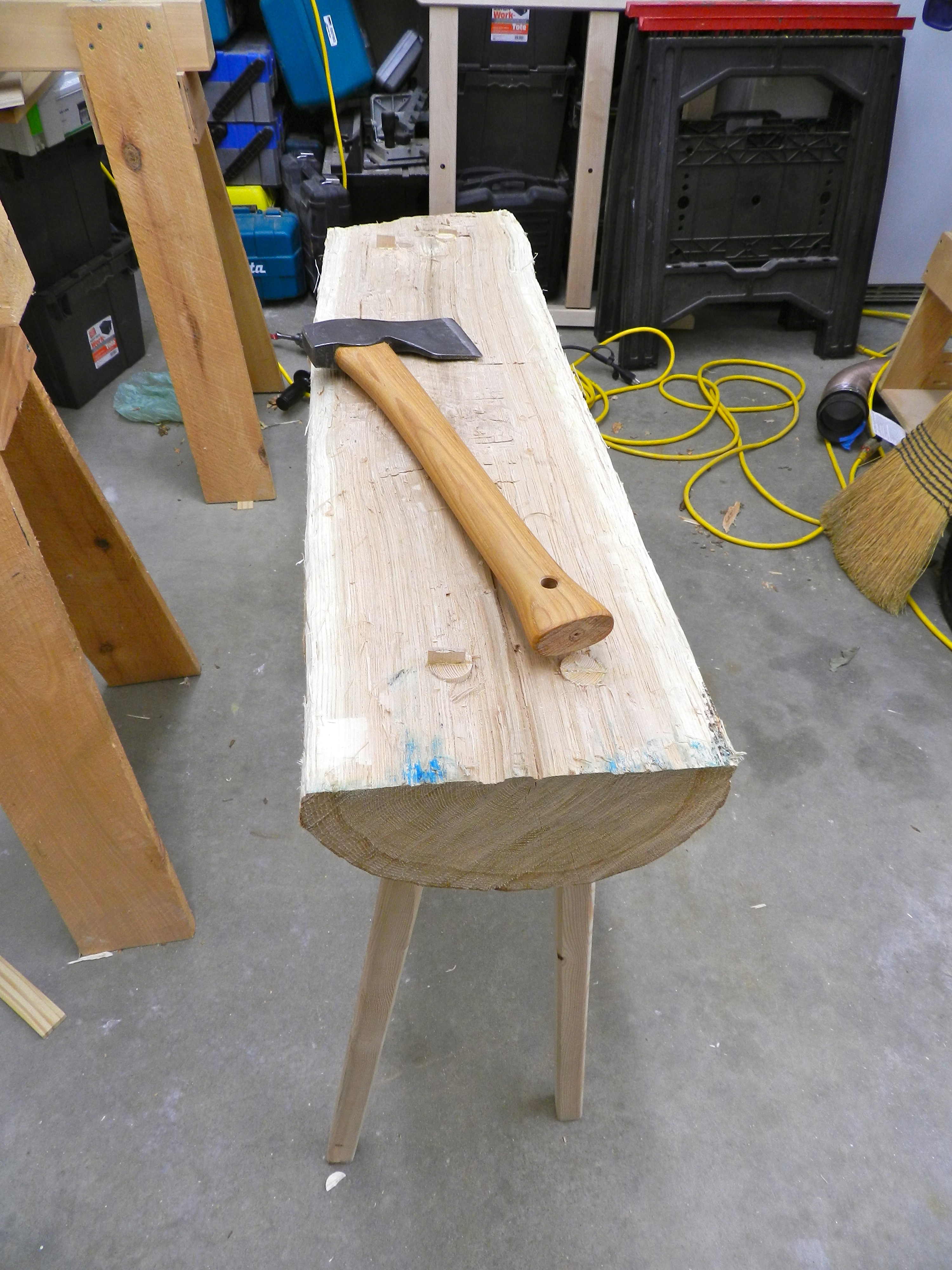
Trim the leg stumps and the wedges

Shown here is a Gransfors Bruks hand made Swedish ax. This carpenter’s hatchet is my goto ax for small trimming work and is sharpened to the point of being able to shave with it. The poll (the other business end) of this ax is hardened and can be used like a hammer. The handle is carefully tapered to fit in the hand and without looking you know when your hand is at the end of the handle. The notch under the bit allows you to use this ax much like a large chisel or plane and can yield impressive results. I used this to quickly level bits of the bench surface.
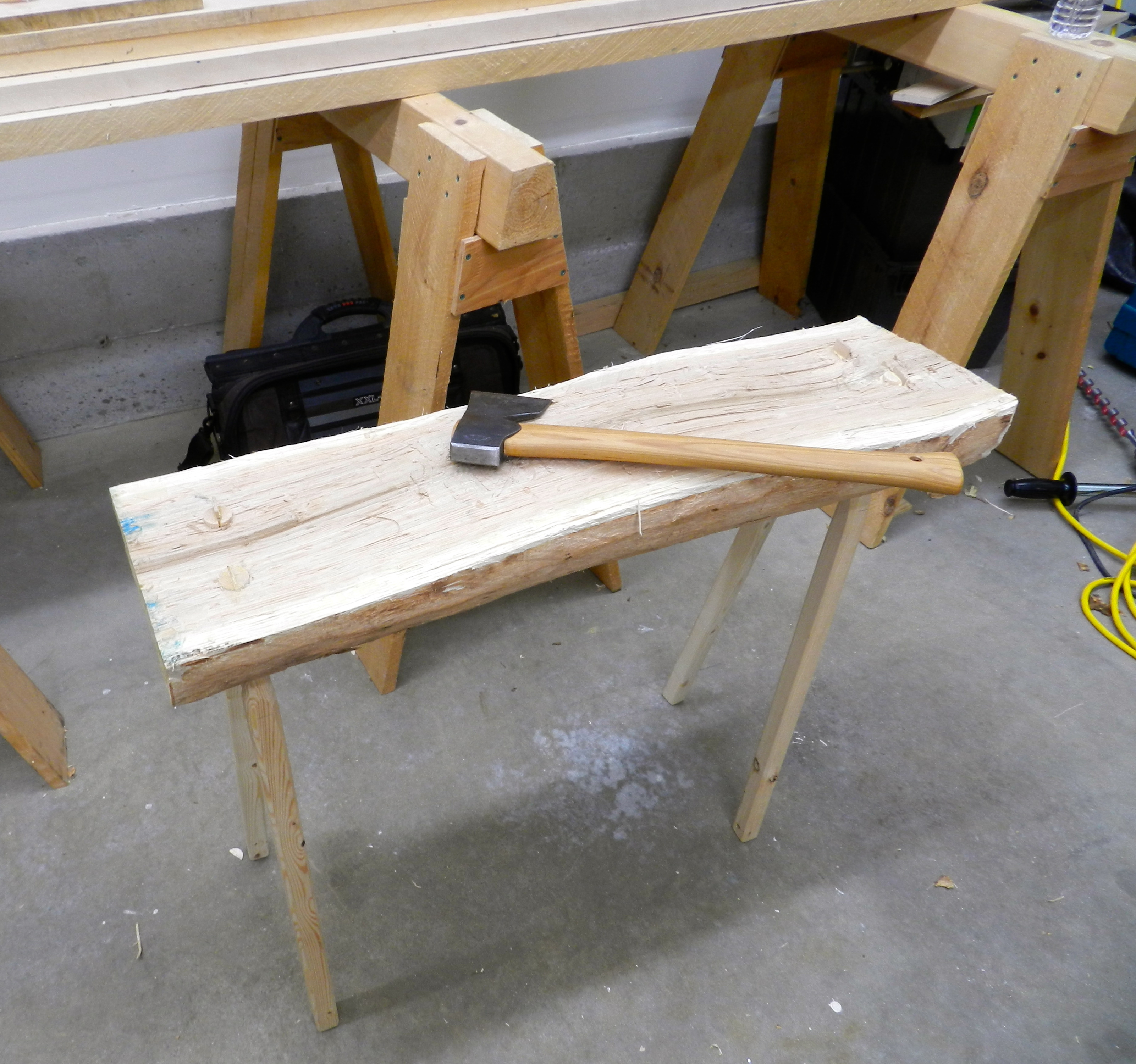
Enjoy your new hewing bench

For short cash, a few tools and an afternoon in the shop this project is well worth the effort.

Take care,
-Bill
Working in the round…

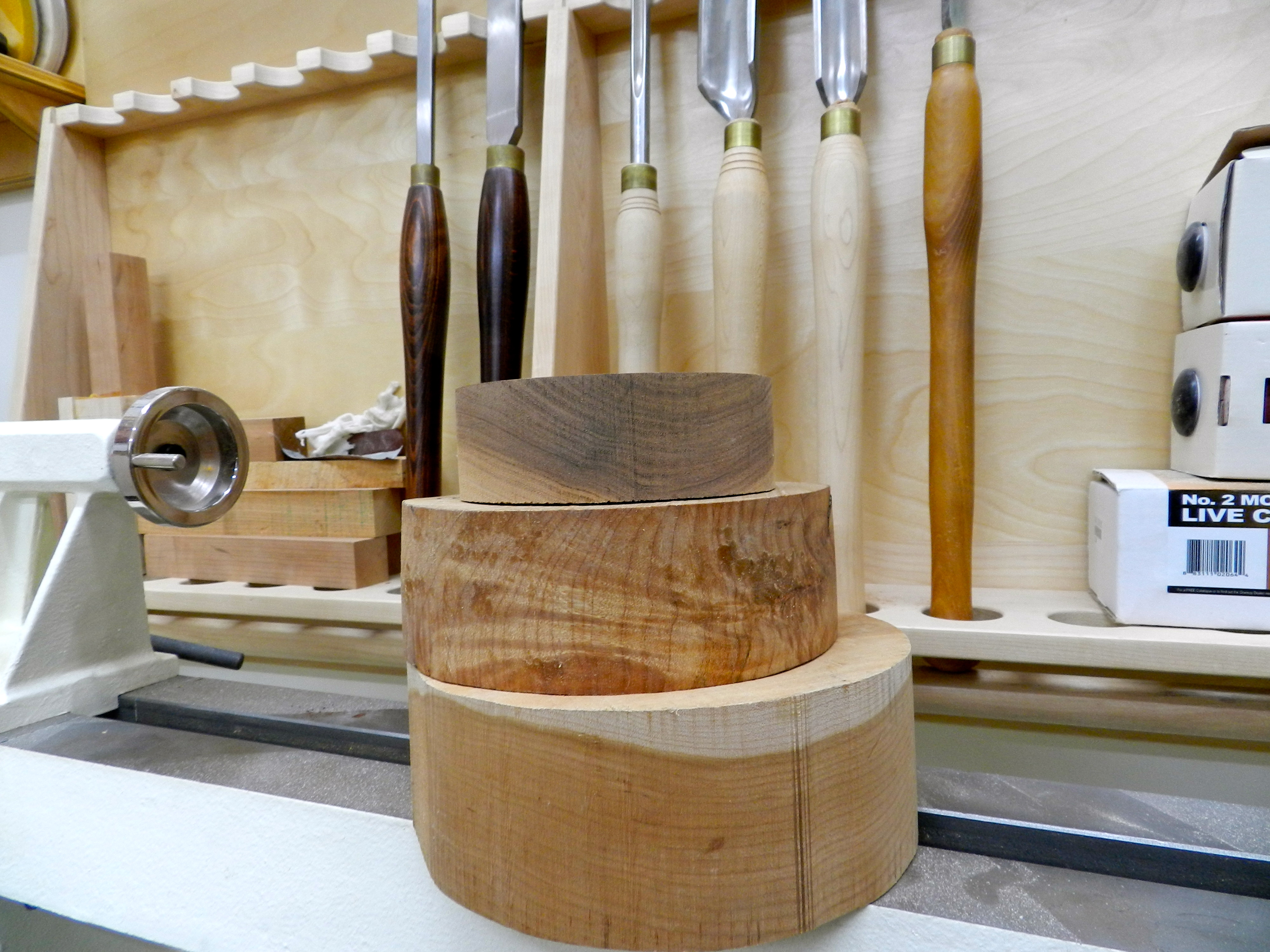
Bowl blanks waiting to be turned

Yesterday I had a rare day off and some time to work in my shop. With the holidays and cold weather fast approaching I am trying to get through my mile long TODO list. One of the items on my list was to make good use of some turning blanks I had on hand. (Last weekend I cleaned up the basement and organized my wood rack so now things are nice and neat)

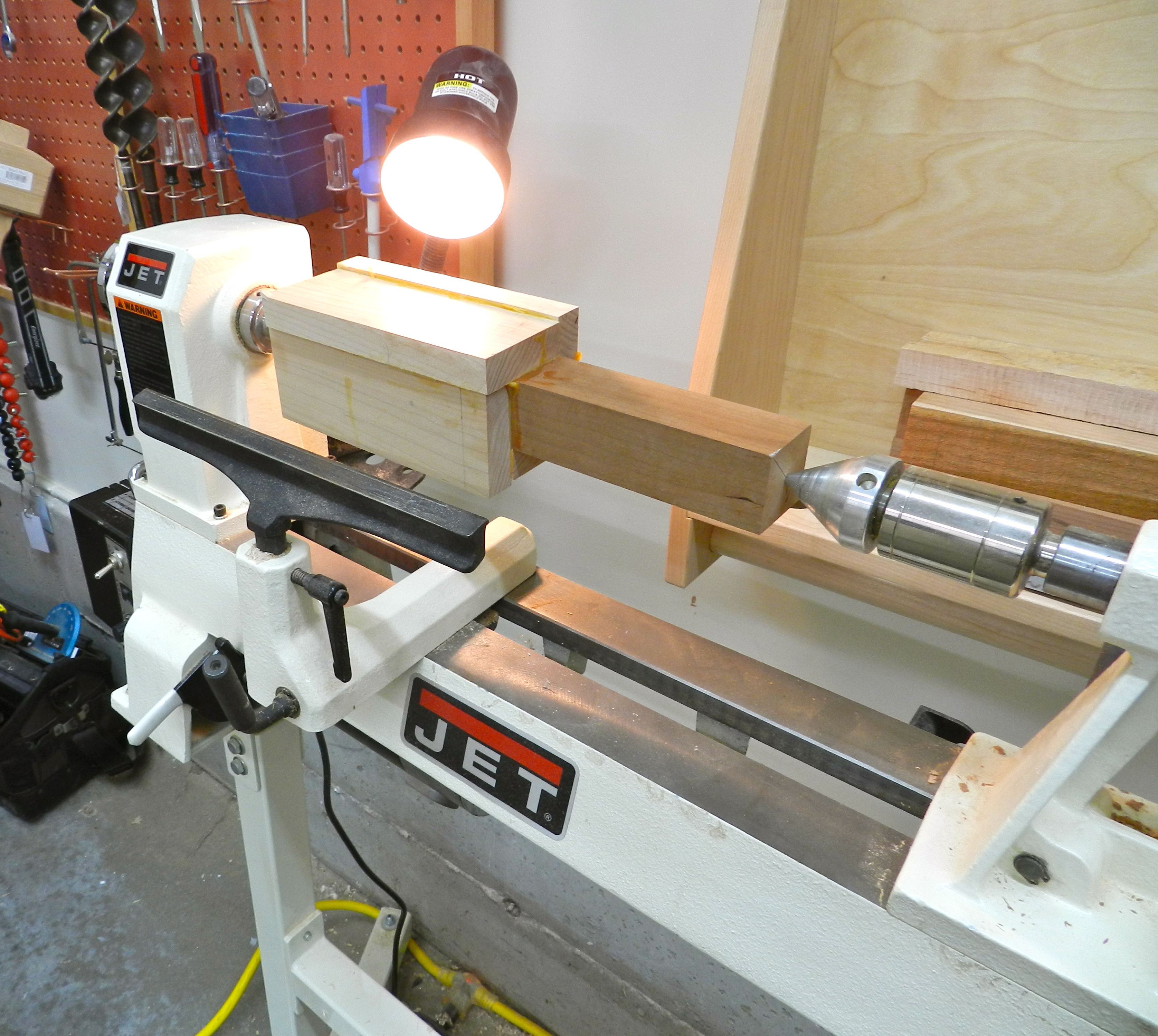
Mallet blank
Mallet blank

Before tearing into a bowl blank I wanted to warm up with a spindle project and I’ve had a nice mallet blank sitting in my tool rack for the last year (literally).

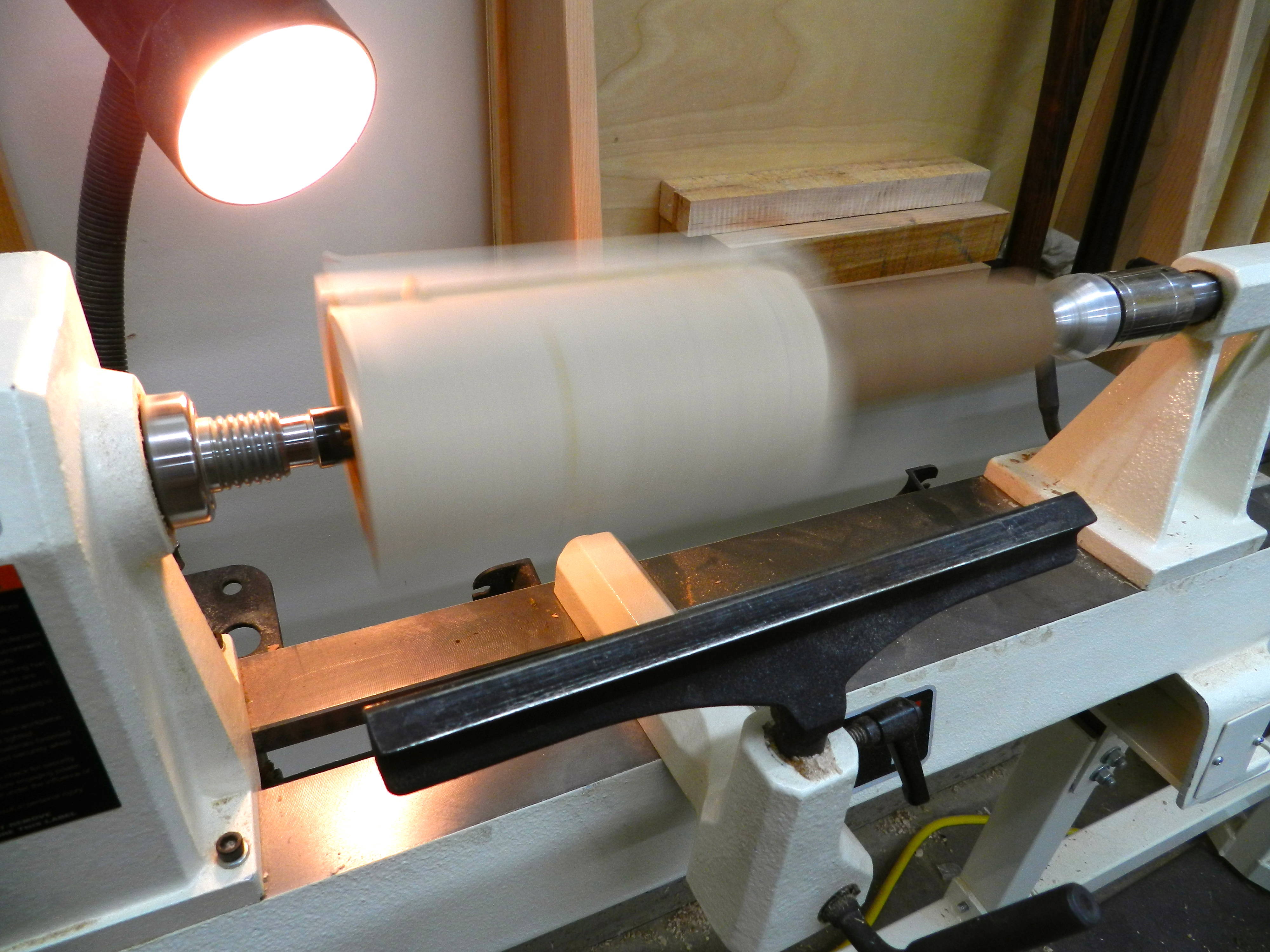
Turning the mallet
Turning the mallet

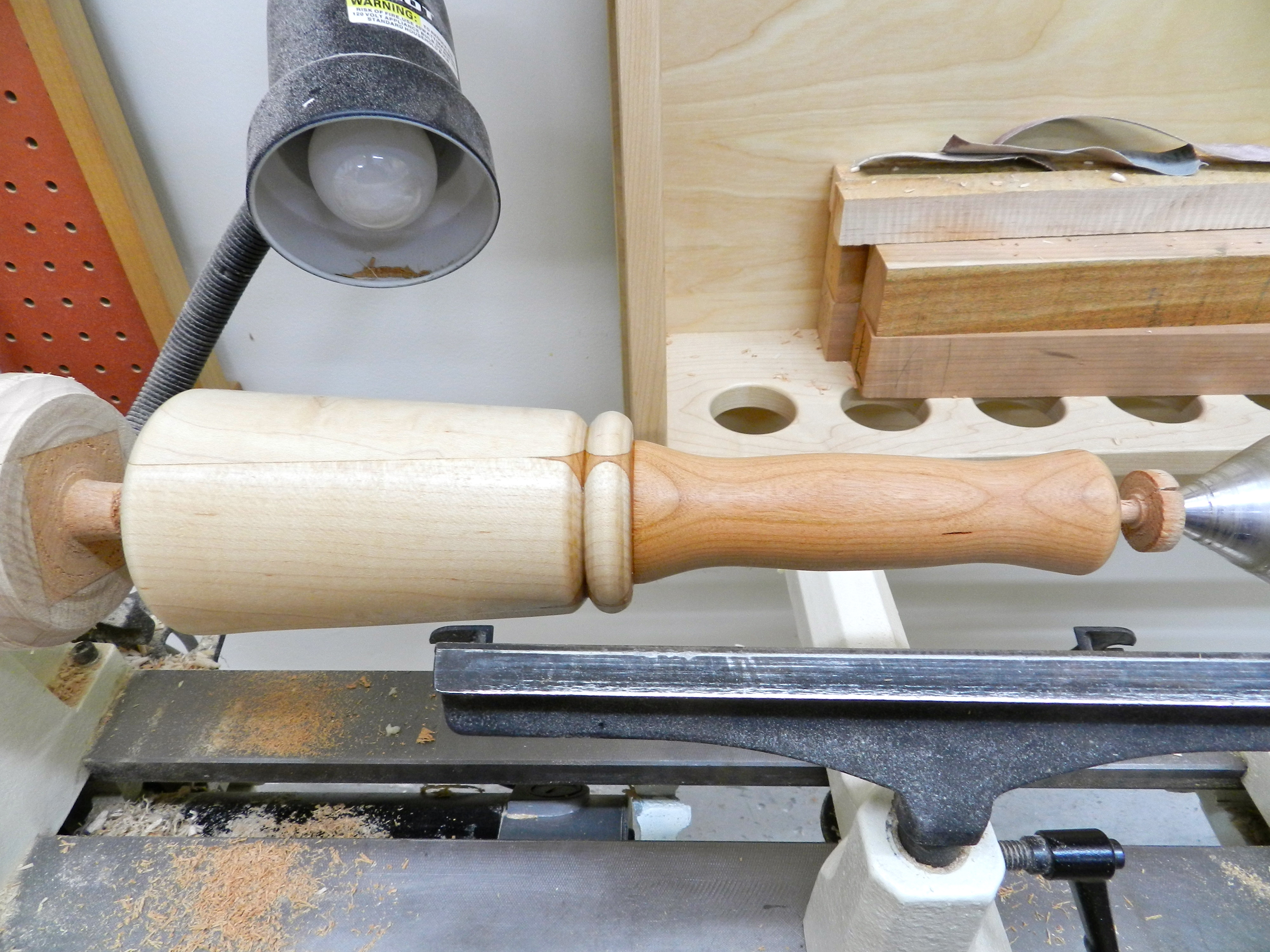
You may recognize this style mallet from an earlier post I made last year on my blog here. The handle is made from cherry and the striking face is quarter-sawn hard maple. The concept here is that a mallet made from a single piece of wood usually loses some of the long grain sections that come flying off over its service life. By using quarter-sawn wood on all 4 sides you are not exposing any of the grain that is likely going to fly off. This also assumes that the Titebond glue joint is stronger than any movement in the handle.  We’ll see how well this one lasts in my own shop. (The first one was a gift for a friend)

Finished Mallet
Finished Mallet

A few changes I made in the design is I made the top a tiny bit concave so I can stand the mallet on its end and I simplified the handle a bit as it will likely have a hard life in the shop. I do however really like how the bead makes a pattern with the contrasting wood species.

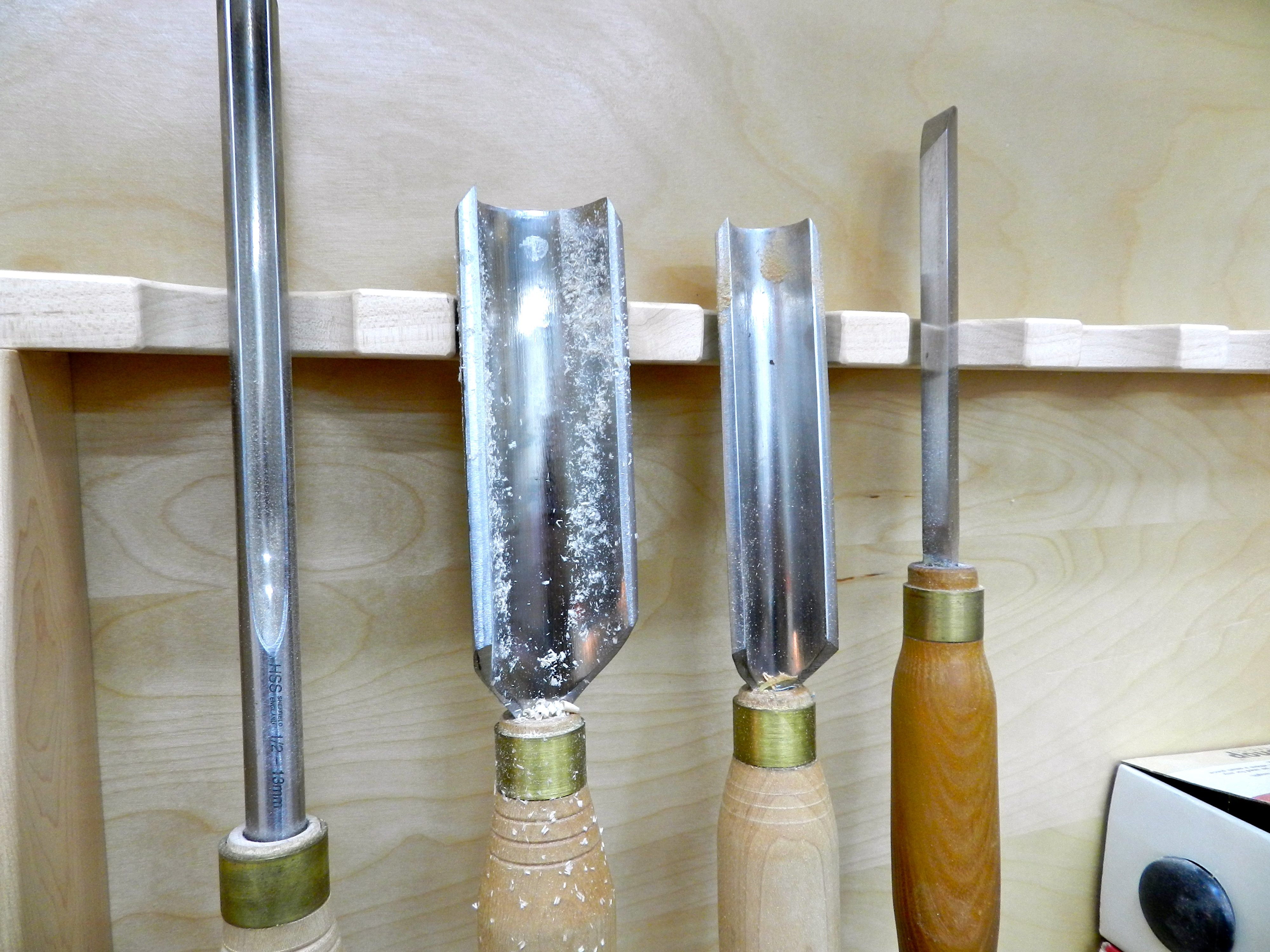
Turning tools in the rack

Now that the tools are all warmed up, it’s time to start making some bowls.

Bowl blank mounted on a face plate

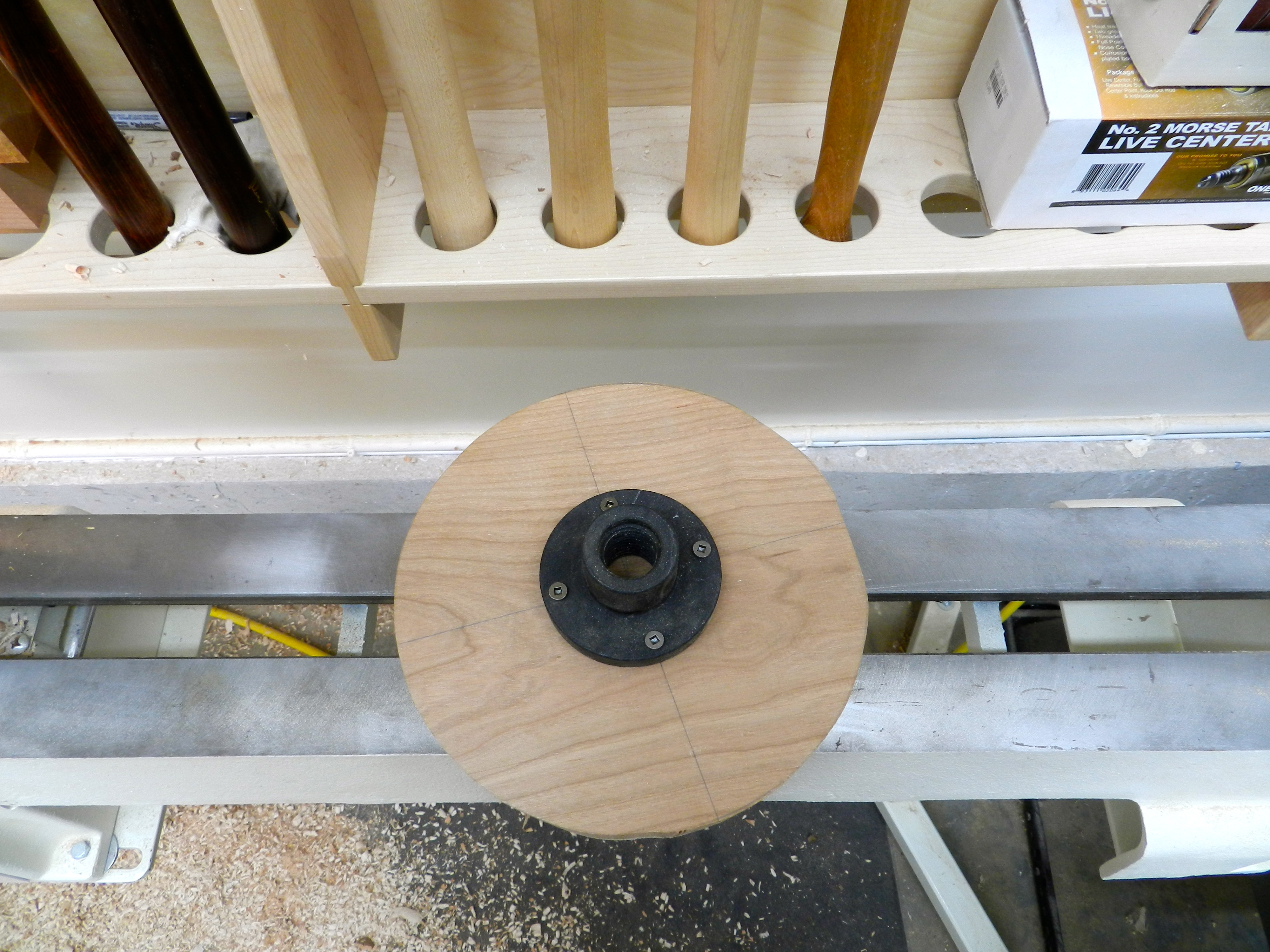
After roughing the blanks round on the band saw I secure the blank to a faceplate using good quality wood screws. (The screw holes disappear as that wood is removed from the inside of the bowl)

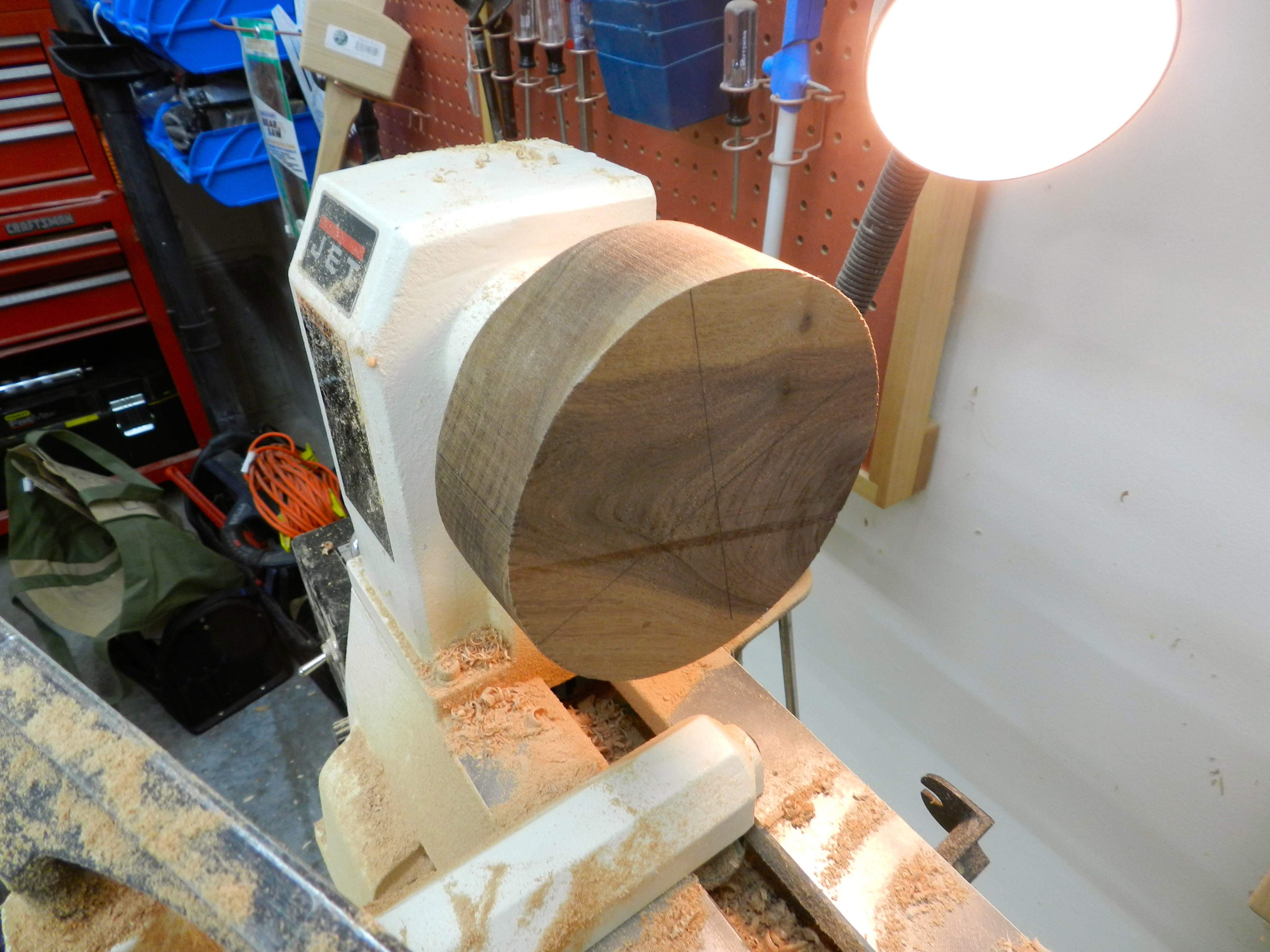
Bowl blank ready for turning

The first step is to turn the bottom of the bowl. I elected to make a chunky Asian feeling bowl from a small walnut blank I had on hand.

Turning the bottom and making a foot for the bowl chuck to grab onto

The bowl chuck grabs onto the foot (or base) of the bowl and allows me to hollow out the inside of the bowl.

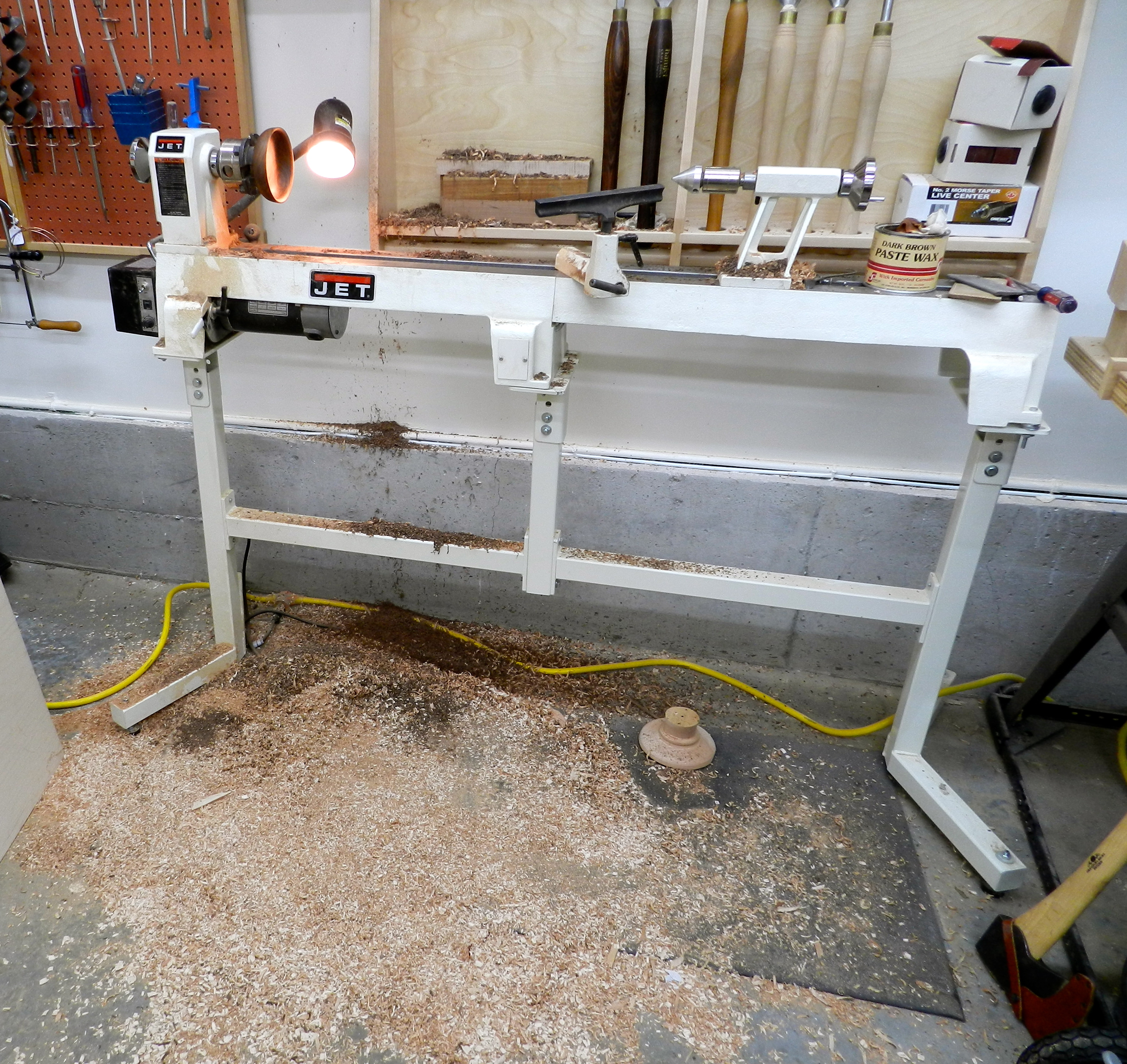
Hollowing the bowl, knee deep in shavings
Hollowing the bowl, ankle deep in shavings

You know it’s a good day at the lathe when you are completely covered in shavings and standing ankle deep in shavings.

Hollowed out bowl, finishing the edge detail

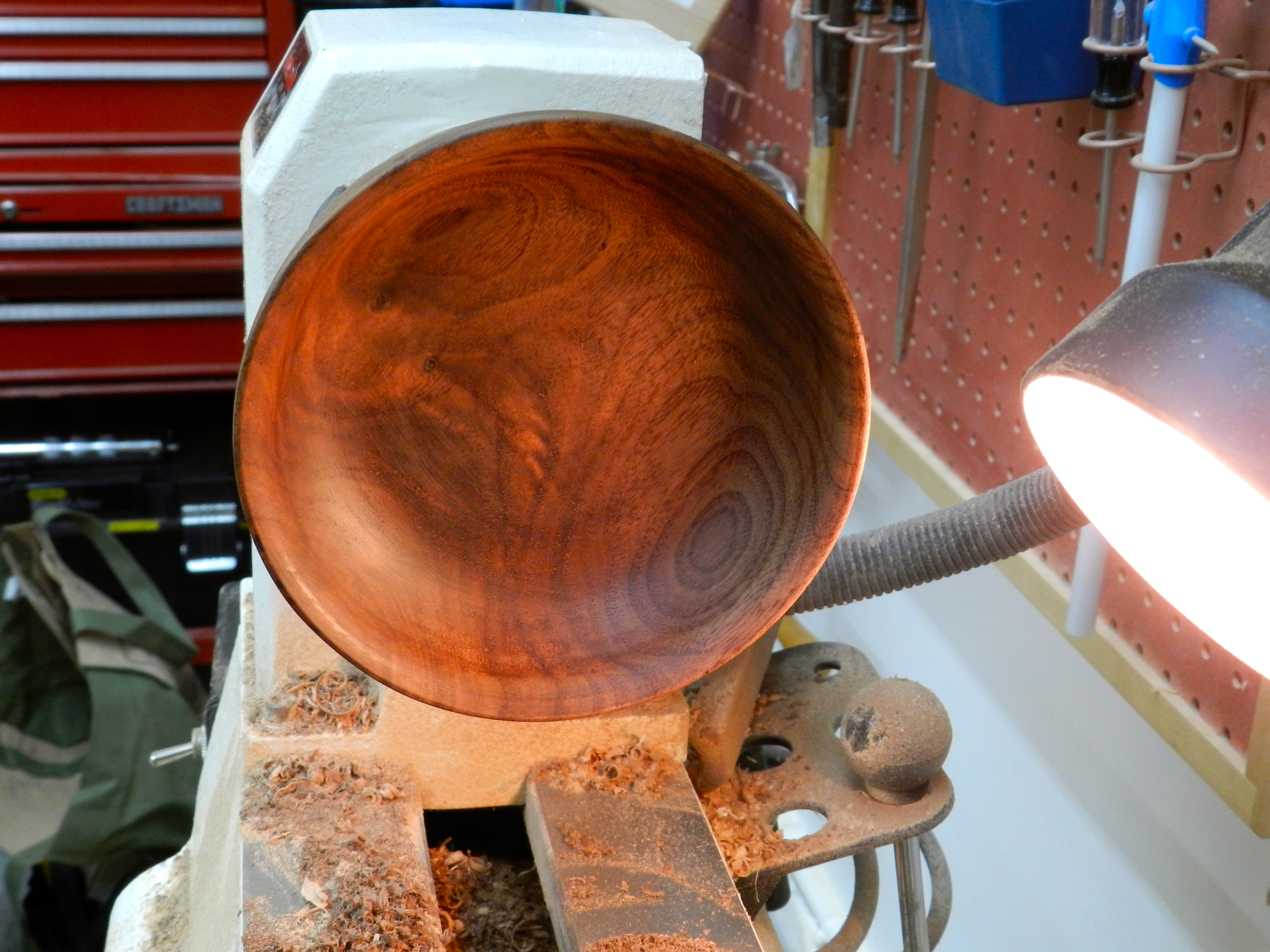
Once I got the wall thickness and profile into a form I liked, I apply the finish right on the lathe. This allows for easier buffing etc.

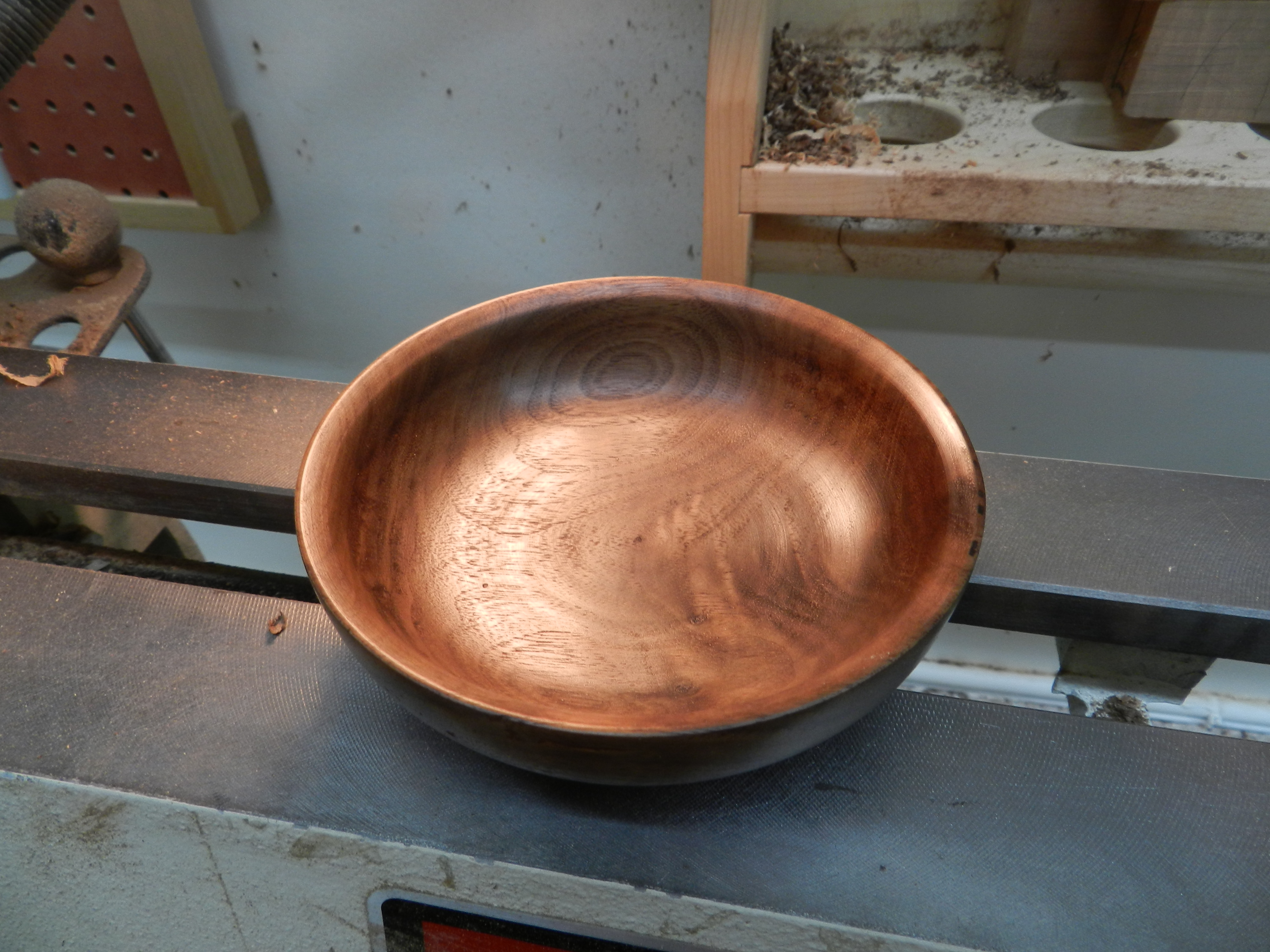
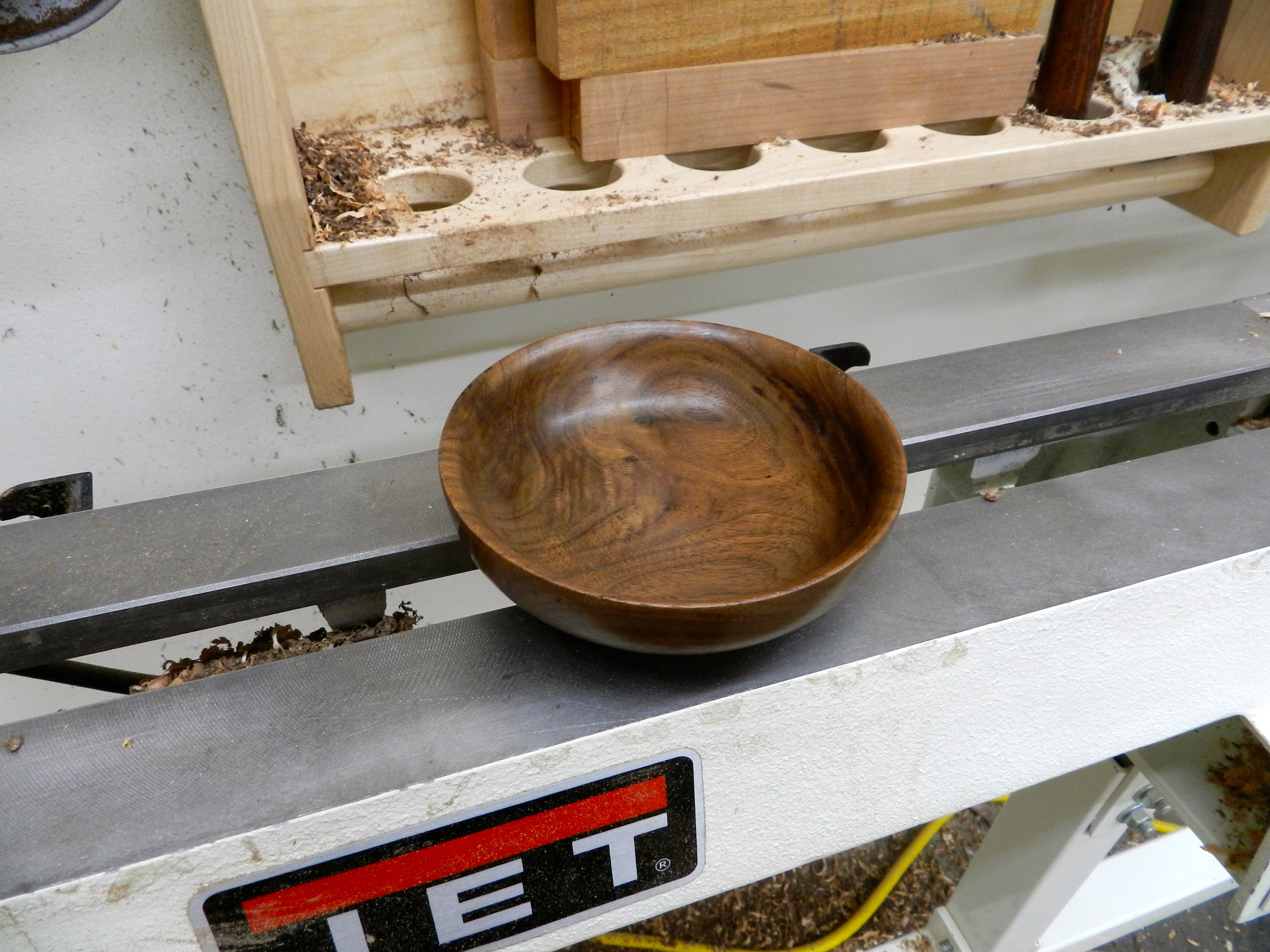
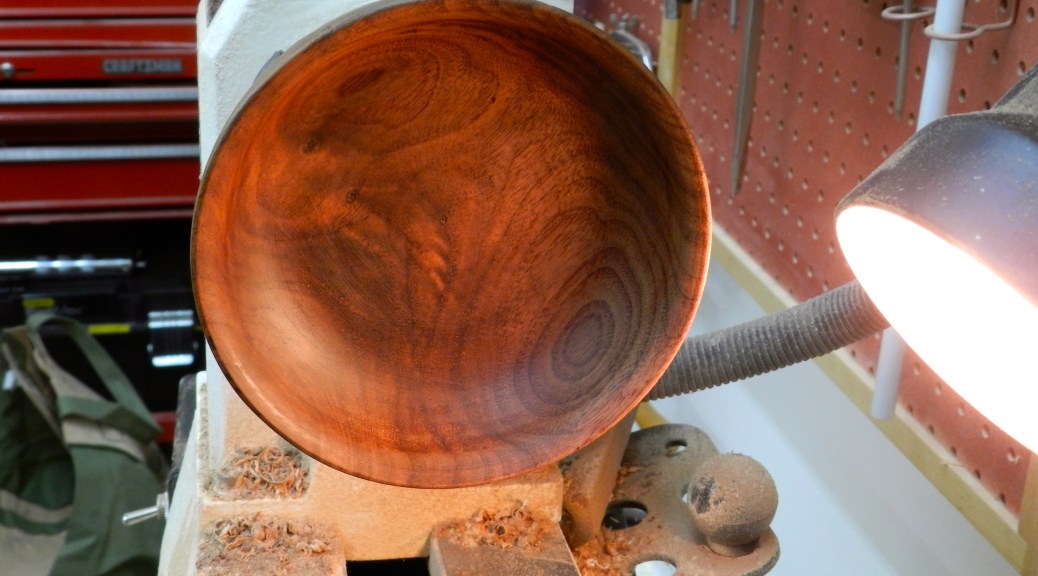
Finished bowl
Finished bowl

I liked the figure of this piece and how it came out.

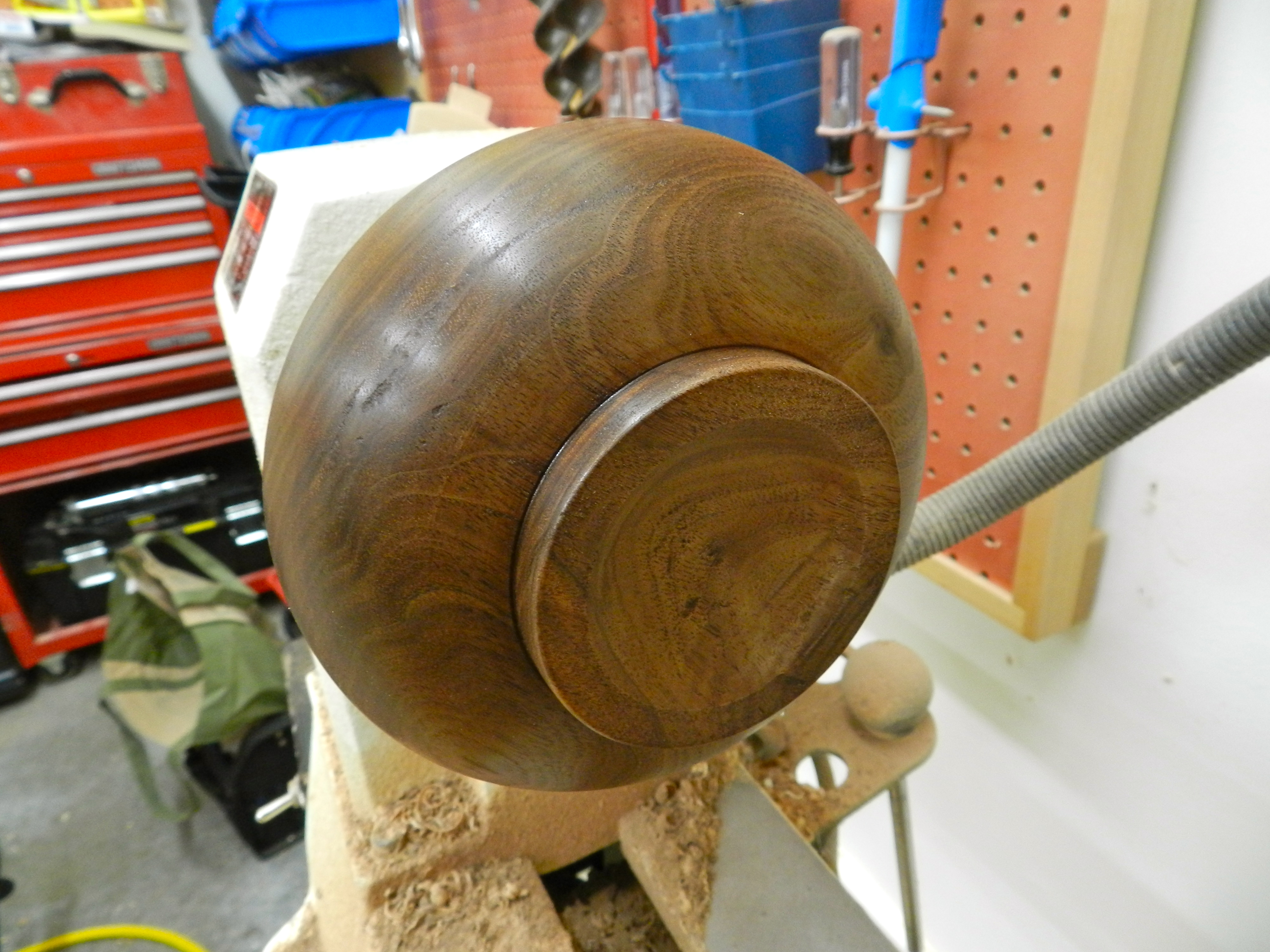
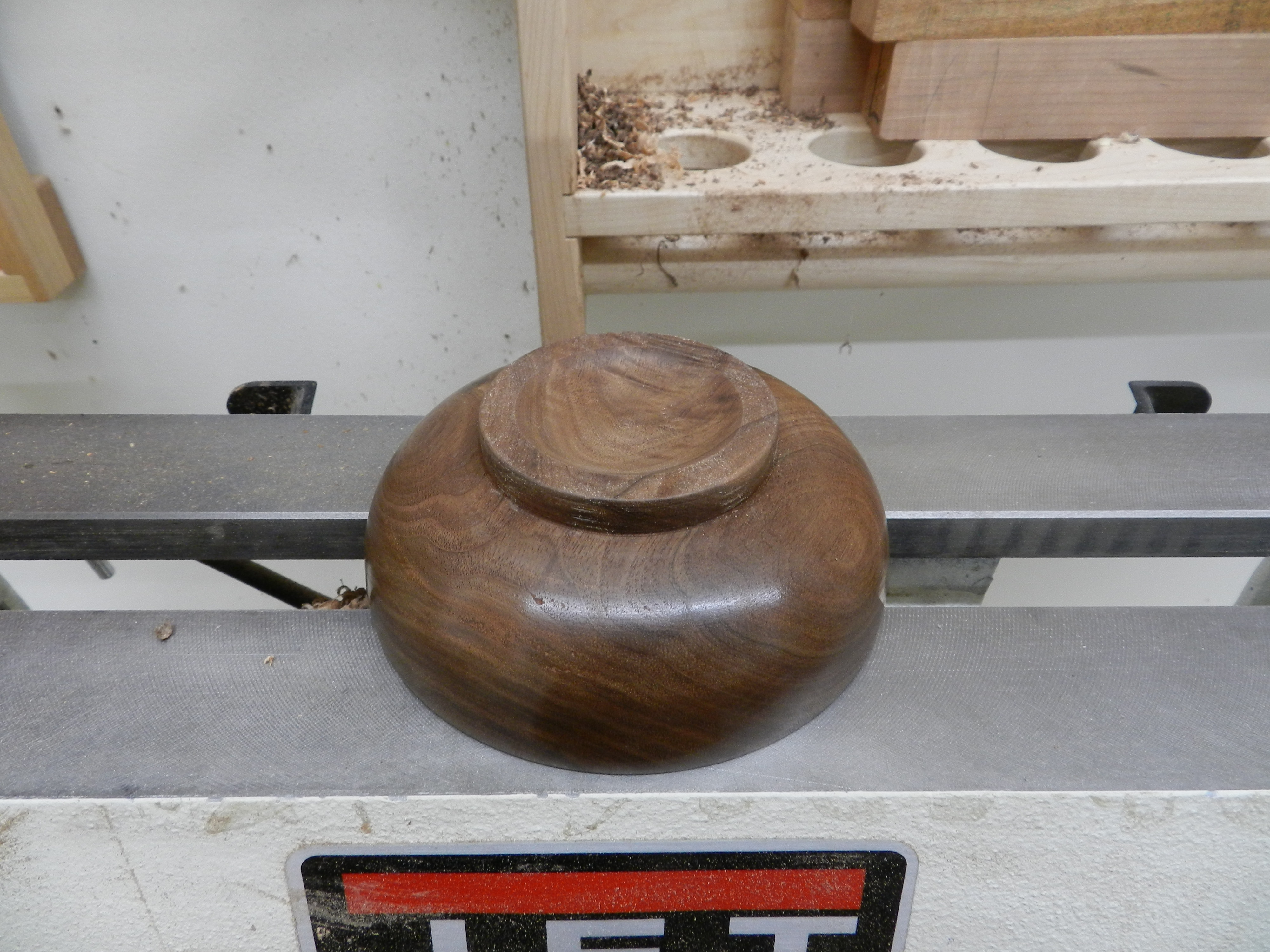
Underside of bowl
Underside of bowl

The bowl is finished with Tung Oil and Wax and likely will be a place for my wife to put her keys or watch or similar items at the end of a day.

Turned walnut bowl. Finished with tung oil and wax

On a cold day like today, I hope that you will get out to the workshop and make something new.  Time for me to get back into the shop myself….

Take care,
-Bill
Stump Vise

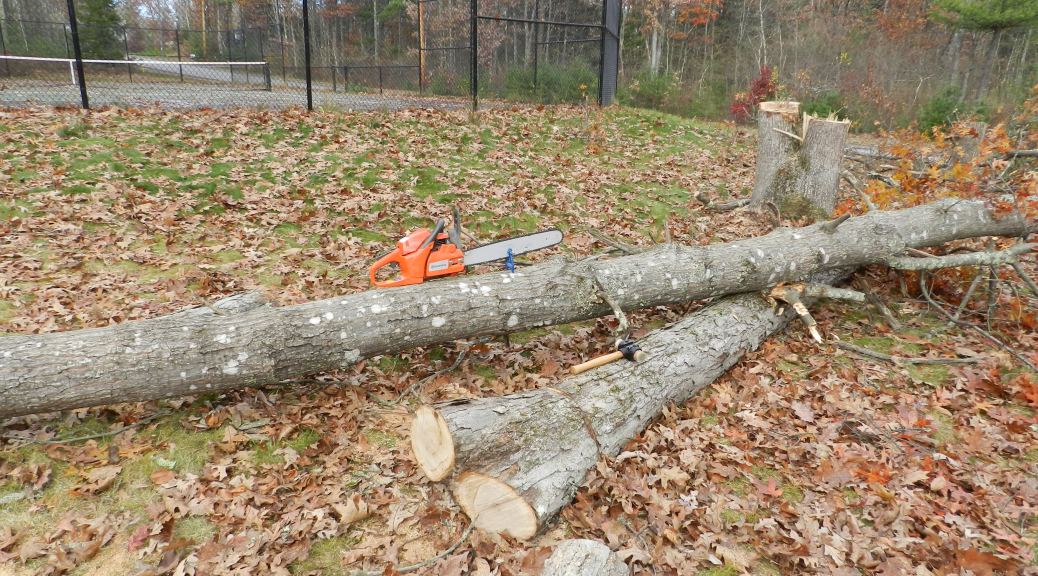
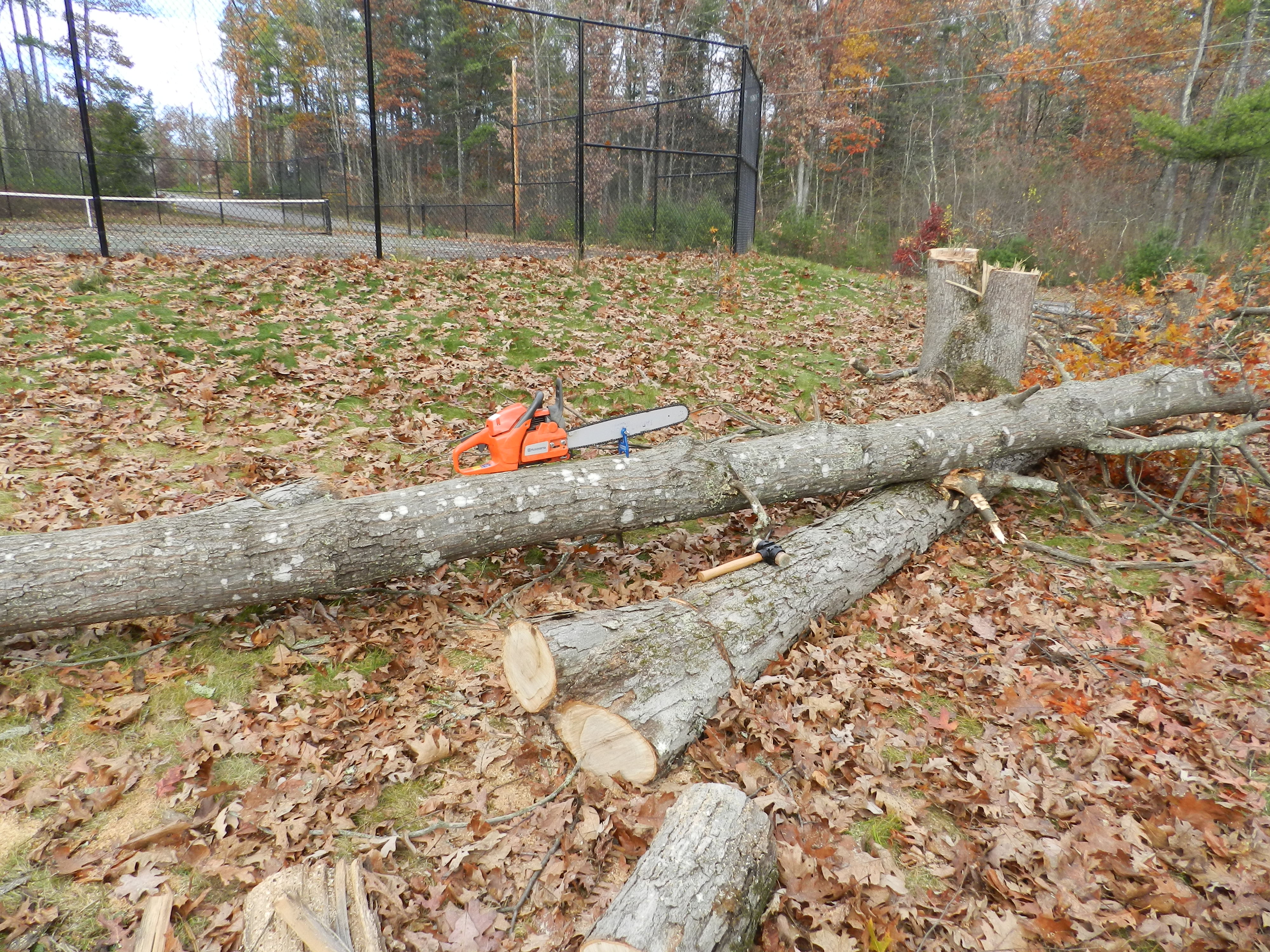
When a chainsaw is cutting well it is a joy to use — you can see shavings fly. When it gets dull and spits out dust it’s a slog at best and dangerous at worst. Working out in the field for an extended period is no excuse for not sharpening your chain. There is a great little accessory called a ‘stump vise’ that every chainsaw lumberjack should own. It allows you to quickly sharpen your chain in the field and get back to work.

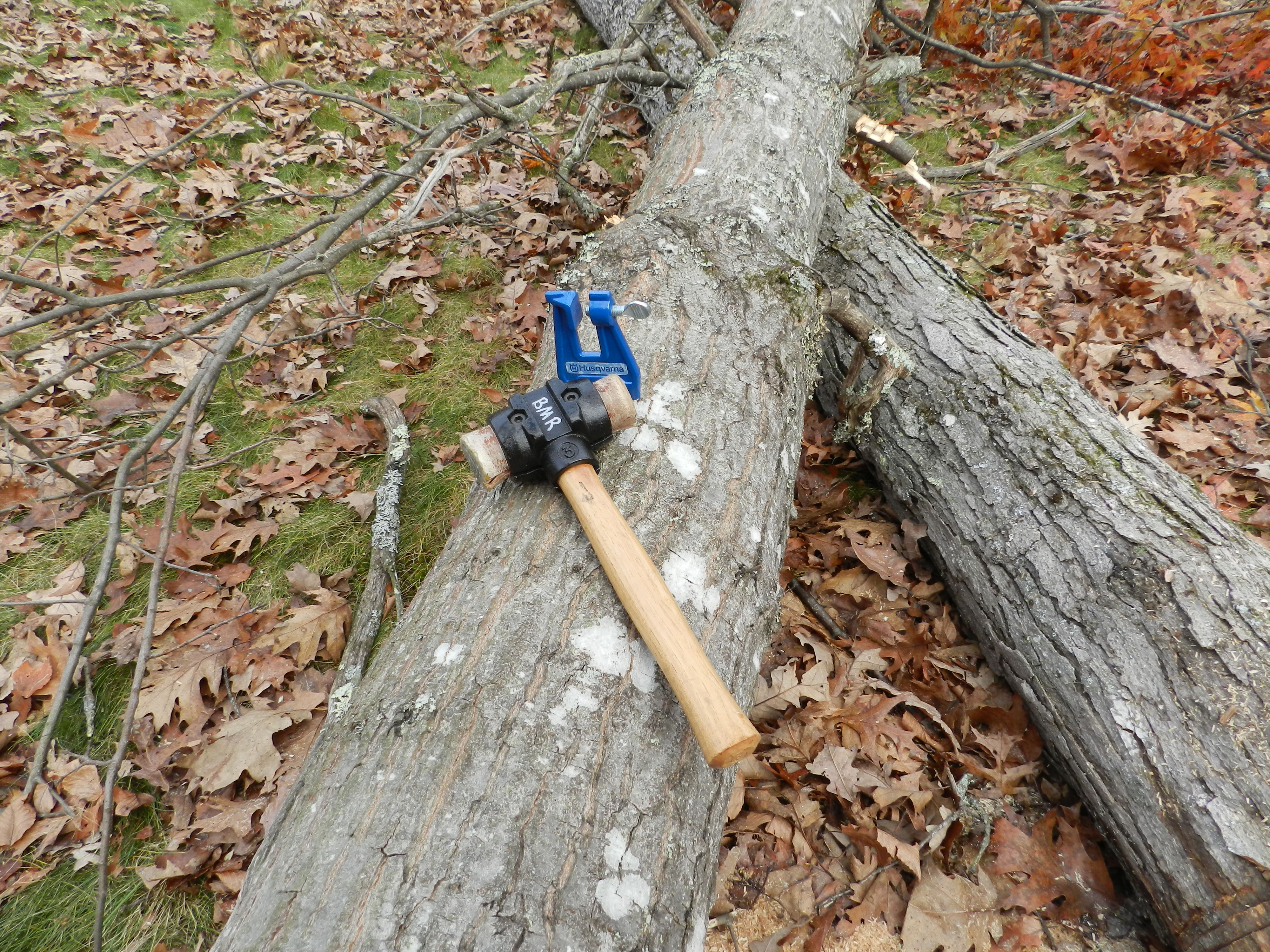
Stump vise
Stump vise

How do you use this vise?

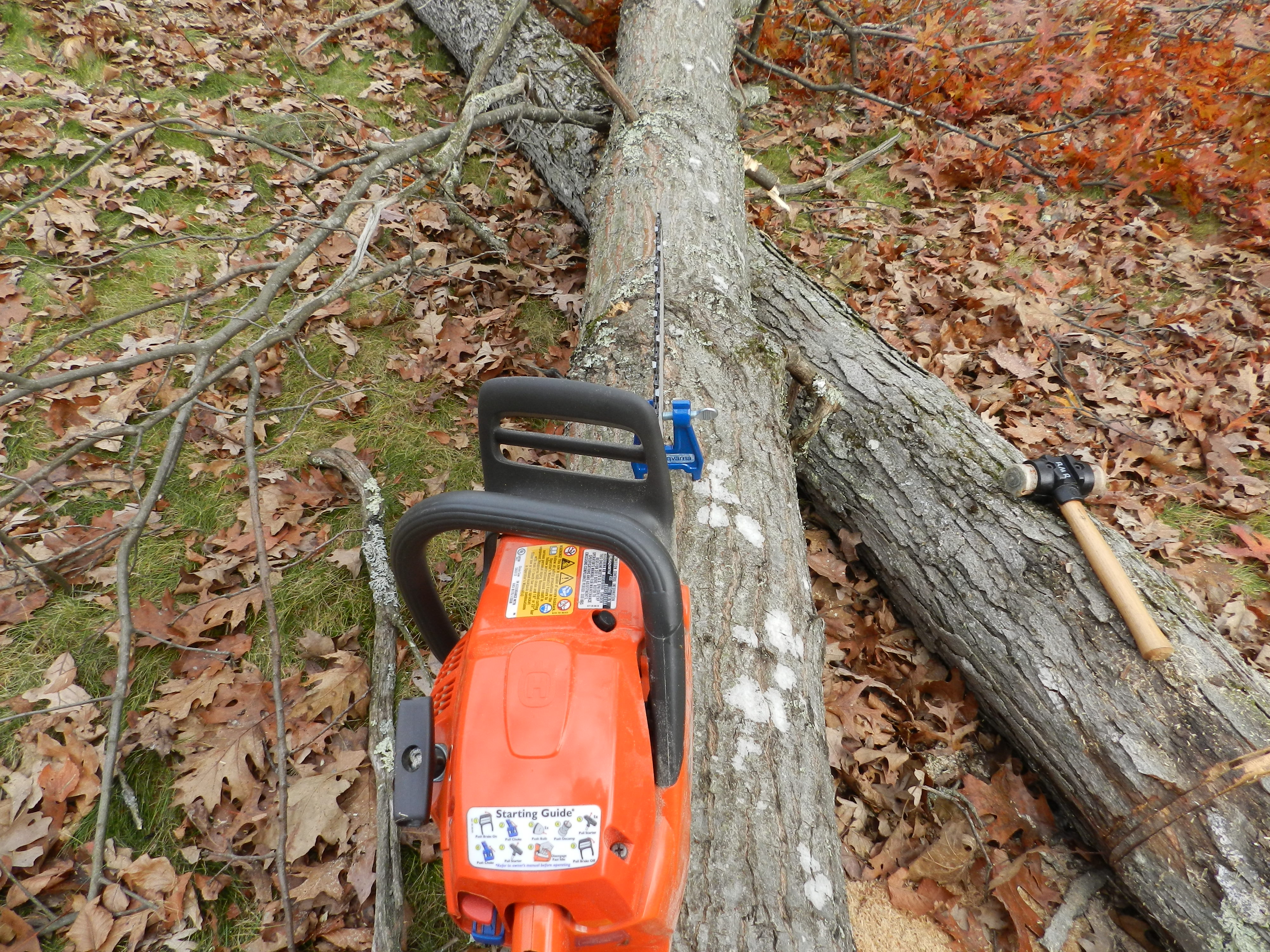
You hammer this little vise into a stump or log. Then you clamp the chain saw bar into the vise, being sure to make sure the bottom chain can clear the vise.

Chainsaw held in place on a tree trunk with a stump vise

Once the saw is secured you can mark the first tooth with a sharpie or similar marker and start filing. I usually do all the right teeth first taking advantage of muscle memory and using the same number of strokes. When I get back to the tooth with the sharpie mark I know I have made it all the way around the chain. Then I make a pass down the left teeth and sharpen each of them. I usually take 3 strokes with the file on each tooth.

Filing a chain saw chain out in the field

After 10 minutes out in the field with a file I am ready to get back to work and making more shavings.

Where can I find one of these vises?

The vise I have was made by Husqvarna and fits nicely into its own compartment inside the blow molded plastic case I keep my chainsaw in when it’s not in use. When you don’t need one of these vises they are easy to find — when you need one they can be hard to find. Last year when I bought a new chainsaw I went to the local Husqvarna dealer seeking one of these vises and he had no idea what I was talking about  — so I showed him the plastic case they sell which had a picture of it even and you’d think I had 2 heads the way he was looking at me telling me that is not something they ever made — clearly he had not done a lot of work out in the field as all the timber framers I knew had them. Needless to say I won’t be returning to that shop. The local True Value, big box stores and Tractor Supply didn’t have them even though I know there is a LOT of logging going on up here in NH. So I caved and bought mine online from a 3rd party outdoor equipment supplier on Amazon and have been very happy with the purchase. I bought the official Husqvarna branded vise for about $18, but the castings look near identical to the yellow model you often see branded as ‘General’ or other similar brands.

I hope you’ll treat yourself or the chainsaw operator in your life to one of these vises so they can get back to cutting up blanks for future projects.

Take care,

-Bill
Working with cut nails…

As a preservation carpenter and joiner my work regularly requires me to work work with a wide variety of cut nails. A lot of recent woodworking publications focus on cut nails appropriate for cabinetmaking and smaller projects, but that barely scratches the surface of what was still available if you know what you want and where to look.

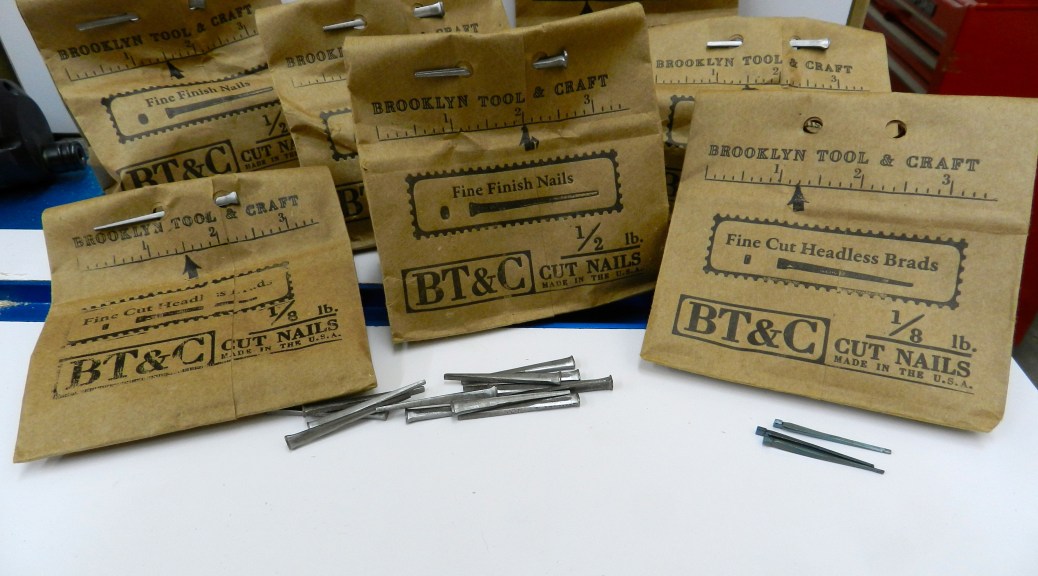
From small projects requiring a few nails…

Brooklyn Tool and Craft bags of cut nails

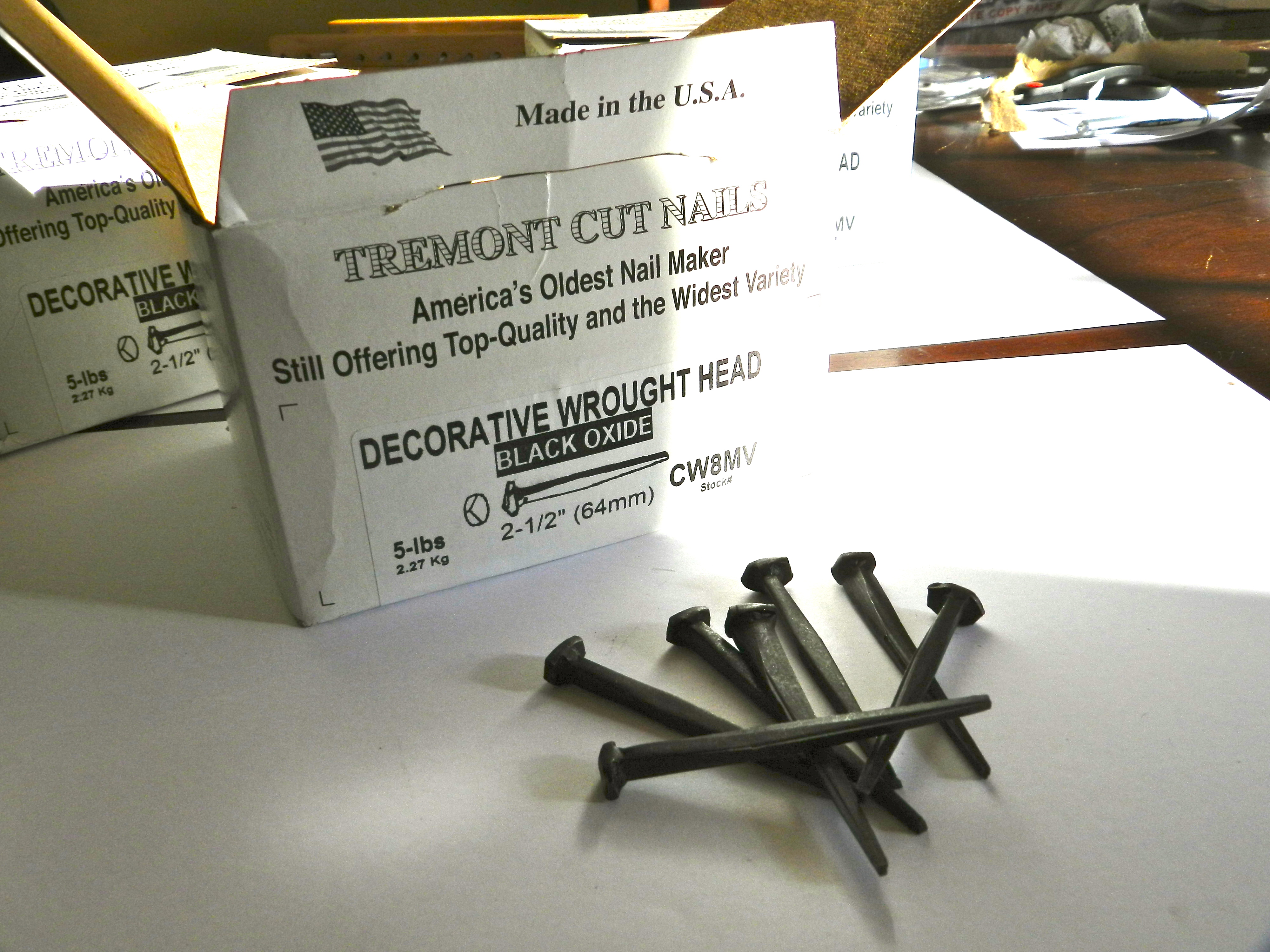
To larger jobs needing them in bulk…

Decorative wrought head cut nails used for wide pine flooring

You can still get cut nails, even galvanized steel cut nails from Tremont, the oldest remaining and most prolific cut nail maker that is still around.

Why do I want to use cut nails?

Cut nails offer several advantages over modern wire nails:

  • The chisel shape of the end of a cut nail helps to severe fibers as it is driven into the wood as opposed to wire nails that compress the wood around it
  • The wedge shaped profile and sharp edges that result from how the nail is made help the nail hold better when compared to wire nails
  • The distinctive square head, or decorative wrought head can be quite pleasing to the eye on new and old projects
  • Cut nails with the wrought head can be a cost effective alternative to blacksmith wrought nails for larger or less historic projects
  • Cut clinch nails can be clinched (bent over onto itself) which makes them a very effective fastener much like a large staple
  • For preservation or reproduction work it is important to get the small details right — including use of the correct period appropriate fasteners
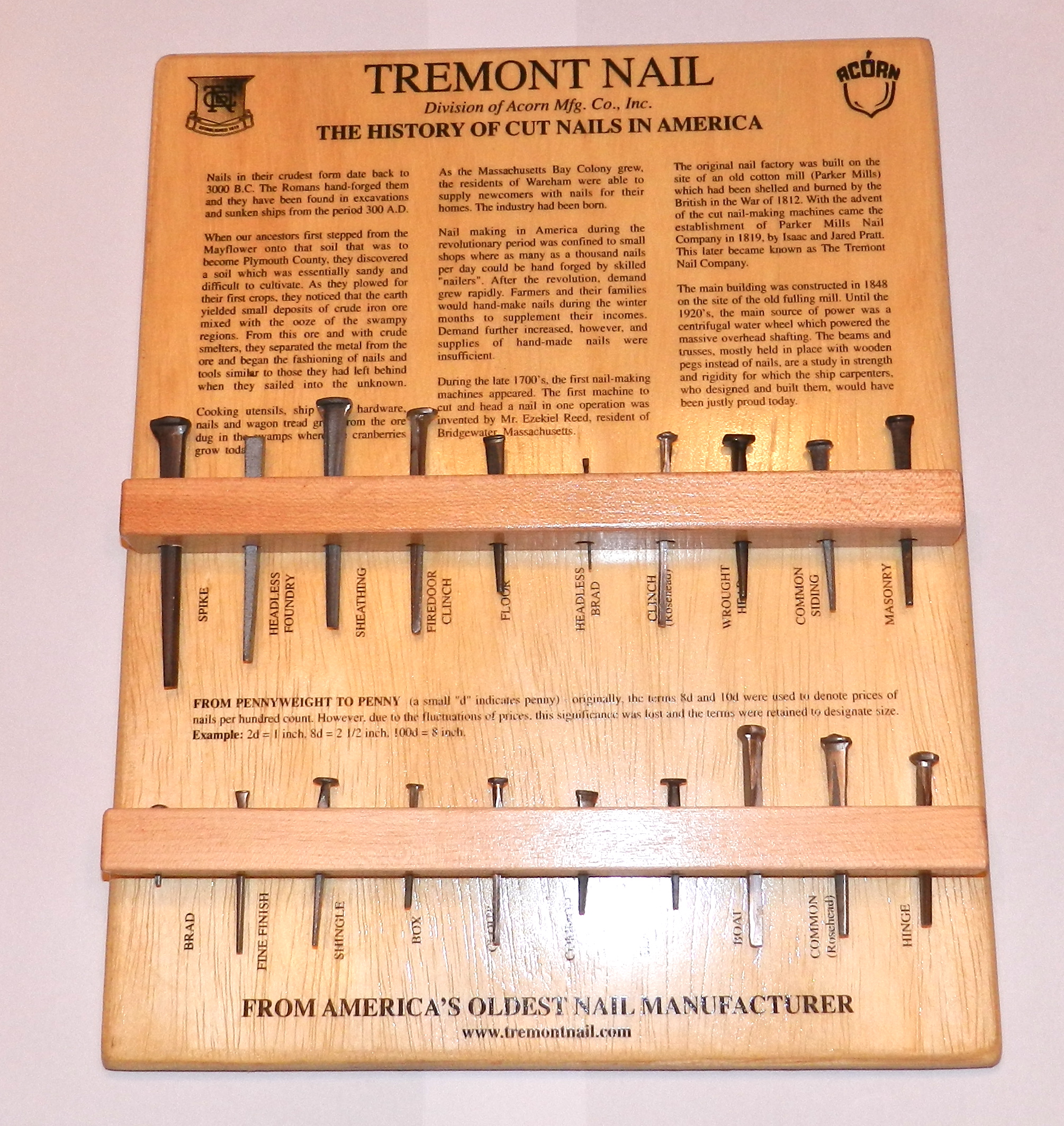
Tremont Nail Display Board

All that sounds well and good, but is it worth the extra time and expense to track down these sometimes hard to find nails?

I’d say it’s hard to argue with good results, so let’s take a look at some common uses for cut nails. From simple traditional boxes and drawers…

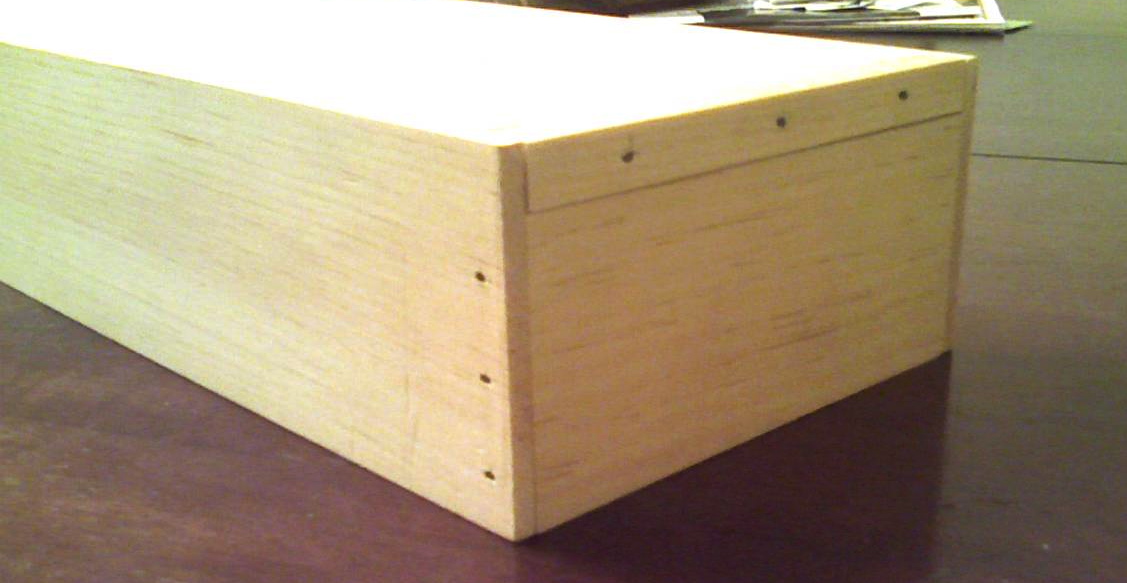
Chisel box with cut nails

To high style door pediments and architectural details..

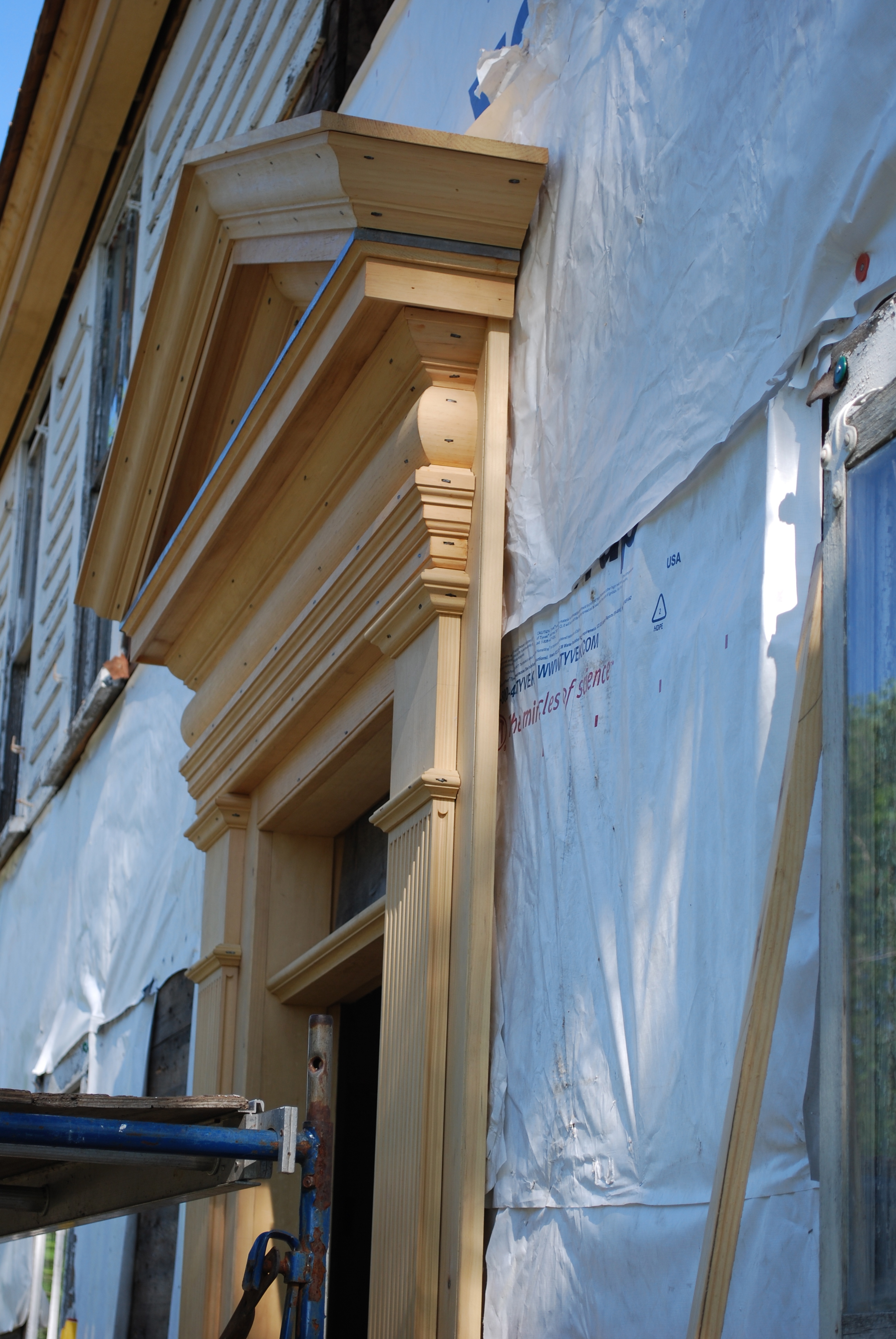
Cut nails in a traditional door pediment

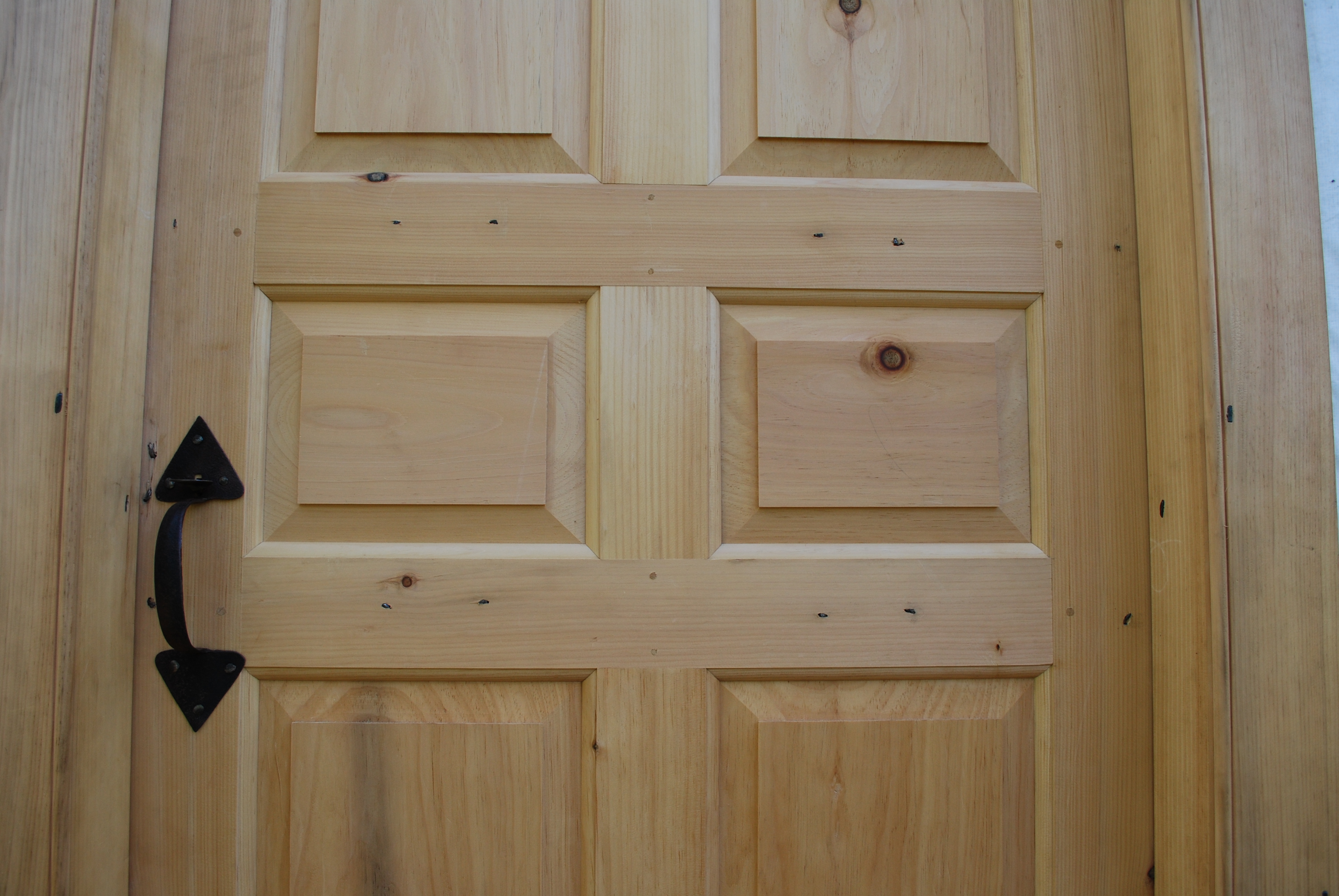
To clinched nails in a reproduction door on an historic home…

Clinched cut nails in a period door reproduction

To siding and trim details…

Cut nails in exterior siding and trim

The cut nails add to the visual authenticity and given their superior holding abilities will also increase the longevity of the work.

Tips on working with cut nails:

  • Make sure the chisel end of the cut nail is set in across the grain thus severing it and not acting like a wedge
  • Start off slow with a couple of light taps before driving the nail home with harder hammer blows
  • If working near the end of a floor board or using a large spike consider pre-drilling a whole that is slightly smaller than the nail to prevent splitting
  • If using the nails on an exterior application consider buying galvanized cut nails. If your local supplier does not offer that, you can send the nails out to have them hot dipped for a reasonable price. This will help the nails survive the elements and require less maintenance.
Cut nails in exterior siding and trim
More cut nails in exterior siding and trim

Gallery of the 20+ Cut Nail Types still available (If you are viewing this in email, you’ll need to click over to the blog to see this gallery properly displayed):

Where can I find these cut nails?

  • If I need a small number of cut nails I usually order from Tools For Working Wood as they sell 1/8lb bags which are secured shut with another cut nail (Labeled as Brooklyn Tool and Craft I believe they are repackaged Tremont nails)
  • If I need a large number of cut nails I usually order direct from Tremont Nail (A company in MA with over 190 years of cut nail making experience)They offer, 1lb, 5lb, 50lb and custom larger size (think nail casks) orders
  • The Tremont Nail wood board with sample nails is available for purchase from Tremont — it’s a great addition to any shop and allow folks to examine each of the above described nail types in person. I have one in my shop and have found it to be a nice visual aid in my teaching.

I hope to see more folks using cut nails on their projects.

-Bill

Winding Laths — Improve How You Flatten a Board

A good pair of winding lath or winding sticks is sometimes hard to find — I suspect not many survived the burn pile. The good news is that a new set is easily made in an few minutes at the bench.

Sighting down a board with winding sticks
Sighting down a board with winding sticks — (This set was made by my friend Bill Anderson of Edwards Mountain Woodworking)

Why would I want a pair of ‘Winding Sticks’? What do they do?

  • This pair of matching straight-edges are a fast and invaluable tool that allows you to quickly see if a board is flat.
  • By placing them at each end of a board, sighting down across the near stick and looking at the far one, you can more easily see any twisting or warping in the board. The sticks help accentuate any non-planer surfaces.
  • By moving one stick and sighting the board at a few locations along its length, you will quickly see how the board flows.
  • Using a single stick you can also check for any cupping or warping as you would with any other straightedge.
  • Once you identify parts of the board that need to be addressed, you can quickly plane them and re-evaluate the board using these sticks. (After a bit of practice, process goes quite fast)
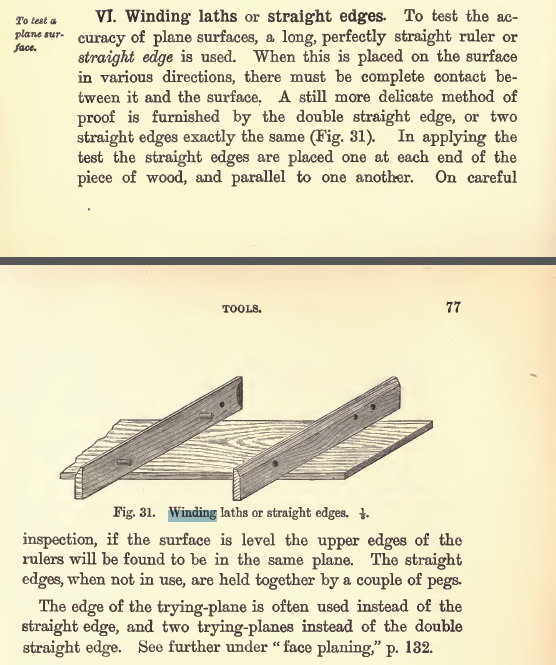
Winding Lath by Otto Salomon in the Teacher's Handbook of Sloyd
Winding Lath by Otto Salomon in the ‘Teacher’s Handbook of Sloyd’ — a great prototype for your own winding sticks

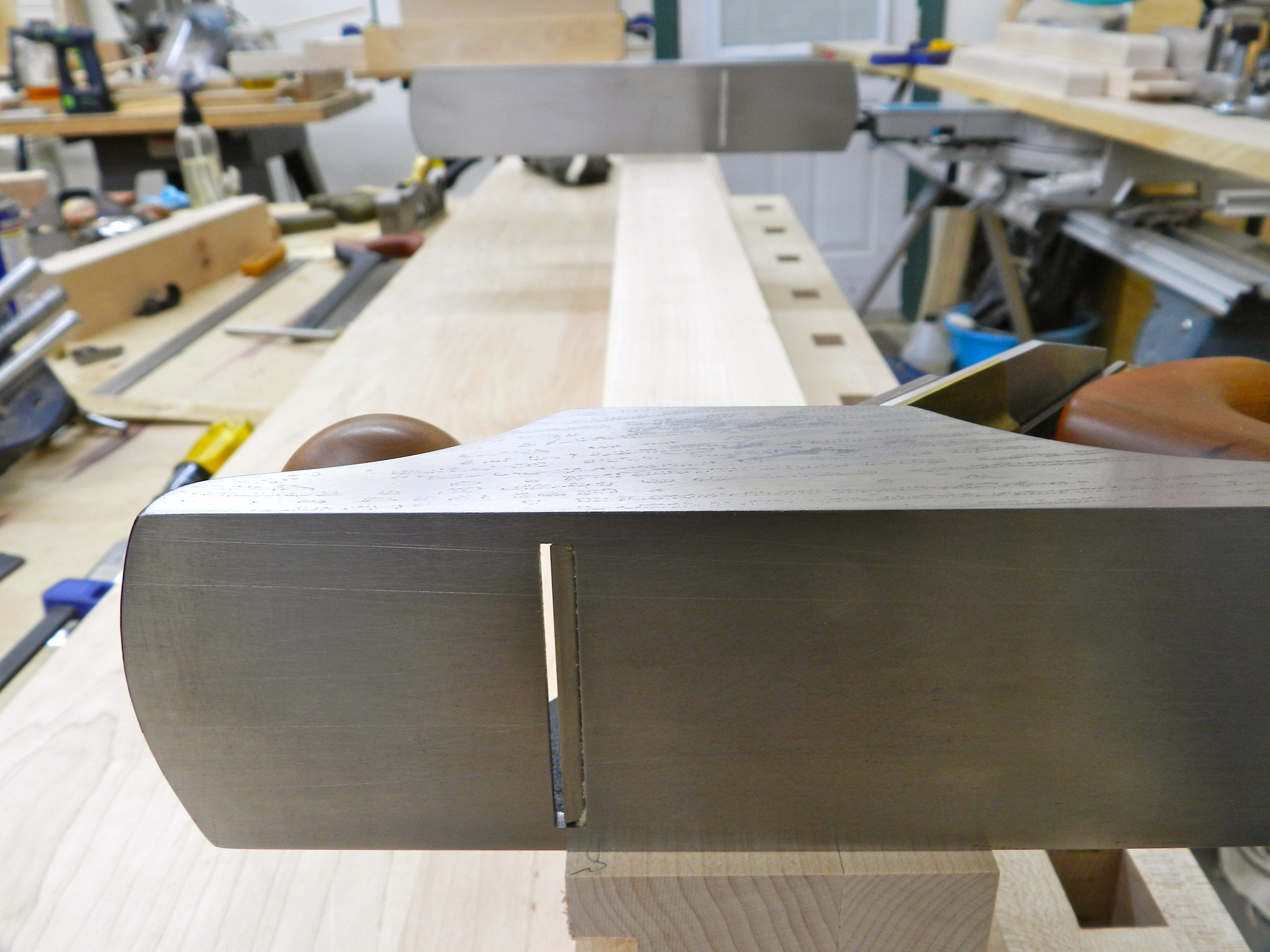
From Otto Salomon’s ‘Teacher’s Handbook of Sloyd’ above you can read a nice description for how to use winding laths efficiently. The pair of wooden Sloyd winding laths shown above nest with each other via a set of fitted wooden pins and have a nice relief one the edge of the short sides so you can easily get a finger hold in there and separate the sticks when you want to use them. Otto also calls out an interesting alternative you can use in a pinch — by turning two try-planes on their side you can use them as an impromptu set of winding sticks and sight across them.

Sighting down two bench planes as impromptu winding sticks

Tips on making your own winding sticks:

  • Use quarter-sawn hardwood like hard maple or beech
  • Consider adding a contrasting inlay or strip to make it easier to sight across the sticks
  • I like to use sticks that are 1/2″ thick, about 2″ wide and about 18-24″ long
  • Sticks that can nest with each other or otherwise stay together are more likely to survive
  • Taper each stick  on one side so that it’s clear what edge is the top (it will not stand on its own on the edge you plane down to 1/8″)
  • If your sticks ever get out of true they are easily squared up again with a plane

The next time you are out in the shop, make a quick set of winding sticks and see how much it can improve your board flattening efficiency.

-Bill

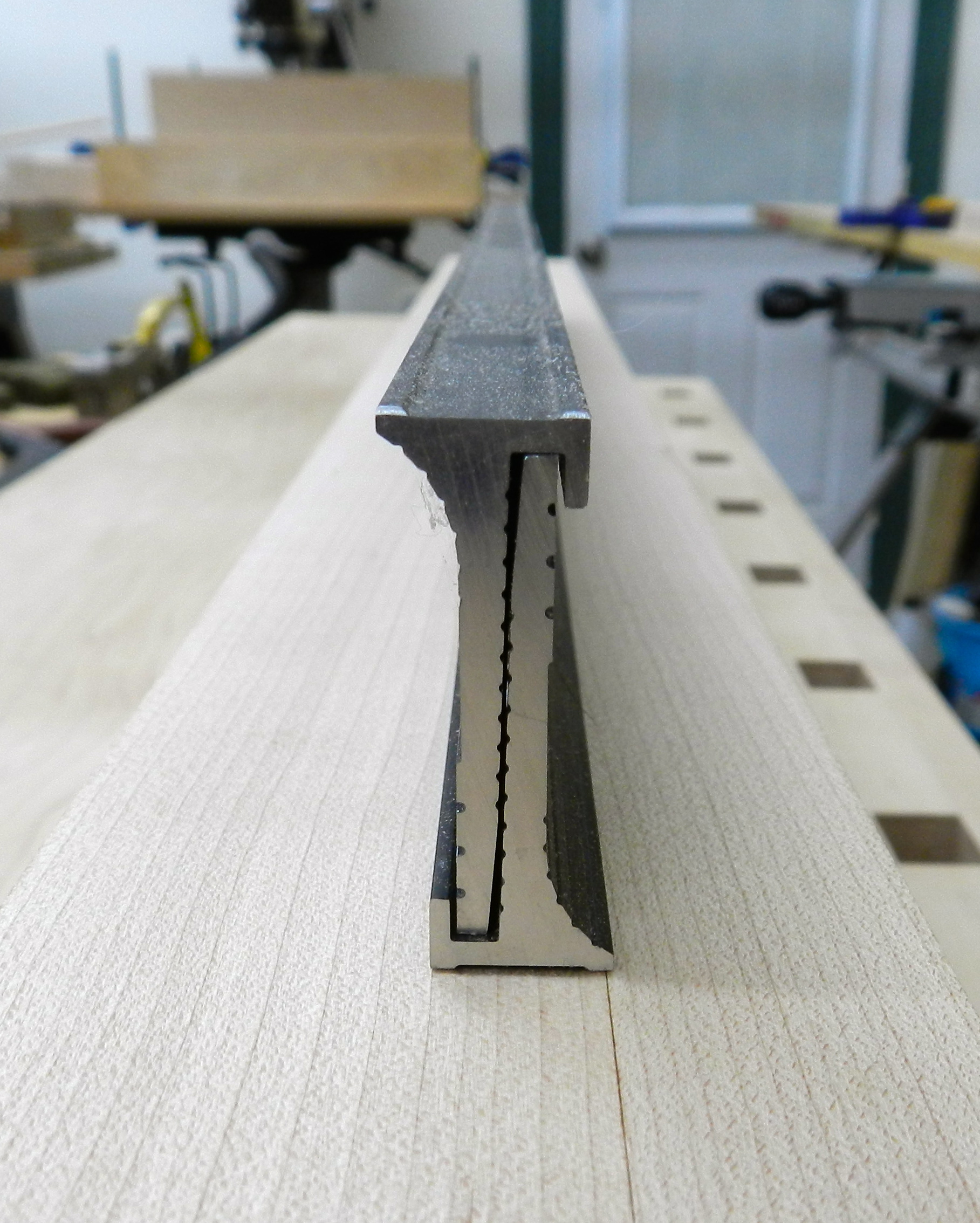
P.S. If you don’t have the the time or scrap to make your own set from wood, and don’t have 2 jack or try planes handy, you need to have a stern talking to, but there are commercially available winding sticks available from Lee Valley and others. I admit that I do have a pair of the Lee Valley aluminum winding sticks which I bought when I first got started in hand tool woodworking. They are well machined and the design hits all the major tips called out above — with the exception of being made of wood of course.

Nesting metal winding sticks from Lee Valley

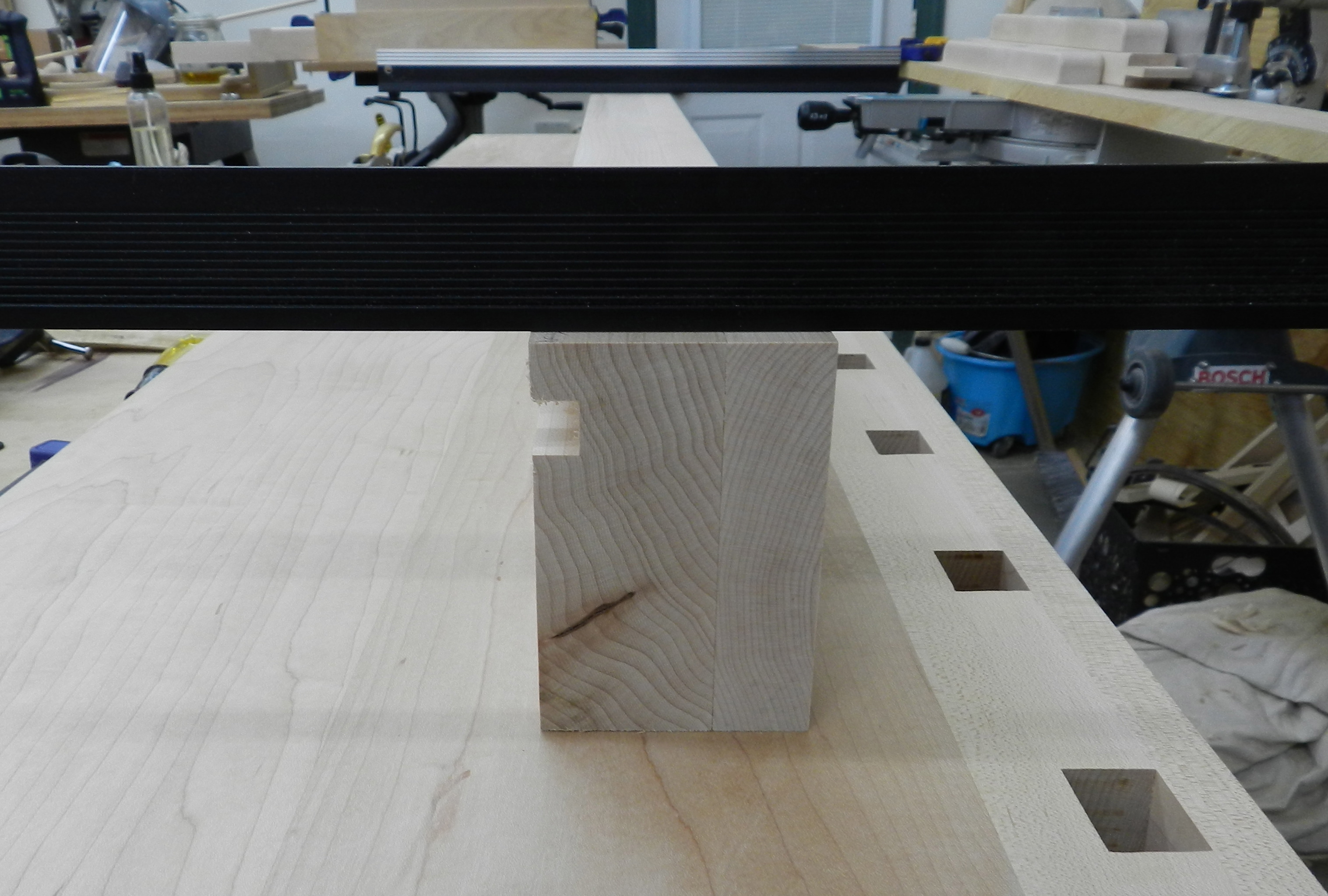
Much like the shop made winding sticks, these aluminum sticks work well and need virtually no maintenance.

Metal Winding Sticks in Use

P.P.S — This is an extended version of a post I put together for my friends at Popular Woodworking on the contributor’s blog which can be found here.

The joys of working with reclaimed old growth timber….

When working with reclaimed wood you generally want to be extra cautious — you never know what you are going to find in the wood. Normally I visually inspect the wood, remove anything glaring (bits of old nails, stones, loose knots etc), then make a pass with a lumber wizard metal detector, remove what it finds and start working my way through the wood. Every so often something makes it through that system….

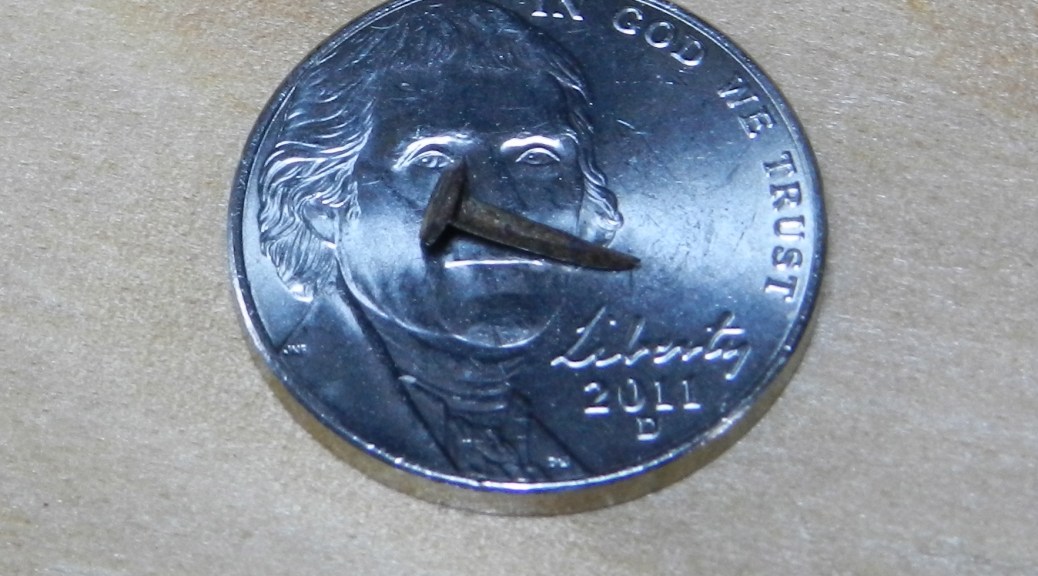
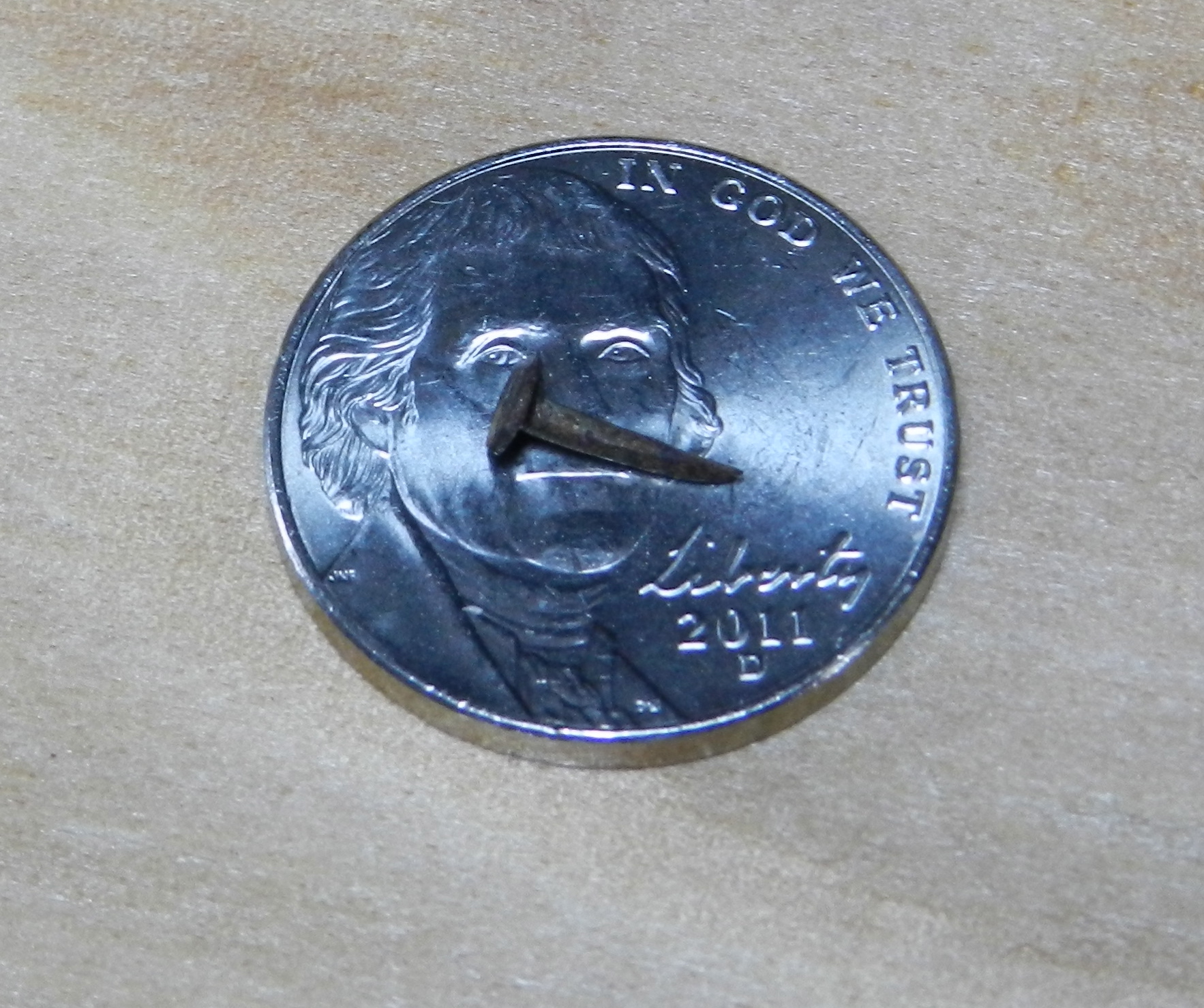
Tiny Tack
Tiny Tack

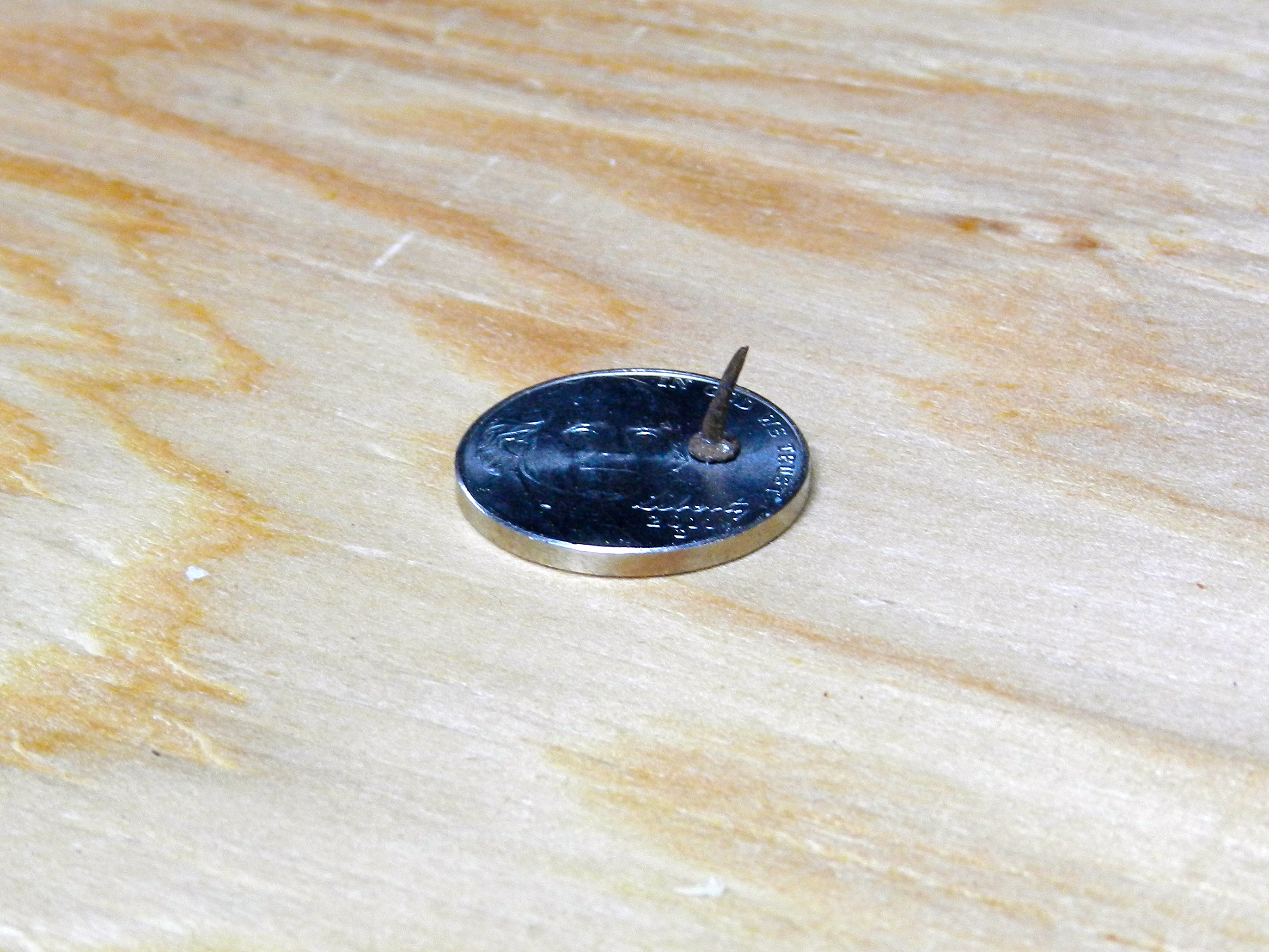
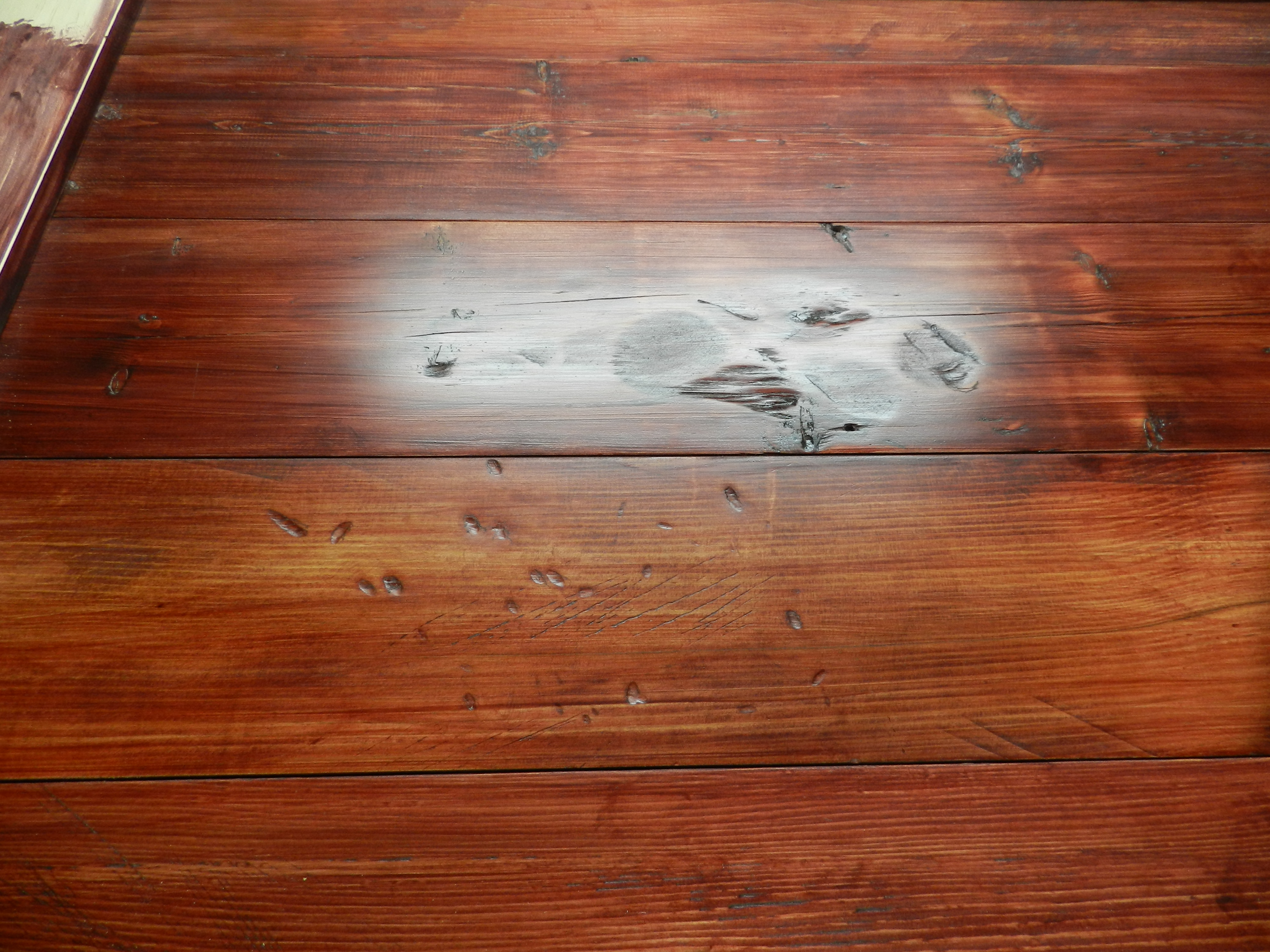
Above and below is a VERY tiny tack was embedded deep into an old barn board I was reclaiming. It must have been fairly deep into the board as the metal detector didn’t find it, but it sure found my planer knife.

Very Tiny Tack on End

But such is the price we sometimes have to pay in order to work with old growth timbers. On an 8-10″ wide board I was counting well over 150 years of growth rings and this pine often handles like hardwood.

Laying out the boards to even out the texture and grain profile.

For projects like this rustic headboard the trick is to stop milling before you lose all the history and character of the old wood.

Texture detail
Texture detail

But in the end the extra effort is worth with for the results cannot be duplicated with modern woods and simulated aging techniques.

Finished Headboard
Finished Headboard

You can see a bit more of this project on an earlier post I made here.

Take care,
-Bill
Making a Jointer Plane with Willard ‘Bill’ Anderson — Part 2

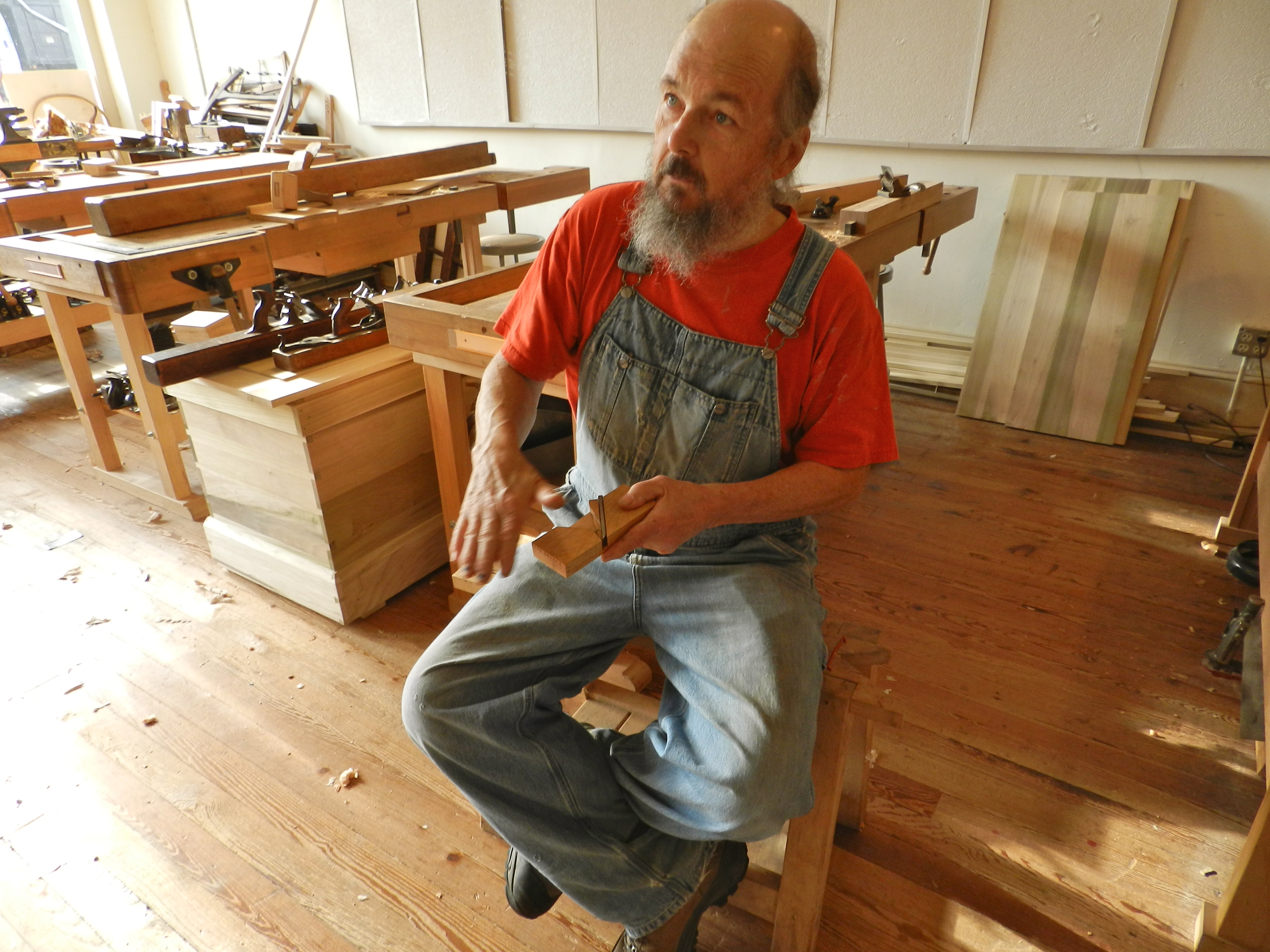
When last we left our plane-making heroes they were in the process of making a traditional single iron jointer plane with my friend Bill Anderson at the Woodwright’s School.

Bill demonstrating with a great bench plan cross section model
Bill demonstrating with a great bench plane cross section model

Bill had a great cross section model of how this sort of bench plane works — made by one of his students. With the body of the plane taking shape, next up was tuning the mouth opening and the abutments. If the mouth is too wide or too large the plane may not cut cleanly so you need to carefully fit the iron to the opening. If the abutment is not carefully placed when you re-flatten the sole of the plane you’d also be opening the mouth more. You also need to take care flatten the face of the bed that supports the iron — if there are high points the iron can pivot on those and make it tough to use the plane. One of the many testing/fitting gauges Bill had was a ‘bed testing gauge’ which looks and works much like a pair of ‘pants’ we use in timber framing to test out the thickness of a tenon, except in this case you are using it to check the thickness of the cheeks and how close your bedline is getting to the line scribed on the side the plane body.

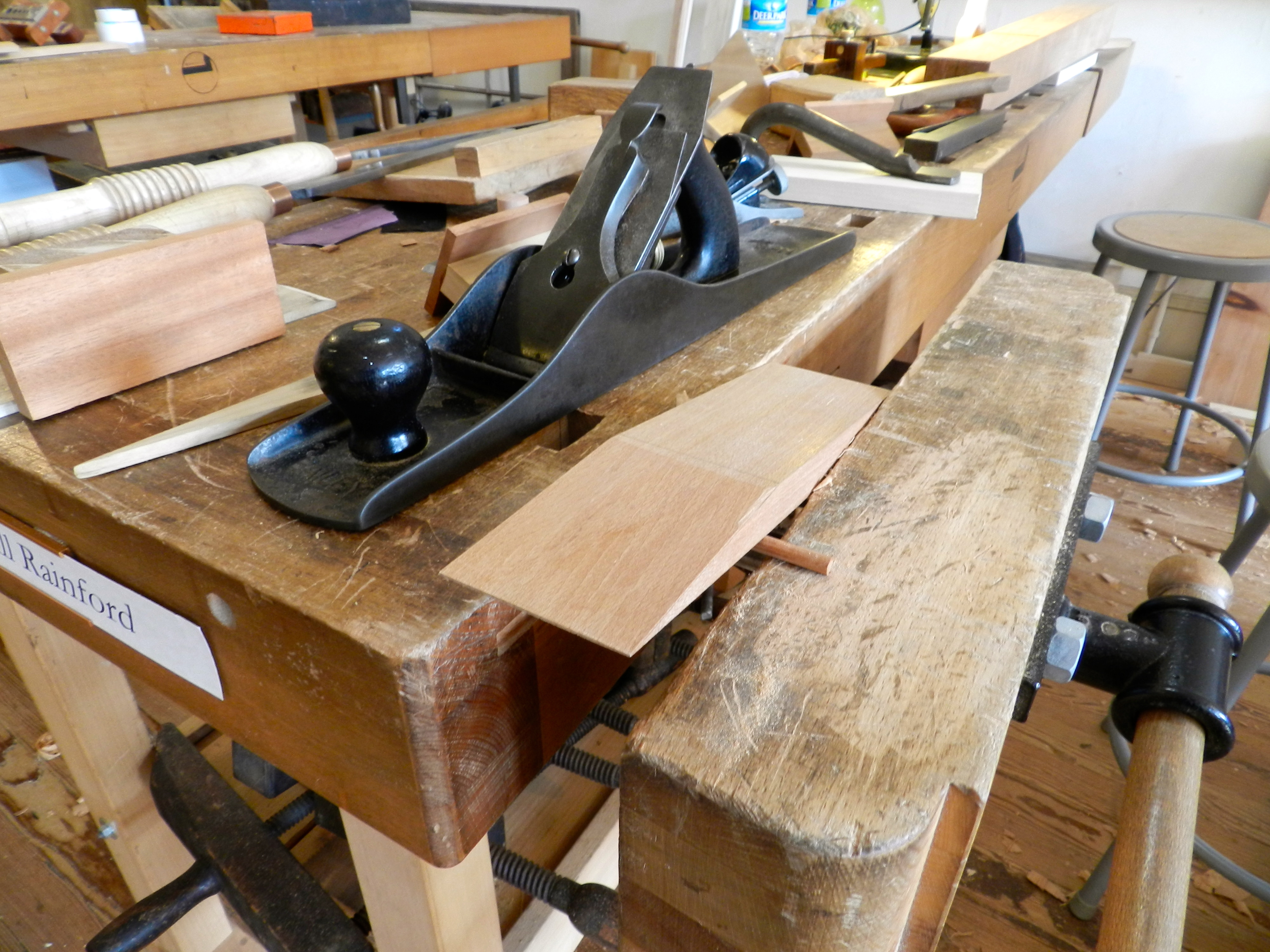
Planing the wedge
Planing the wedge

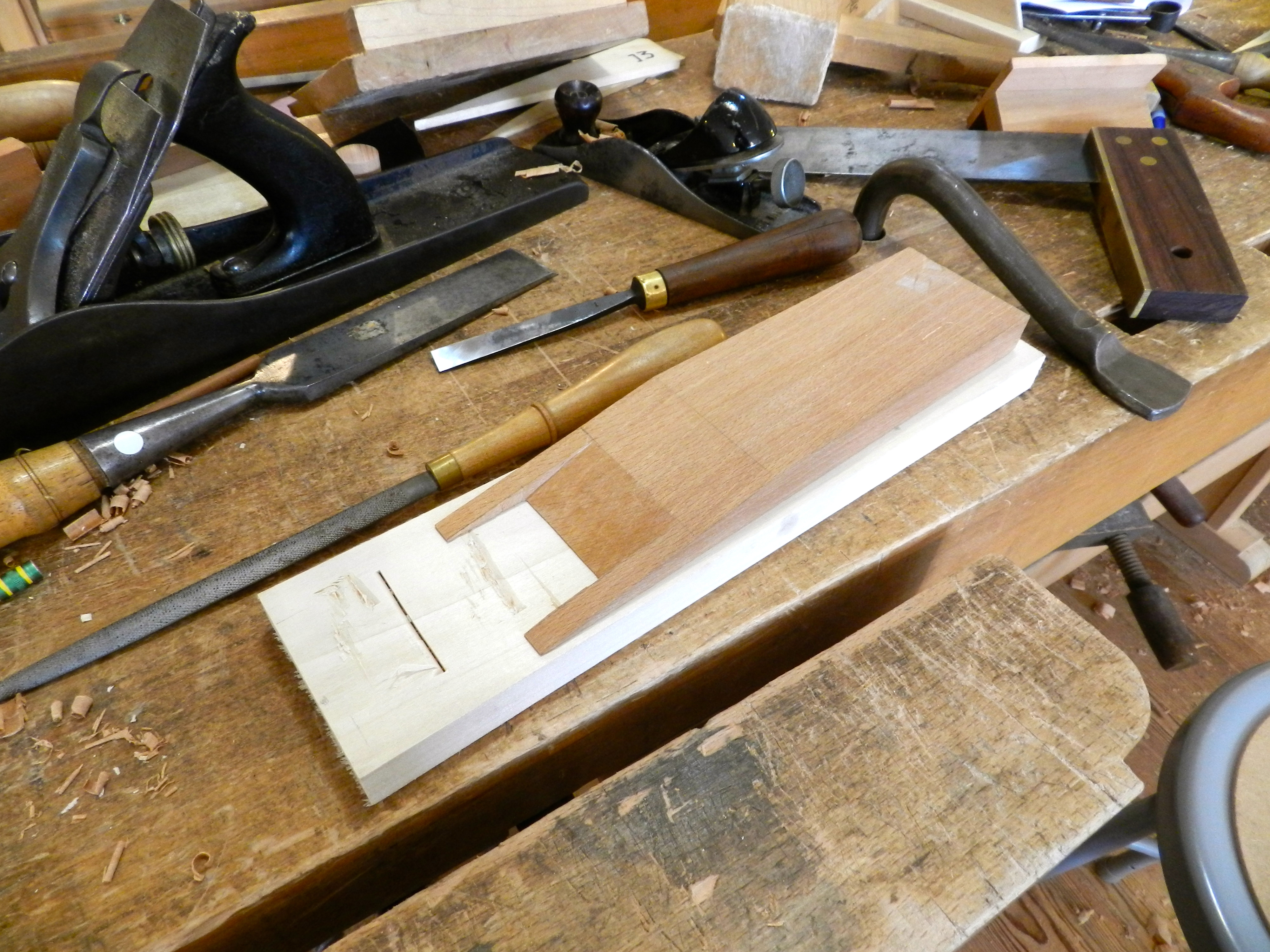
With the mouth and throat all set, next up was making the wedge to hold the iron in place. The wedge needs to be carefully planed to fit the abutments inside of your plane and tightly hold the iron in place. Again here you are using an abutment gauge (wooden wedge of a known profile in degrees) to test your work as you go.  With all the gauges and specialized tools you can quickly see why plane-making was its own dedicated craft specialty.

Shaped and fitted wedge

The wedge is further relieved so that the shavings can clearly escape the plane body.

Templates, gauge blocks and pants
Templates, bed gauges blocks and pants

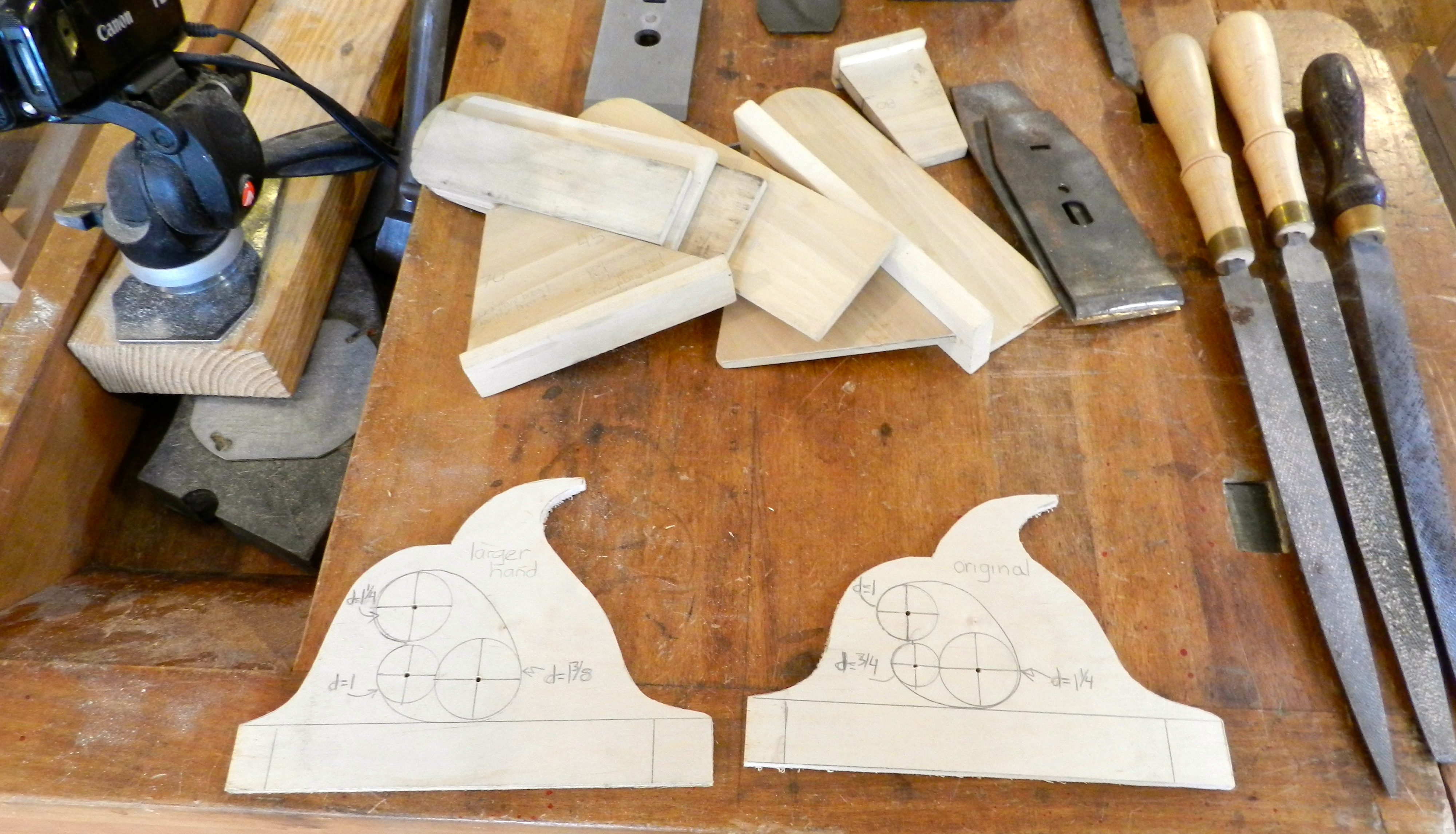
Above you can see some of the many gauges used in laying out and testing parts of your plane, along with templates for the handles.

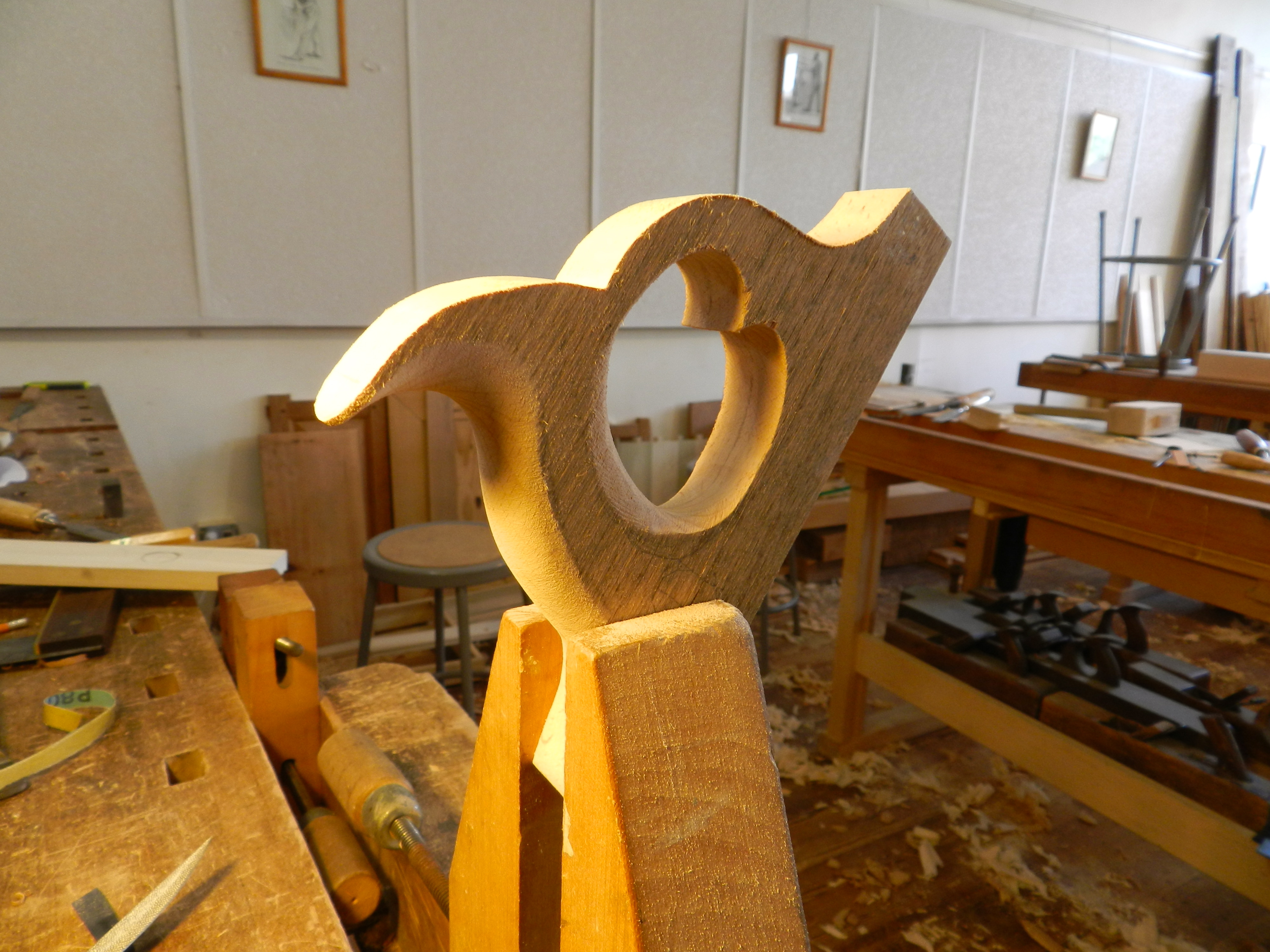
Starting to shape the handle

The handle is first cut out from a rough blank and then carefully shaped by hand to have flowing, graceful lines similar to that of a quality hand saw. The result is a handle that fits the hand so well it, the whole plane feels like an extension of your body.

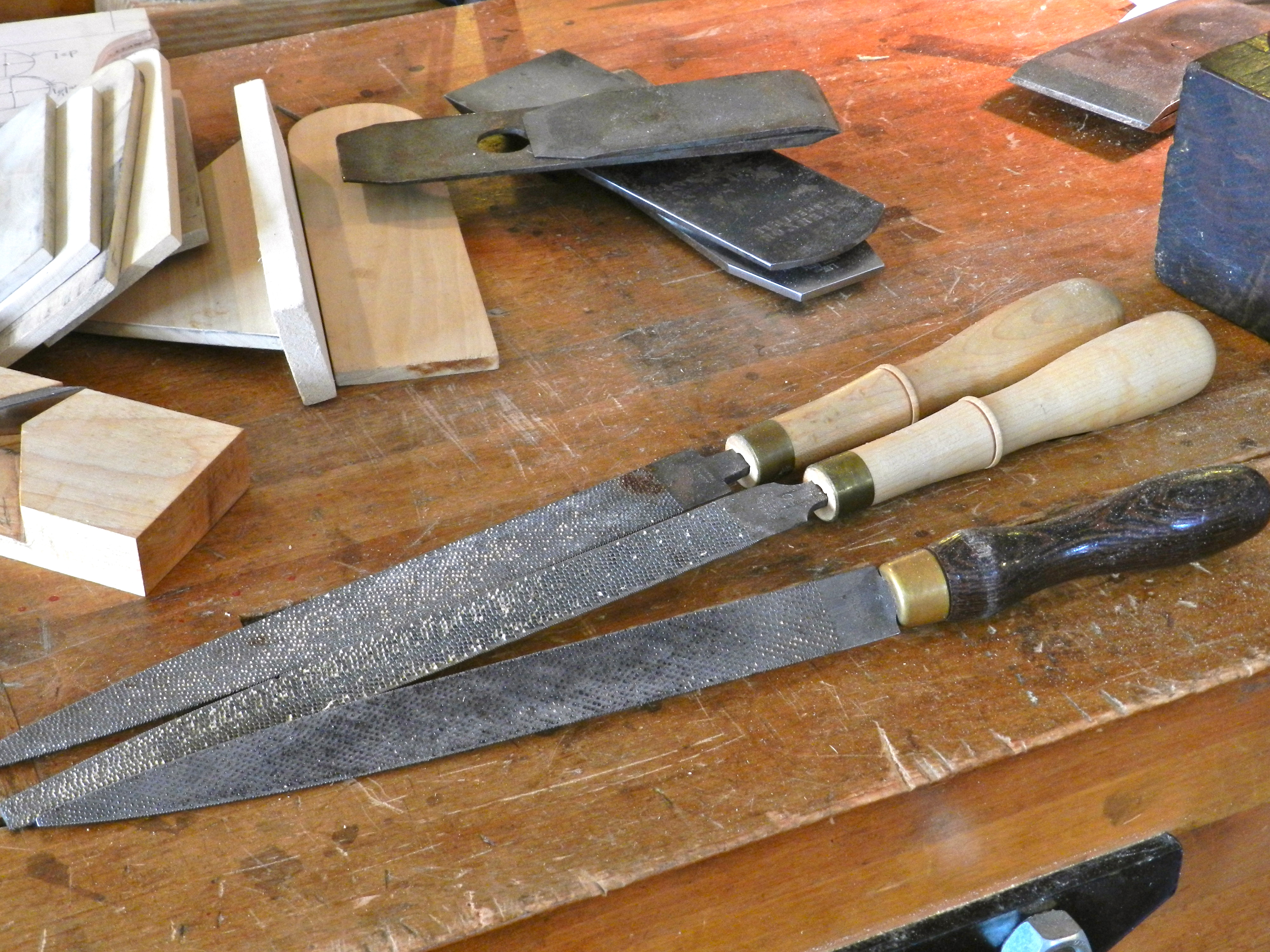
Auriou rasps used to shape the handle -- they were a pleasure to use
Auriou rasps used to shape the handle — they were a pleasure to use

Various rasps, files and sandpaper are used to shape the handle. Using crisp hand stitched Auriou rasps made quick work of shaping the handles.

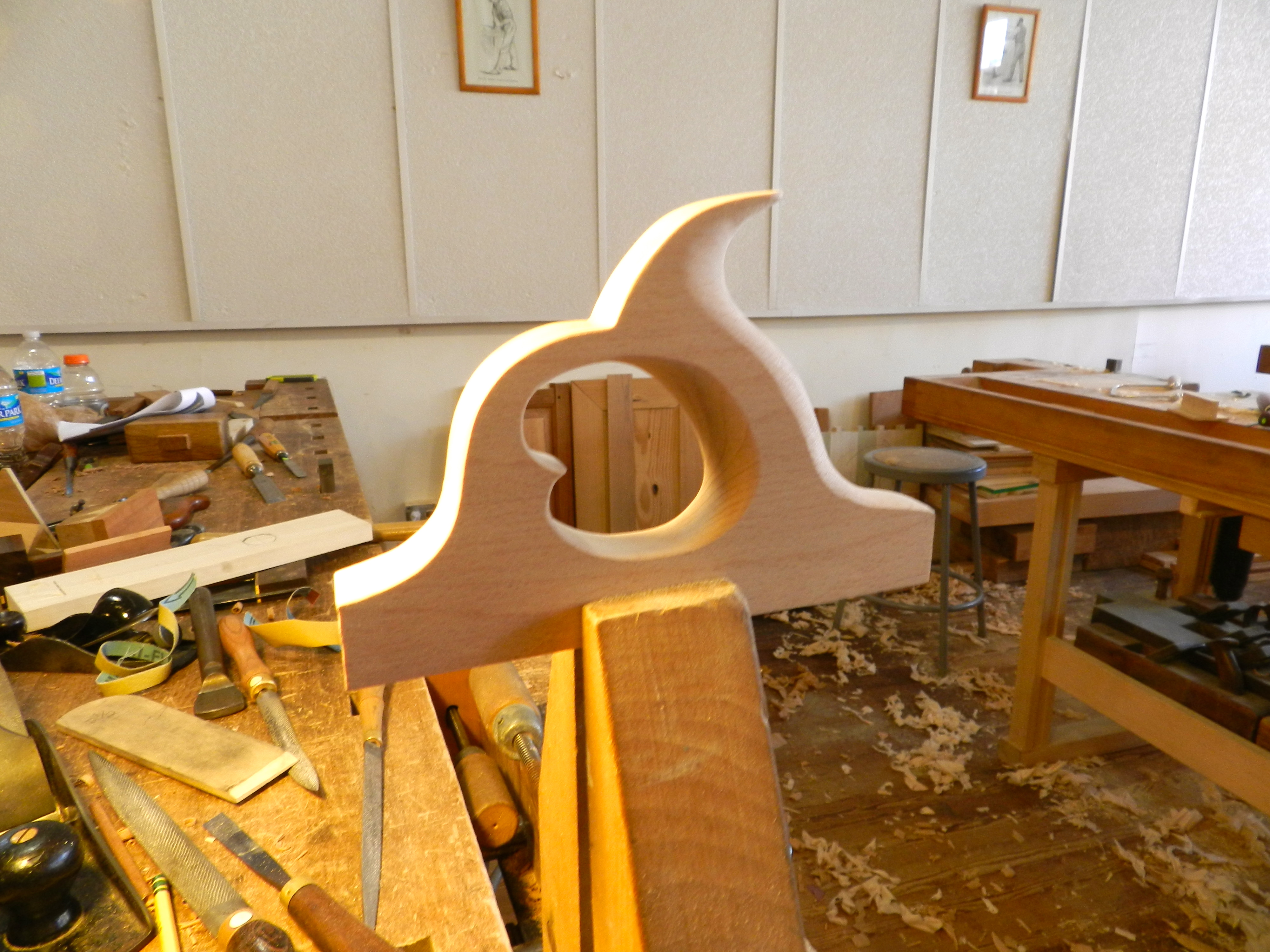
Finished handle
Finished handle

Above is the handle after a bit of light sanding.

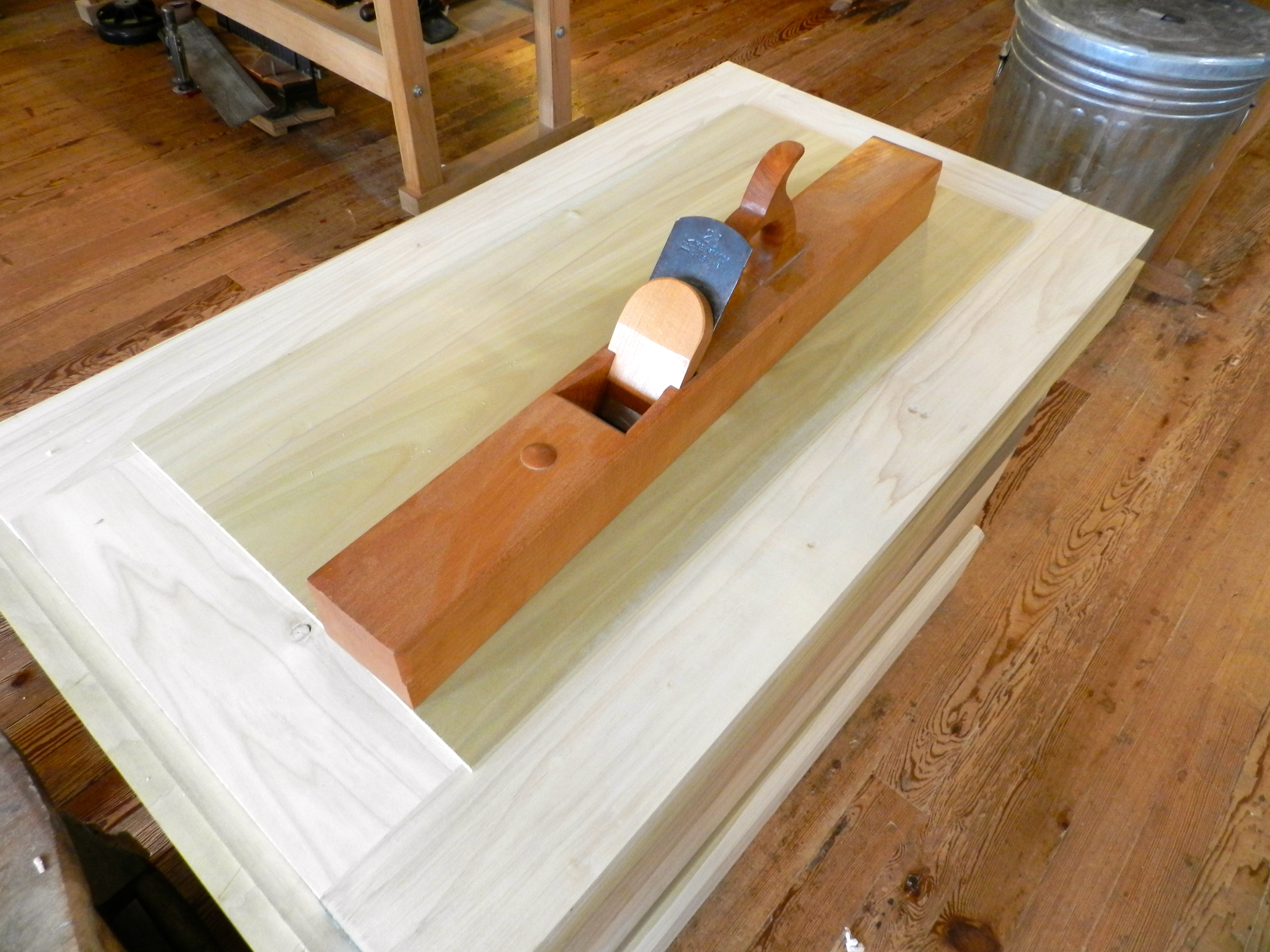
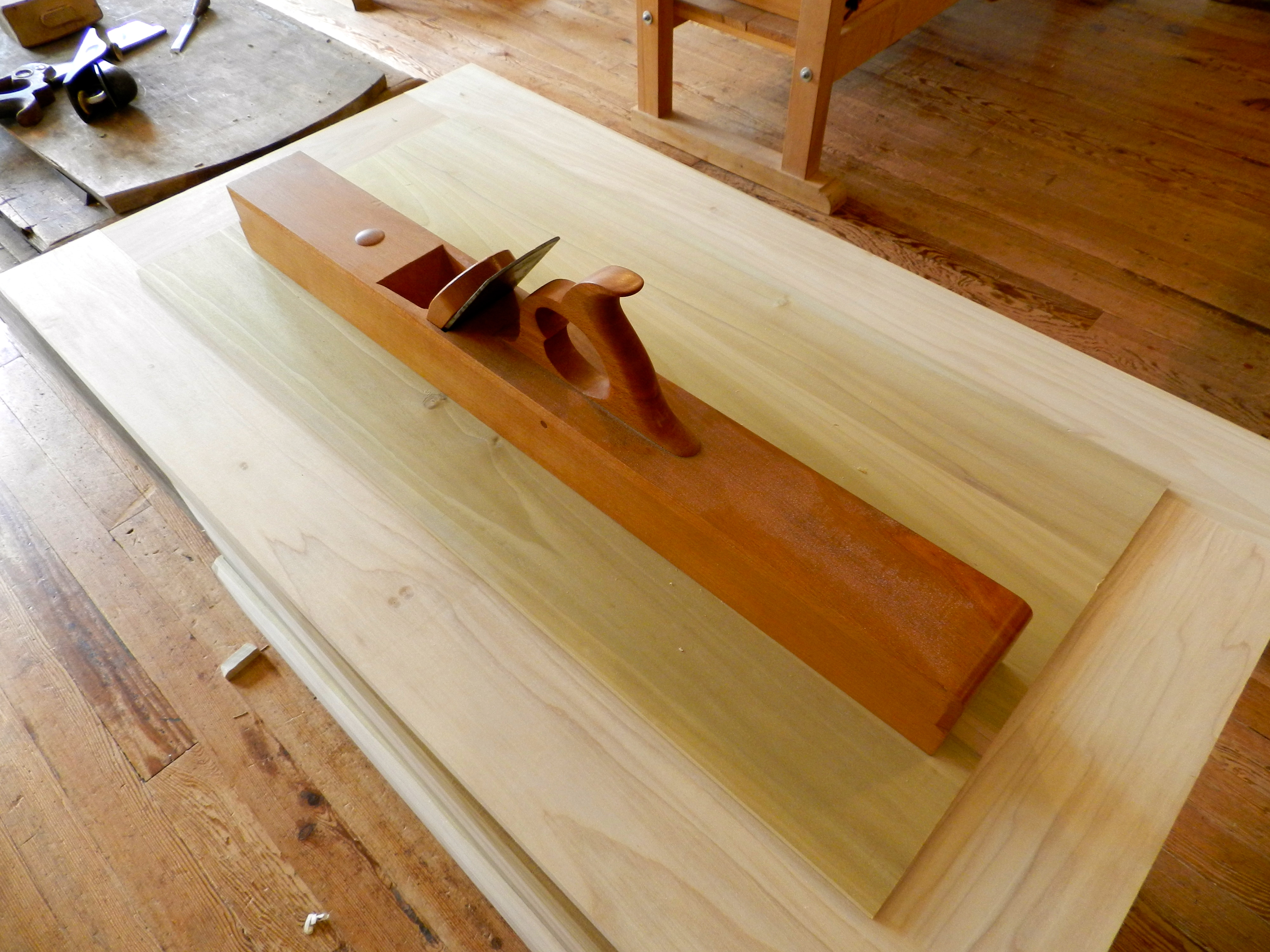
A finished Jointer Plane

Shown here you can see Bill’s finished/sample plane which is based on an historical example.  I’ll post the final shots of my own plane when I finish it soon in my shop.

Rear 3/4 view of the completed sample plane

At the end of the workshop one of the most important tasks was to make sure you plane can take a nice shaving. I’m happy to report that I was able to get a nice full width shaving with my mostly completed plane. (I need to finish setting the handle, trim the edges, apply some finish and use my maker’s name stamp and it will be ready for regular use in the shop).

Making the first shaving with a new plane...
Making the first shaving with a new plane…

In an upcoming post I will complete this series with how I finished off the plane. Stay tuned…

In the meantime, if you’d like to learn more about Bill Anderson or take a class with him, and I highly encourage you to do so, please check out his website here.

-Bill

P.S. You can see the first post on making this jointer plane here.

Making a Jointer Plane with Willard ‘Bill’ Anderson — Part 1

A single iron jointer plane is one of those tools you have use yourself to truly appreciate. Over Labor Day weekend I was fortunate enough to have the opportunity to make one of these planes with Willard ‘Bill’ Anderson at the Woodwright’s School in Pittsboro, NC.

Entrance to the Woodwright's School
Entrance to the Woodwright’s School

Bill is a passionate woodworker and skilled teacher. You may recognize him from his appearances on Roy’s television show or the articles that he’s written. He’s a molding plane aficionado and has studied plane-making and general furniture-making with many masters in the field. He recently retired from being a Scientist for the EPA so I see a lot of parallels to my own life working in software.

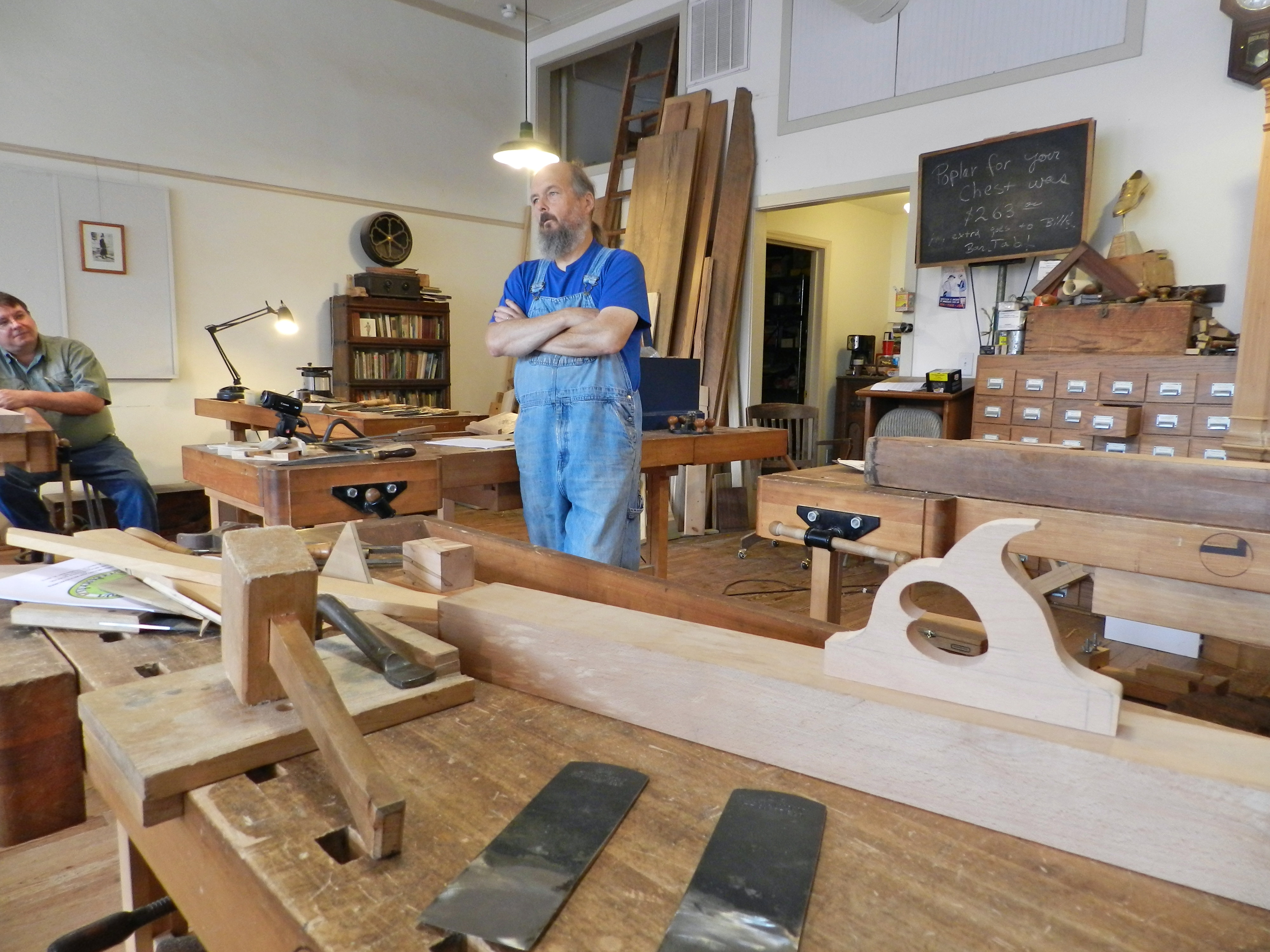
Getting started, with Bill Anderson

The plane is made of air dried American Beech and a new old stock English iron.

Squaring up the air dried beech blank

We started out by squaring up the stock using a wooden straightedge and winding sticks.

Laying out the mouth and abutments

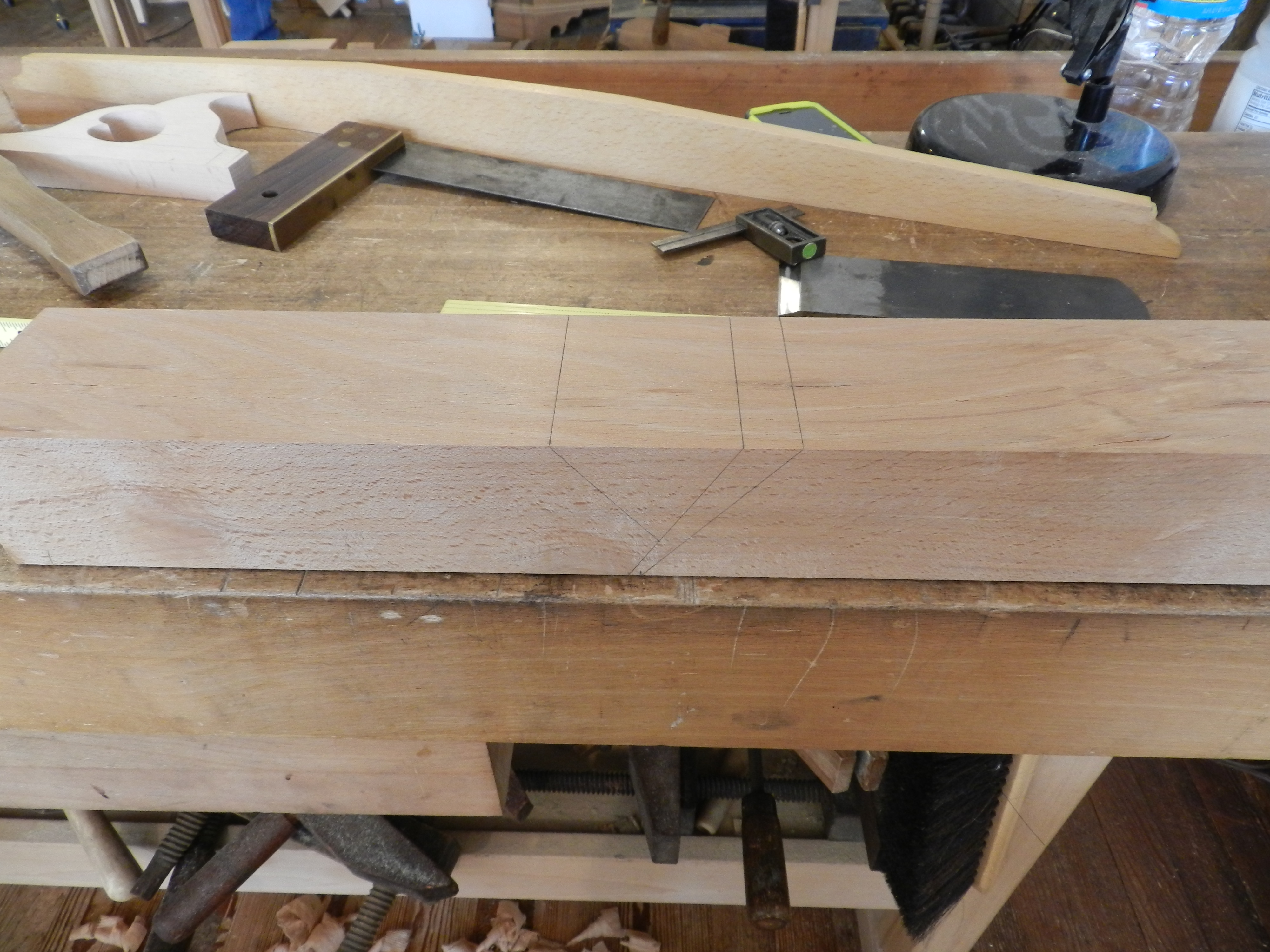
Next up was laying out the mouth and throat. The mortises are all chopped by hand with a chisel and refined via a series of floats and scrapers. It was my first time using that many different floats, and for what looks like it might be a fairly coarse tool, when sharpened leaves a remarkably good surface.

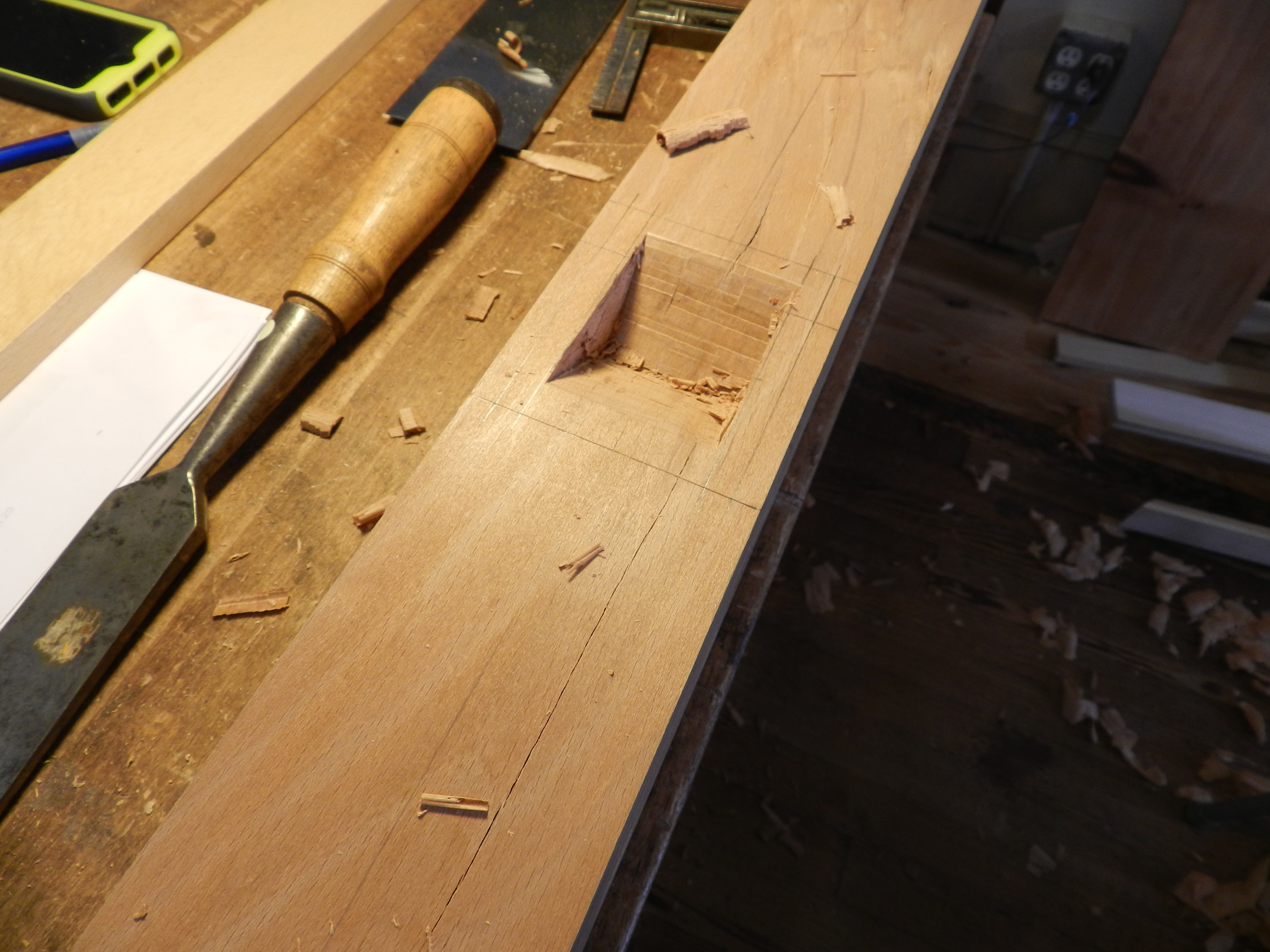
Chopping the mortise by hand

As we worked through the throat mortise a key was to make sure you don’t overshoot and chop through the abutment.

Scraping
Scraping

One of the last steps in refining the abutment and sides of the throat was to scrape the surface using a scraper chisel.

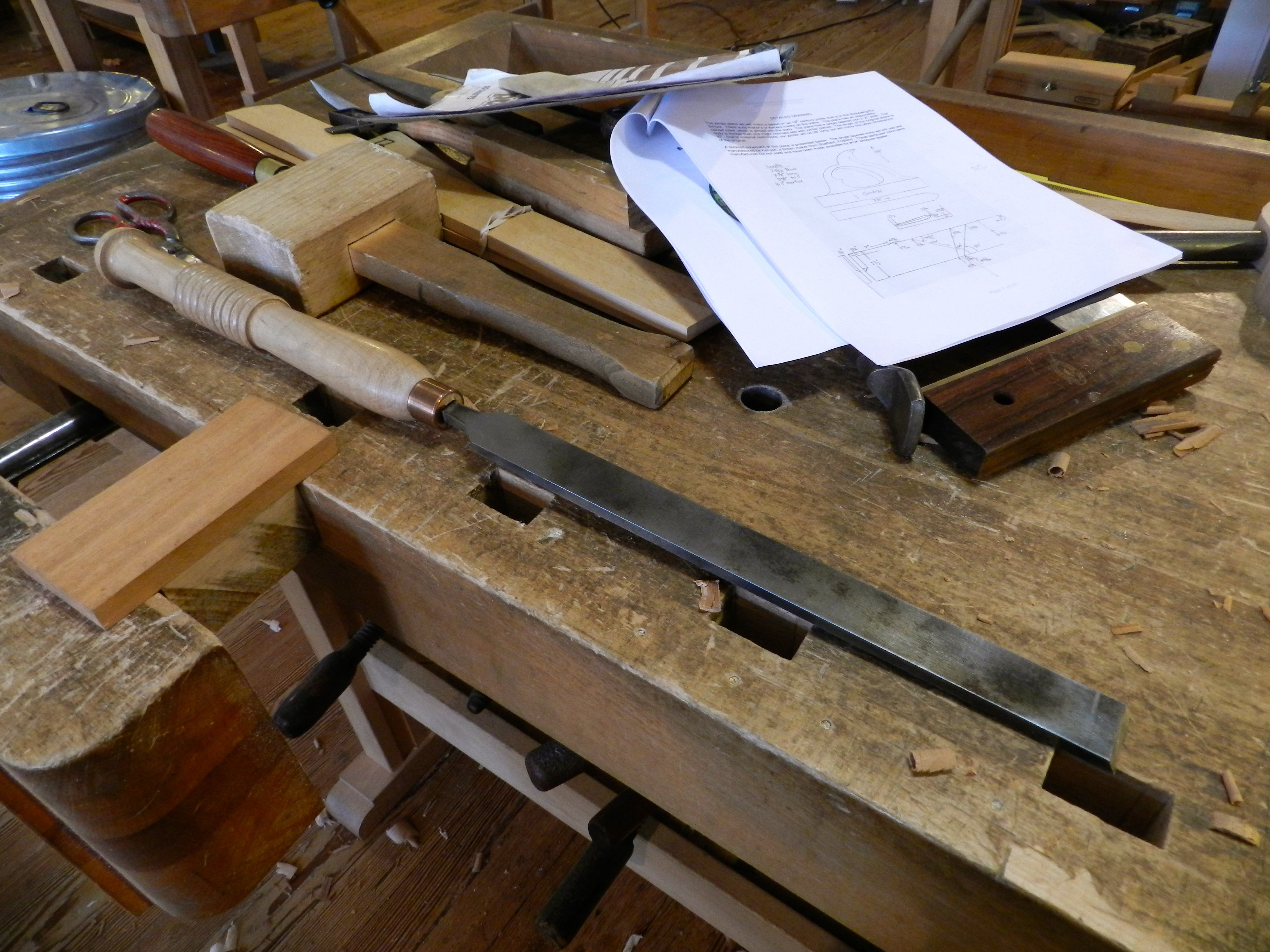
A very nice scraping chisel that Bill made

This beast of a chisel was made by Bill and heat treated by Peter Ross. It was based on some research Bill did into traditional plane making tools. The long bar of tool steel and handle allow you to put a lot of your weight into it as you scrape the surface flat. The cutting edge is a very steep angle similar to a scraper you’d use with a lathe (upside down compared to the lathe tool) but works well since you are only removing a little bit of material at a time.

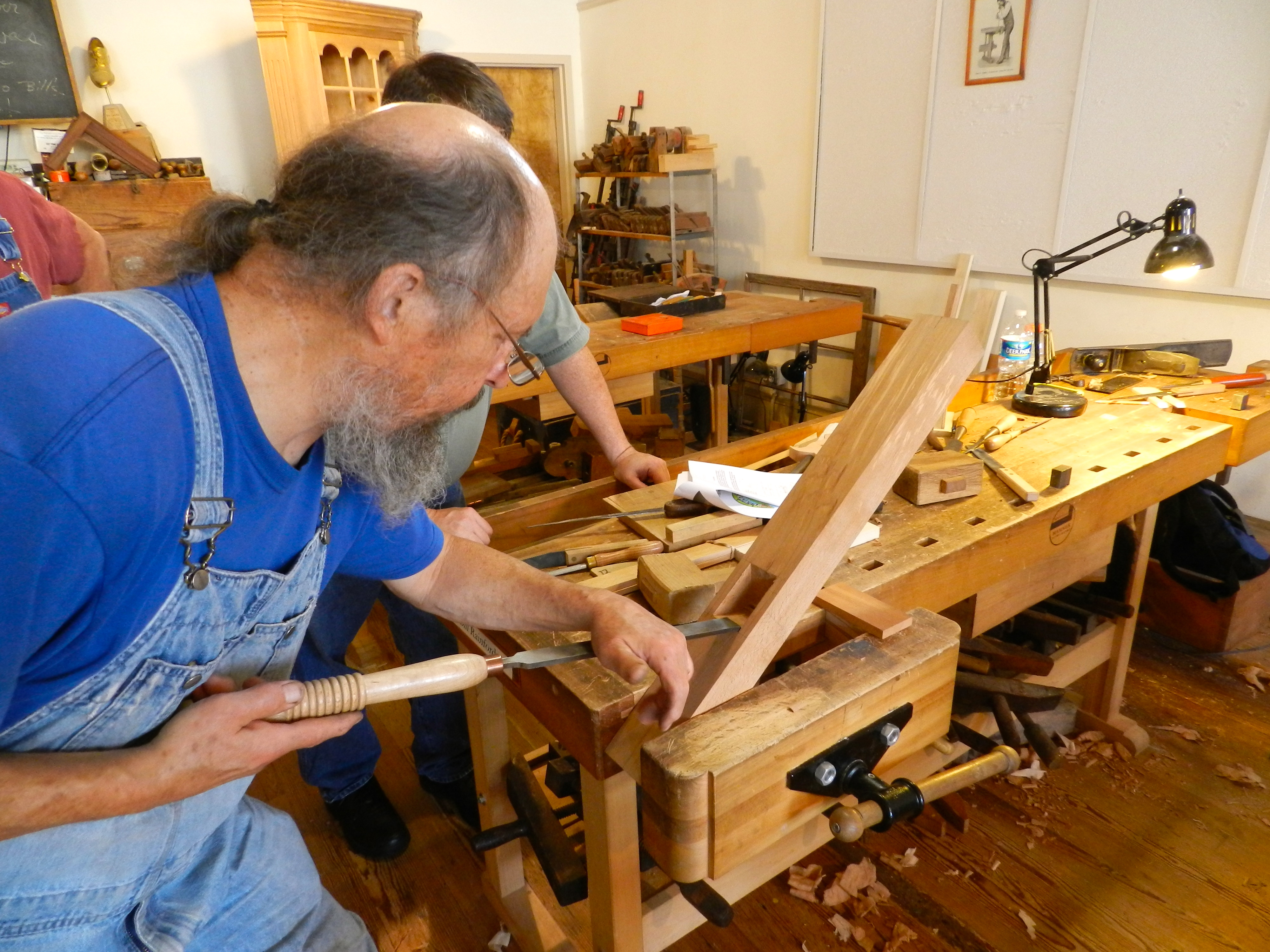
Paring away any fuzz

Regular bench chisels are used to clean up any fuzz in the corners. Next up is cutting in for the wedge and cleaning up a cheeks. This is an operation that requires a steady hand and the ability to work to an exacting standard. You want your test wedge, and eventually your actual wedge, to fit tightly against the abutment so the iron does not move when you are working with the plane. I took my time and was very happy with the results.

Fitting with test wedges

In upcoming posts I will document more about my experience in building and finishing this plane.

In the meantime, if you’d like to learn more about Bill Anderson or take a class with him, and I highly encourage you to do so, please check out his website here.

-Bill

The Woodwright’s School

For Labor Day weekend this year I flew down to the Woodwright’s School in Pittsboro, North Carolina to take a 3 day class on making a Jointer Plane with Willard ‘Bill’ Anderson (more on that in an upcoming post).

My flight got in early on Friday and I had the chance to hang out with some friends at the school during the last day of a class on building the Anarchist’s Tool Chest with Chris Schwarz.

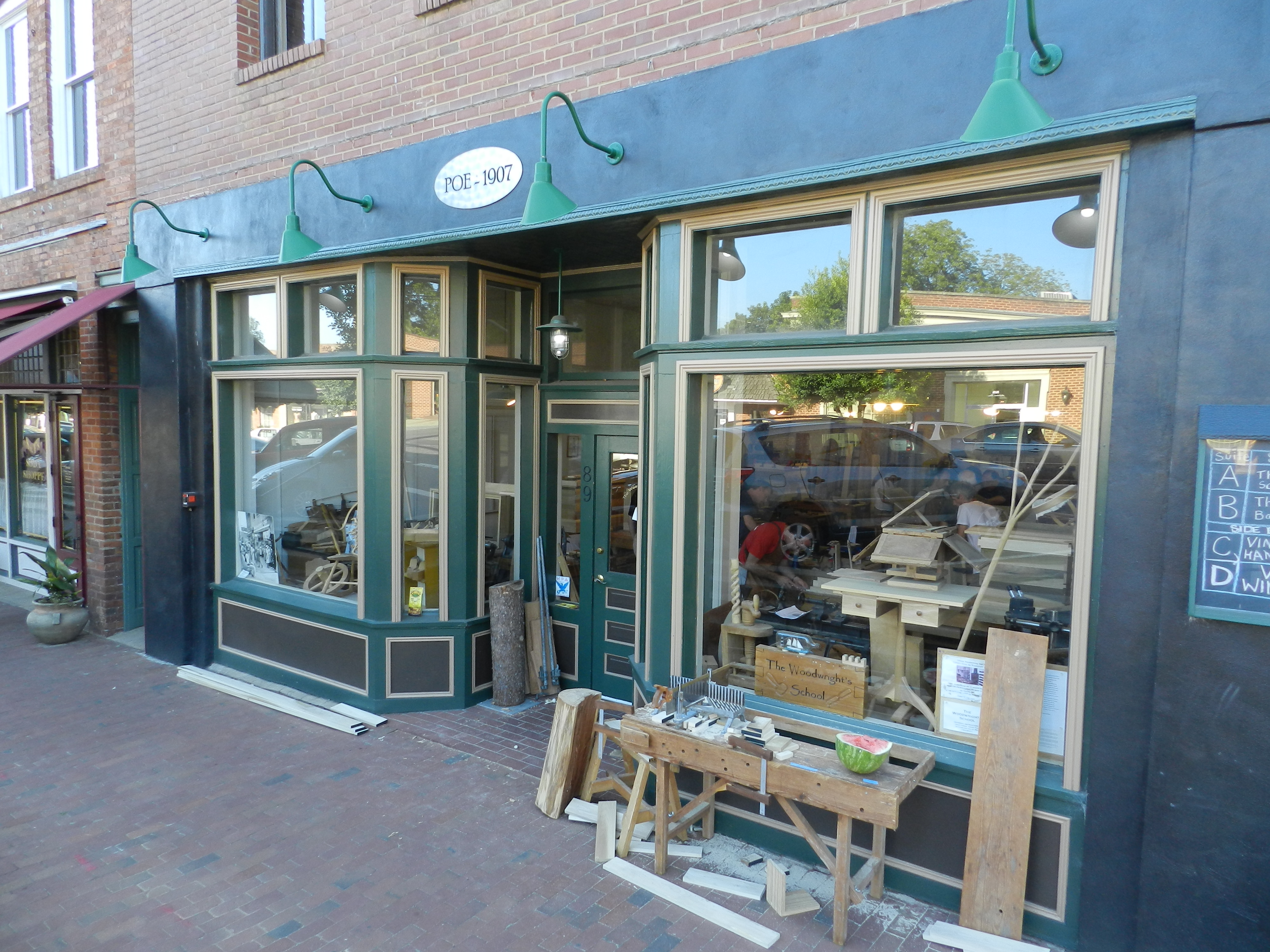
The Woodwright's School
The Woodwright’s School

The Woodwright’s School is located in downtown Pittsboro which is a scenic town about 20 minutes from Chapel Hill.

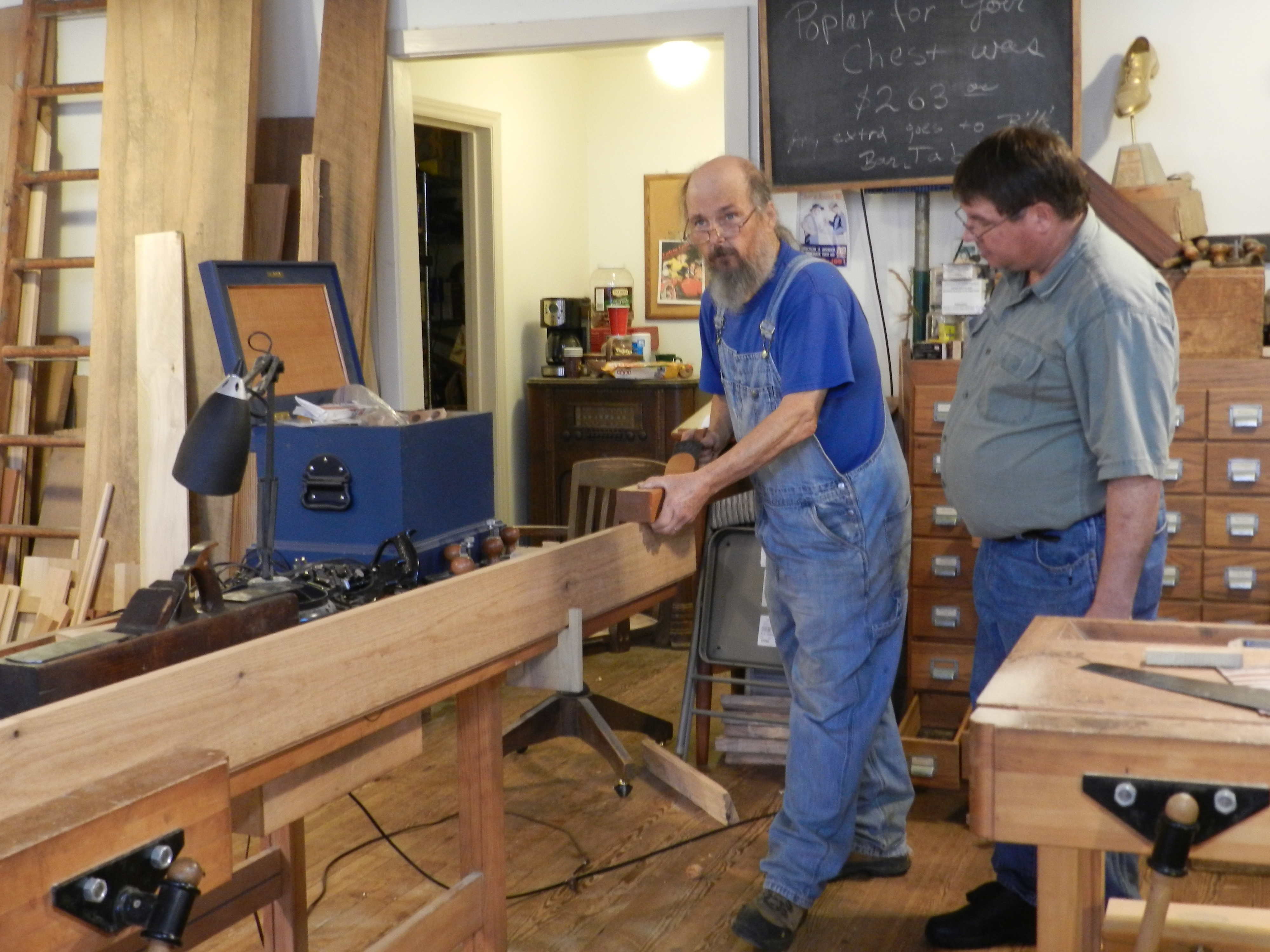
Roy Underhill planing a groove

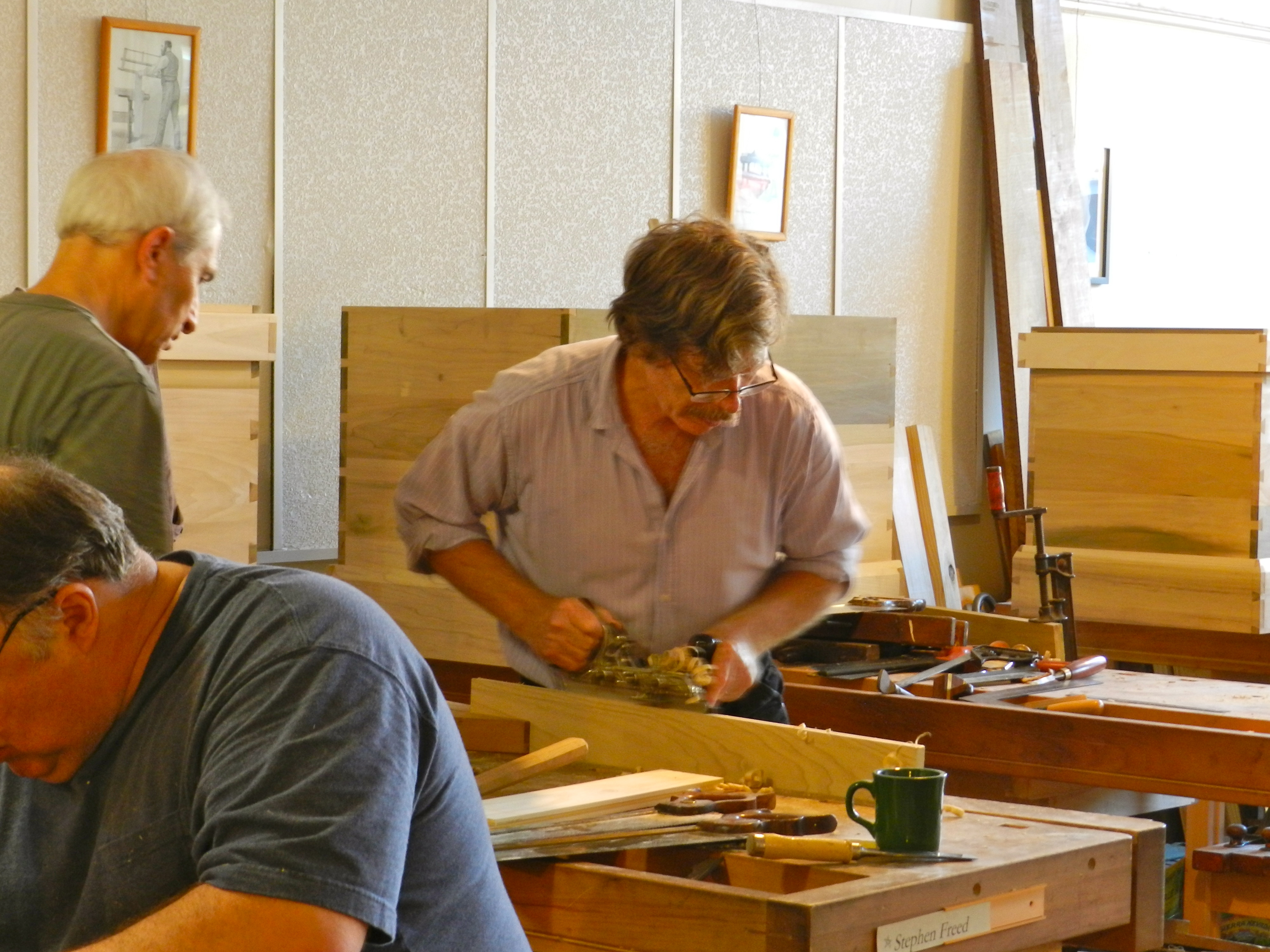
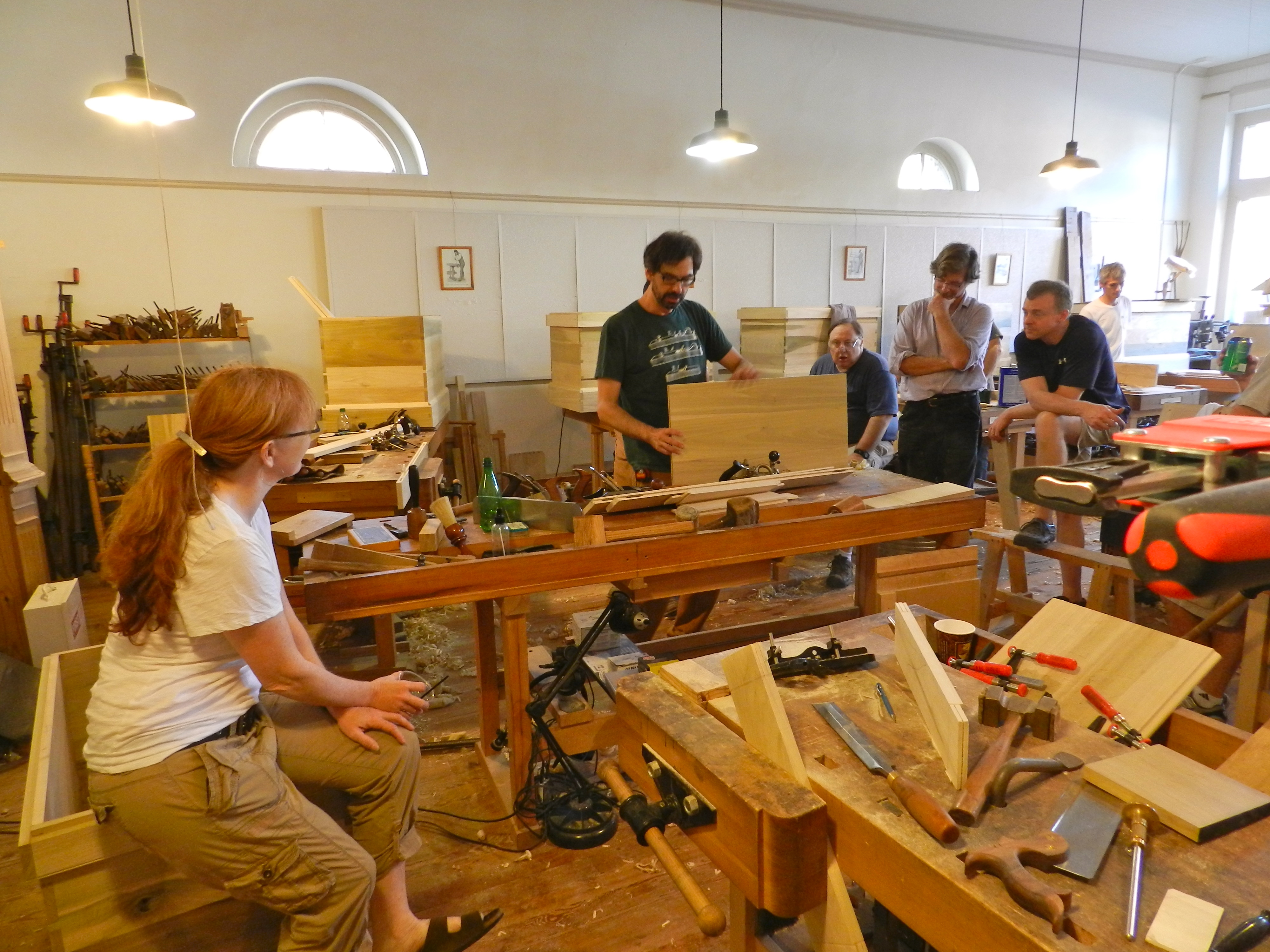
Don’t let the sometimes quiet streets fool you, once inside the school you are in a lively space full of folks who as passionate about woodworking as you are. Roy was on hand to help students as they worked their way through the last day of week long class on building a traditional English tool chest based on Chris’ book ‘The Anarchist’s Toolchest’.

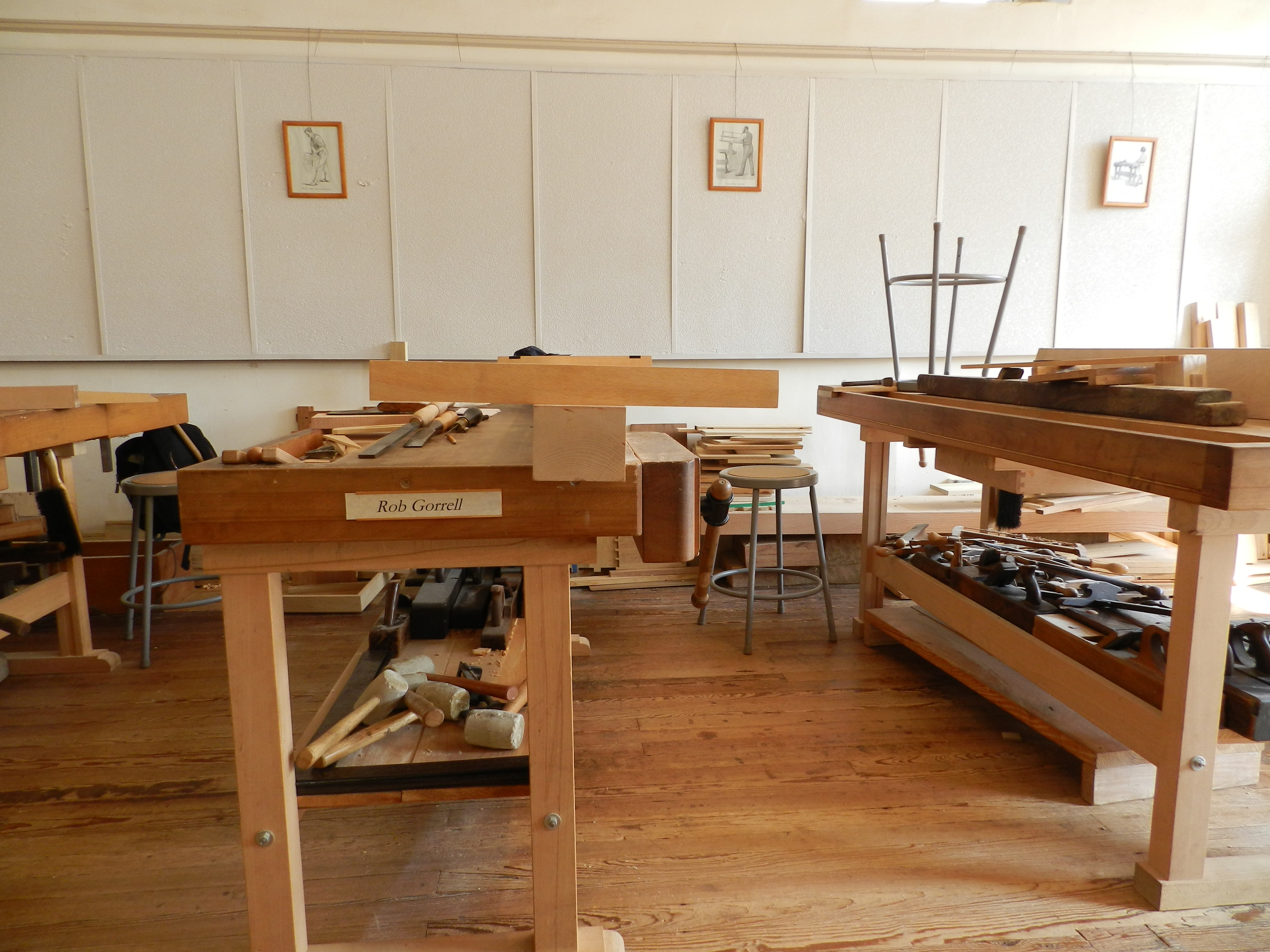
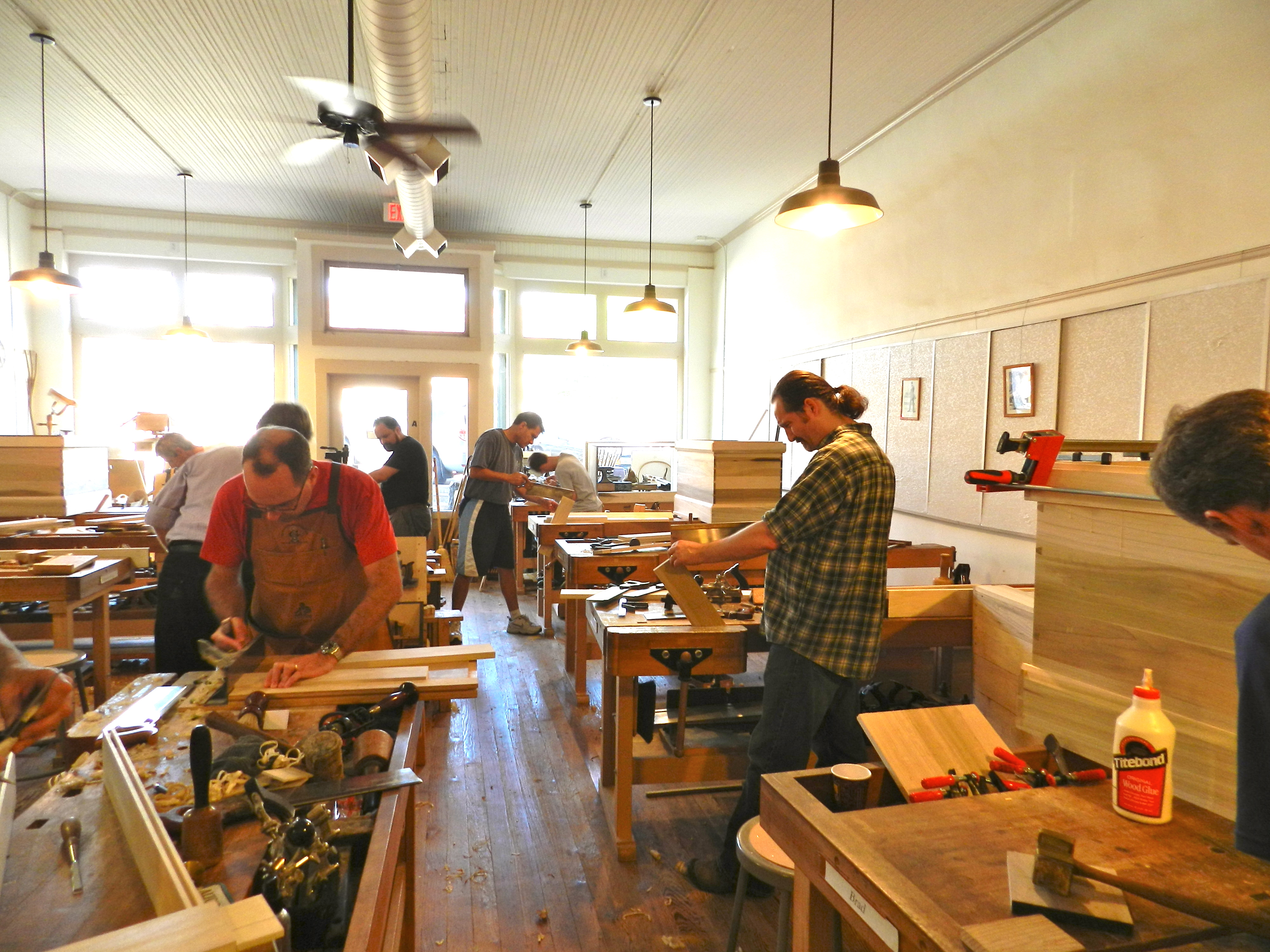
The class busy working on their Anarchist's Toolchest
The class busy working on their Anarchist’s Toolchest

One of the attractions to Roy’s school is its focus on only using traditional English/American hand tools — there were no whining power tools, no Dozuki saws and no plastic handles to be seen — or at least none that I saw when Roy was making his rounds. 😉

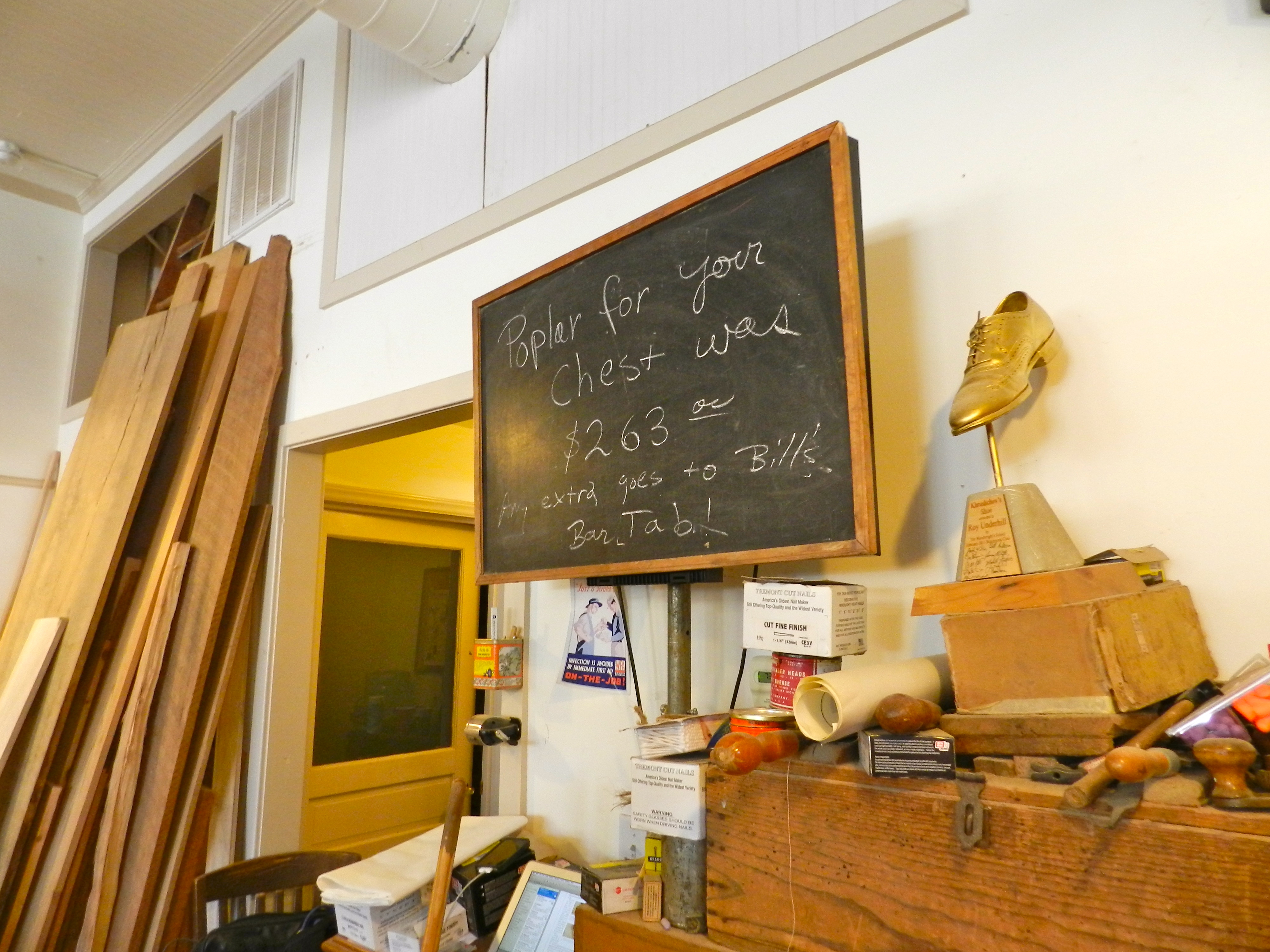
Feeding Bill's bar tab and Khrushchev's shoe
Feeding Bill’s bar tab and Khrushchev’s shoe

If you ever read Roy’s book on public speaking you’ll get why Khruschev’s shoe is an interesting trophy. Beyond the witty stories and advice on how to keep a crowd engaged and entertained, the last chapter on the morning after a presentation was the one that resonated the most with me. Applying the advice therein has improved several lectures I have to make each year.

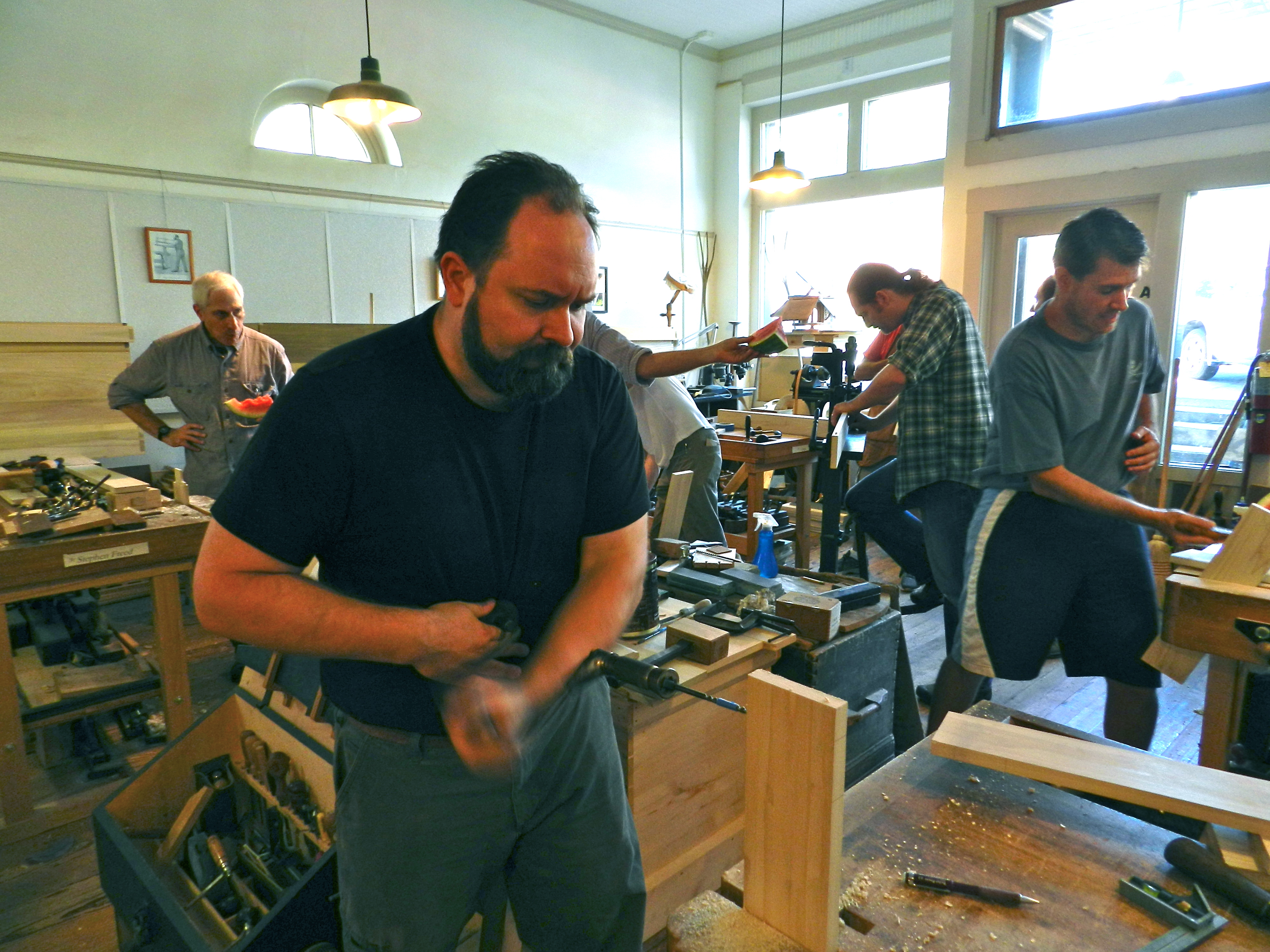
Drilling out a mortise

Traditional woodworking can feel like a very small world at times — the gentleman in the photo above was also in the class I took earlier this summer on making a Name Stamp with Peter Ross at Roy’s school — even though I was 700+ miles from home I happy to see that I could still run into people I knew.

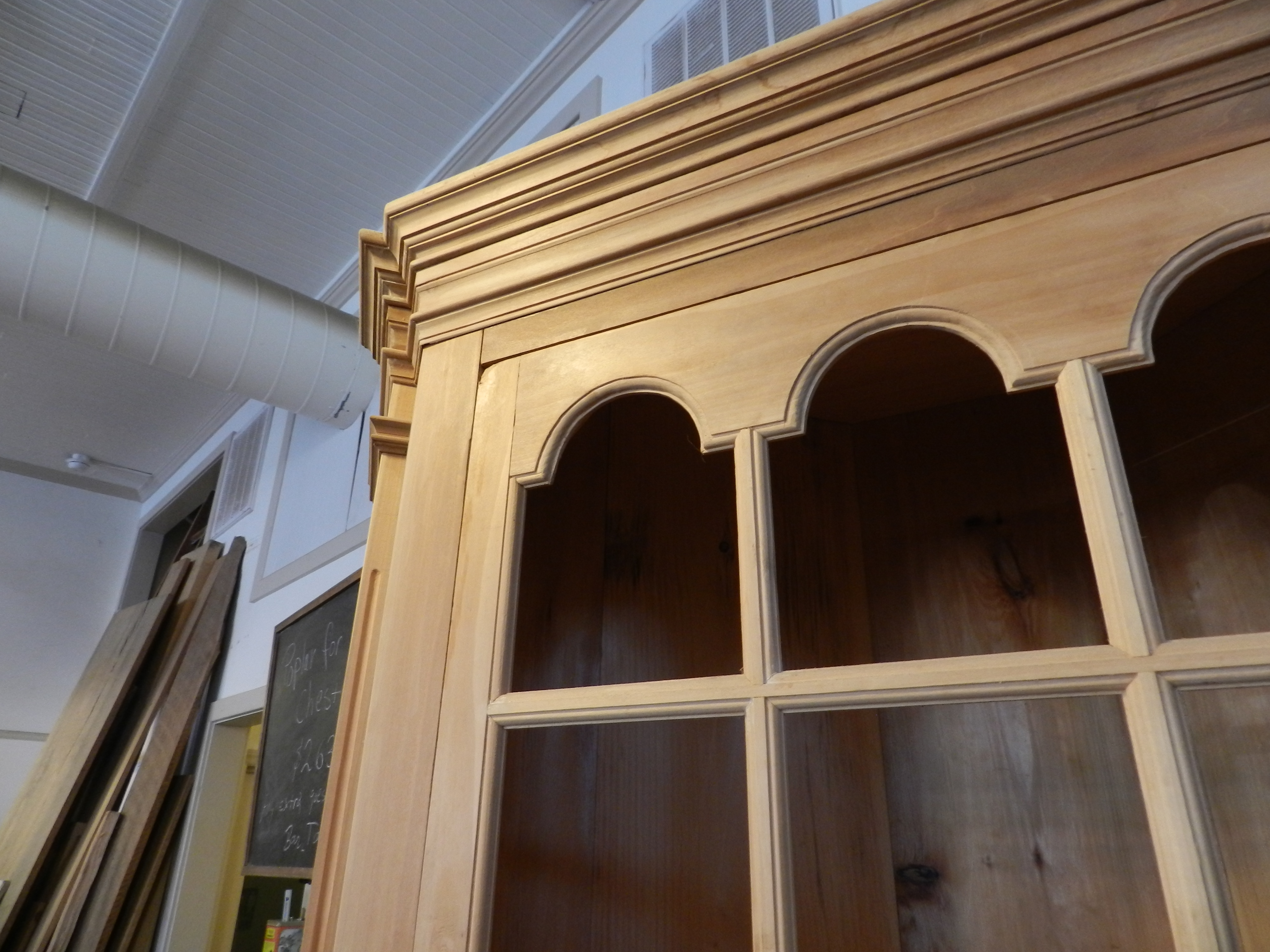
Roy's corner cabinet
Roy’s corner cabinet

Loitering in the back of the classroom is a corner cupboard you may recognize from Roy’s show. I heard his wife has been waiting on it for a while — which made me feel a tiny bit better about the dresser I owe my wife Alyssa — which reminds me I need to get working on that again….

Chris Schwarz teaching

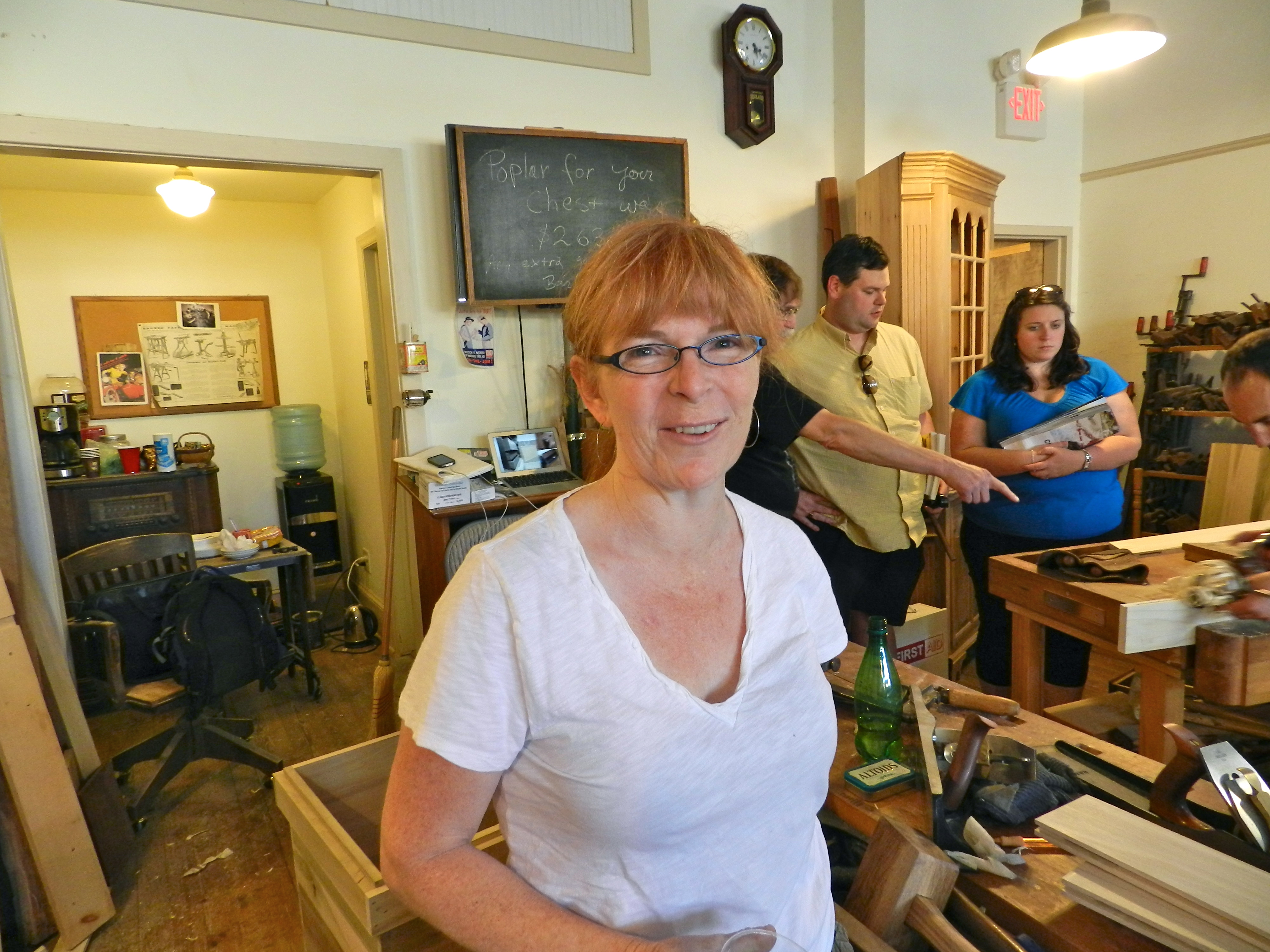
It was also great to spend some time hanging out with my friends Chris Schwarz and Megan Fitzpatrick including a stroll through Ed’s tool shop above the school.

Chatting with Megan Fitzpatrick

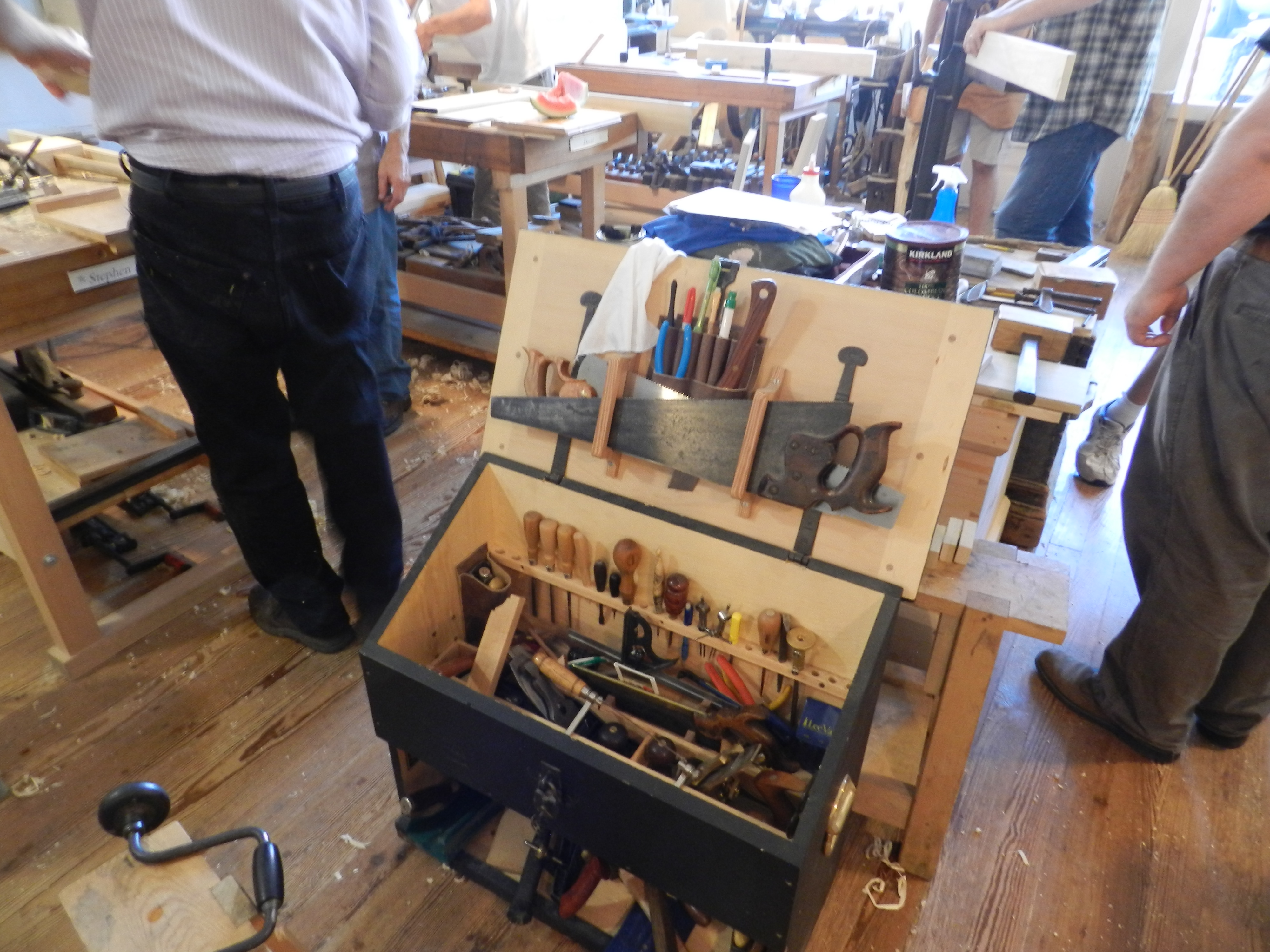
No toolchest is ever completely filled and Ed’s shop has a huge collection of traditional tools on par with some of the best regional tool shows. I tried my best to be good and save my pennies for the Nashua tool show later this month, but I did find some new toys.

Chris' Dutch Tool Chest
Chris’ Dutch Tool Chest

I had fun chatting with everyone, examining some interesting tools and helping to sweep up before a trip to the City Tap — which is a awesome bar just behind the school with great food and drinks.

Roy helping a student

On my way out of the school I saw my old friend Otto Salomon and various other proper woodworking models from the Teacher’s Handbook of Sloyd.

Sloyd Prints
Sloyd Prints

It seems the Woodwright’s School is full of new and old friends that are literally popping out of the woodworking.

If you’d like to learn more about the school, make some new friends, meet up with old friends, or sign up for a class you can check out the school’s website here.

-Bill

The Real Cost Of A Tool

When looking at the historic prices of tools, even after converting the dollar amounts into today’s prices it often does not give a truly accurate representation of what a tool really cost the person who bought it. I remember my first job in high school working in a retail clothing store for ~$5 an hour in 1997 which was the minimum wage in NY at the time. If I went to the store to buy something, part of that decision was always based on a calculation of ‘how many hours did I have to work to buy this item?’

Hammacher Schlemmer Sloyd Knife Ad -- The School Journal July 2, 1898
Hammacher Schlemmer Sloyd Knife Ad — The School Journal July 2, 1898

I wanted to apply this same logic to some of the tools in the 1900 Sloyd tool chest list we talked about here. I did some research and found that the average carpenter in 1899 made $2.30/day**. So that would mean the Sloyd cabinet full of tools which cost $11.91 would be about a week’s worth of wages to purchase  — 5.17 days to be exact.

Hammacher Schlemmer Sloyd Training Bench from 1898 ad in the School Journal

This summer I had a chance to chat a bit with my cousin, master NYC woodworker James Cooper. (Or as he is known to the family — Jim)

Jim has been working in the craft for a long time and it was great to pick his brain a bit on this topic. I’ll recount some of my interview with him here:

“In 1971 we worked for $4/hr (although we were often wrong in estimating the time required) and the only catalog I could find from that era, 1973, is of a small German American maker of chisels and carving tools where Pattern Maker’s Chisels, 6mm – 30mm,  sold for $7.50 – $12.50 ea…….about  2 – 3hrs of labor! Today a competent mechanic in NY can earn $25/ hr and a decent 3/4″ (19mm) chisel can be had for $25 – $40 or rather less work then I exchanged 40 yrs ago. The most important point to emphasize is that whatever the cost, good to great hand tools will last a lifetime+ and, well used and cared for, will feed you for all that time, while never loosing value.

The early 20th Century Bailey 07 plane that I picked up, used but cleaned, at a flee market in 1981 for $100 (which at that time was about the cost of a new British Stanley) is worth $200+ today after my having used it for countless hours to realize 100s of projects over all that time…and it outperformed the British Stanley to boot! The $100 Bailey bought in 1981 was less then a days labor (about $125 / day at that time)!” — Jim Cooper

Taking the 3/4″ firmer gouge as an example I tried to plot it over time, and here are my findings so far:

Year Price Avg Pay Rate Time to earn it Notes
1900 $0.34 $0.23/hr 1.48 hours work $2.30/day, so assuming an 10 hour day for hourly rate at the time
1973 $10.00 $4.00/hr 2.5 Hours Assumption that during this time was potentially a low water mark for availability of quality tools in the US — all the old makers were on their way out, and new high end tools were only getting started
1981 $20.50 $12.50/hr 1.64 Hours Based on estimate of about $125/day and assuming a 10 hour day. Price of tool inflation adjusted from 1973 data point. Note also this was the time of a large global recession.
2013 $49.99 $25.00/hr 2 Hours Based on current price of a Henry Taylor 3/4″ in-cannel gouge from Traditional Woodworker which is very similar to that original gouge in the Sloyd tool chest

If any of my readers have some additional data points, I’d be happy to flesh this out more — especially before and after the world wars. So if you have an old tool catalog with prices from an earlier time (especially for a 3/4″ firmer gouge) or recall and are willing to share your pay rate at an earlier time (either hourly or daily) I would be happy to flesh this out more and see what else the data can teach us.

My conclusions based on all of this?
The availability of good quality tools, societies’ willingness to pay a craftsman a fair wage, tax codes, the macro-economic climate and the ability to find work in that field have all fluctuated over time which makes it hard to draw a lot of concrete conclusions without befriending an economist or gathering a lot more data. But having said that, I think all craftsmen and women have at one time or another done the mental calculation of current wage versus the price of that new tool and thought to themselves ‘I really need to charge a higher rate’ 😉

What to you think?  There are only so many working hours in a lifetime. Are you spending more on tools today relative to your hourly wage compared to earlier decades? Or are you coping in other ways? (Refurbishing old tools etc which still takes up a lot of time). I’m interested to hear your thoughts in the comments below.

-Bill

** I used the following source for that pay rate data —  http://www.nber.org/chapters/c2486.pdf